

What Is MDF?
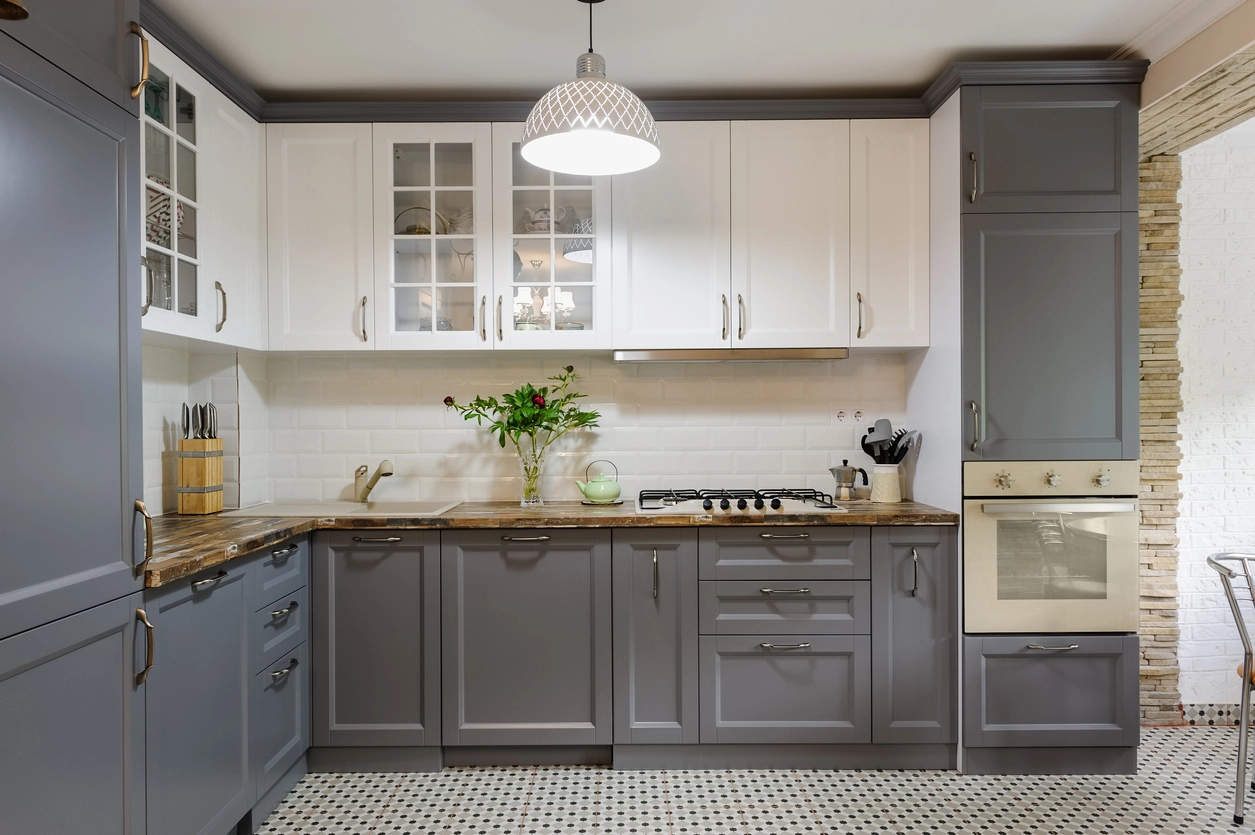
MDF stands for Medium-Density Fiberboard. It is an engineered wood product made from wood fibers, wax, and resin that are compressed under high heat and pressure into smooth panels.
Unlike natural wood, MDF has no grain, knots, or visible texture. This gives it a clean and consistent surface that works especially well for painted kitchen cabinets.
Many homeowners choose MDF because it:
- Has a smooth finish for paint
- Costs less than plywood
- Is easy to cut and shape
- Creates modern, seamless cabinet designs
MDF is commonly used for:
- Painted cabinet doors
- Decorative panels
- Shaker-style cabinets
- Indoor cabinet components
However, MDF is heavier than plywood and can absorb water if exposed to too much moisture. In wet areas, swelling and damage may happen over time.
Overall, MDF is a popular choice for affordable and stylish kitchen cabinets, especially when a smooth painted look is the main goal.
What Is Plywood?

Plywood is a strong wood panel made by gluing together multiple thin layers of natural wood veneer. Each layer is placed in alternating directions, which improves strength and stability.
Because of this layered construction, plywood is widely considered one of the most durable materials for kitchen cabinets.
Plywood offers several advantages:
- Stronger structure and screw holding
- Better moisture resistance
- Lighter weight than MDF
- Longer lifespan in busy kitchens
Plywood is often used for:
- Cabinet boxes
- Shelves and drawers
- Sink base cabinets
- High-moisture kitchen areas
One downside is that plywood usually costs more than MDF. It may also show natural wood grain or uneven edges, especially on lower-grade panels.
Still, many homeowners and cabinet makers prefer plywood because it handles daily wear, humidity, and heavy use better over the long term.
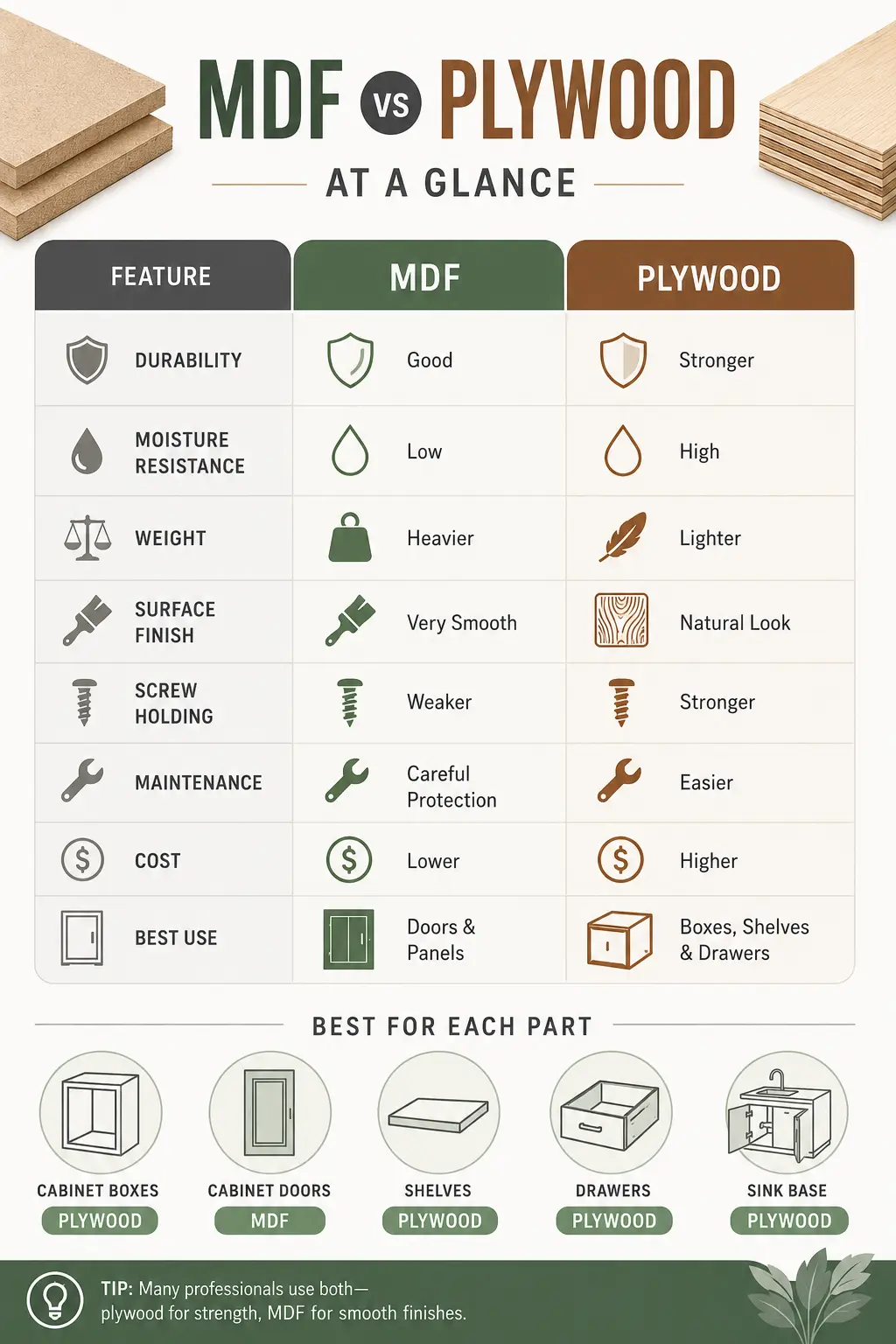
MDF vs Plywood: Key Differences
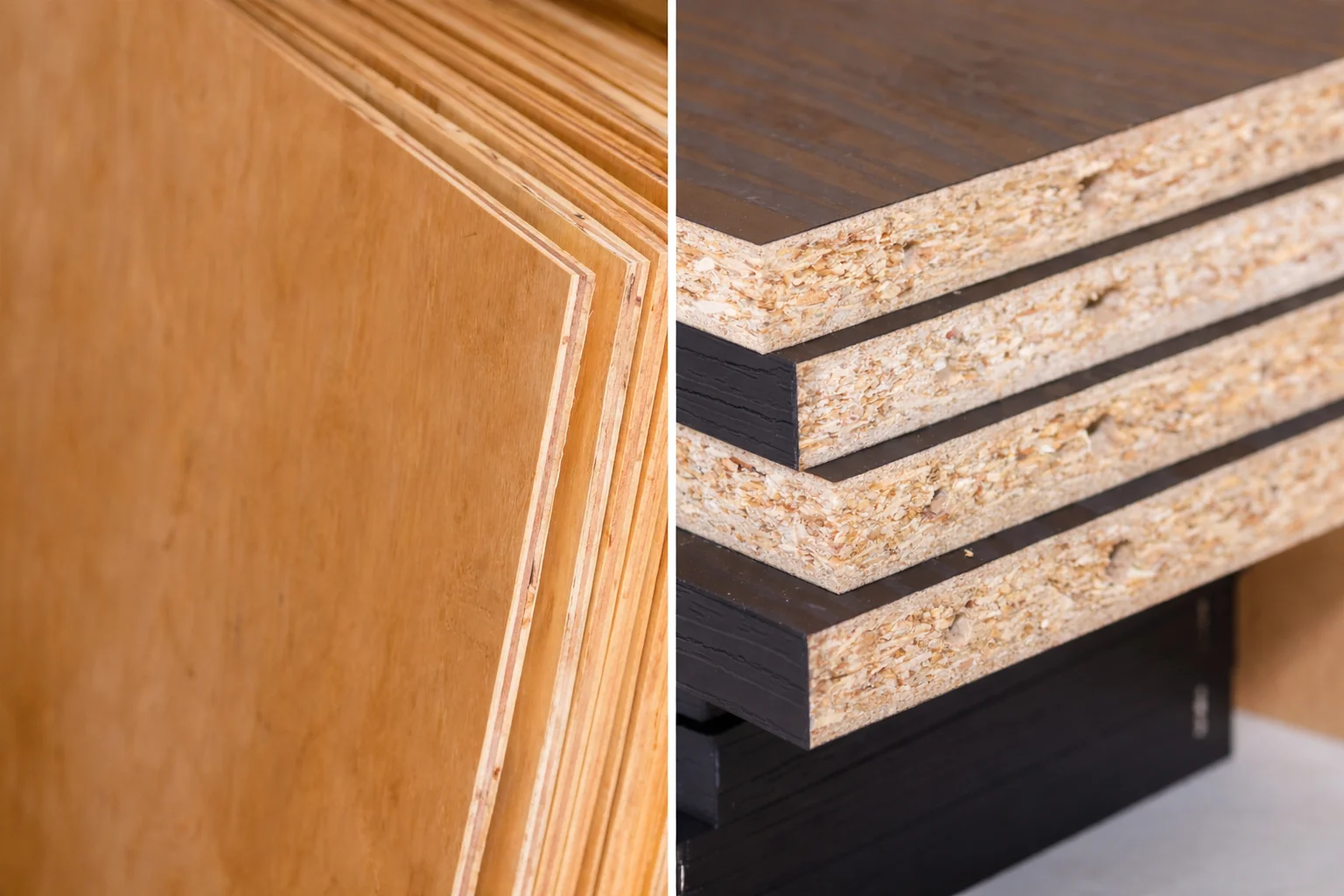
MDF and plywood may look similar at first, but they perform very differently in a kitchen. Here’s how they compare in the areas that matter most for kitchen cabinets.
| Feature | MDF Cabinets | Plywood Cabinets |
|---|---|---|
| Durability | Good for light daily use, but may dent or chip | Stronger and better for heavy daily use |
| Moisture Resistance | Can swell if exposed to water | Handles humidity and moisture better |
| Weight | Heavier and harder to install | Lighter and easier to handle |
| Surface Finish | Very smooth, best for painted cabinets | Better for wood grain, veneer, or stained looks |
| Screw Holding | Weaker, especially after repeated repairs | Stronger for hinges, slides, and hardware |
| Maintenance | Needs careful moisture protection | Easier to repair and maintain long term |
| Cost | More affordable upfront | More expensive but better long-term value |
| Best Use | Painted cabinet doors and decorative panels | Cabinet boxes, shelves, drawers, and sink bases |
Durability Comparison
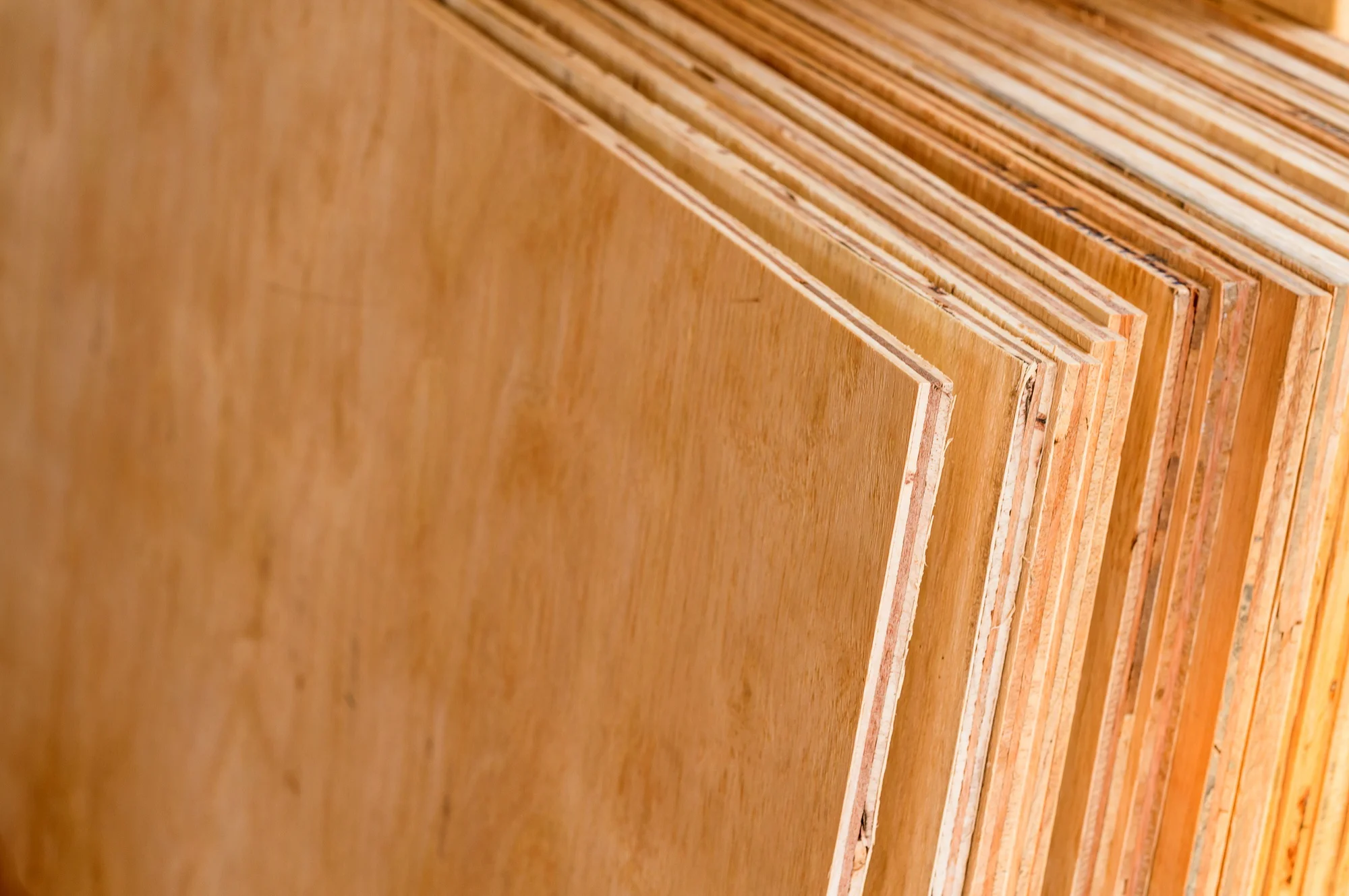
Plywood is generally more durable than MDF. Its layered wood construction gives it better strength for daily kitchen use.
MDF has a smooth surface, but it is more likely to dent or crack under heavy impact.
Durability differences:
- Plywood handles heavy loads better
- MDF can sag over time on long shelves
- Plywood resists cracking more effectively
- MDF edges may chip if hit hard
For busy family kitchens, plywood usually lasts longer.
Moisture Resistance
Moisture resistance is one of the biggest differences between MDF and plywood.
Plywood performs much better in humid kitchens because its wood layers resist swelling and water damage more effectively.
MDF absorbs water quickly if the surface becomes damaged or exposed.
Plywood is better for:
- Sink base cabinets
- Areas near dishwashers
- High-humidity kitchens
MDF works best in dry spaces with limited moisture exposure.
Weight Comparison
MDF is heavier than plywood because of its dense fiber structure.
This extra weight can make installation harder and may require stronger cabinet support.
Plywood is:
- Lighter to handle
- Easier to install
- Better for large cabinet systems
For upper cabinets, many installers prefer plywood because it puts less stress on walls and hardware.
Surface Finish and Appearance
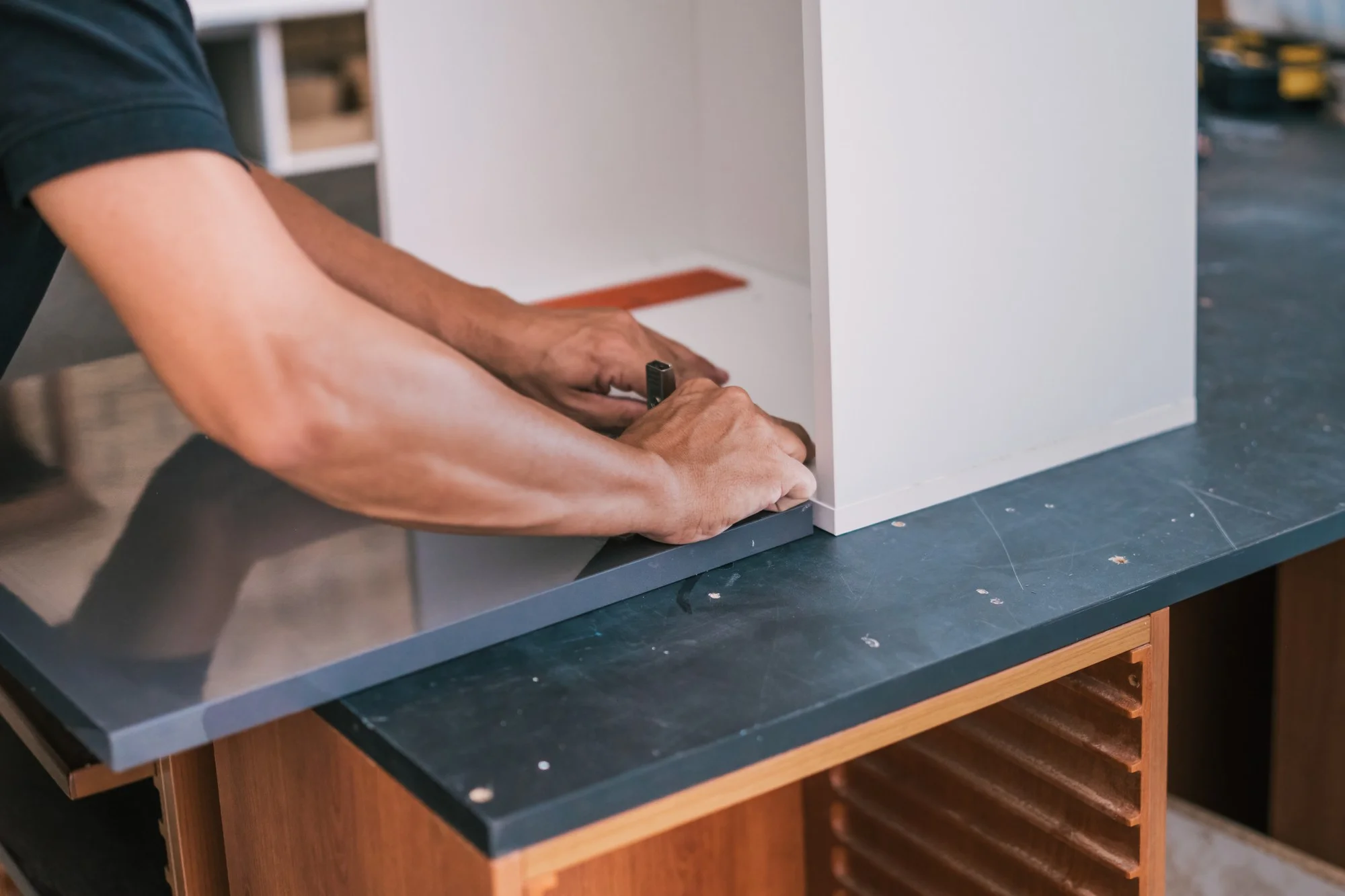
MDF is known for its ultra-smooth surface, making it one of the best cabinet materials for painted cabinets.
Since MDF has no wood grain, paint finishes often look cleaner and more modern.
Plywood offers a more natural wood appearance and works well with veneers and wood stains.
Appearance comparison:
- MDF: best for smooth painted finishes
- Plywood: best for natural wood looks
- MDF: ideal for shaker-style doors
- Plywood: better for visible wood grain designs
The right choice depends on your kitchen style.
Strength and Screw Holding
Plywood has stronger screw-holding power than MDF. This is important for cabinet hinges, drawer slides, and heavy hardware.
MDF can weaken over time if screws are removed and reinstalled repeatedly.
Plywood provides:
- Better hardware stability
- Stronger drawer support
- Improved long-term structural performance
For heavy-use kitchens, plywood usually offers more reliable strength.
Maintenance and Repair
Both materials are fairly easy to clean, but plywood is usually easier to repair if damaged.
Minor scratches or dents in plywood may be repaired or refinished more easily. Water-damaged MDF is often harder to fix once swelling starts.
Maintenance overview:
- MDF requires careful moisture protection
- Plywood handles daily wear more effectively
- Plywood often has a longer lifespan
With proper care, both materials can last many years.
Cost Comparison
MDF is usually more affordable than plywood, making it popular for budget-friendly kitchen remodels.
Plywood costs more because it uses natural wood veneers and offers better durability.
General cost differences:
- MDF: lower upfront cost
- Plywood: higher long-term value
- MDF: lower material price
- Plywood: better lifespan investment
If budget is the main concern, MDF can be a smart choice. If durability matters most, plywood is often worth the extra cost.
MDF vs Plywood for Different Cabinet Parts
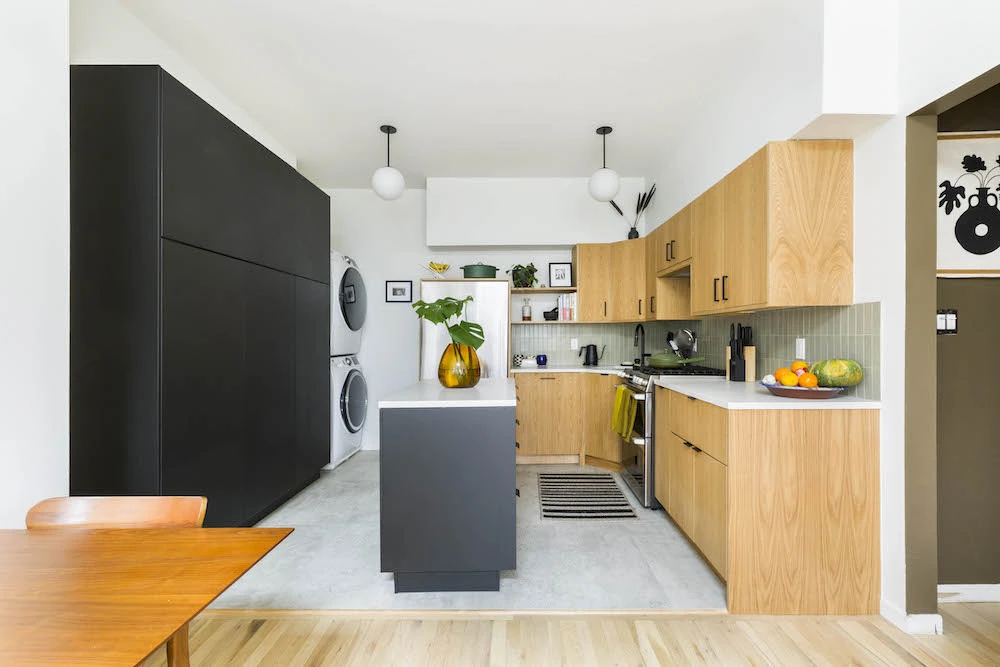
MDF and plywood do not perform the same in every part of a kitchen cabinet. Many professional cabinet makers use both materials together to balance cost, durability, and appearance.
| Cabinet Part | Recommended Material | Why It Works Best |
|---|---|---|
| Cabinet Boxes | Plywood | Stronger, lighter, and better for long-term structural support |
| Cabinet Doors | MDF | Smooth surface makes painted doors look clean and even |
| Shelves | Plywood | Resists sagging better under dishes, cookware, and appliances |
| Drawers | Plywood | Holds screws well and supports daily pulling, sliding, and storage |
| Sink Base Cabinets | Plywood | Handles moisture better near sinks, plumbing, and dishwashers |
Which Material Is Better for Your Kitchen?
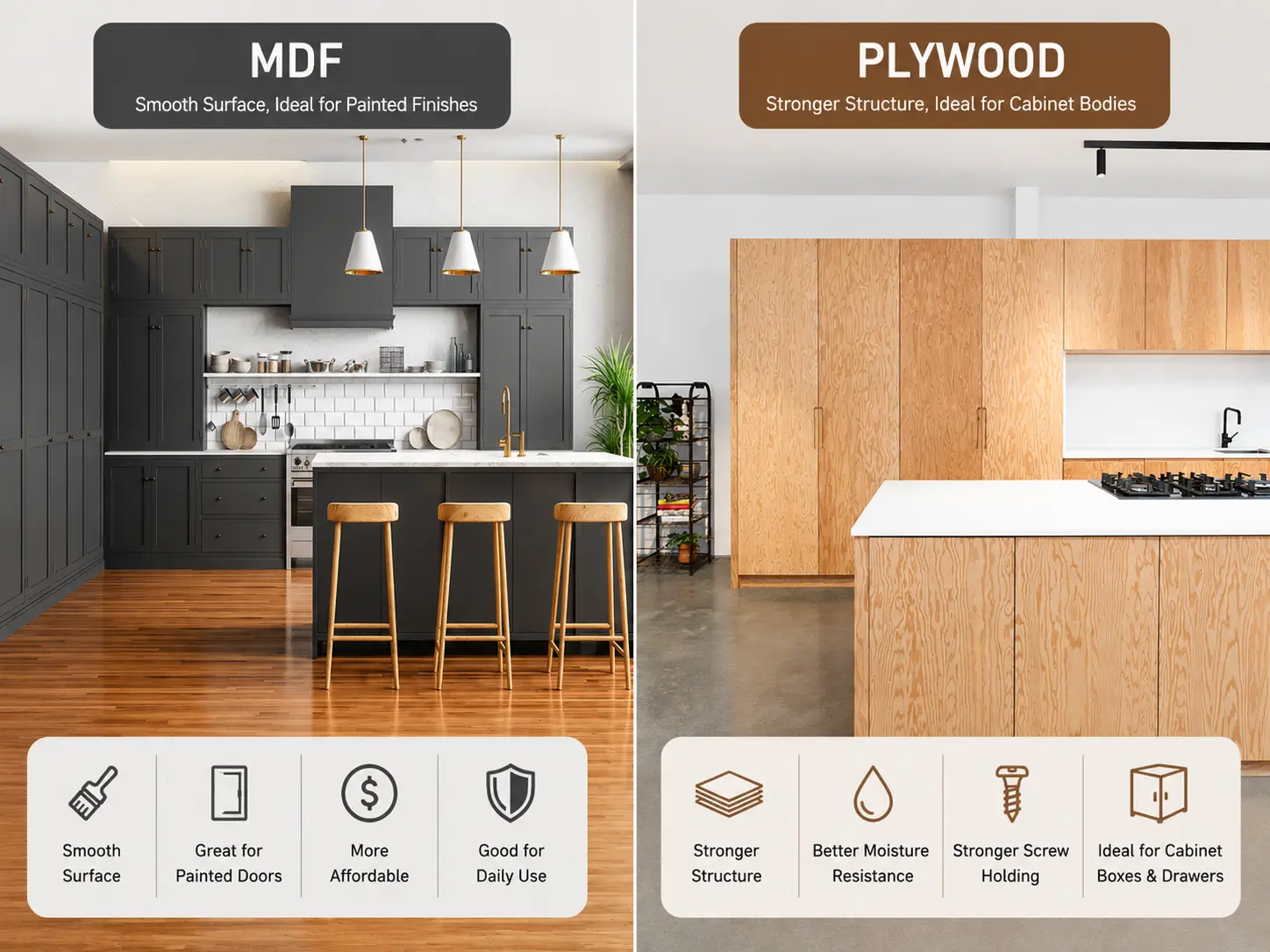
The best cabinet material depends on your kitchen style, budget, and how much daily use your cabinets will handle. Both MDF and plywood have advantages, but they work best in different situations.
Choose MDF If You Want…
MDF is a smart option for homeowners who want a clean painted finish at a lower price.
Because MDF has a smooth surface without wood grain, it creates a modern and polished cabinet appearance. It is especially popular for painted shaker cabinets and decorative door styles.
Choose MDF if you want:
- Lower cabinet costs
- Smooth painted finishes
- Modern or decorative cabinet designs
- A budget-friendly kitchen remodel
MDF works best in kitchens with lower moisture exposure and lighter daily wear.
Choose Plywood If You Want…
Plywood is the better choice for homeowners who prioritize durability and long-term performance.
Its layered wood construction makes it stronger, lighter, and more resistant to moisture than MDF. This makes plywood ideal for busy kitchens and high-humidity areas.
Choose plywood if you want:
- Better long-term durability
- Stronger moisture resistance
- More stable cabinet construction
- Better long-term investment value
Plywood is especially recommended for cabinet boxes, shelves, drawers, and sink base cabinets where strength matters most.
FAQs
Which is better plywood or MDF?
Plywood is generally better for kitchen cabinets because it is stronger, more moisture-resistant, and lasts longer. MDF is better for smooth painted finishes and lower-cost projects.
What are 5 disadvantages of MDF?
Common disadvantages of MDF include:
- Poor moisture resistance
- Heavy weight
- Weaker screw holding
- Can swell when wet
- Easier to dent or chip than plywood
Why do people use MDF instead of wood?
People choose MDF because it is more affordable, has a smooth surface for painting, and has no wood grain or knots. It is also easy to cut and shape for decorative cabinet styles.
Which is cheaper, MDF or plywood?
MDF is usually cheaper than plywood because it is made from compressed wood fibers and resin, while plywood uses multiple layers of natural wood veneer.

 English
  Arabic
  Spanish
  Japanese
  Russian
  Korean
  French
  Italian