Understanding the Most Important Window Ratings
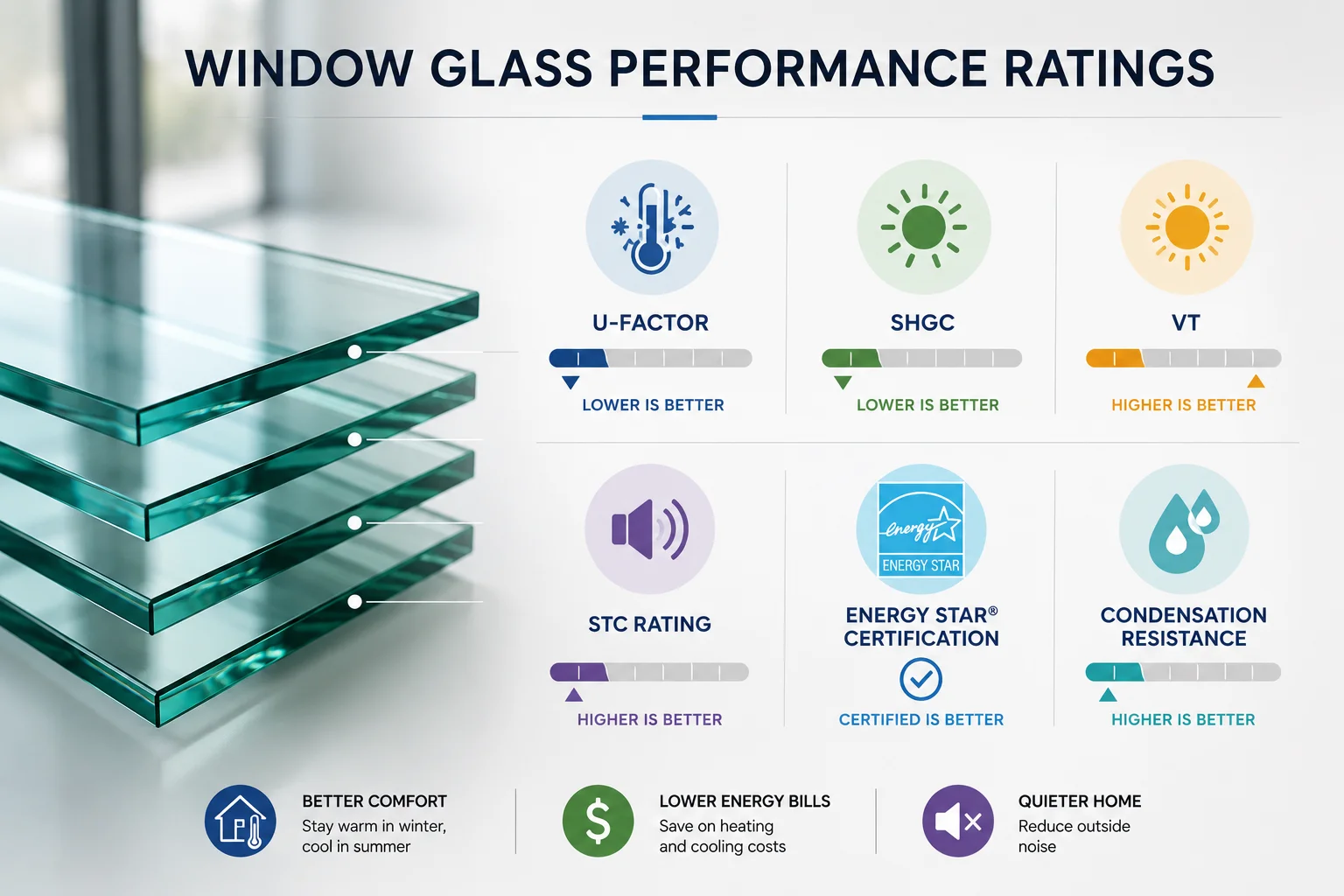
Window ratings help you compare how well a window performs in real-life conditions. They measure insulation, sunlight control, airflow, moisture resistance, and even noise reduction. Understanding these numbers makes it much easier to choose windows that improve comfort, lower energy bills, and match your local climate.
| Rating | What It Measures | Lower or Higher Better | Ideal Range |
|---|---|---|---|
| U-Factor | Heat transfer and insulation performance | Lower is better | About 0.20–0.30 for strong efficiency |
| SHGC | How much solar heat enters through glass | Lower for hot climates; higher for cold climates | 0.25–0.40 for hot areas; 0.40+ for cold areas |
| VT | Amount of visible natural light entering indoors | Higher is better for daylight | 0.40–0.70 for balanced light and comfort |
| Air Leakage | Unwanted air passing through window gaps | Lower is better | 0.30 or lower |
| Condensation Resistance | Resistance to moisture and fogging on glass | Higher is better | 50+ is good; 60+ is better |
| STC Rating | How well the window blocks outside noise | Higher is better | 30+ for quieter homes; 35+ for noisy areas |
U-Factor
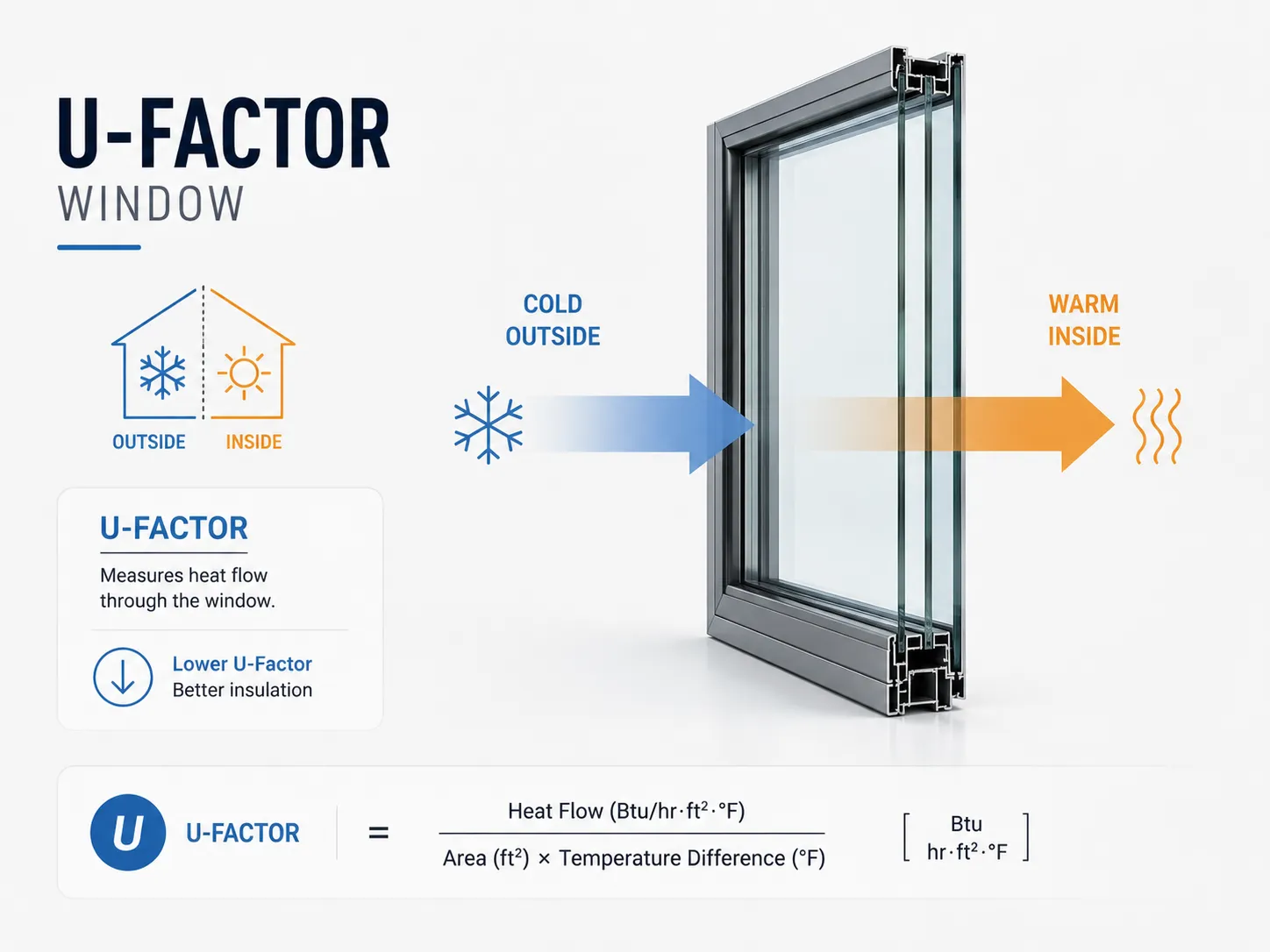
U-factor measures how much heat passes through a window. In simple terms, it tells you how well the window keeps indoor heat from escaping during winter and blocks outdoor heat during summer.
Lower U-factor numbers mean better insulation performance. A window with a low U-factor can help reduce heating and cooling costs while keeping indoor temperatures more stable throughout the year.
Recommended ranges usually depend on climate:
- Cold climates: lower U-factor for stronger insulation
- Hot climates: moderate to low U-factor for energy savings
- Mixed climates: balanced performance for all seasons
Homeowners in colder regions often prioritize low U-factor ratings because heat loss can significantly increase energy use during winter.
Solar Heat Gain Coefficient (SHGC)
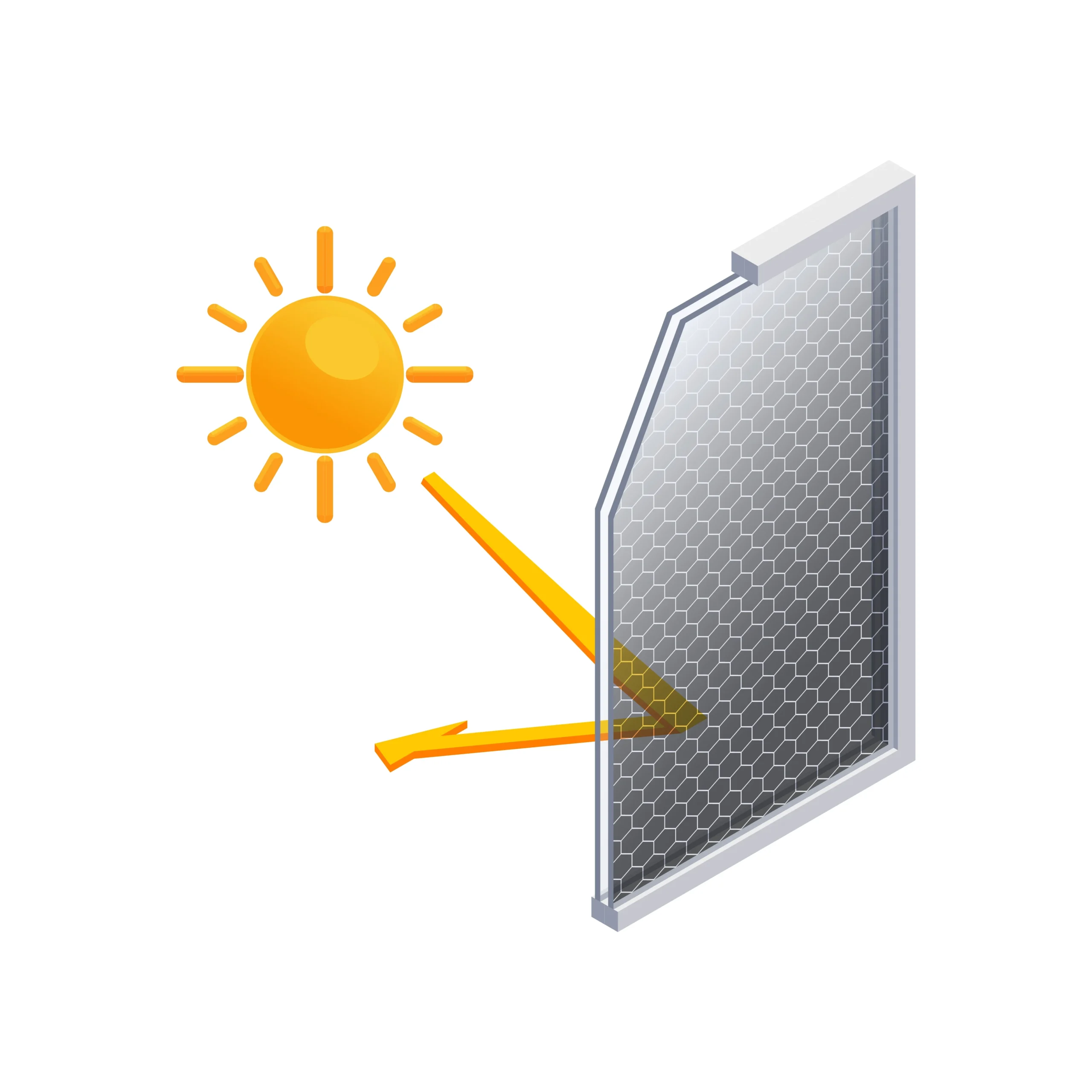
SHGC measures how much solar heat enters through the window glass. This rating is especially important in areas with strong sunlight and hot summers.
A lower SHGC helps block heat from the sun, which keeps indoor spaces cooler and reduces air conditioning use. Higher SHGC ratings allow more solar warmth inside, which can be beneficial in colder climates.
Climate recommendations usually look like this:
- Hot climates: lower SHGC to reduce heat buildup
- Cold climates: higher SHGC to capture solar warmth
- Mixed climates: balanced SHGC for year-round comfort
South-facing windows often receive the most direct sunlight. In warmer regions, choosing lower SHGC glass for these windows can improve indoor comfort and energy efficiency.
Visible Transmittance (VT)
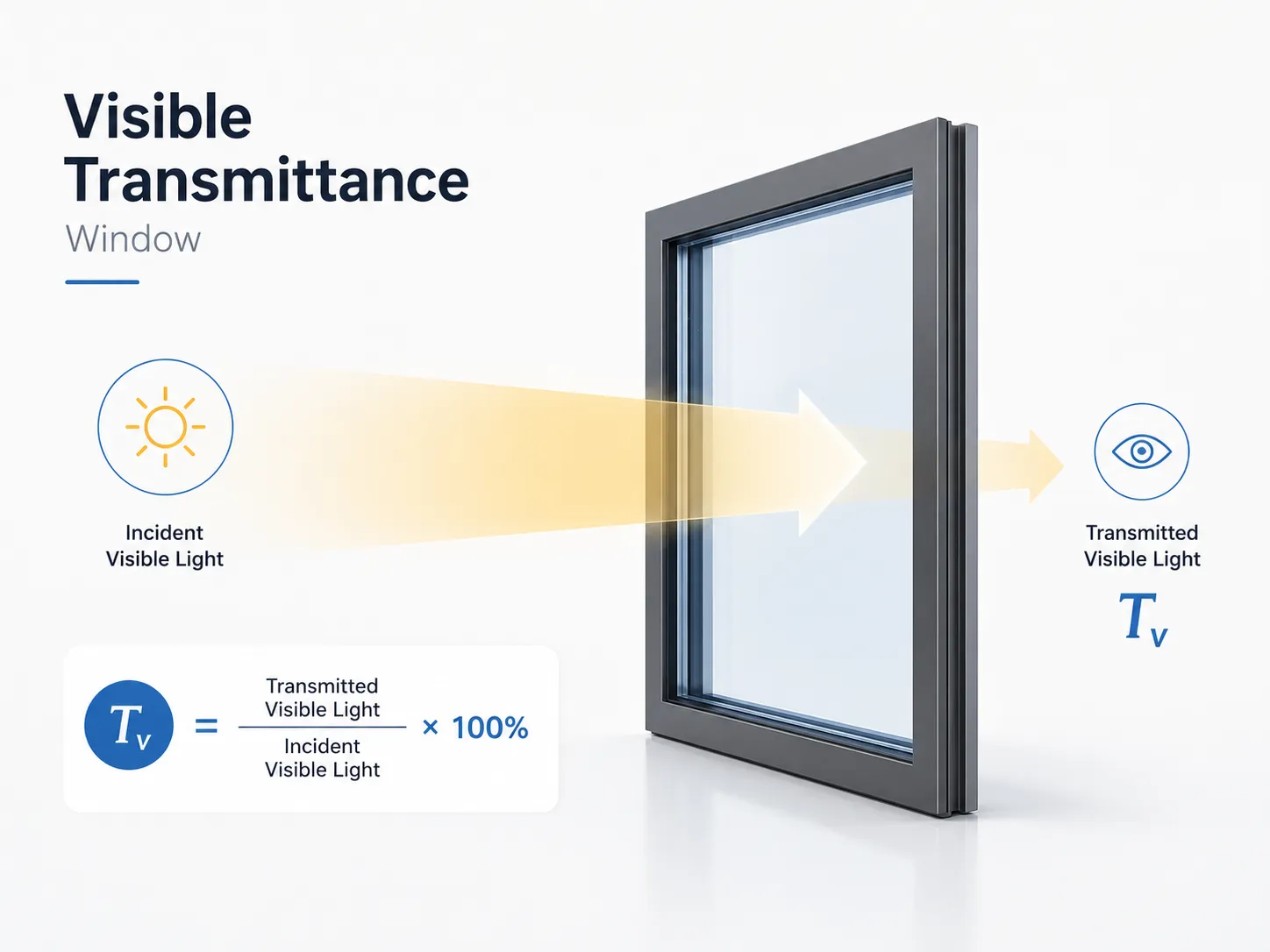
Visible Transmittance measures how much natural light passes through the window glass. The higher the VT rating, the brighter your indoor space will feel.
Good VT ratings help maximize daylight and reduce the need for artificial lighting during the day. However, too much light can also create glare and indoor heat buildup if the glass is not properly designed.
The goal is to balance:
- Natural daylight
- Glare reduction
- Indoor comfort
- Energy efficiency
Many modern windows combine high VT with Low-E coatings, allowing plenty of sunlight while still improving insulation performance.
Air Leakage (AL)
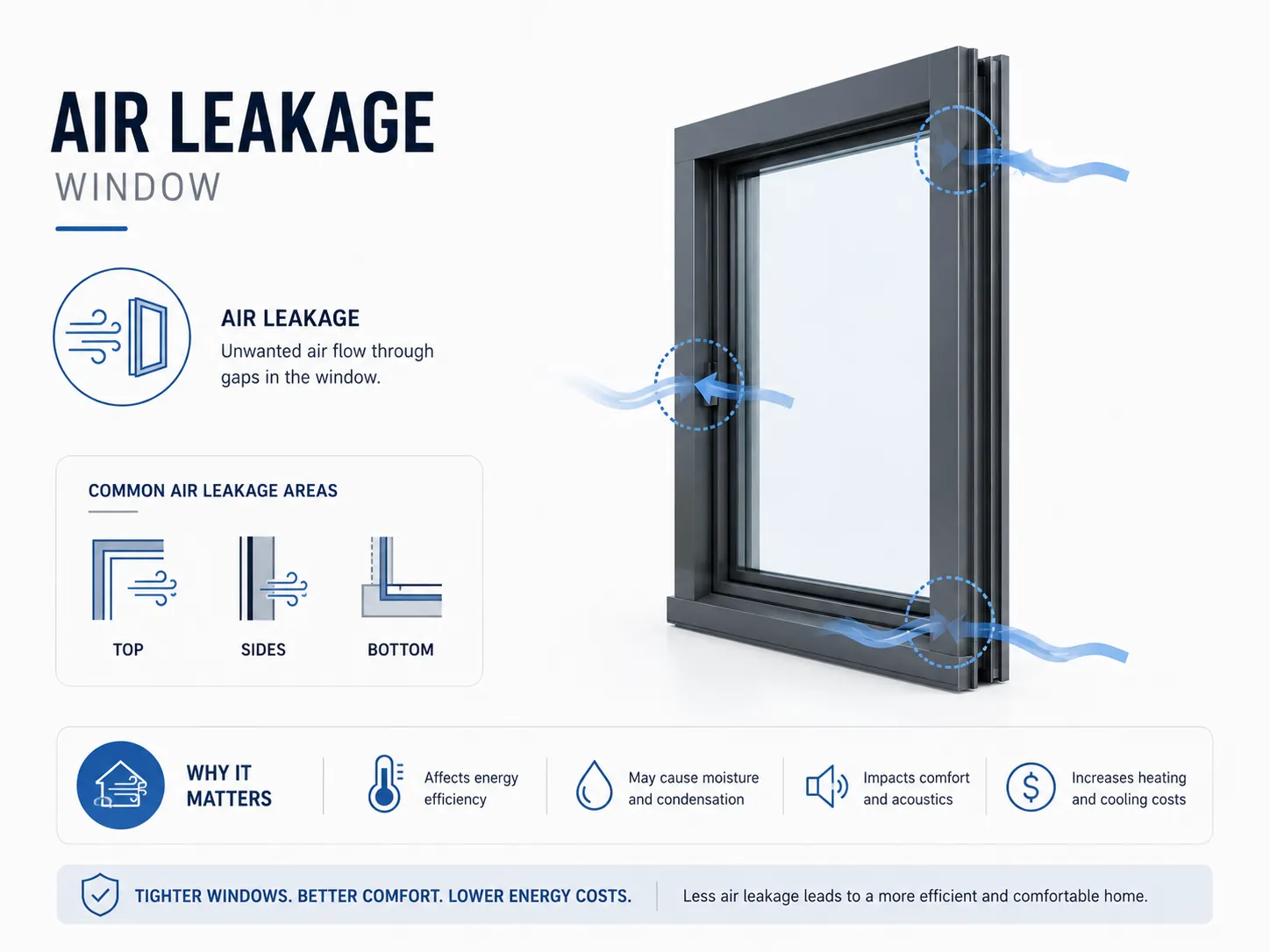
Air Leakage measures how much outside air enters through small gaps around the window. Lower AL ratings mean better sealing and fewer drafts.
Poor air leakage performance can make rooms feel uncomfortable, especially during winter or windy weather. It can also force HVAC systems to work harder, increasing energy costs.
Benefits of low AL ratings include:
- Better indoor comfort
- Reduced drafts
- Improved energy efficiency
- More stable indoor temperatures
Many experts recommend choosing windows with AL ratings of 0.30 or lower for residential applications.
Condensation Resistance (CR)
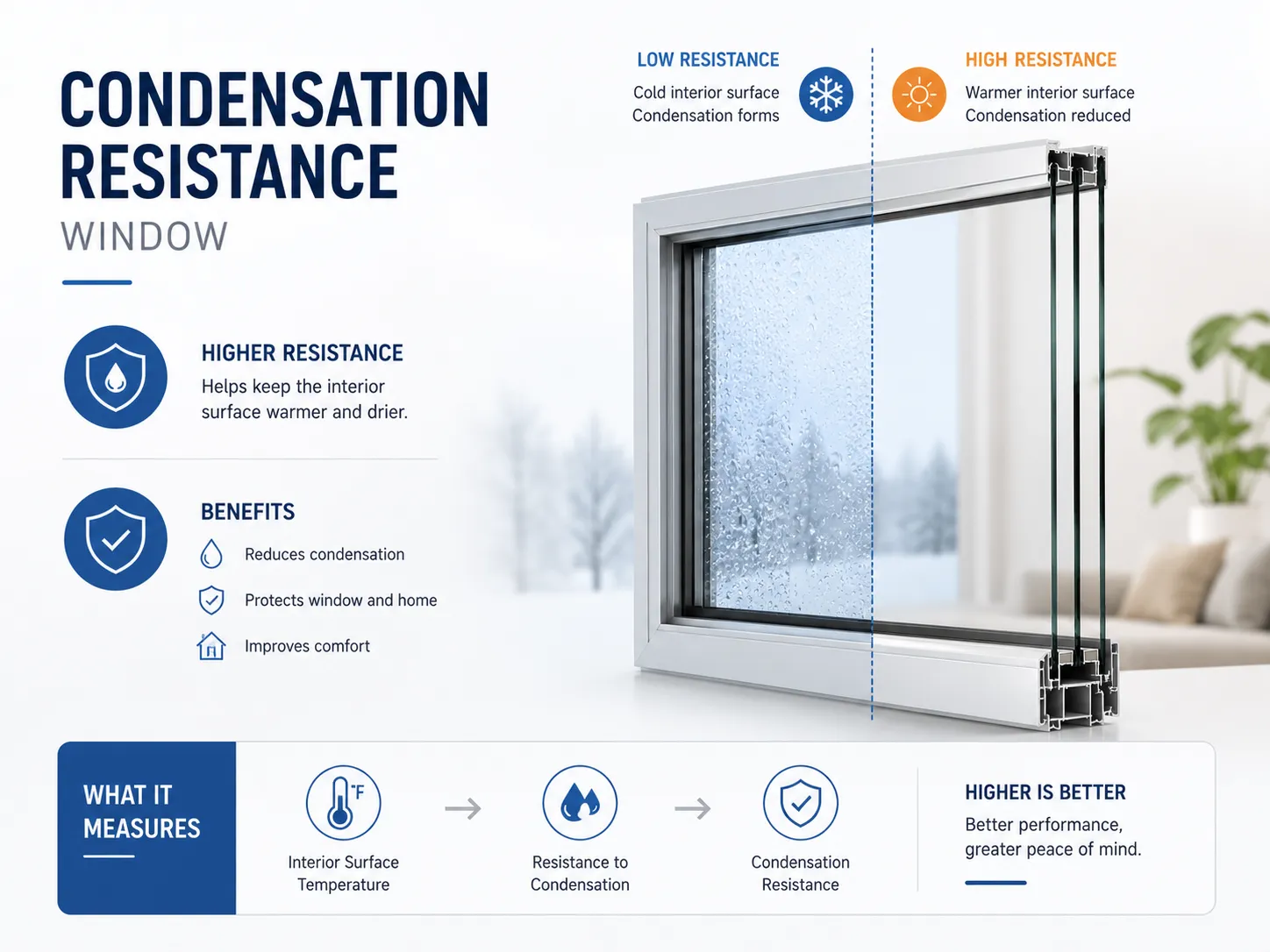
Condensation Resistance measures how well a window resists moisture buildup on the glass surface. Higher CR ratings generally mean better resistance to fogging and interior condensation.
Good condensation resistance helps:
- Reduce indoor moisture problems
- Prevent mold growth
- Improve visibility through the glass
- Protect surrounding window materials
Homes in humid or cold environments often benefit from windows with stronger condensation resistance performance.
Sound Transmission Class (STC)
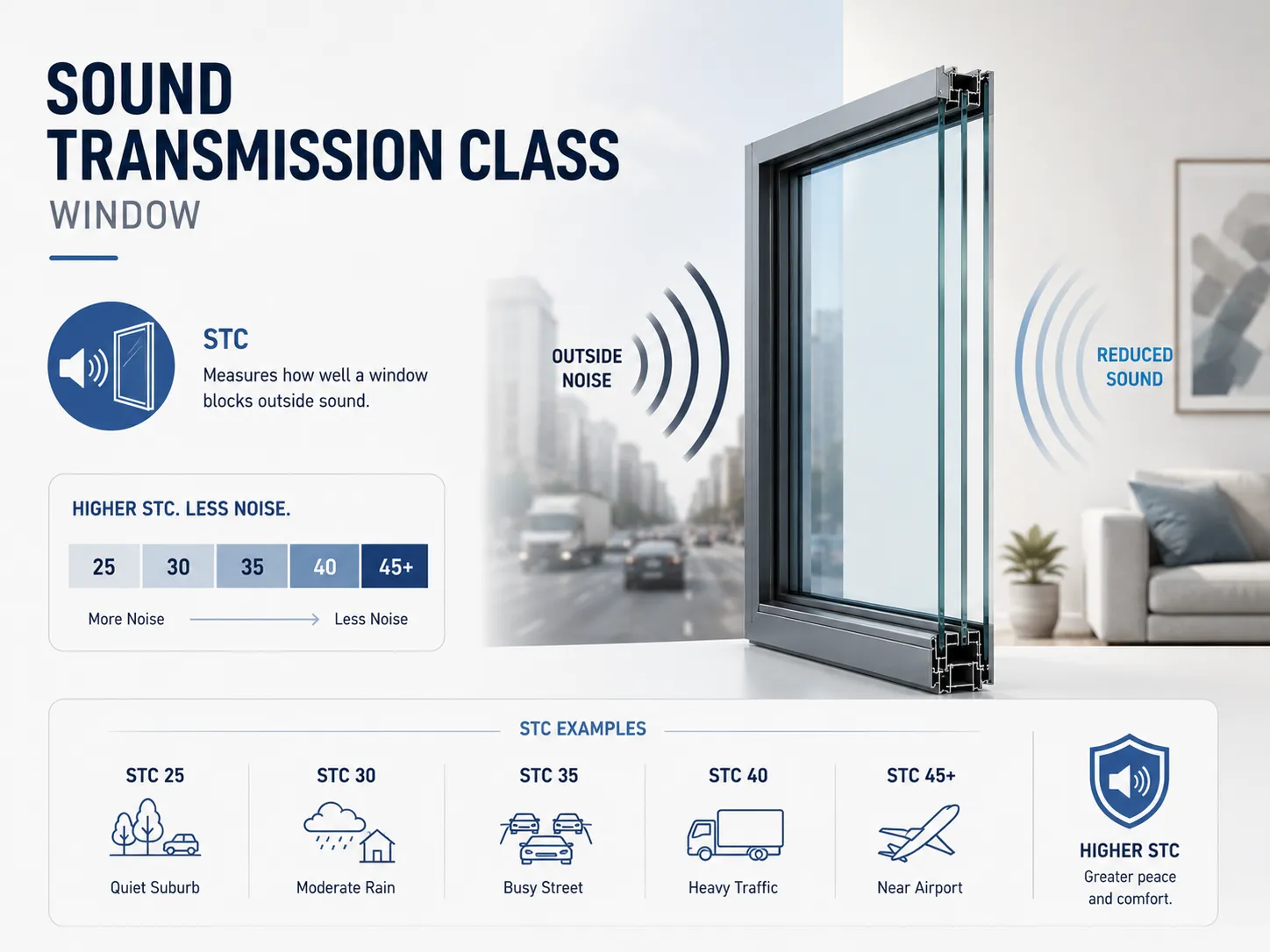
STC ratings measure how effectively a window blocks outside noise. Higher STC ratings provide better sound insulation and a quieter indoor environment.
This rating is especially important for homes located near:
- Busy roads
- Airports
- Construction zones
- Urban city centers
Windows with laminated glass, insulated glass units, or acoustic glass designs usually achieve higher STC ratings. These windows can significantly reduce traffic noise and improve indoor comfort in noisy environments.
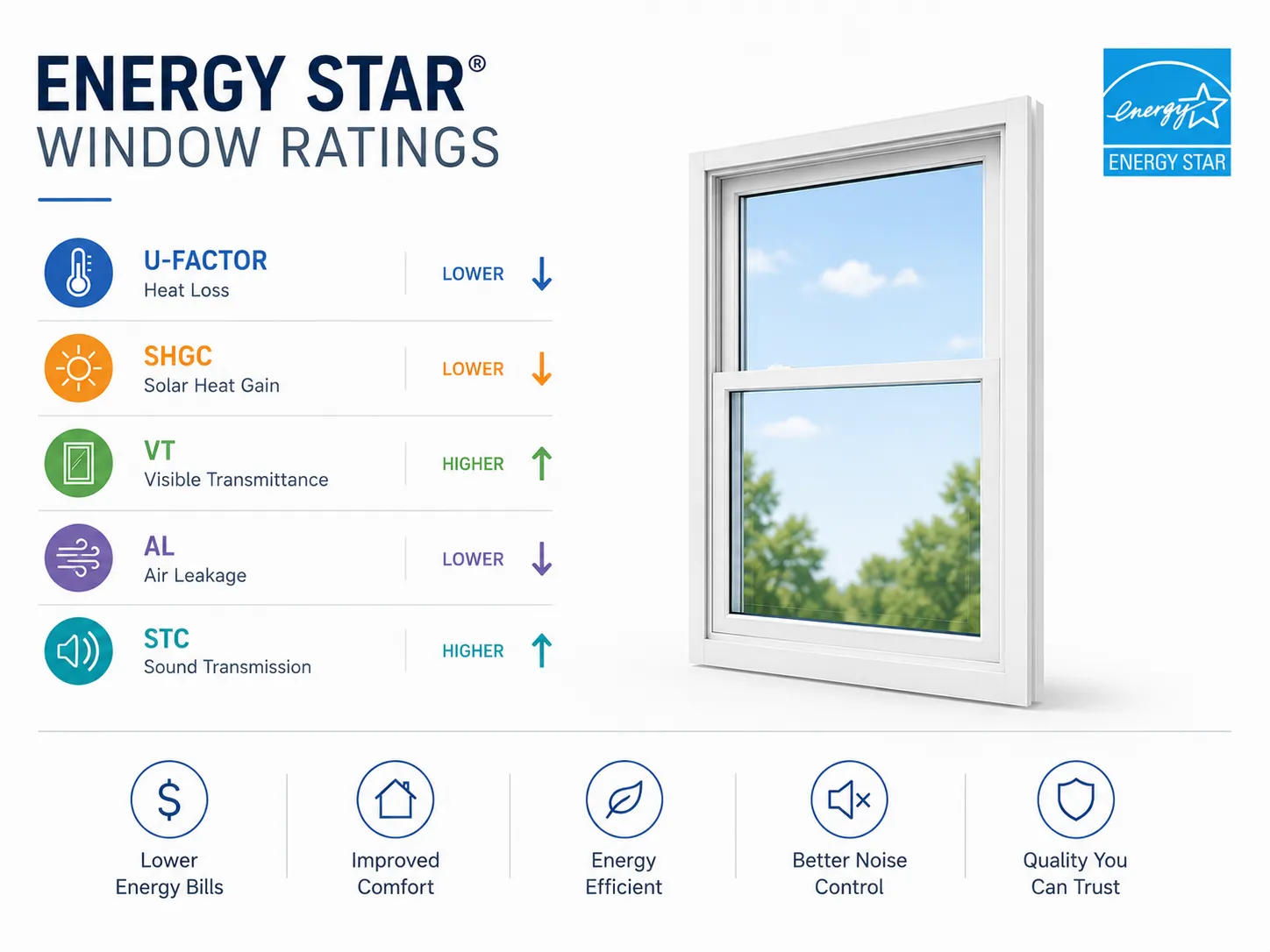
ENERGY STAR Window Ratings Explained
ENERGY STAR window ratings help homeowners identify energy-efficient windows tested for insulation, solar heat control, and overall performance. These certified windows meet strict efficiency standards based on different climate zones and can help reduce heating and cooling costs while improving indoor comfort year-round.
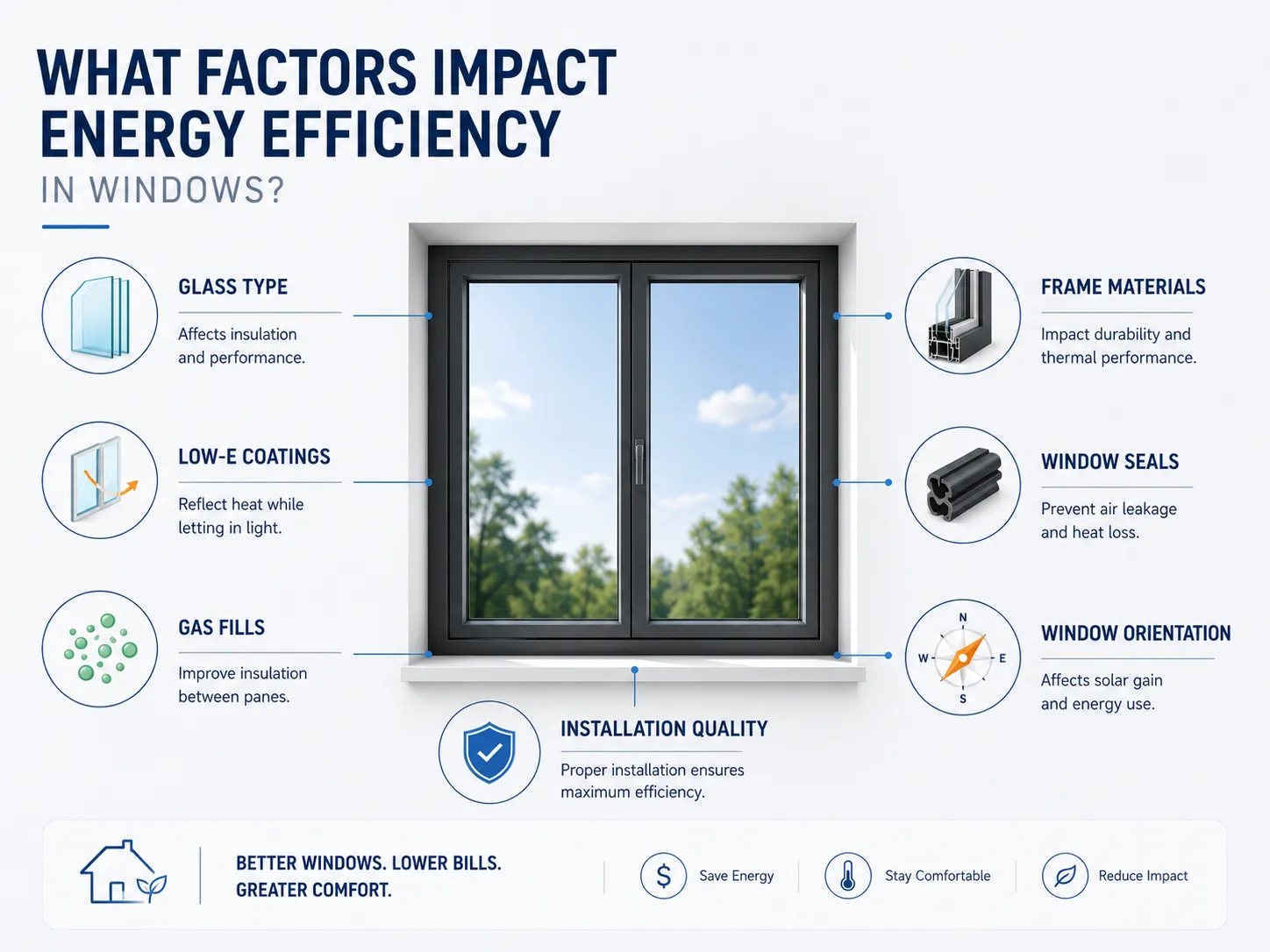
What Factors Impact Energy Efficiency In Windows?
Several window components work together to improve energy performance. Choosing the right combination can help create a more comfortable and cost-efficient home.
- Glass Type
Double-pane and triple-pane glass provide better insulation than single-pane windows by reducing heat transfer. - Low-E Coatings
Low-emissivity coatings reflect heat while still allowing natural sunlight to enter the home. - Gas Fills
Argon and krypton gas between glass panes improve thermal insulation and reduce energy loss. - Frame Materials
Vinyl, fiberglass, wood, and composite frames usually insulate better than standard aluminum frames. - Window Seals
High-quality seals help reduce air leakage, drafts, and moisture problems. - Window Orientation
South-facing and west-facing windows often receive more direct sunlight, affecting indoor temperatures. - Installation Quality
Even high-performance windows can lose efficiency if installation gaps allow air infiltration.
Together, these factors directly affect insulation, indoor comfort, energy bills, and long-term window performance.
Best Window Ratings for Different Climates
The best window ratings depend heavily on your local climate. A window that performs well in a cold northern region may not be the best choice for a hot sunny area. Understanding climate-based ratings helps homeowners improve comfort, reduce energy costs, and choose windows that perform efficiently year-round.
Cold Climate Recommendations
In colder regions, insulation is the top priority. Homeowners should look for windows with a low U-factor because lower numbers reduce heat loss and help keep indoor spaces warmer during winter.
A slightly higher SHGC can also be beneficial in cold climates because it allows more solar heat to enter the home naturally. This can reduce heating demand during sunny winter days.
Recommended features often include:
- Triple-pane glass
- Low-E coatings
- Argon or krypton gas fills
- Well-insulated frames
Hot Climate Recommendations
In hot climates, reducing solar heat gain becomes more important than maximizing insulation. Windows with a low SHGC help block excessive heat from sunlight and reduce air conditioning costs.
Solar-control Low-E glass and tinted glass are commonly used to improve indoor comfort and minimize glare.
Many warm-climate homeowners prioritize:
- Low SHGC ratings
- UV protection coatings
- Double-pane insulated glass
- Strong air leakage performance
Mixed Climate Recommendations
Homes in mixed climates need balanced performance for both summer and winter conditions. In these regions, windows should provide good insulation while still controlling solar heat gain.
A balanced approach usually includes:
- Moderate U-factor
- Moderate SHGC
- Double-pane or triple-pane glass
- Energy-efficient frame materials
The goal is to maintain comfortable indoor temperatures throughout all seasons without overworking heating or cooling systems.
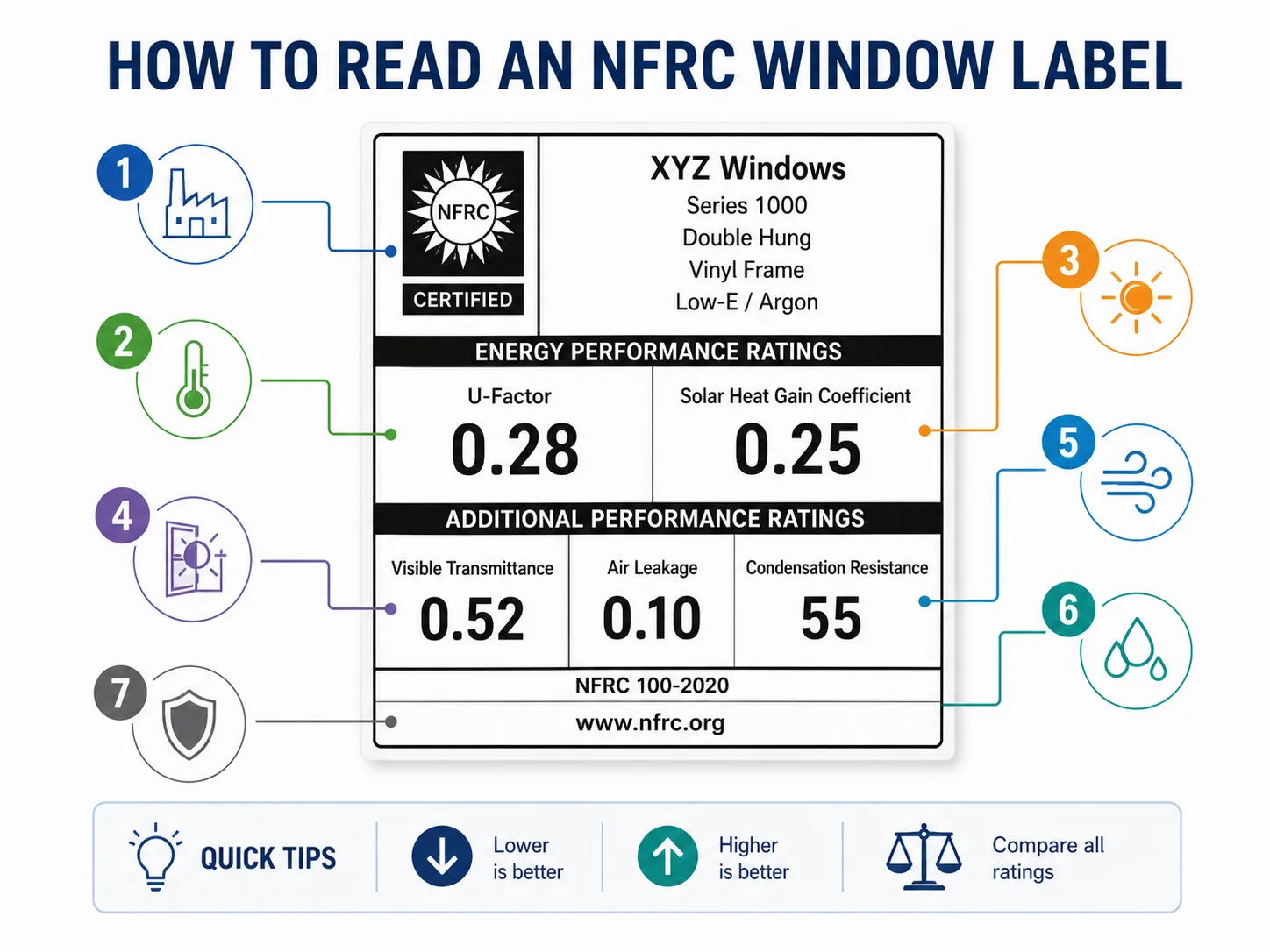
How to Read an NFRC Window Label
NFRC labels help homeowners compare window performance using standardized ratings. NFRC stands for the National Fenestration Rating Council, an organization that tests and certifies window energy performance.
A typical NFRC label includes:
- U-Factor — Measures insulation performance
- SHGC — Measures solar heat entering the home
- Visible Transmittance (VT) — Measures natural light transmission
- Air Leakage (AL) — Measures draft resistance
- Condensation Resistance (CR) — Measures resistance to moisture buildup
When comparing windows, it is important to evaluate the entire label instead of focusing on only one rating. The best window usually balances insulation, sunlight control, daylight, airflow, and comfort based on your local climate and home design.
FAQs
What is a good U rating for a window?
A good window U-factor is usually between 0.20 and 0.30. Lower numbers provide better insulation and improved energy efficiency, especially in colder climates.
What is a PG50 rating for a window?
PG50 stands for Performance Grade 50, a structural performance rating that measures how well a window resists wind pressure, water infiltration, and air leakage. Higher PG ratings indicate stronger and more durable windows.
How do window ratings work?
Window ratings measure performance factors like insulation, solar heat control, air leakage, condensation resistance, and noise reduction. These ratings help homeowners compare windows and choose products that fit their climate and energy-efficiency needs.
How to find window rating?
Window ratings are usually displayed on the NFRC label attached to new windows. You can also find ratings in manufacturer product specifications, brochures, or official ENERGY STAR certification information.