

Feng Shui Kitchen Layout Rules (Most Important Section)
When it comes to feng shui, layout matters more than anything else. A well-planned kitchen supports smooth energy flow, better daily use, and even a sense of balance in your home.
Kitchen Location in the Home

The best place for a kitchen is toward the back of the house, where it feels stable and grounded. Avoid placing it in the center of the home, as this can disrupt energy balance. A kitchen facing the front door is also not ideal, since energy—and even wealth—is believed to flow out too quickly.
The Stove Position (Wealth Symbol)
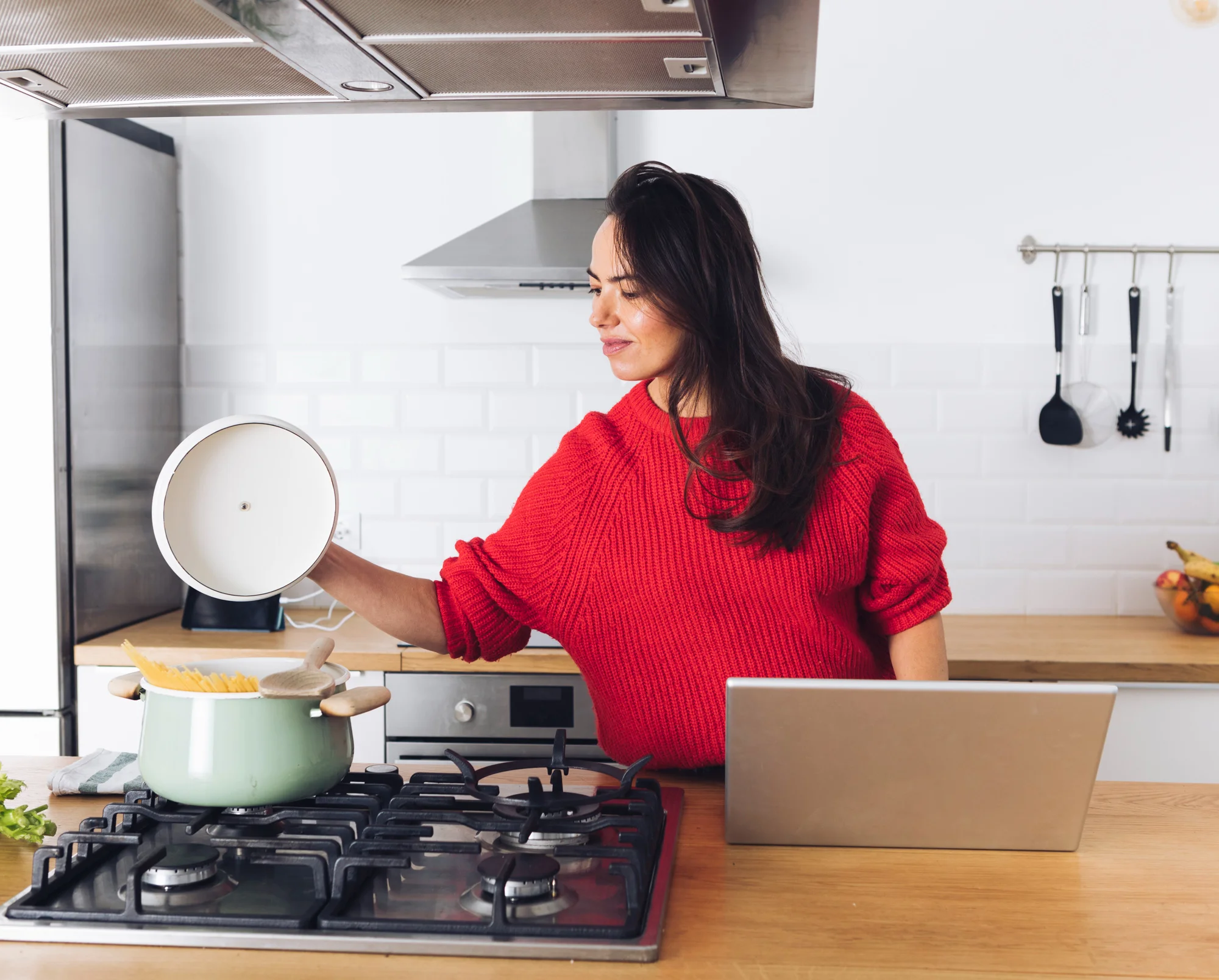
The stove represents wealth and nourishment, so its position is critical. Ideally, you should be able to see the door while cooking, known as the “command position.” This creates a sense of control and security. Try to avoid placing the stove directly facing the door, as it can lead to unstable energy.
Sink vs Stove Placement
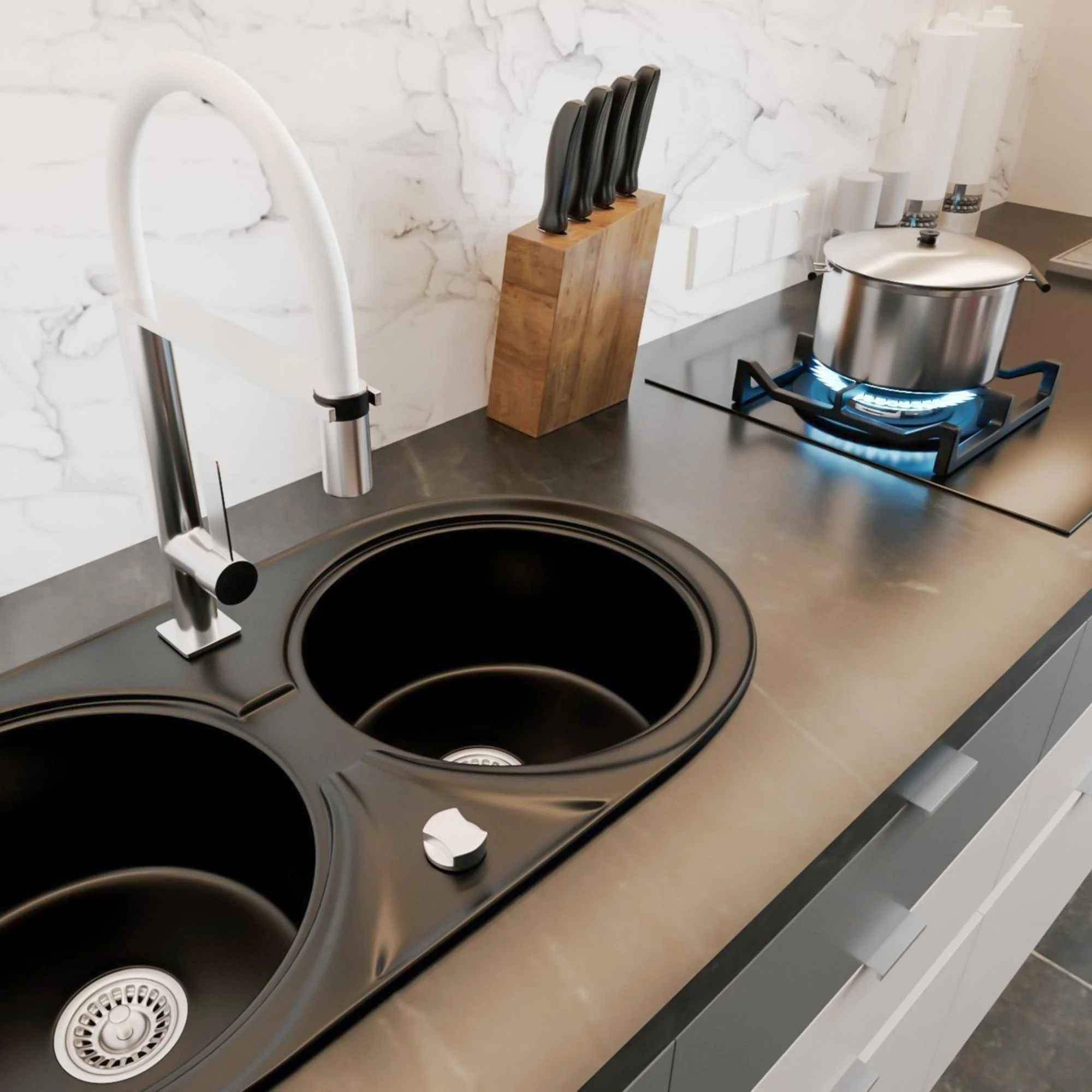
In feng shui, the sink (water) and stove (fire) naturally conflict. Placing them too close together can create imbalance. If separation is limited, adding a wood element—like a cutting board or green decor—can help soften the clash and restore harmony.
Kitchen Shape & Flow
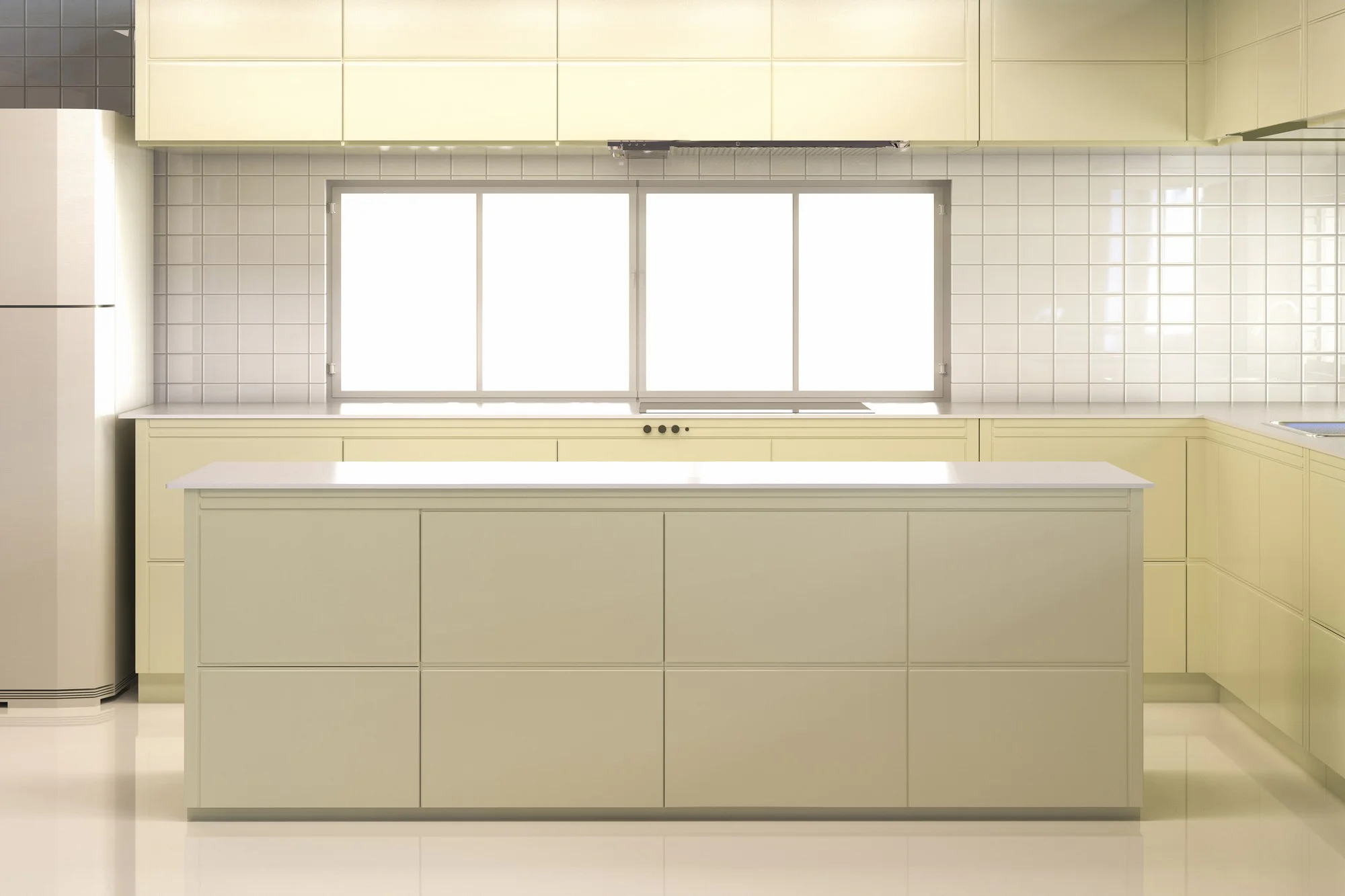
Simple shapes work best. A square or rectangular kitchen supports steady and predictable energy flow. Keep pathways open and uncluttered so movement feels natural. Good flow not only improves feng shui, but also makes your kitchen more practical and comfortable to use every day.
Feng Shui Kitchen Design Ideas
A good feng shui kitchen doesn’t have to feel traditional or complicated. In fact, modern design can work perfectly with feng shui principles—as long as you focus on balance, light, and flow. Here are some practical ideas you can actually apply:
1. Bright and Well-Lit Kitchen
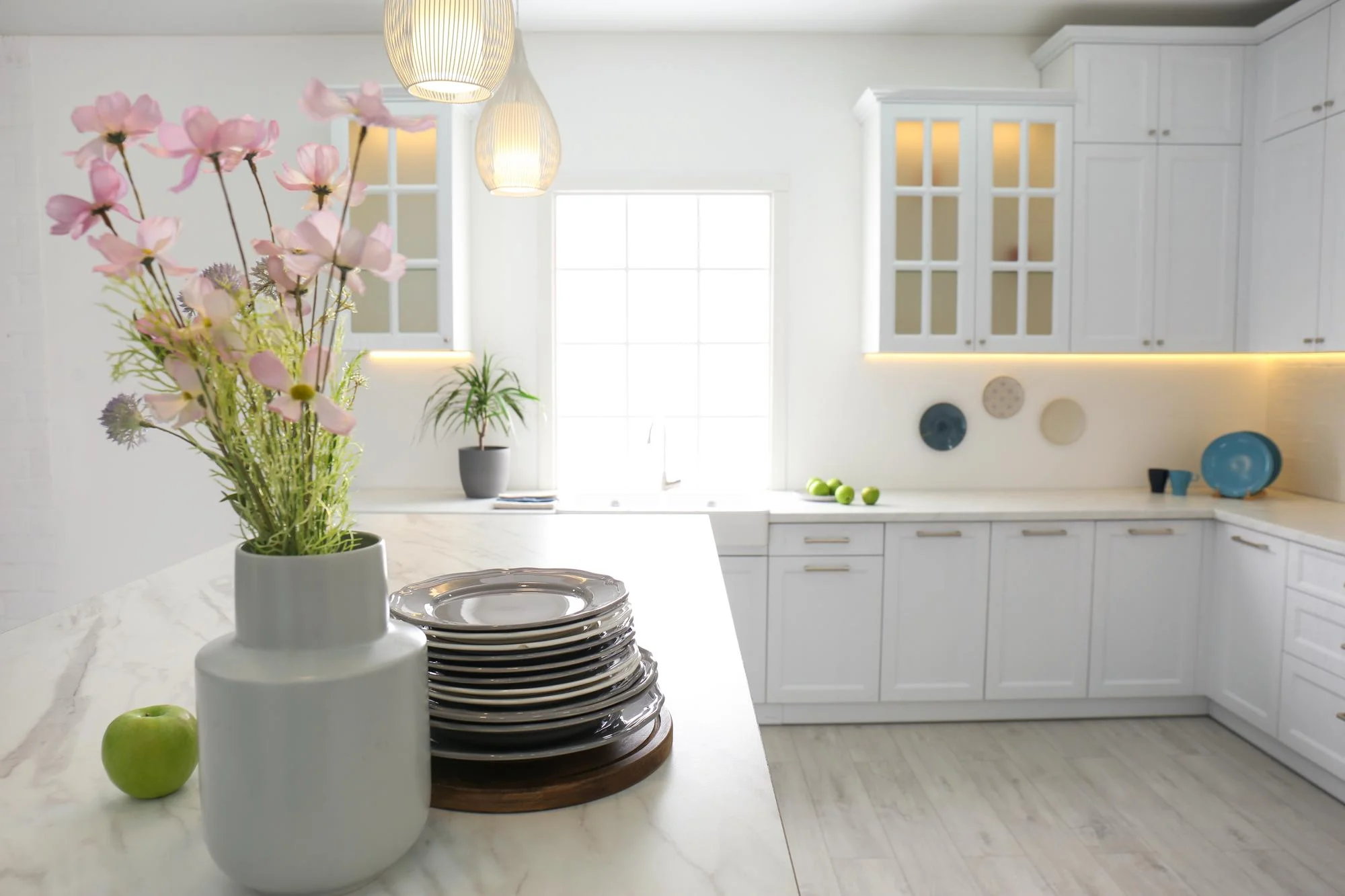
Lighting plays a big role in energy. A bright kitchen feels alive, clean, and welcoming. Use natural light whenever possible, and add task lighting under cabinets or above work areas. This not only improves visibility but also boosts positive energy throughout the space.
2. Minimal Clutter Design
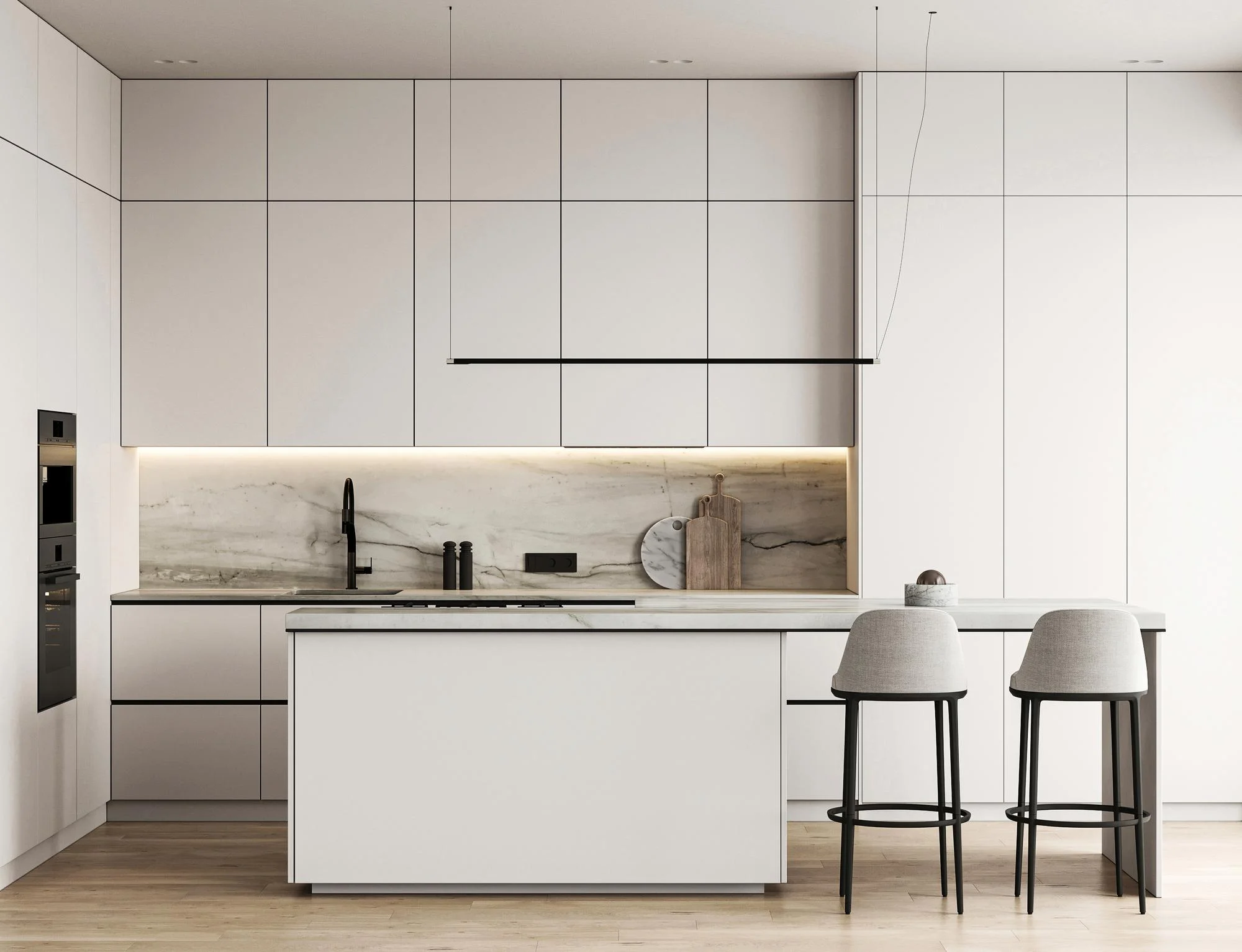
Clutter blocks energy—both physically and mentally. Keep countertops clean and only display what you use daily. A simple, organized kitchen helps create a calm environment and makes cooking feel more enjoyable and focused.
3. Add Natural Elements
Introducing natural materials brings balance into the kitchen. Plants are one of the easiest ways to add the wood element, which helps soften the strong fire energy from the stove. Even small herbs or greenery can make a big difference.
4. Use Calm, Neutral Colors
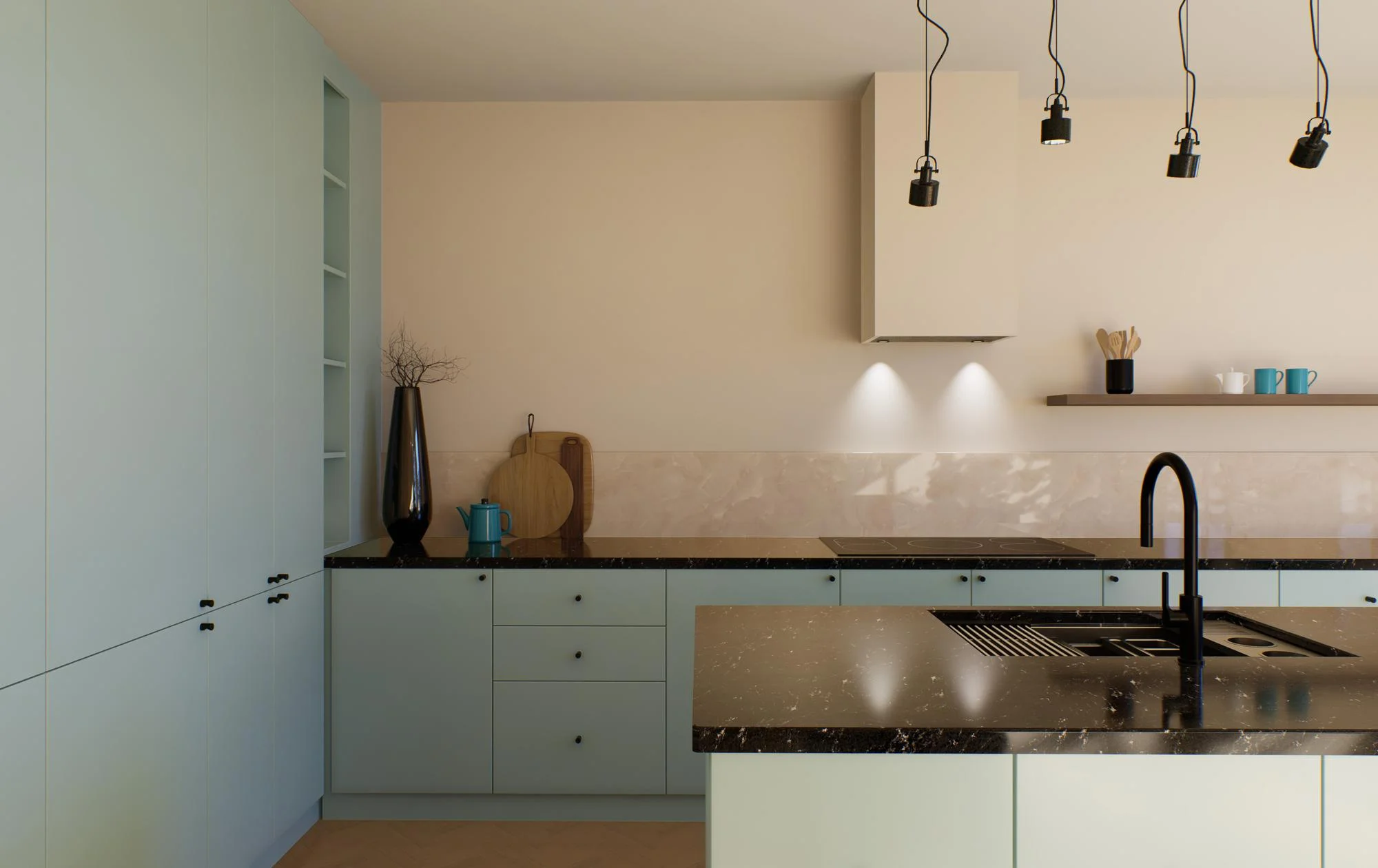
Color affects how a space feels. Soft tones like white, beige, and light green create a sense of calm and harmony. These colors also reflect light well, making the kitchen feel more open and balanced.
5. Balanced Open Storage
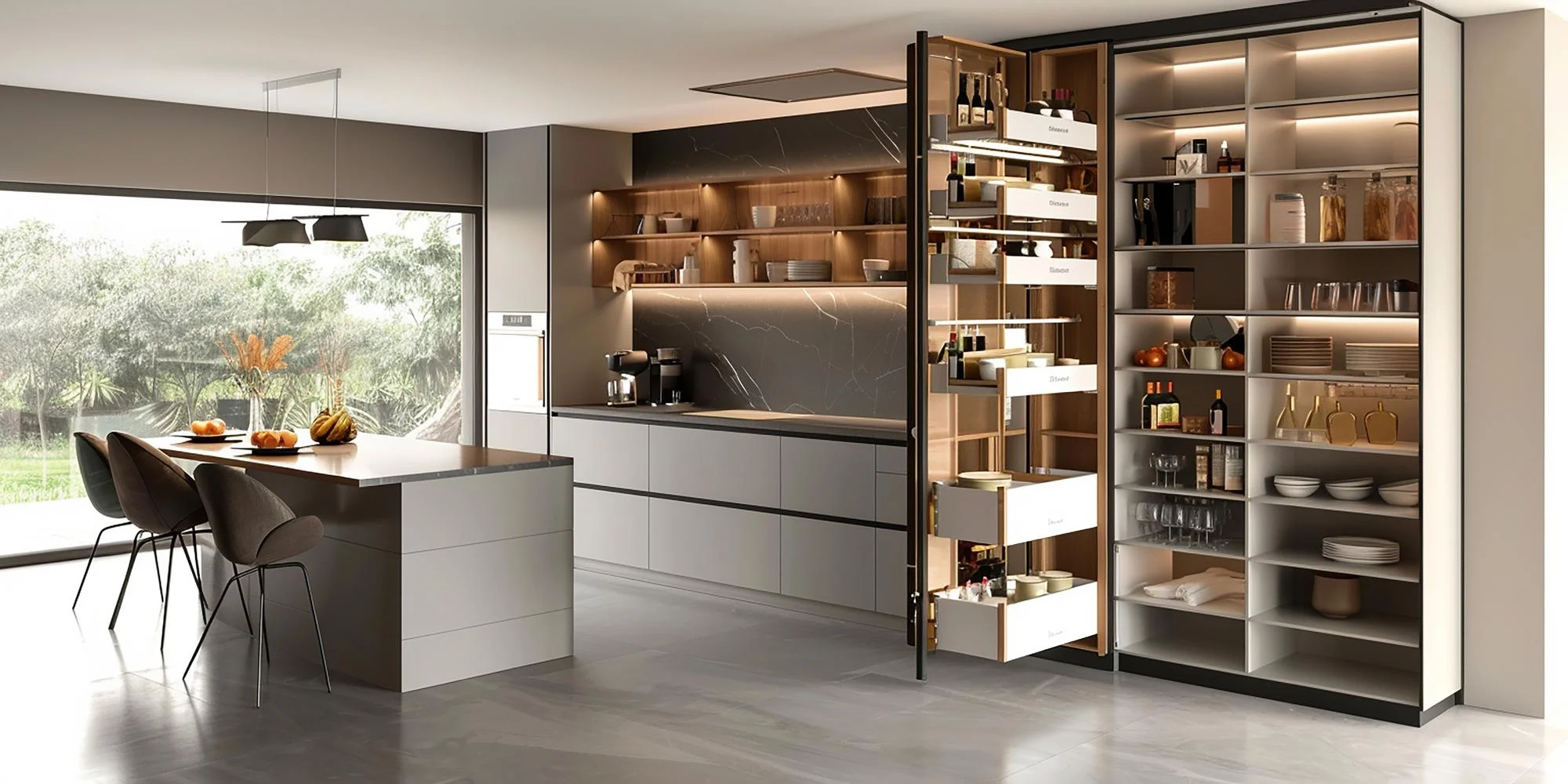
Open shelves can make a kitchen feel lighter, but too much can look messy. The key is balance. Combine open and closed storage to keep the space visually clean while still adding personality.
The Five Elements in a Feng Shui Kitchen
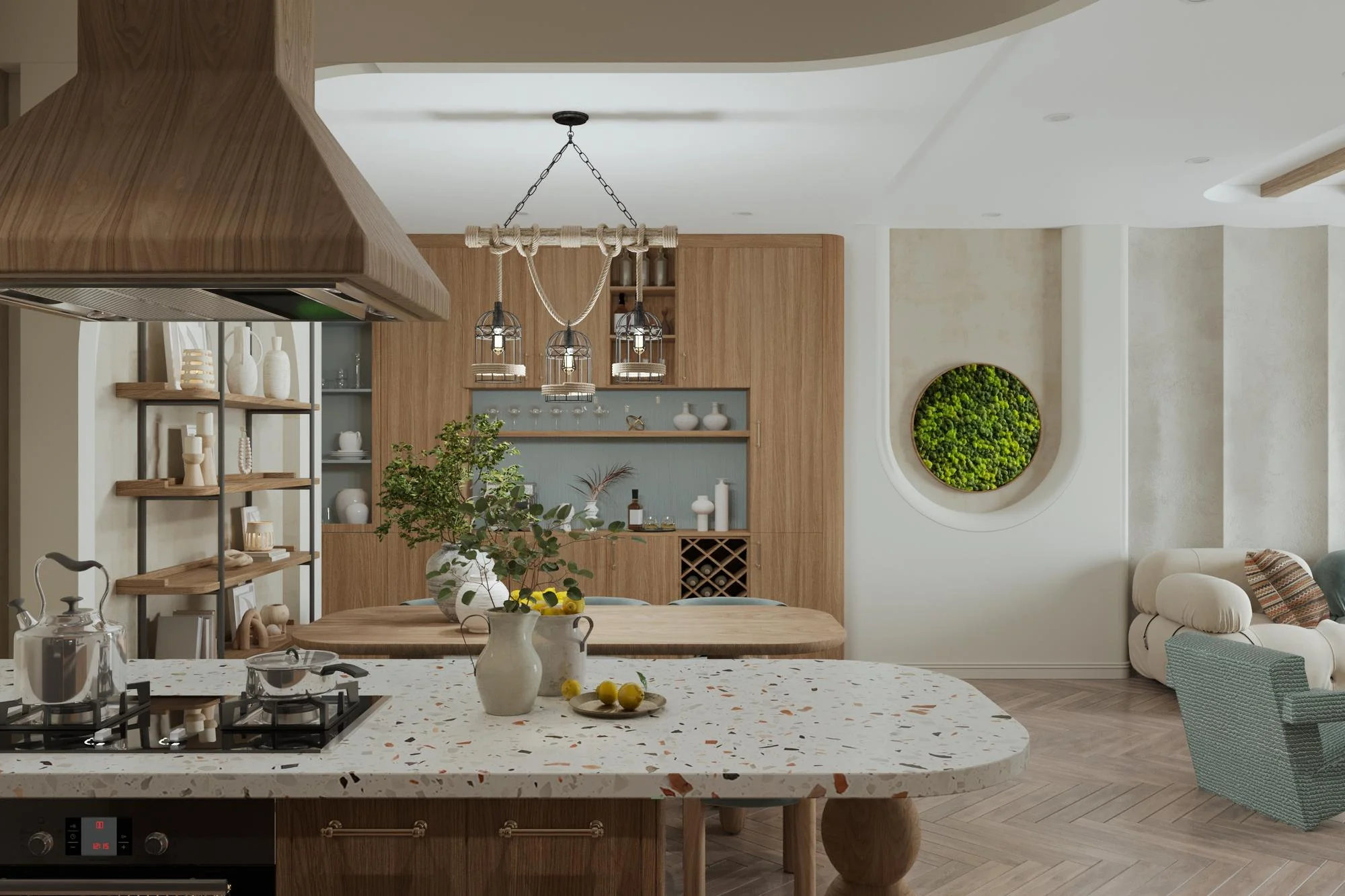
Feng shui is built around five elements: wood, fire, earth, metal, and water. A well-designed kitchen includes all five in a balanced way, without letting one dominate too much.
- Wood represents growth and balance. You can add it through plants, wooden utensils, or cabinets.
- Fire is linked to the stove and cooking energy. It symbolizes warmth, energy, and nourishment.
- Earth brings stability. Use it through stone countertops, ceramics, or neutral colors.
- Metal supports clarity and efficiency. Stainless steel appliances and fixtures naturally add this element.
- Water is connected to the sink and flow. It represents movement and wealth.
The key is not to overthink it. Most kitchens already include these elements—you just need to balance them. When everything works together, the space feels more comfortable, functional, and naturally inviting.
Feng Shui Kitchen Colors Guide
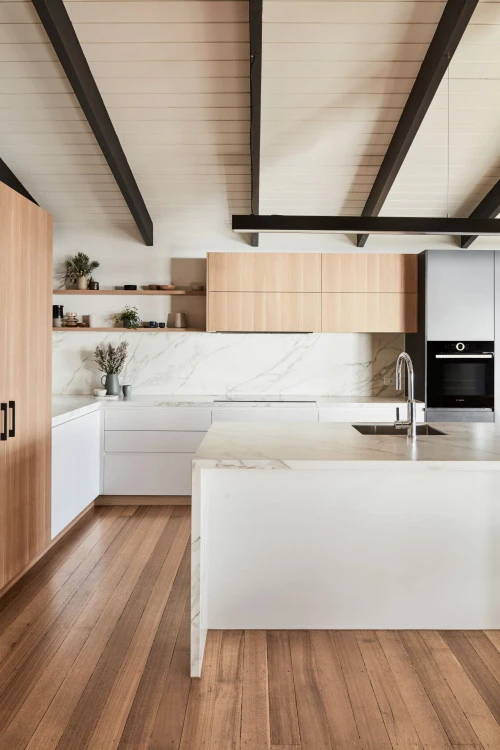
Color is one of the easiest ways to improve feng shui in your kitchen. The right palette can make the space feel calm, balanced, and inviting—while the wrong one can feel overwhelming or heavy. The goal is to create harmony, not extremes.
| Color | Meaning in Feng Shui | Effect in the Kitchen | Usage Tip |
|---|---|---|---|
| White | Cleanliness and clarity | Makes the kitchen feel fresh, bright, and open | Use for walls, cabinets, or overall base color |
| Green | Health and growth | Adds a natural, calm, and balanced feeling | Works well for accents, decor, or cabinetry |
| Earth Tones | Stability and grounding | Creates warmth and a steady, welcoming atmosphere | Use beige, cream, or light brown for balance |
| Red | Strong fire energy | Can feel intense or overwhelming if overused | Use only as a small accent color |
| Black | Heavy and powerful energy | Can make the kitchen feel dark or heavy | Use carefully and balance with lighter tones |
Common Feng Shui Kitchen Mistakes to Avoid
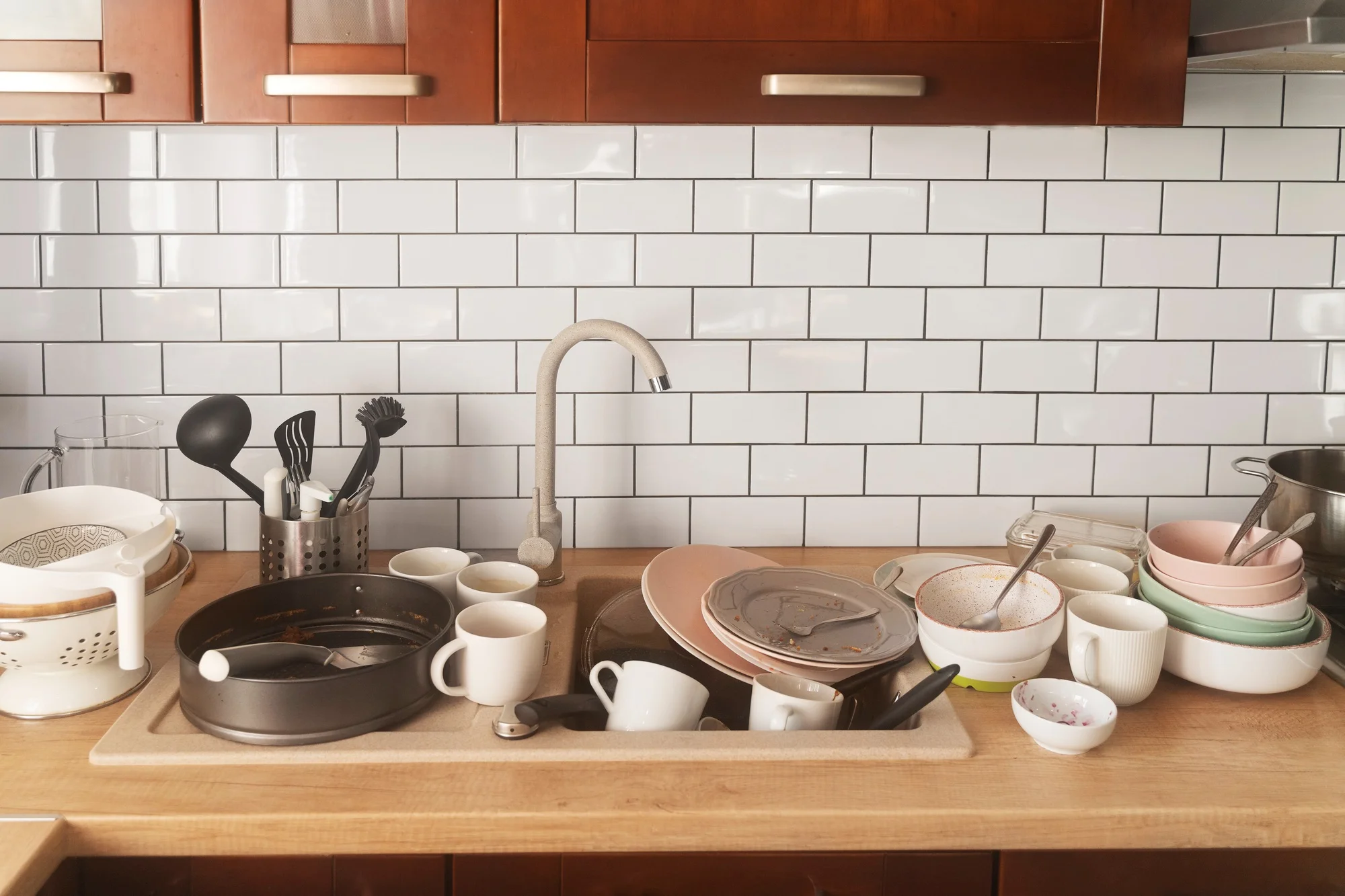
Even a well-designed kitchen can lose its balance if a few key feng shui rules are overlooked. The good news is that most mistakes are easy to fix once you know what to watch for.
- Stove placed next to the sink
Fire and water clash in feng shui. When the stove and sink are too close, it can create imbalance. Try to separate them or add a wood element, like a cutting board or plant, in between. - Kitchen facing the front door
This layout allows energy to flow out too quickly. It’s believed to affect stability and even finances. If this can’t be changed, use a screen, rug, or visual divider to slow the flow. - Cluttered countertops
Too many items block energy and make the space feel stressful. Keep surfaces clean and only display what you use daily. - Poor lighting
A dark kitchen feels heavy and low in energy. Add layered lighting—such as ceiling lights and under-cabinet lighting—to brighten the space. - Broken or unused items
Damaged appliances or unused tools represent stagnant energy. Repair, replace, or remove anything that no longer works.
Key takeaway:
A good feng shui kitchen is not about perfection—it’s about keeping the space clean, balanced, and easy to use every day.



 English
  Arabic
  Spanish
  Japanese
  Russian
  Korean
  French
  Italian