

What Are Leather Sofas?
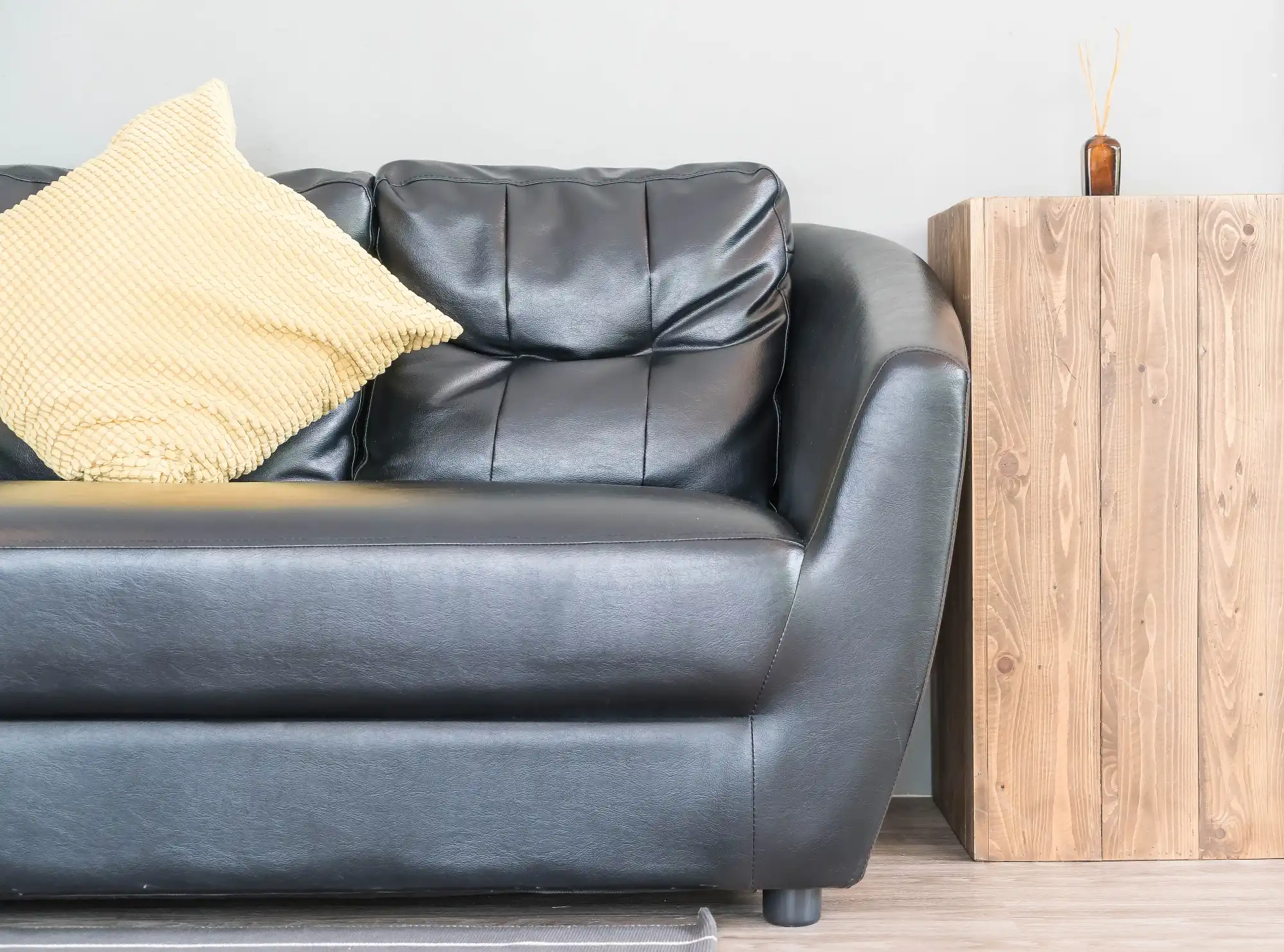
Leather sofas are upholstered with natural or synthetic leather to create a polished, durable seating surface. Real leather options include full-grain, top-grain, and corrected leather, which vary in softness, texture, and aging. More affordable choices such as bonded leather and faux leather offer a similar appearance at lower cost and with less maintenance.
Leather sofas have a classic, elevated look that works well in both modern and traditional interiors. They bring a sense of refinement and structure to living spaces and often develop character over time as the material softens and patinas. Because of their timeless aesthetic, leather sofas are frequently used as statement pieces in living rooms, offices, and lounge areas.
What Are Fabric Sofas?
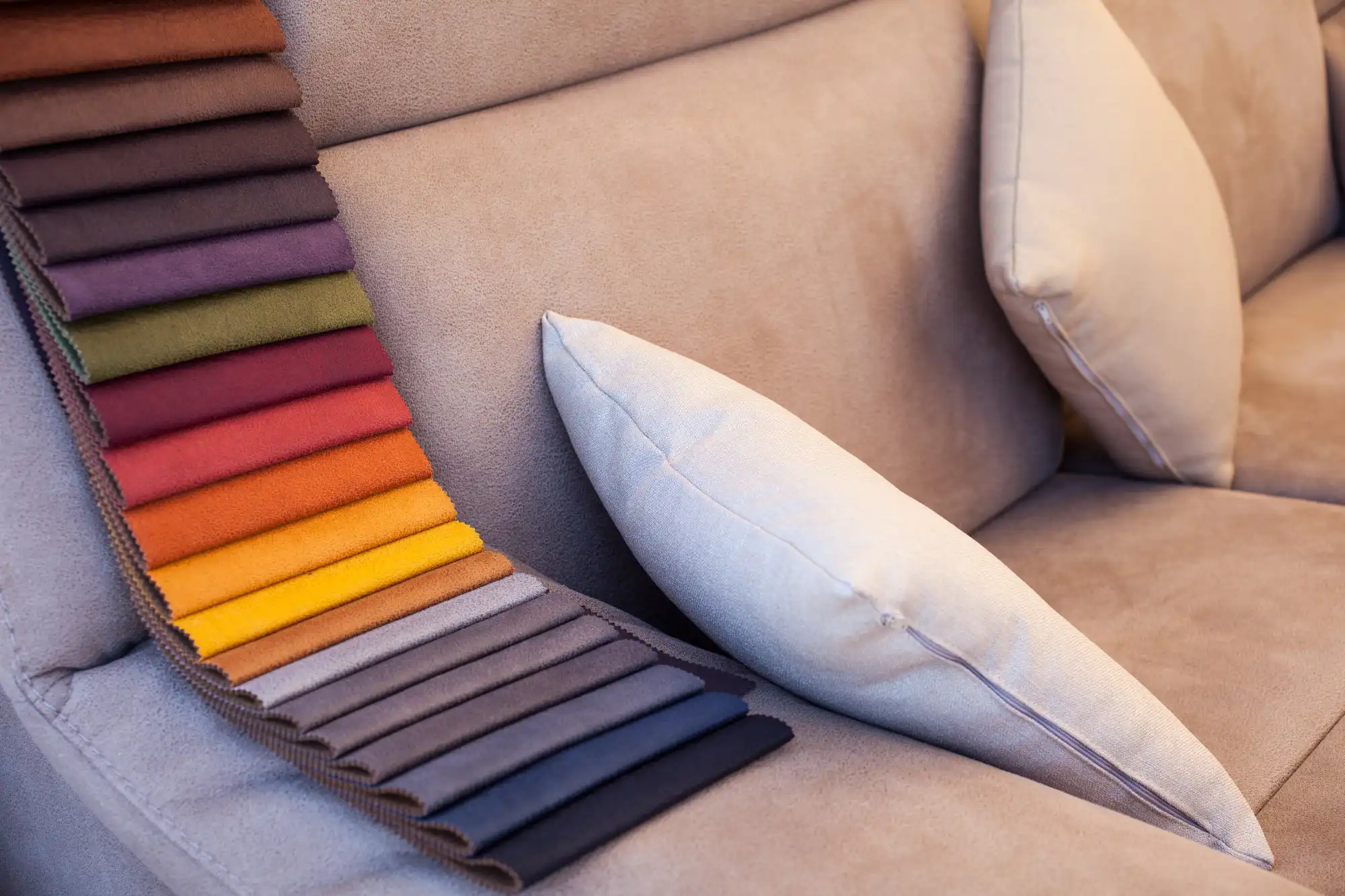
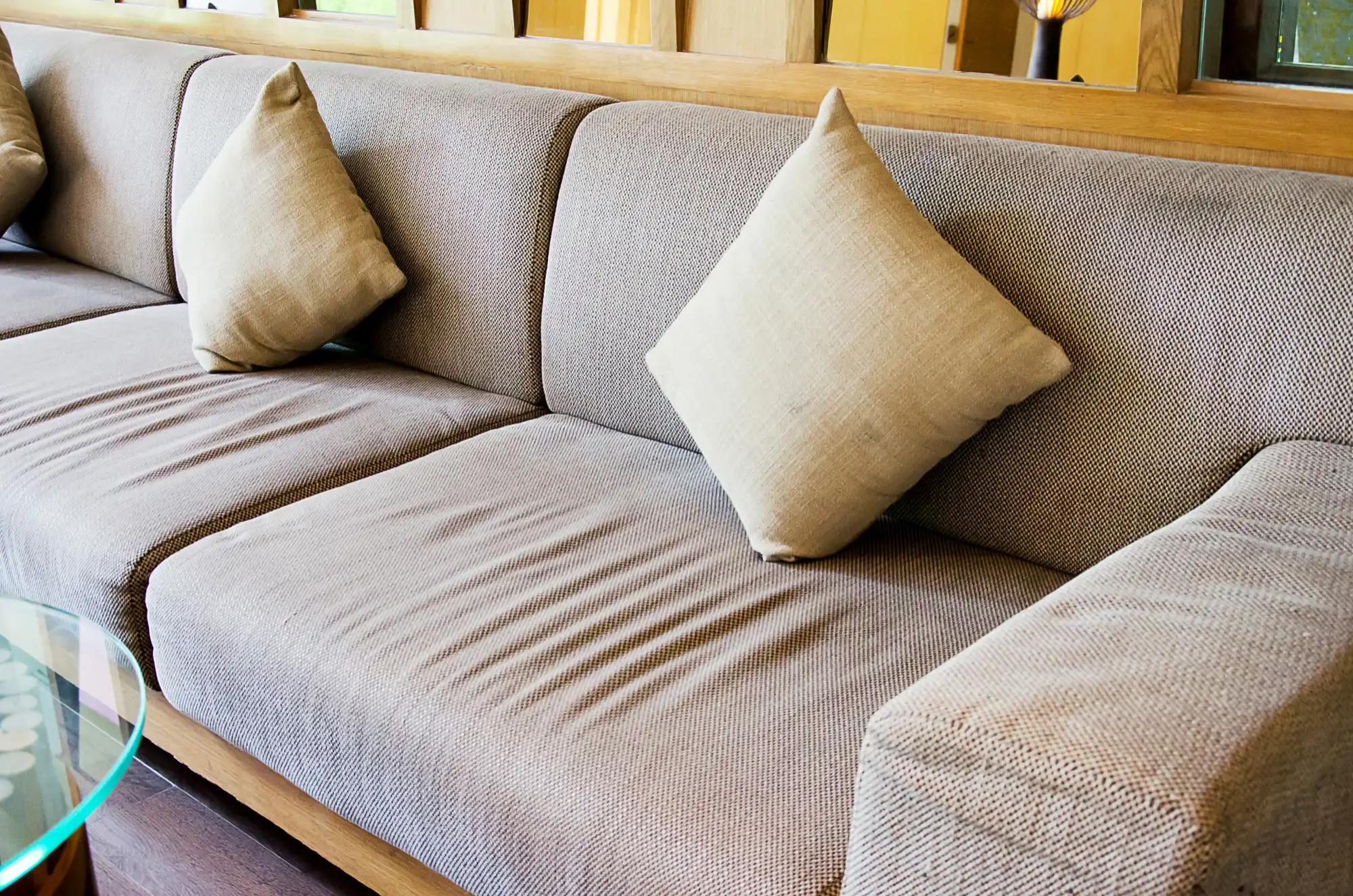
Fabric sofas are upholstered with textile materials rather than leather. They come in a wide variety of fabric types including microfiber, cotton and linen blends, velvet, chenille, and performance fabrics designed to resist stains and wear. This broad range gives homeowners more control over texture, comfort, and visual style.
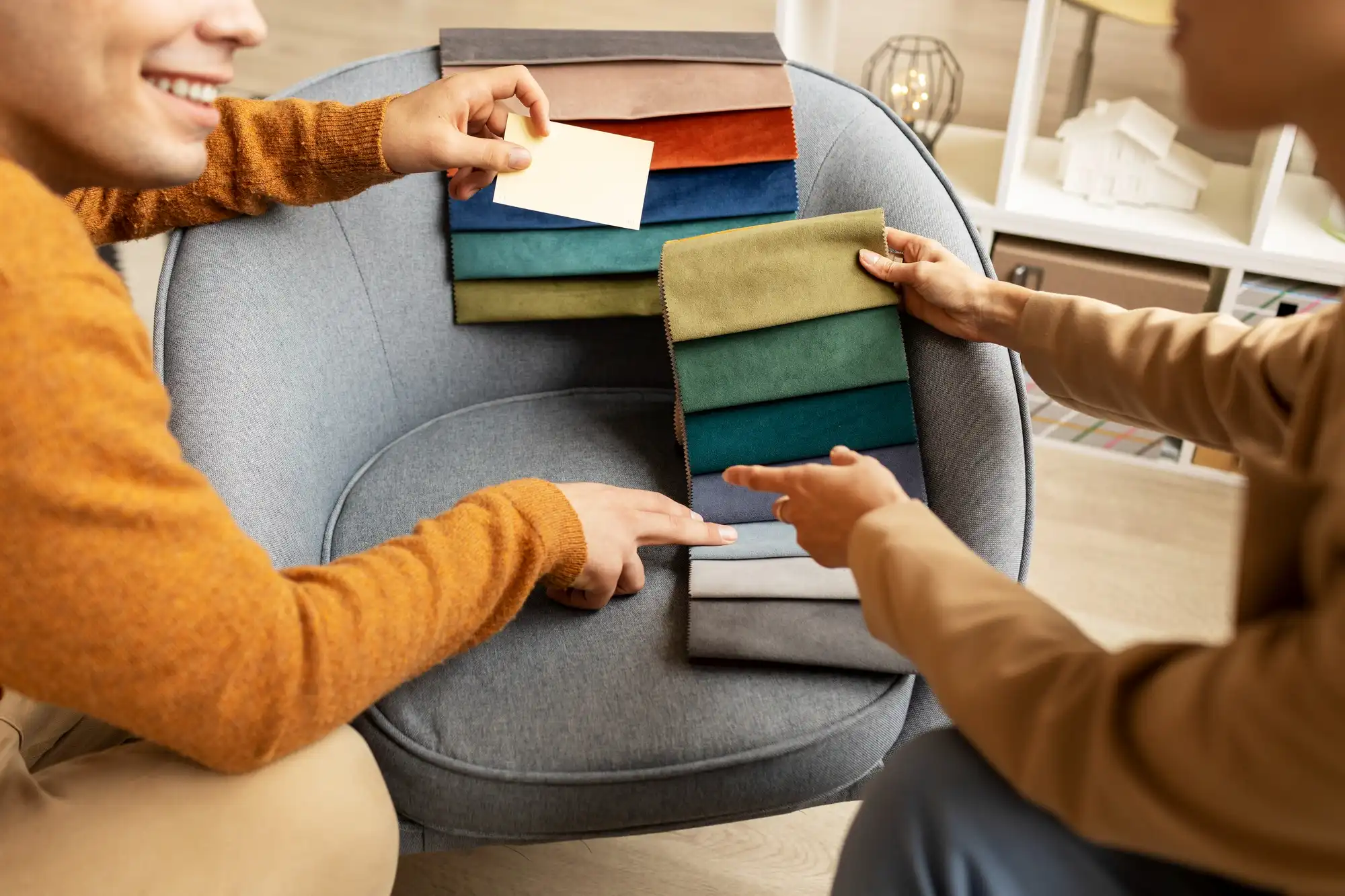
Fabric sofas are valued for their color flexibility and softness. They are available in countless colors, patterns, and weaves, making them easy to coordinate with rugs, curtains, and décor. Whether the space leans cozy, minimalist, or bold, fabric provides design versatility that suits nearly any interior style.
Comfort Comparison
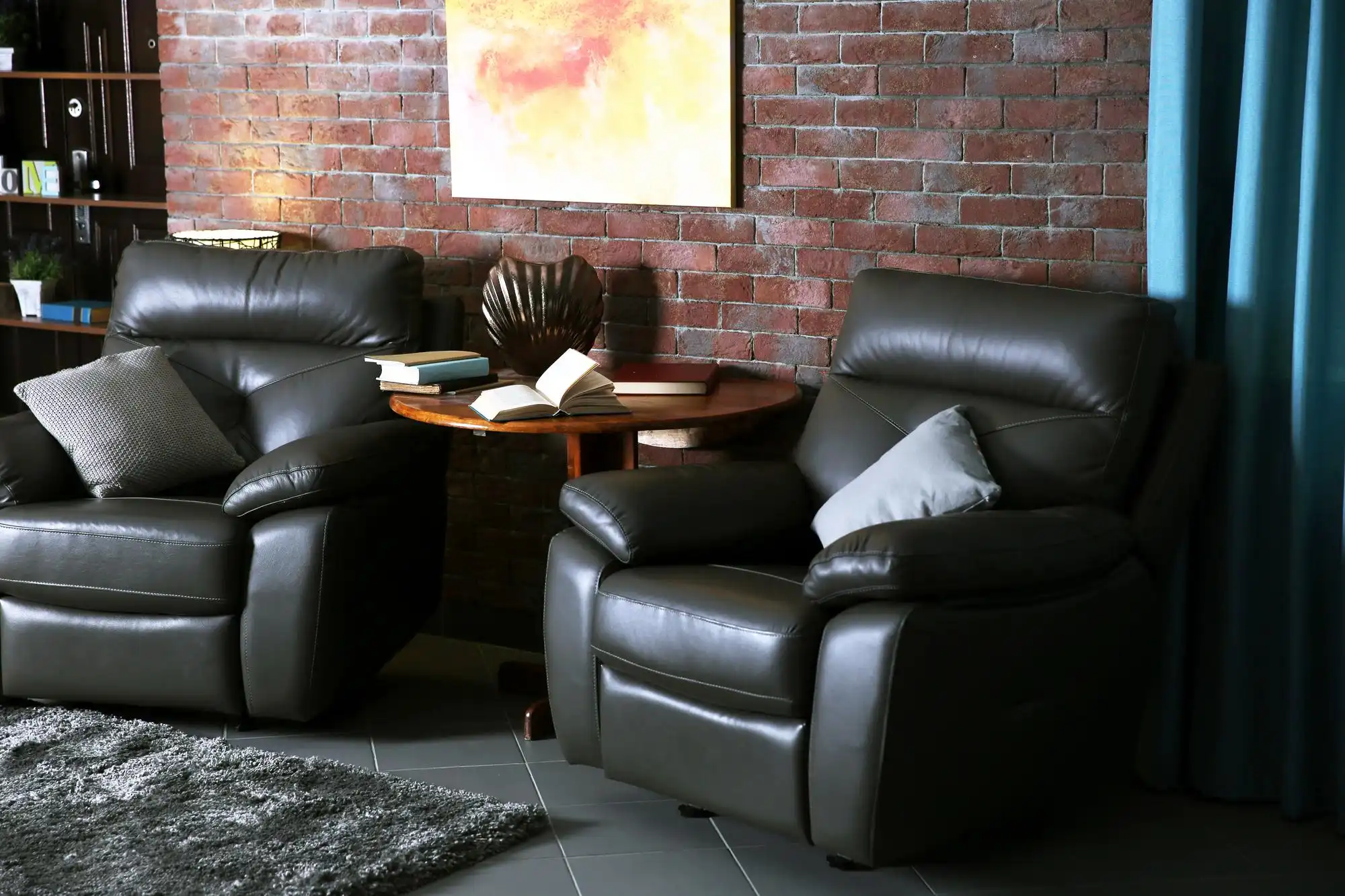
Leather:
Leather sofas often feel firmer at first and gradually soften with use. Over time, they develop a natural patina and more comfortable feel. In extreme climates, leather may feel cool in winter or slightly sticky in summer without climate control.
Fabric:
Fabric sofas deliver cozy, breathable comfort right away. They feel warm and inviting in all seasons and offer plush cushioning ideal for lounging, movie nights, and long seating periods.
Durability & Longevity
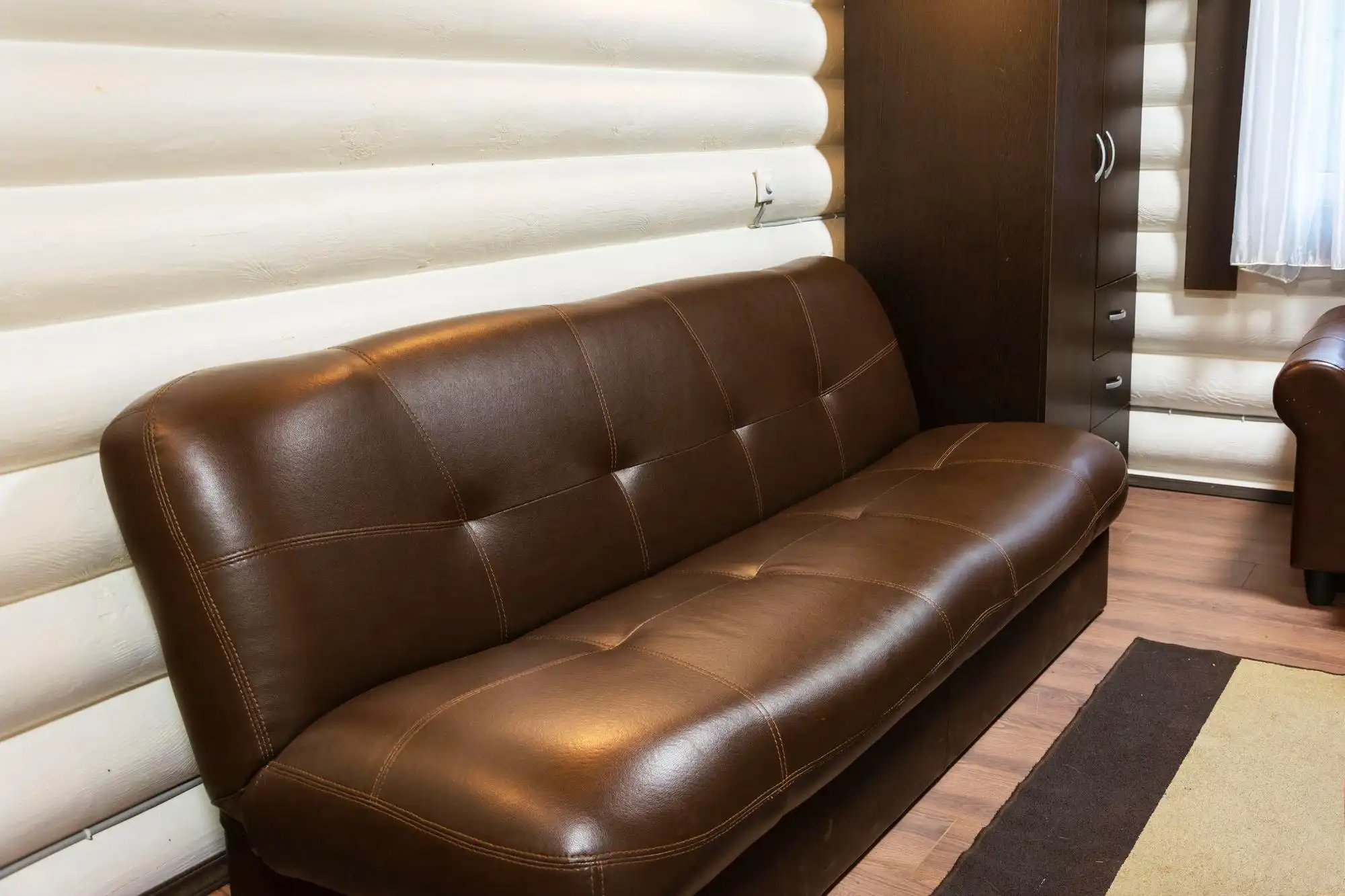
Leather is known for longevity when properly cared for. High-quality leather can last many years, aging gracefully and becoming more supple with time. Scratches and marks can add character or be repaired depending on leather grade.
Fabric durability depends on the weave, fiber type, and construction. Performance fabrics have improved stain resistance, fade resistance, and abrasion ratings, extending the lifespan for family and high-traffic homes.
Maintenance & Cleaning
Leather:
Leather is relatively easy to maintain. Most spills can be wiped away with a cloth, and conditioning every few months helps prevent drying or cracking.
Fabric:
Fabric needs more routine care such as vacuuming, brushing, and spot-cleaning. Some fabrics resist stains well, while others may hold onto oils, dust, or pet hair. Removable cushion covers are a bonus for easy washing.
Cost & Value
Leather sofas typically cost more upfront due to materials and craftsmanship. However, with proper care they often last longer, giving good long-term value.
Fabric sofas are usually more budget-friendly and come in wider style options at every price tier. Replacement or re-upholstery can also be more accessible compared to leather.
Aesthetic & Style Impact
Leather:
Offers a sleek, refined look, often associated with luxury or modern minimal design. Colors lean toward natural tones such as brown, tan, black, and charcoal.
Fabric:
Provides endless customization with colors, prints, and textures. From velvet jewel tones to neutral linens, fabric adapts easily to different décor styles and trend cycles.
Practical Living Situations
Leather works well for allergy-friendly environments because it doesn’t trap dust, pet dander, or pollen. It also resists odors better than many fabrics.
Fabric suits households seeking softness and warmth—ideal for kids, pets, and relaxed family spaces where comfort is a priority.
Climate & Comfort Considerations
Leather is more sensitive to temperature swings and may feel cold or sticky without proper climate control.
Fabric maintains a more consistent feel year-round, making it easy to live with in warm or mixed climates.
Trends & Modern Preferences
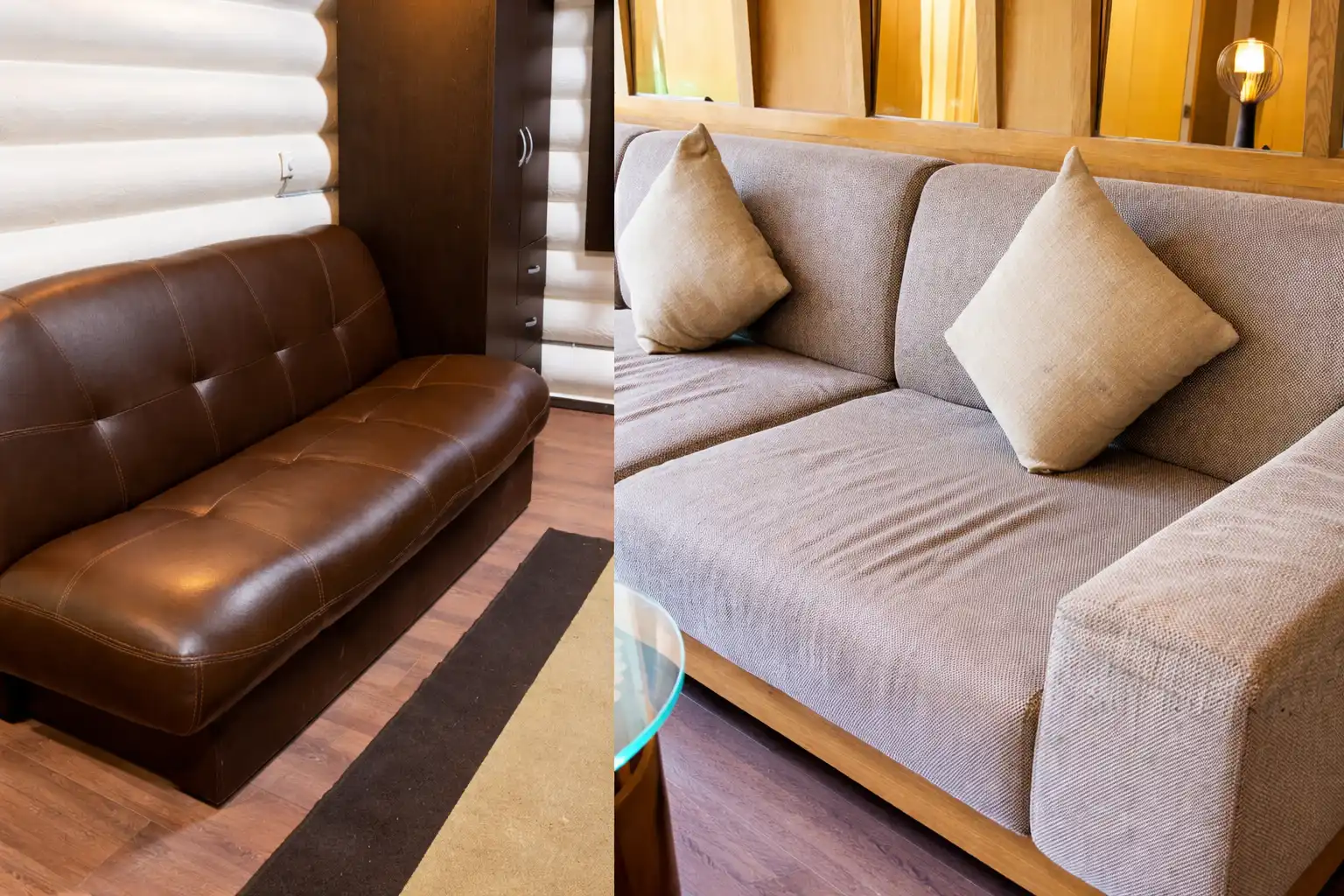
The rise of performance fabrics has made fabric sofas increasingly popular for busy homes. At the same time, leather maintains its status as a timeless, upscale choice with lasting appeal, especially in modern and minimalist interiors.



 English
  Arabic
  Spanish
  Japanese
  Russian
  Korean
  French
  Italian