
What Are the Main Types of Window Glass?
Choosing the right window glass is just as important as choosing the right window frame. Different glass types affect energy efficiency, safety, privacy, noise reduction, and indoor comfort. Some glass is designed for insulation, while others focus on security or natural light. Below are the most common window glass types used in modern homes.
Annealed Glass

Annealed glass is the most basic and traditional type of window glass. It is standard untreated glass commonly used in older homes and low-cost window systems. While it is affordable and easy to manufacture, it breaks into large sharp pieces, which makes it less safe than modern safety glass options.
This glass is usually found in simple residential windows, picture frames, and decorative applications where high impact resistance is not required.
Tempered Glass
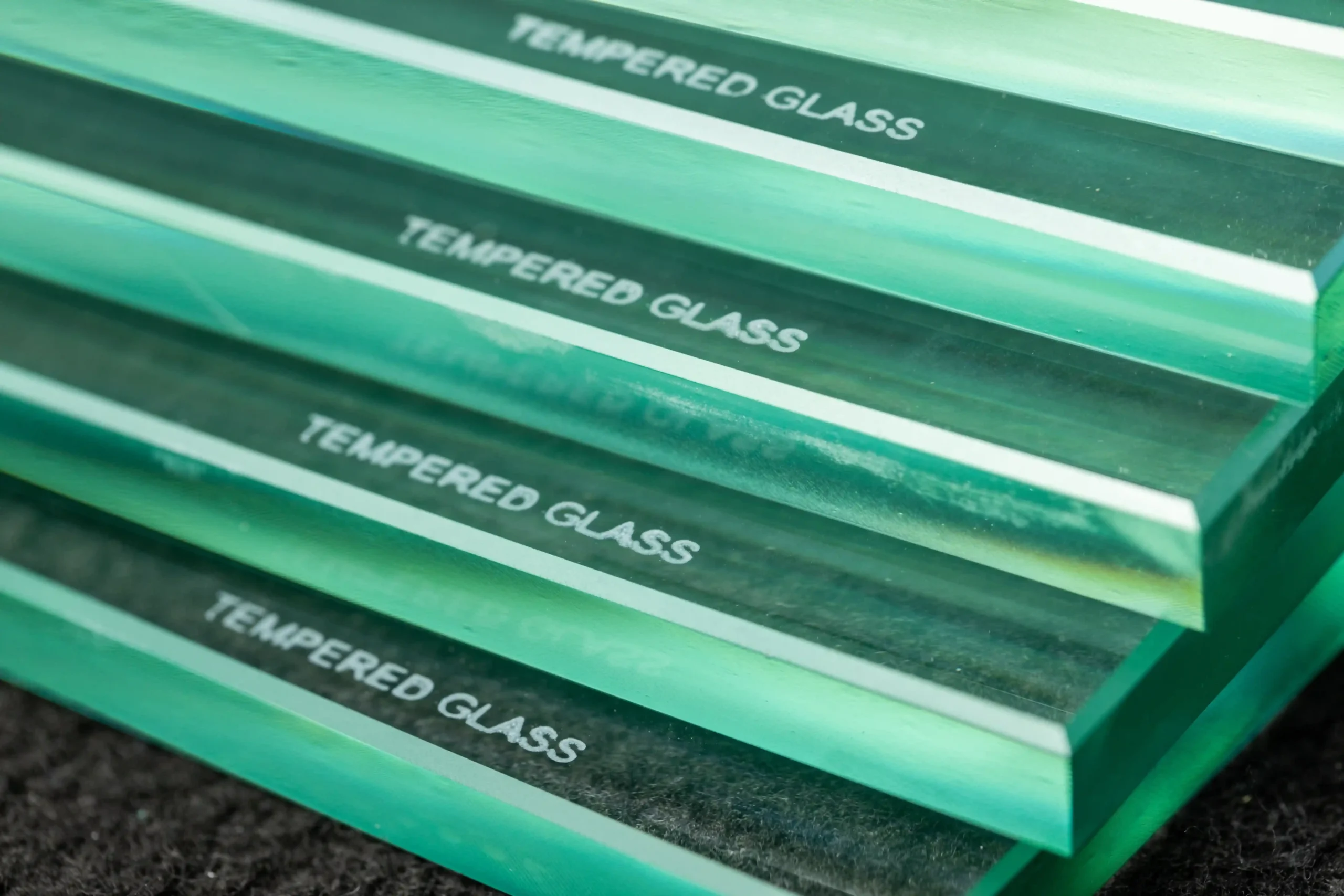
Tempered glass is a heat-treated safety glass designed to be much stronger than regular annealed glass. When broken, it shatters into small rounded pieces instead of dangerous sharp shards, helping reduce injury risk.
Because of its safety benefits, tempered glass is commonly used in bathroom windows, shower enclosures, patio doors, and large low-level windows. Many local building codes also require tempered glass in certain areas of the home.
Laminated Glass
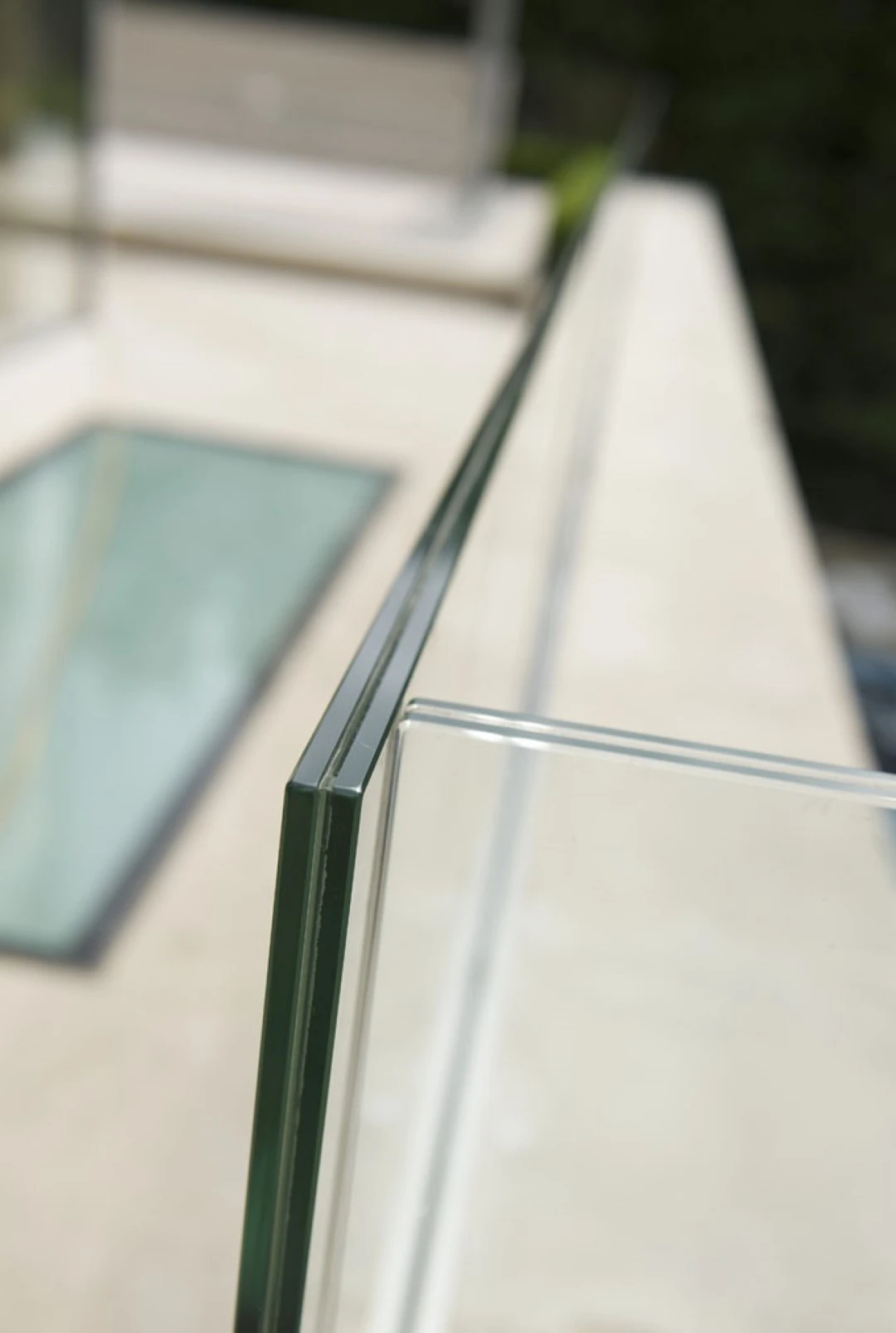
Laminated glass is made by bonding multiple layers of glass together with a durable plastic interlayer. Even if the glass cracks, the broken pieces stay attached to the inner layer instead of falling apart.
This type of glass offers excellent security, noise reduction, and storm resistance. Laminated glass is often used in hurricane-prone areas, urban homes with traffic noise, and properties needing extra protection against break-ins.
Insulated Glass Units (IGU)
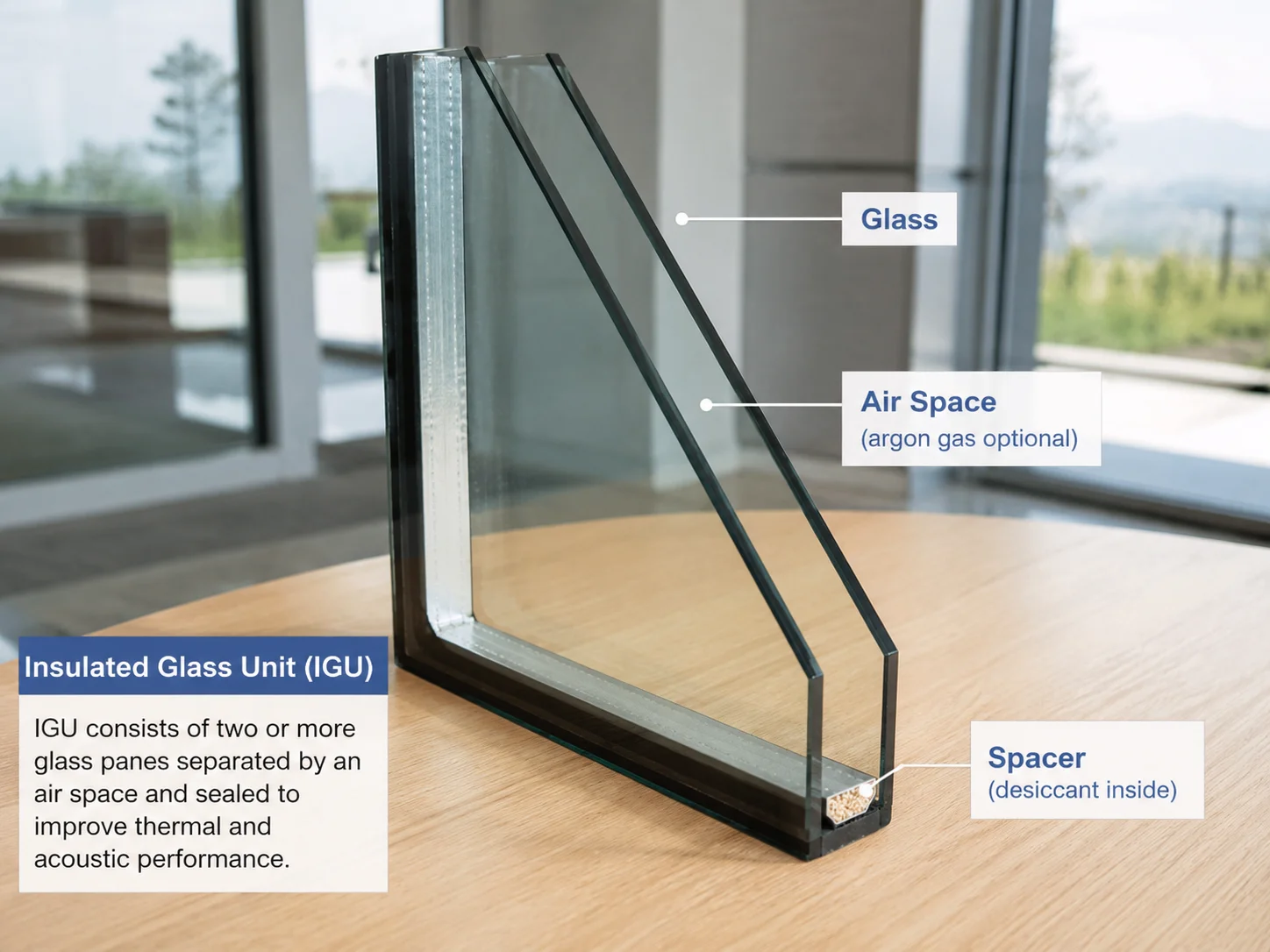
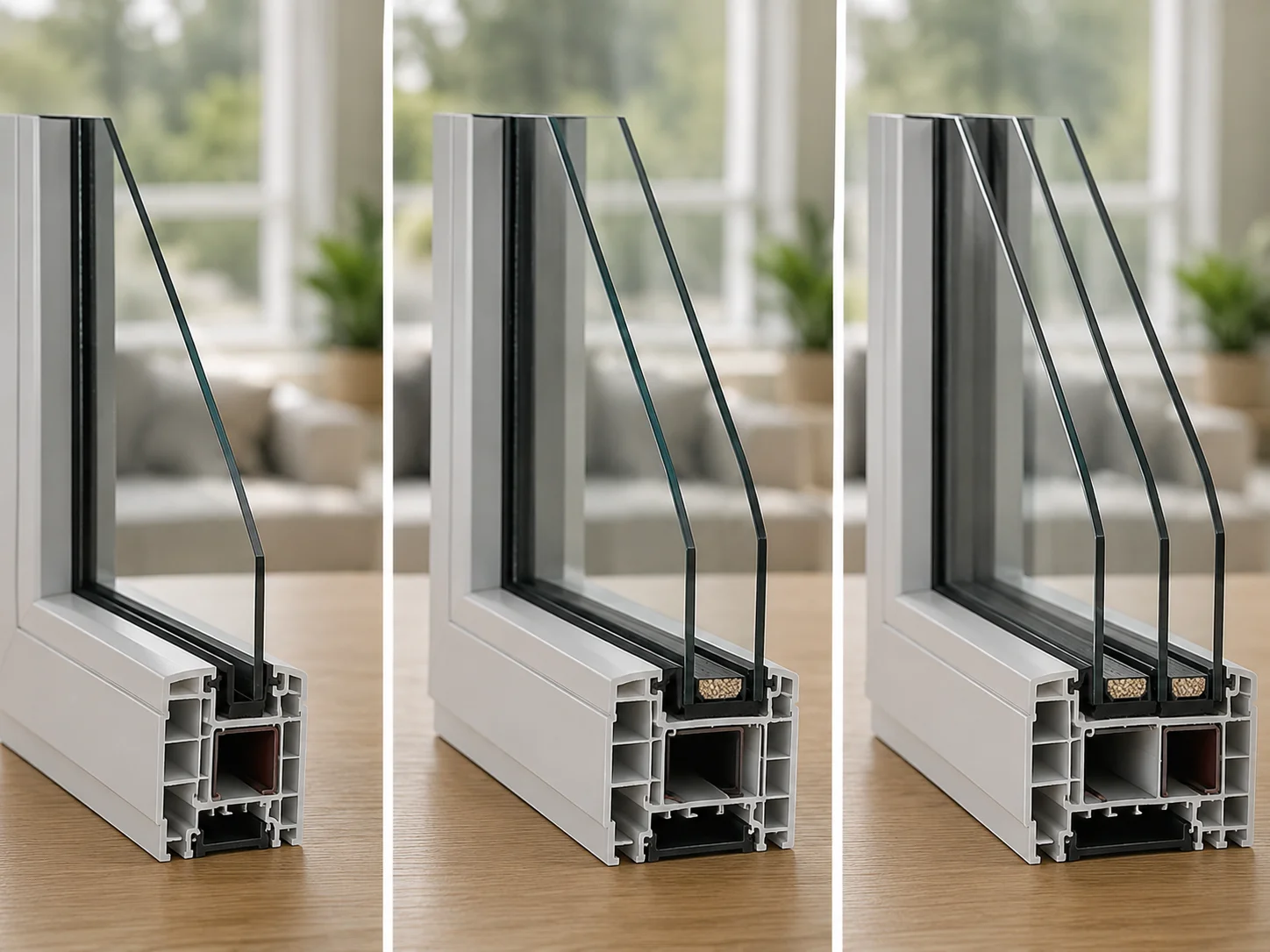
Insulated Glass Units, often called IGUs, use two or three panes of glass separated by sealed air spaces. These spaces are usually filled with insulating gases like argon or krypton to improve thermal performance.
Double-pane and triple-pane windows help reduce heat transfer, improve indoor comfort, and lower energy bills. Today, IGUs are one of the most popular choices for modern energy-efficient homes.
Low-E Glass
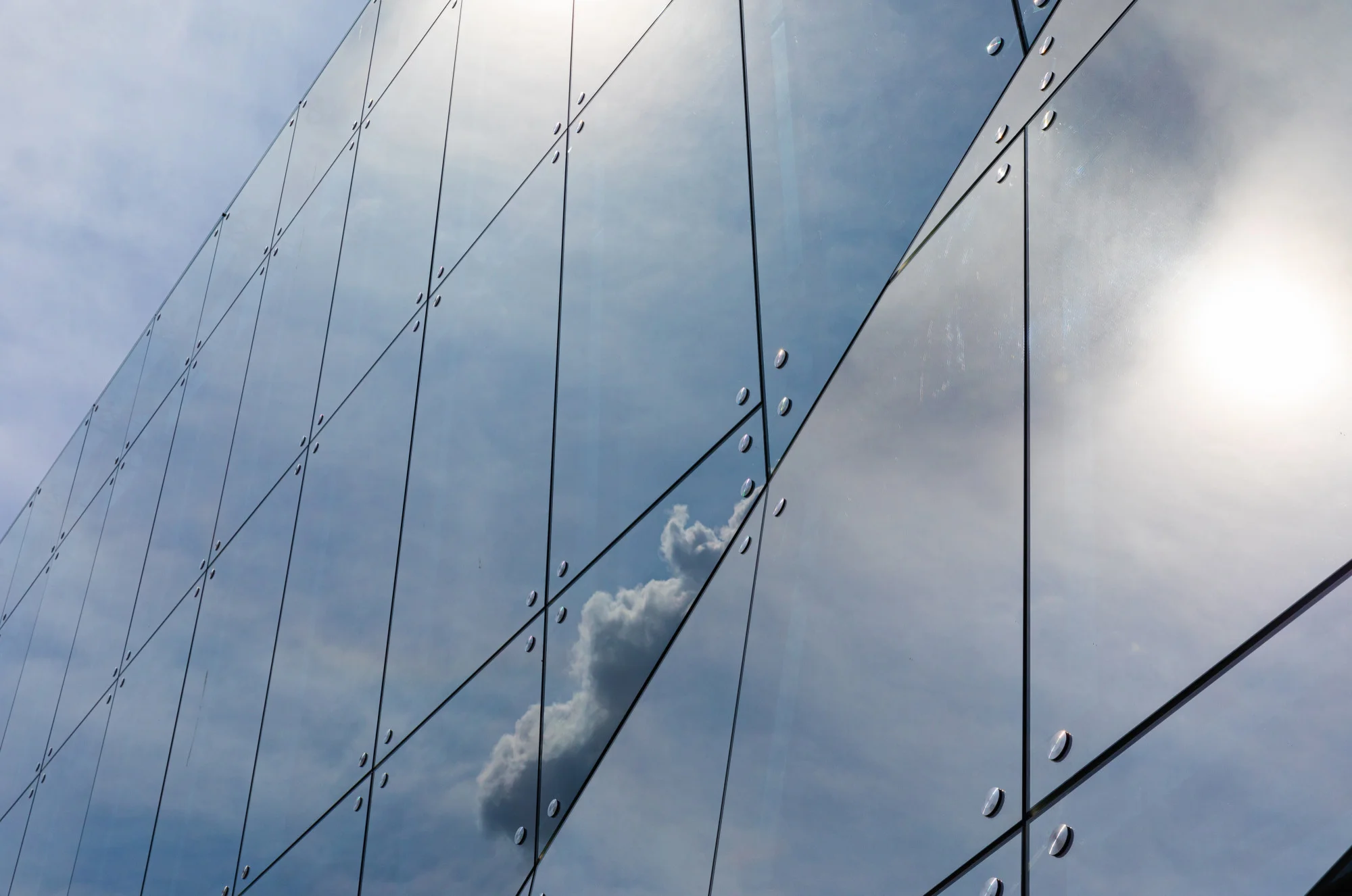
Low-E glass, short for low-emissivity glass, has a special microscopic coating that reflects heat while still allowing natural light to enter the room. It helps keep homes cooler in summer and warmer in winter.
Low-E coatings also block harmful UV rays that can fade flooring, furniture, and curtains over time. Because of its strong energy-saving performance, Low-E glass is widely used in modern residential windows.
Tinted Glass
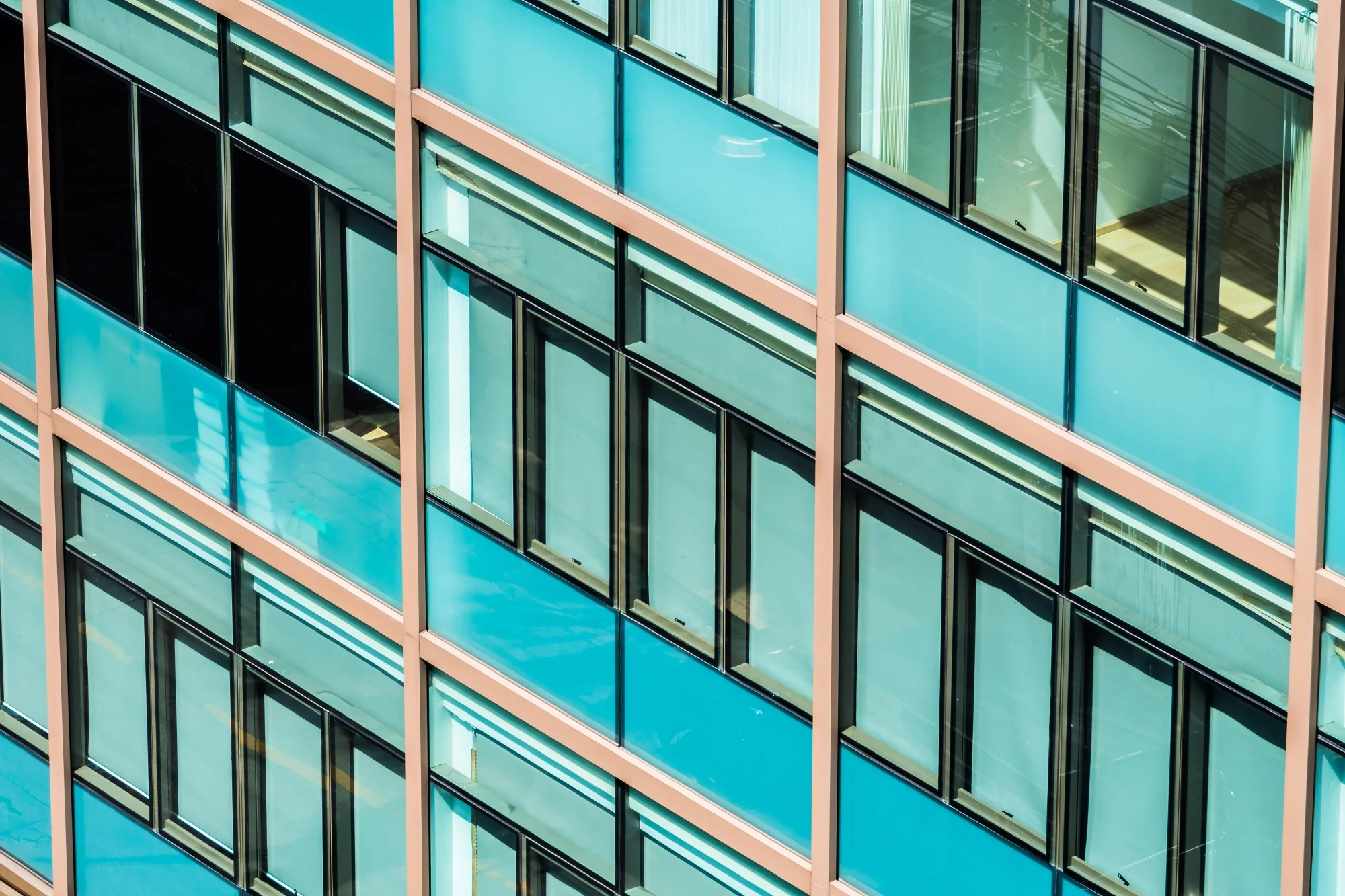
Tinted glass contains added color pigments that help reduce glare, sunlight intensity, and solar heat gain. It can also improve daytime privacy while giving windows a sleek modern appearance.
Many homeowners choose tinted glass for large windows, west-facing rooms, or homes in hot climates where excessive sunlight becomes uncomfortable.
Obscure & Frosted Glass

Obscure and frosted glass are designed to improve privacy while still allowing light to pass through. These glass types use etched, textured, or frosted surfaces to blur visibility.
They are commonly installed in bathroom windows, entry doors, office spaces, and shower areas. Besides privacy benefits, decorative patterns and textures can also enhance interior design styles.
Single-Pane vs Double-Pane vs Triple-Pane Glass
| Glass Type | Structure | Energy Efficiency | Noise Reduction | Best For |
|---|---|---|---|---|
| Single-Pane Glass | One layer of glass | Low insulation performance | Limited sound control | Older homes, sheds, basic windows |
| Double-Pane Glass | Two glass panes with sealed air or gas space | Good energy efficiency | Moderate noise reduction | Most modern residential windows |
| Triple-Pane Glass | Three glass panes with two insulated spaces | Highest insulation performance | Strong noise reduction | Cold climates, noisy areas, premium homes |
Specialty Window Glass Options
Modern windows do much more than let in sunlight. Specialty window glass options are designed to improve privacy, safety, sound control, and home comfort. These advanced glass types are becoming more popular in both residential and commercial buildings because they combine performance with modern design.
Smart Glass
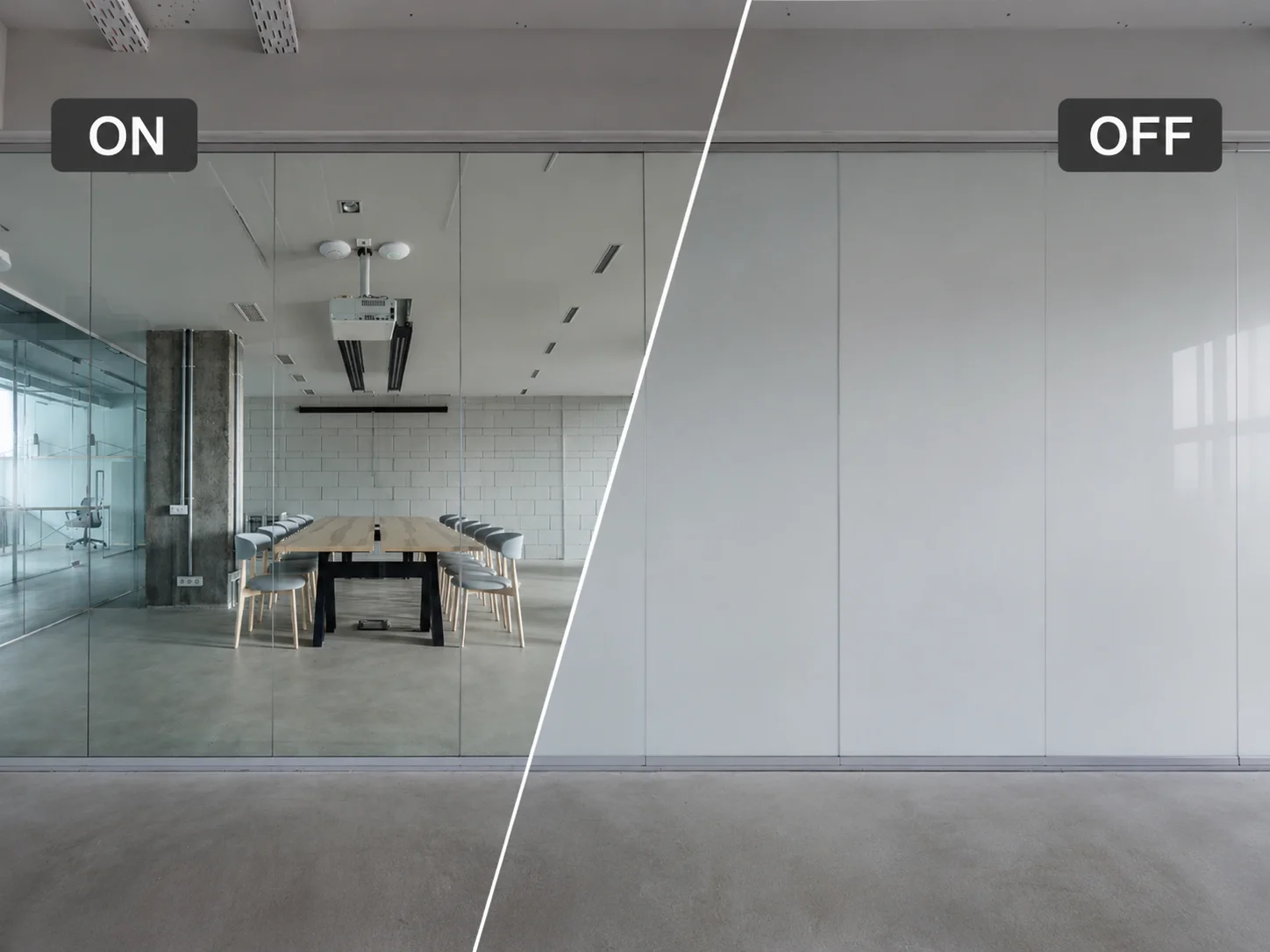
Smart glass uses switchable technology that changes the glass from clear to frosted with the push of a button. This allows homeowners to control privacy instantly without curtains or blinds.
Smart glass is often used in luxury homes, office meeting rooms, bathrooms, and modern apartments. Besides privacy, it also helps reduce glare and improve energy efficiency in sunny spaces.
Acoustic Glass
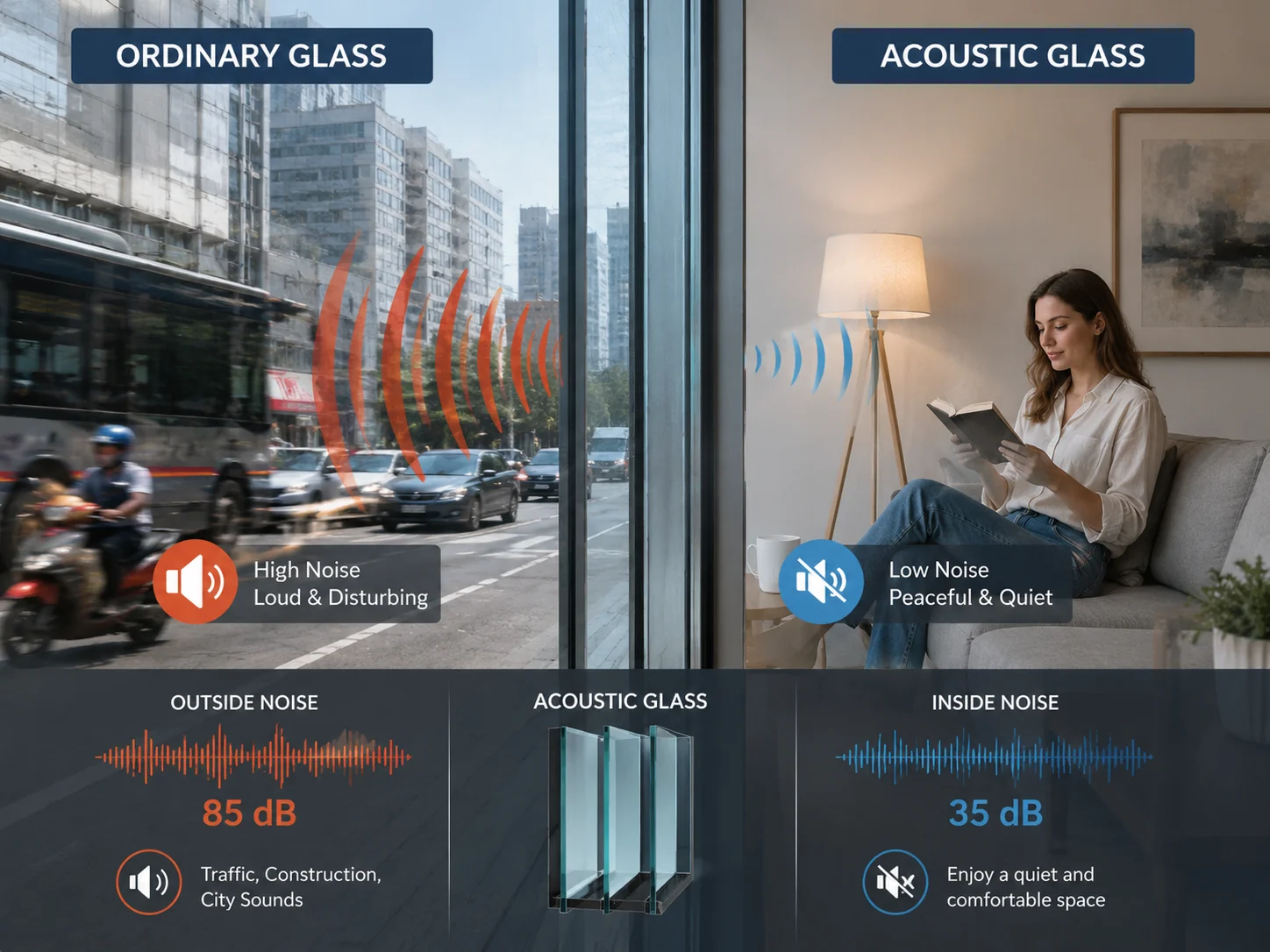
Acoustic glass is specially designed to reduce outside noise. It usually combines multiple glass layers with sound-dampening materials to block traffic, construction, and neighborhood noise.
This type of glass is ideal for homes near busy roads, airports, schools, or city centers. Acoustic glass helps create a quieter indoor environment and improves overall living comfort.
Fire-Resistant Glass
Fire-resistant glass is built to slow the spread of flames, smoke, and heat during a fire. It helps provide extra evacuation time and supports building safety requirements.
This glass is commonly installed in stairwells, commercial buildings, schools, hospitals, and certain residential areas where local building codes require fire protection.
Hurricane & Impact Glass
Hurricane and impact-resistant glass is designed to withstand strong winds, flying debris, and severe storms. Most impact glass uses laminated layers that stay together even when cracked.
These windows are especially popular in coastal and hurricane-prone regions because they improve storm protection, home security, and long-term durability.
Decorative Glass
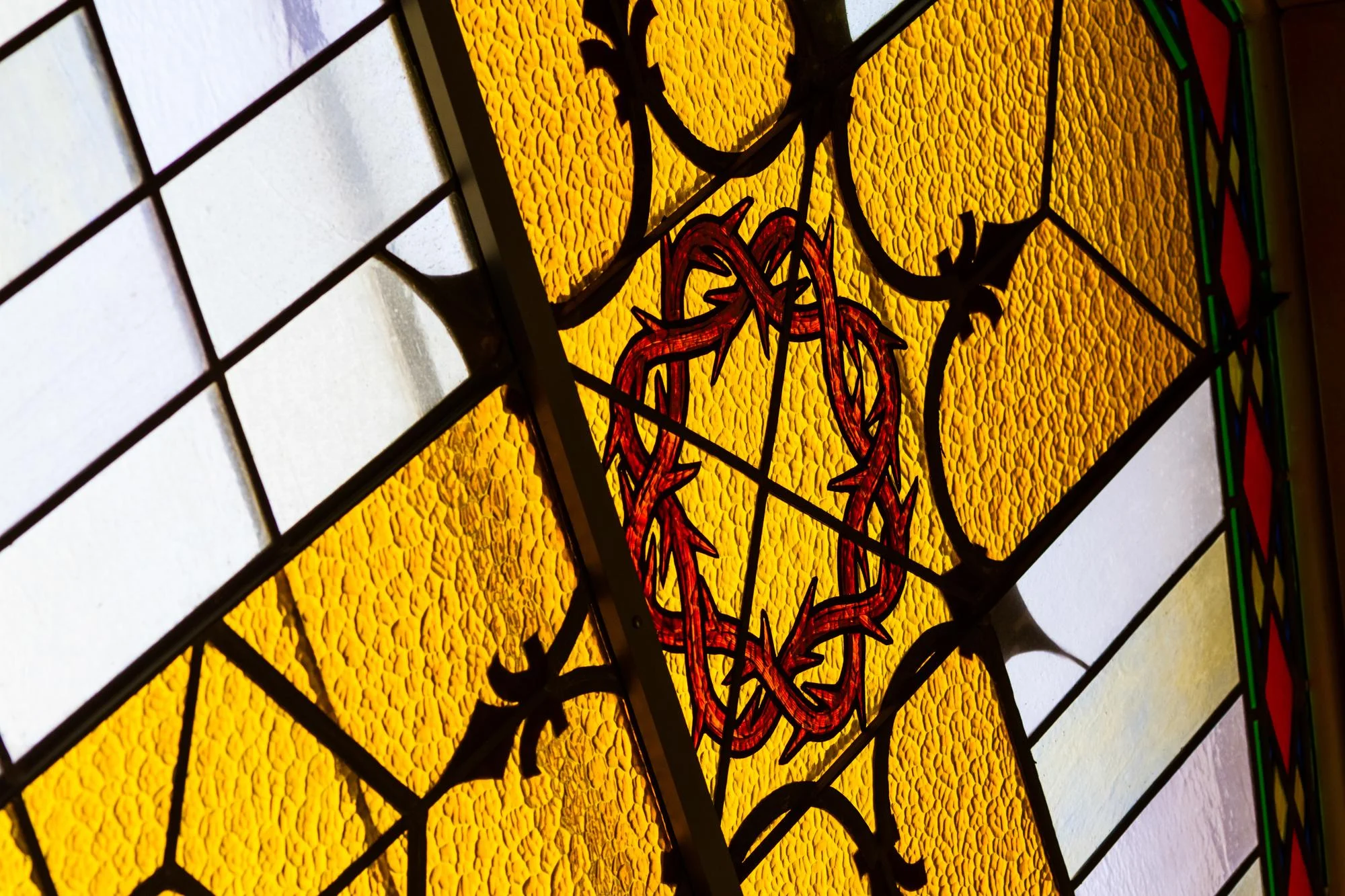
Decorative glass adds style and personality to windows while still allowing natural light inside. Popular options include etched glass, stained glass, frosted designs, and textured patterns.
Homeowners often use decorative glass in entry doors, bathroom windows, dining rooms, and custom architectural projects to create a more unique and elegant appearance.
Understanding Window Glass Performance Ratings
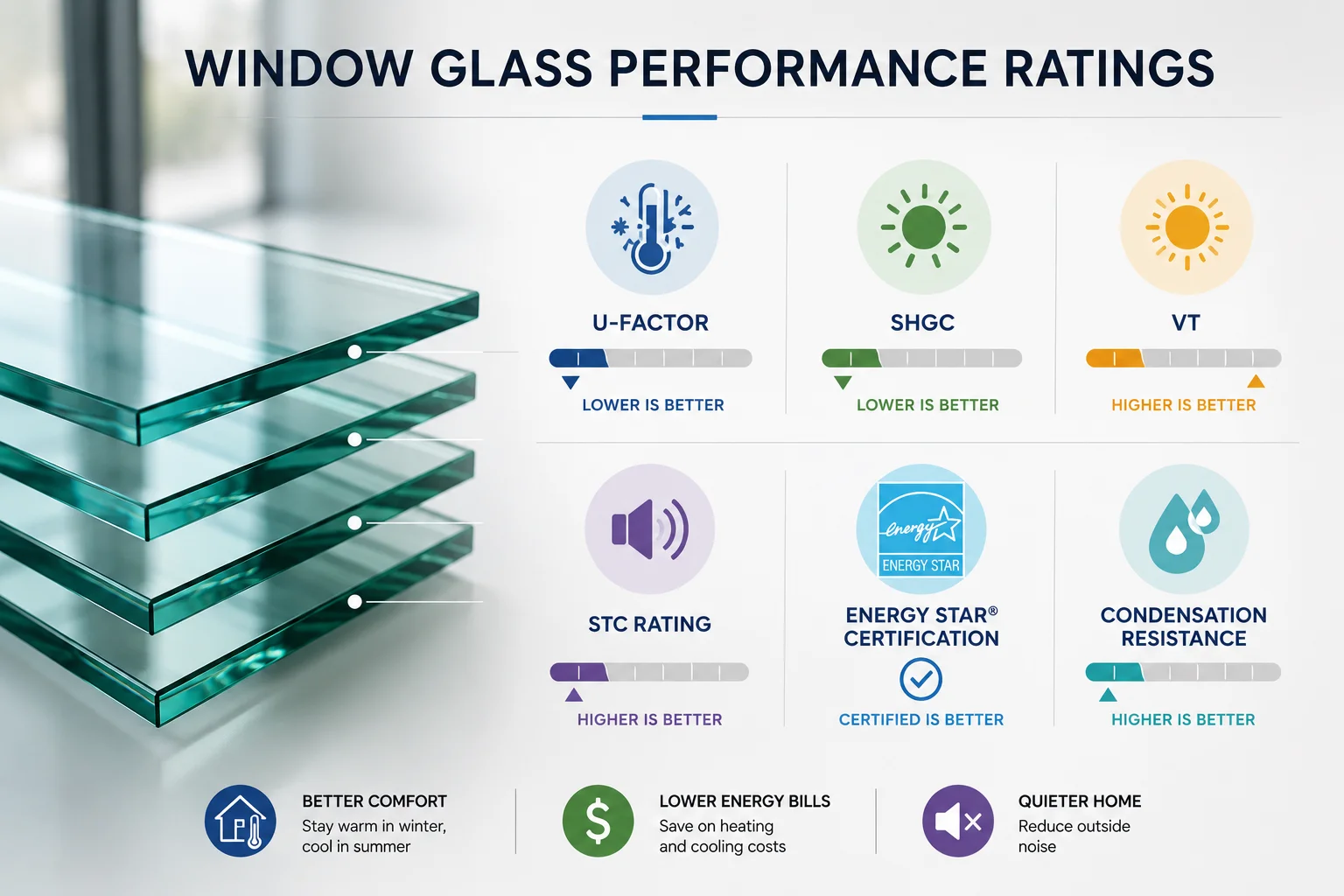
Window glass performance ratings help homeowners compare energy efficiency, insulation, sunlight control, and noise reduction. Understanding these ratings makes it easier to choose windows that improve comfort and reduce energy costs.
U-Factor
Measures how well a window prevents heat transfer. Lower U-factor numbers mean better insulation and improved energy efficiency.Solar Heat Gain Coefficient (SHGC)
Shows how much solar heat passes through the glass. Lower SHGC ratings help keep homes cooler in hot climates.Visible Transmittance (VT)
Measures how much natural light enters through the glass. Higher VT ratings allow brighter indoor spaces.STC Rating (Sound Transmission Class)
Indicates how well the glass blocks outside noise. Higher STC ratings provide better sound insulation.Energy Star Certification
Windows with Energy Star labels meet energy-efficiency standards for specific climate zones and can help lower heating and cooling costs.Condensation Resistance
Measures how well windows resist moisture buildup. Better ratings help reduce fogging and mold risk.
How to Choose the Right Window Glass

The best window glass depends on your climate, privacy needs, energy goals, and budget. Choosing the right combination can improve comfort, reduce utility bills, and increase home value.
Consider Your Climate
Triple-pane and Low-E glass work well in cold climates, while solar-control glass is better for hot sunny regions.Think About Energy Efficiency
Double-pane or triple-pane insulated glass can significantly reduce heating and cooling costs over time.Evaluate Noise Levels
Homes near traffic or airports may benefit from laminated or acoustic glass for better sound reduction.Prioritize Safety
Tempered and laminated glass improve protection against impacts and accidental breakage.Match Privacy Needs
Frosted, obscure, or tinted glass is ideal for bathrooms, entryways, and street-facing windows.Balance Budget and Performance
Higher-performance glass costs more upfront but can provide long-term savings through improved insulation and durability.Check Local Building Codes
Some areas require safety glass or impact-resistant windows depending on location and window placement.
FAQs
What is called window glass?
Window glass is the transparent material installed inside a window frame to allow natural light into a building while providing visibility, insulation, and weather protection.
What type of glass is used in a window?
Common window glass types include tempered glass, laminated glass, Low-E glass, double-pane insulated glass, and frosted glass. The best type depends on energy efficiency, safety, privacy, and climate needs.
Is glass the same as a window?
No. Glass is only one component of a window. A complete window also includes the frame, sash, hardware, seals, and other structural parts.
How much are window glasses?
Window glass replacement costs typically range from about $100 to $800 or more depending on glass type, window size, energy-efficiency features, and installation requirements.