

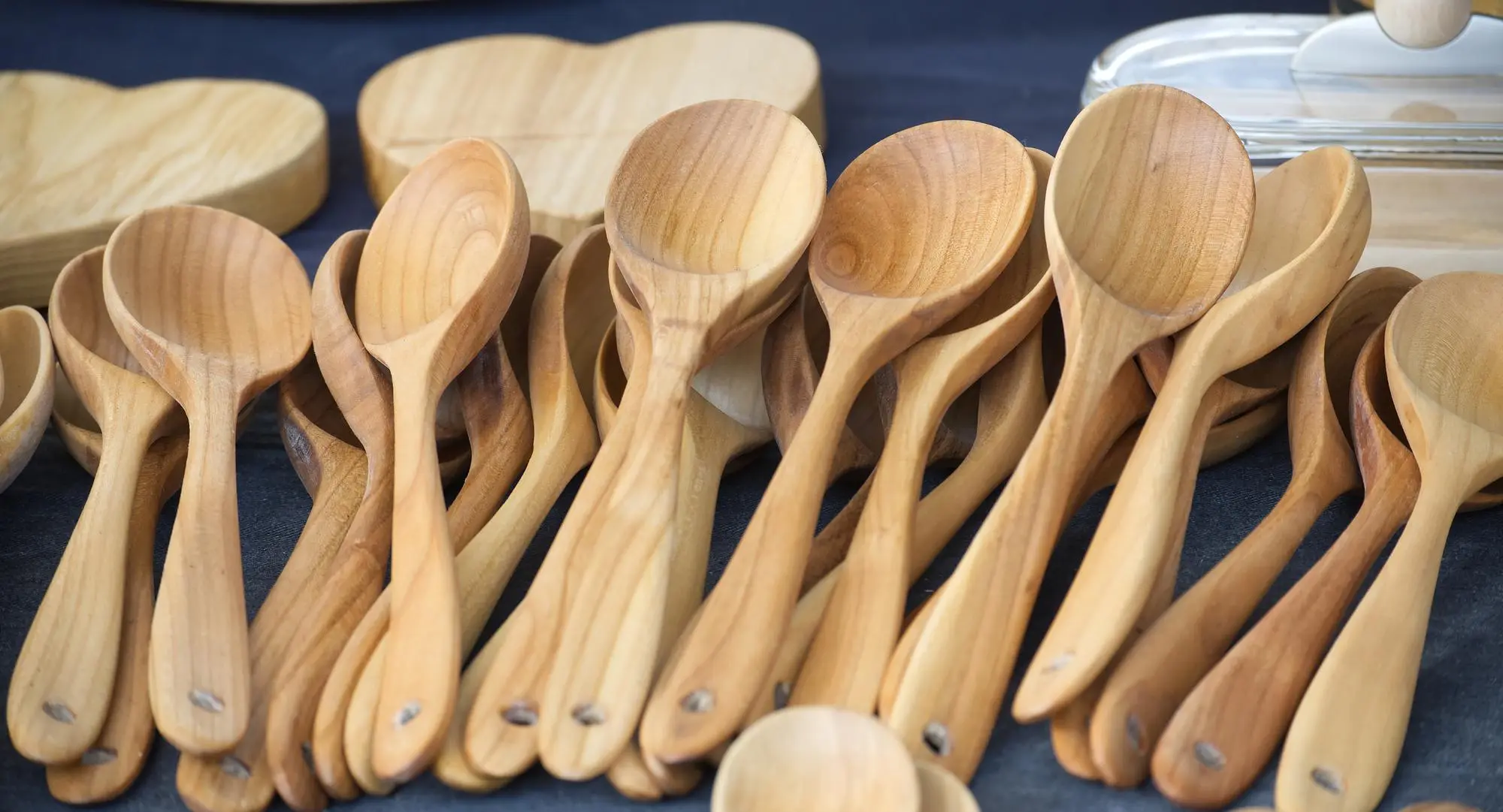
7 Best Woods for Kitchen Utensils
| Wood Type | Key Strength | Best For | Main Advantage | Possible Drawback |
|---|---|---|---|---|
| Maple | Tight grain and hygienic surface | Daily cooking and non-stick cookware | Affordable, durable, and cookware-friendly | Less premium look than some hardwoods |
| Teak | Natural oils resist water and stains | Heavy use and long-term durability | Very durable with low maintenance | Usually more expensive |
| Beech | Smooth texture and stable structure | Everyday cooking on a budget | Reliable and cost-effective | Needs more care than teak |
| Olive Wood | Dense and naturally antibacterial | Serving tools and heavy use | Strong with a unique premium grain | Often costs more |
| Acacia | Water-resistant and crack-resistant | Busy kitchens and mixed use | Good balance of price and durability | Can vary in grain and finish |
| Cherry | Smooth and lightweight feel | Light to medium cooking tasks | Comfortable to hold and attractive | Less suited for heavy-duty use |
| Bamboo | Sustainable and lightweight | Light cooking and budget use | Eco-friendly and affordable | Less durable under heavy use |
Choosing the right wood for kitchen utensils is key to safety, durability, and everyday performance. The best options are dense, food-safe woods that resist moisture, bacteria, and wear. Here are the top choices you can rely on:
Maple – Most Popular Choice
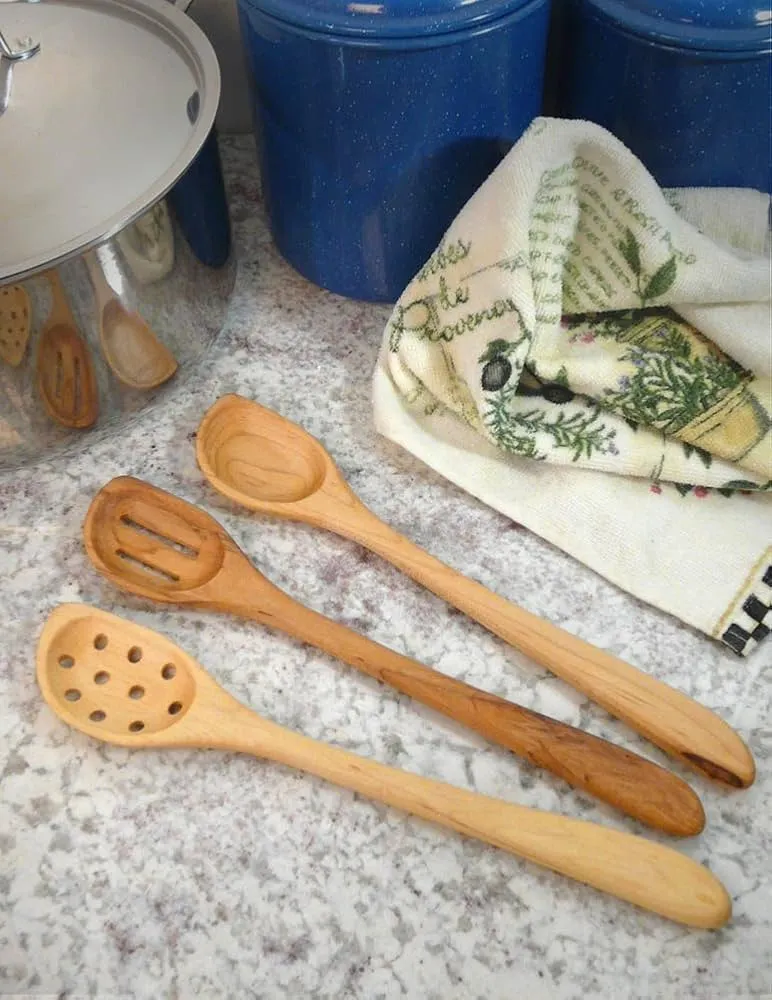
Maple is one of the most widely used woods for kitchen utensils—and for good reason. It has a tight, closed grain, which helps prevent moisture and bacteria from getting inside. This makes it hygienic and safe for daily use.
It’s also durable yet gentle on cookware, so it won’t scratch non-stick surfaces. Plus, maple is affordable and easy to maintain, making it a great all-around option.
Teak – Premium & Long-Lasting
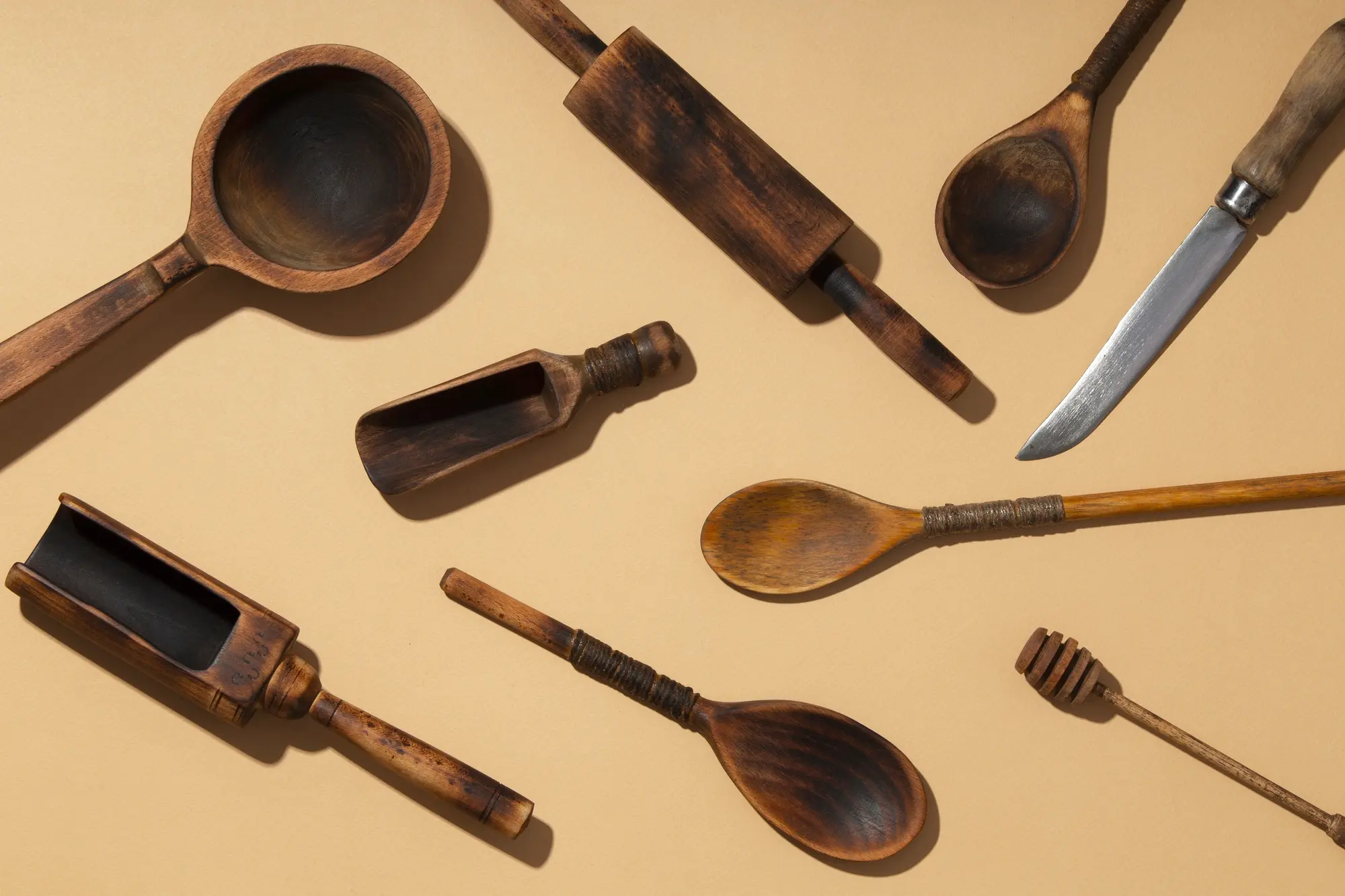
Teak is a high-end choice known for its natural oils, which help resist water, stains, and bacteria. This makes it one of the most durable woods for kitchen tools.
It requires less maintenance than many other woods and holds up well over time, even with frequent use. If you want something long-lasting and low-maintenance, teak is a strong option.
Beech – Budget-Friendly & Durable
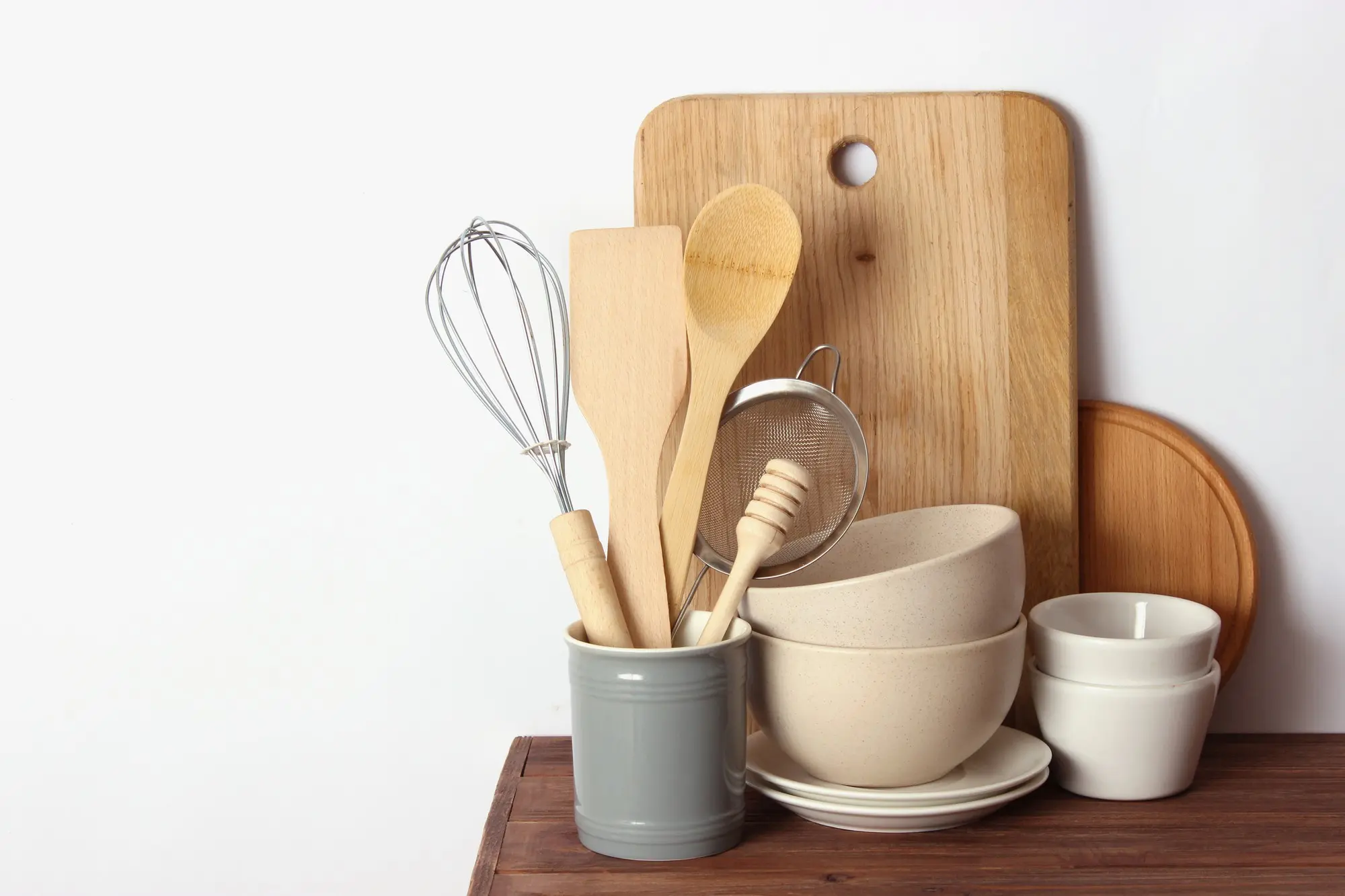
Beech wood offers a good balance between cost and performance. It has a smooth texture and stable structure, making it suitable for everyday cooking.
While it’s not as moisture-resistant as teak, it still performs well with proper care. Beech utensils are a practical choice for those looking for reliability at a lower price.
Olive Wood – Dense & Beautiful
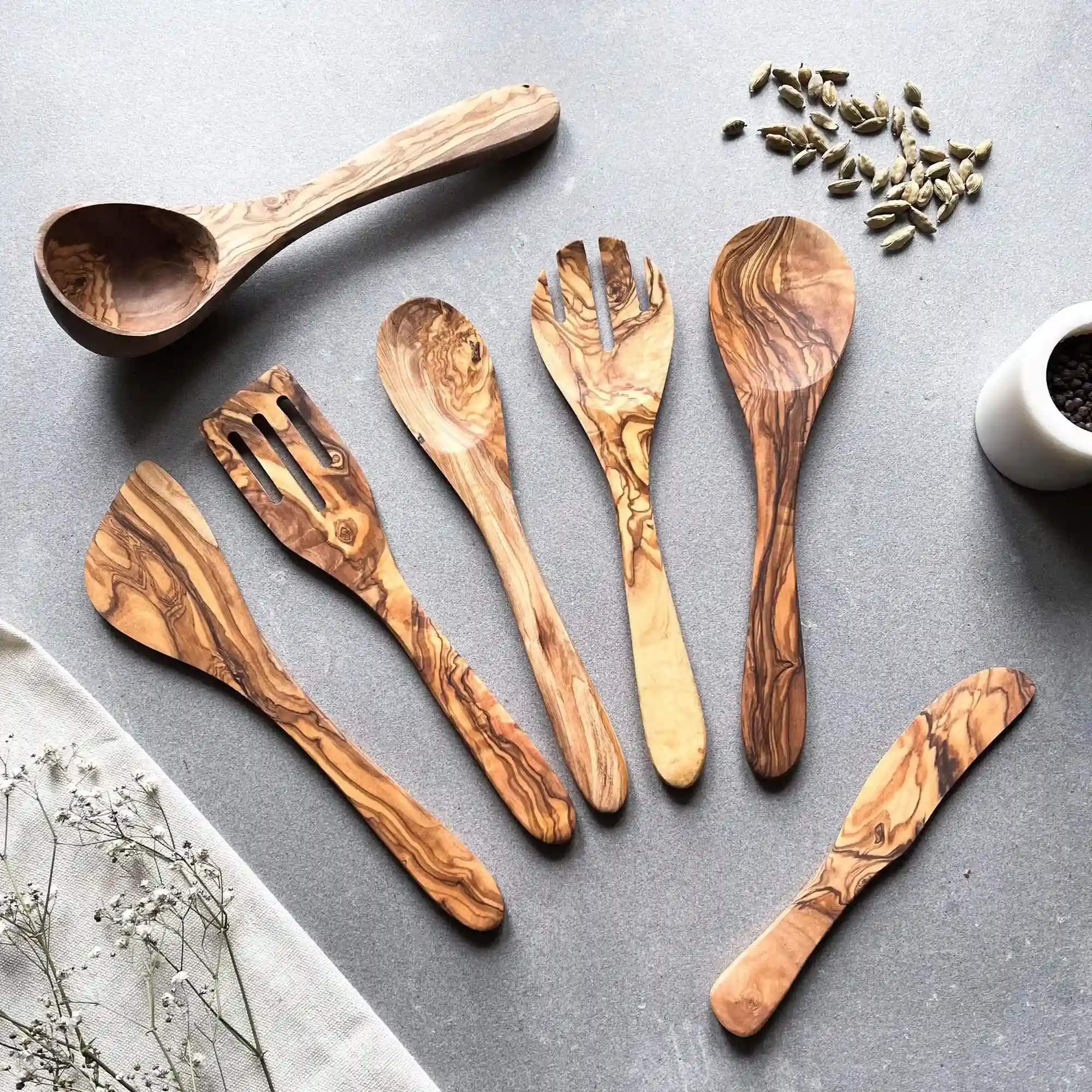
Olive wood stands out for both its strength and appearance. It is dense, naturally antibacterial, and highly durable, making it suitable for heavy use.
Its unique grain patterns also make each piece visually distinct, which is why it’s often used for serving utensils as well as cooking tools.
Acacia – Durable & Water-Resistant
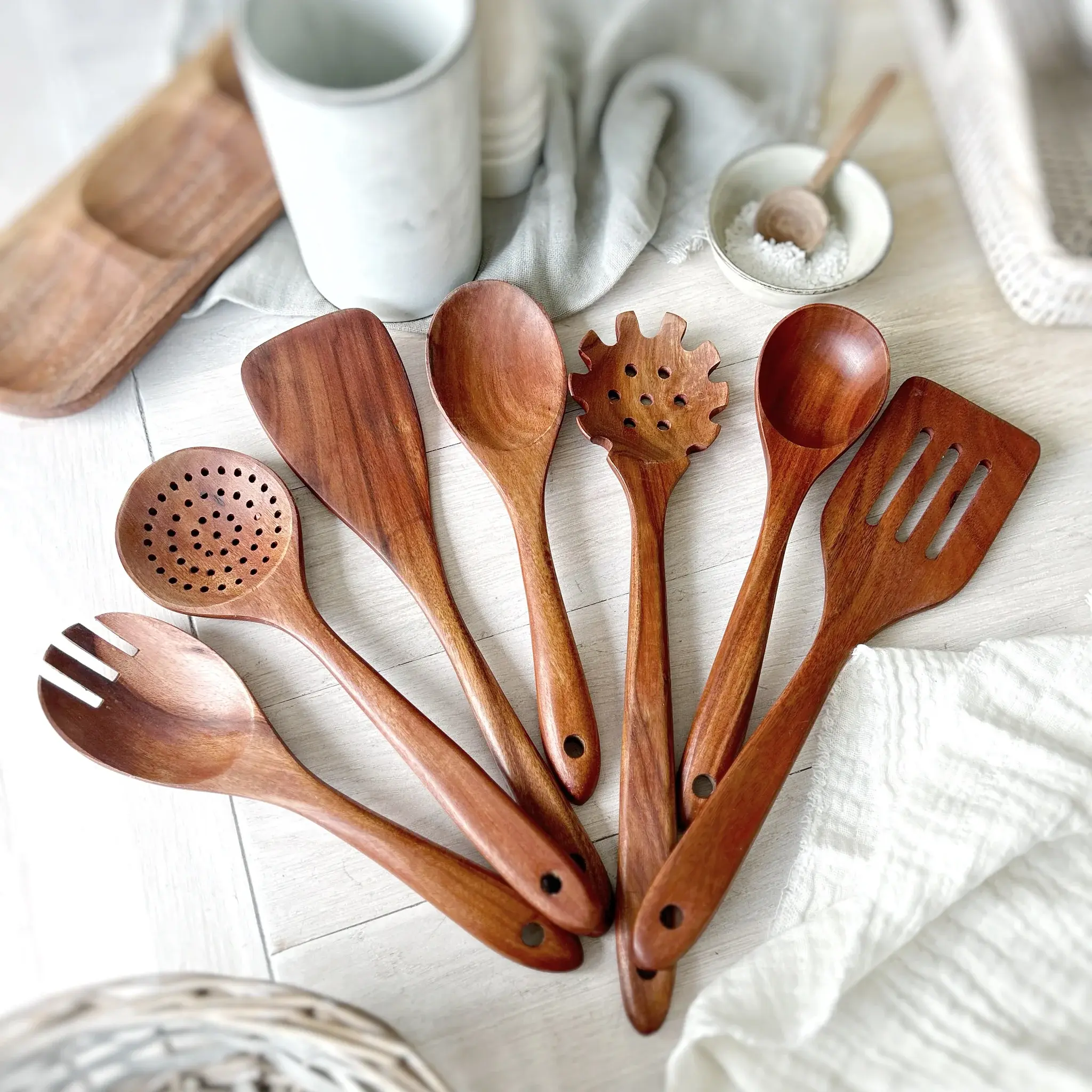
Acacia is a tough hardwood that naturally resists water and cracking. It performs well in busy kitchens and offers good durability without a high price tag.
Its rich color and strength make it a popular choice for both cooking and serving utensils.
Cherry – Smooth &Lightweight
Cherry wood is slightly softer than maple, which makes it lighter and more comfortable to handle. It has a smooth surface and a warm tone that deepens over time.
While it’s not ideal for heavy-duty tasks, it works well for light to medium cooking and everyday use.
Bamboo – Eco-Friendly Option
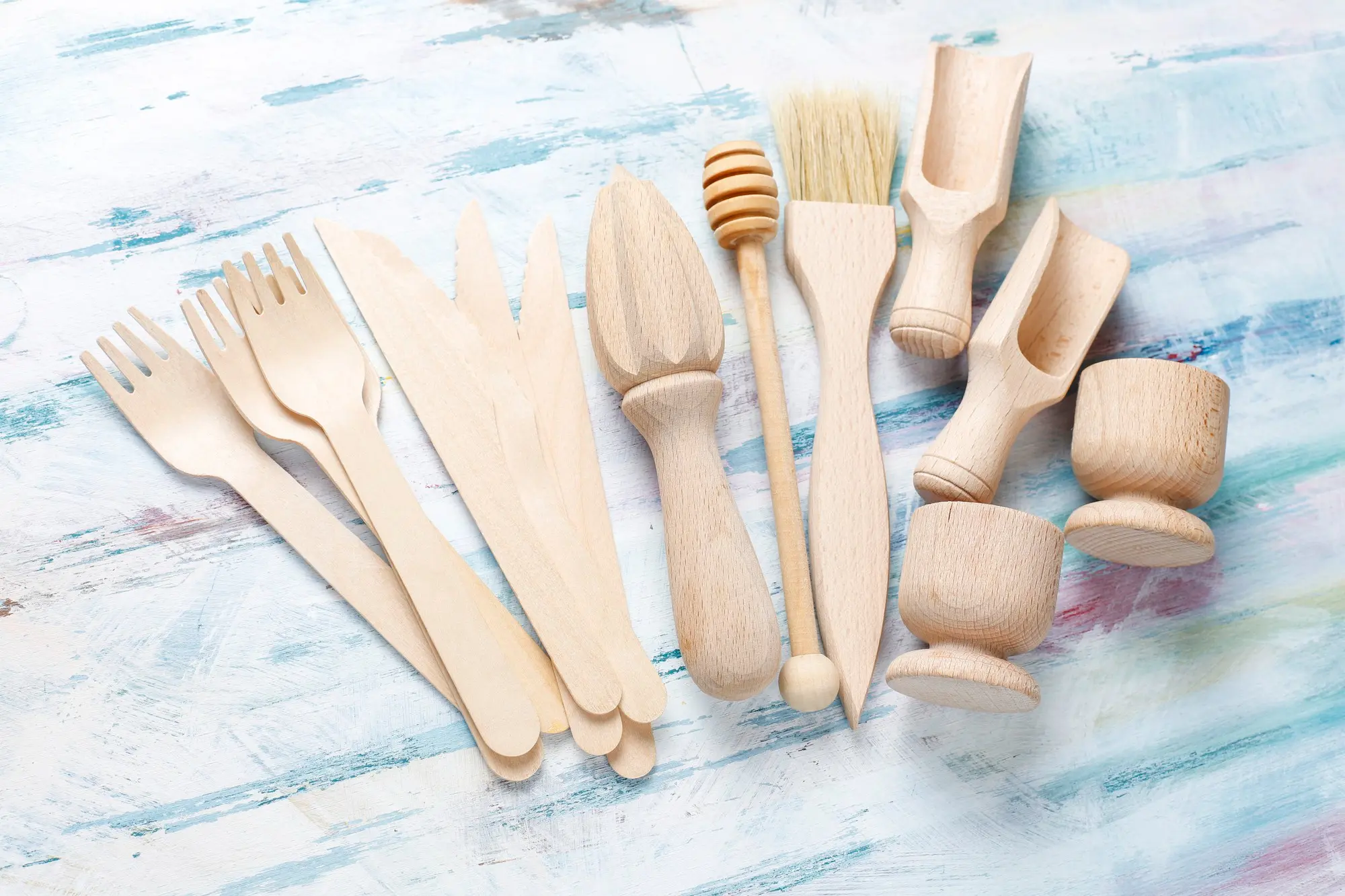
Bamboo is a fast-growing, sustainable material, making it an eco-friendly and affordable choice. It’s lightweight and easy to use, which is great for basic kitchen tasks.
However, bamboo is not as durable as traditional hardwoods and may wear out faster under heavy use. It’s best suited for light cooking or as a budget-friendly option.
 English
  Arabic
  Spanish
  Japanese
  Russian
  Korean
  French
  Italian