

Step-by-Step: How to Sharpen with a Whetstone
Sharpening your kitchen knife with a whetstone may look tricky at first, but once you understand the process, it becomes simple and even satisfying. Follow these steps carefully, and you’ll get a sharp, long-lasting edge.
Step 1: Prepare the Stone
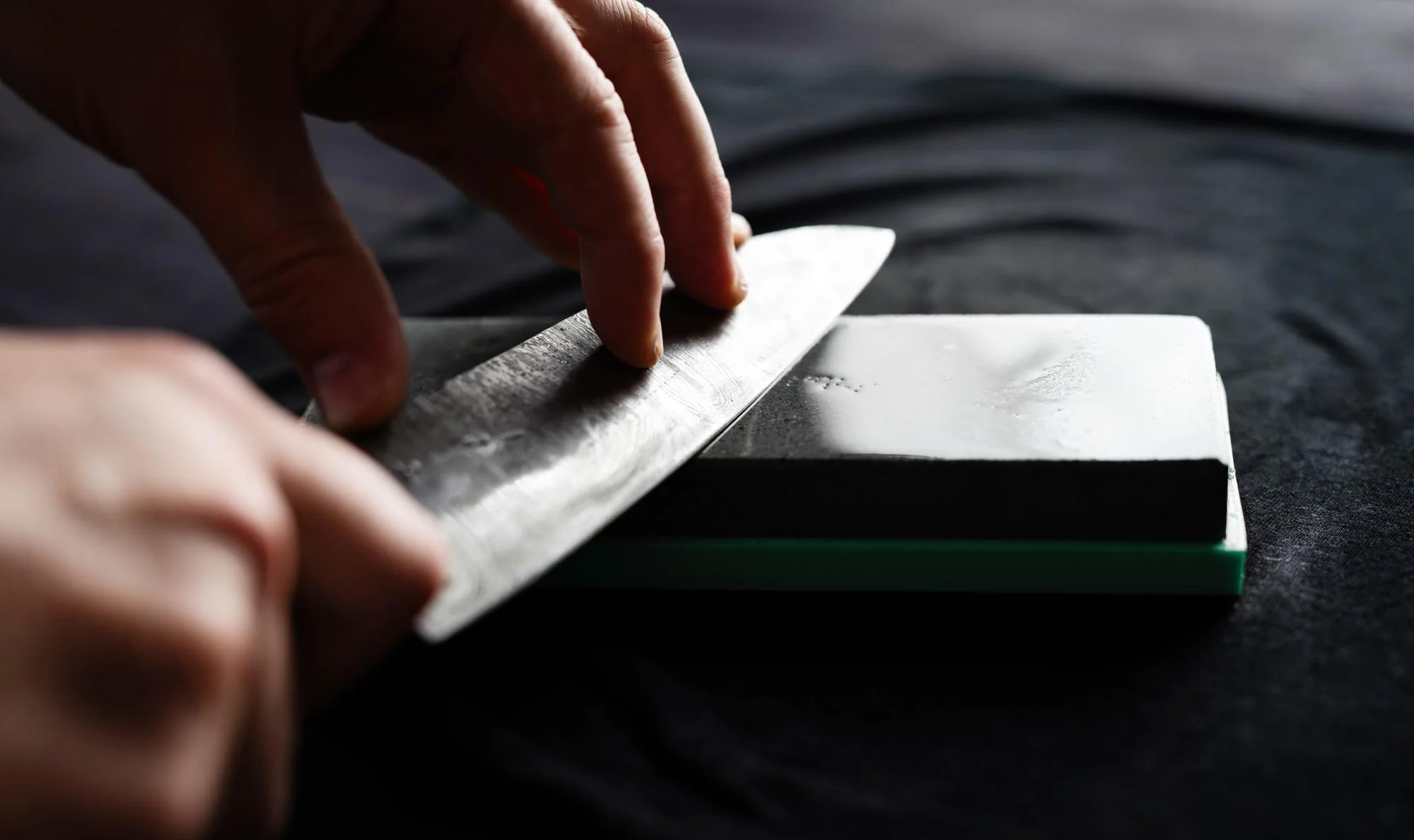
Start by soaking your whetstone in water for about 5–10 minutes. This allows the stone to absorb moisture, which helps reduce friction and prevents overheating during sharpening.
Place the stone on a stable, non-slip surface—like a damp towel—to keep it steady while you work.
Step 2: Set the Correct Angle
Hold your knife at a consistent angle of about 15–20°. This is the ideal range for most kitchen knives, balancing sharpness and durability.
Tip: A simple way to estimate the angle is to lift the spine of the knife slightly—about the height of a coin or two.
Step 3: Start Sharpening Strokes
Place the blade on the stone and begin moving it from heel to tip in smooth, controlled strokes.
Apply light, even pressure and keep the angle steady. Focus on covering the entire edge with each pass to ensure consistent sharpening.
Step 4: Create a Burr
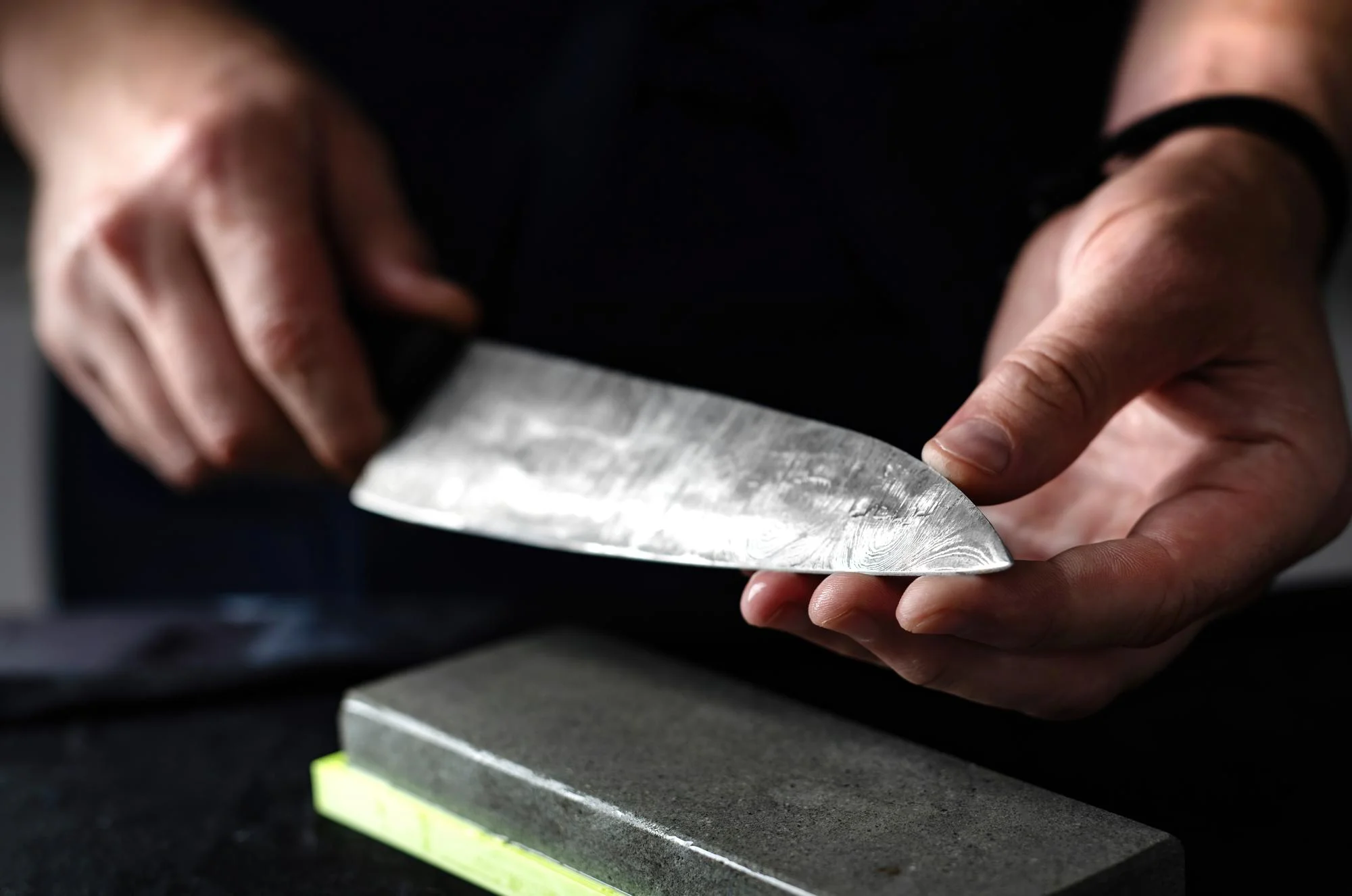
As you sharpen, you’ll start to feel a slight rough edge (called a burr) on the opposite side of the blade.
This is a key sign that the sharpening is working. It means you’ve removed enough material to form a new edge.
Step 5: Switch Sides
Once a burr forms along the full length of the blade, flip the knife and repeat the same process on the other side.
Keep your strokes even and balanced to maintain a symmetrical edge.
Step 6: Refine with Finer Grit
After sharpening with a medium grit stone, switch to a finer grit (3000+) to polish the edge.
Use lighter pressure and smoother strokes to refine the blade, making it sharper and more precise.
Step 7: Clean and Test Sharpness
Rinse the knife and wipe it dry carefully. Then test the sharpness:
- Paper test: The knife should slice cleanly through paper
- Tomato test: It should cut smoothly without slipping
If needed, repeat the final polishing step for better results.
Common Knife Sharpening Mistakes
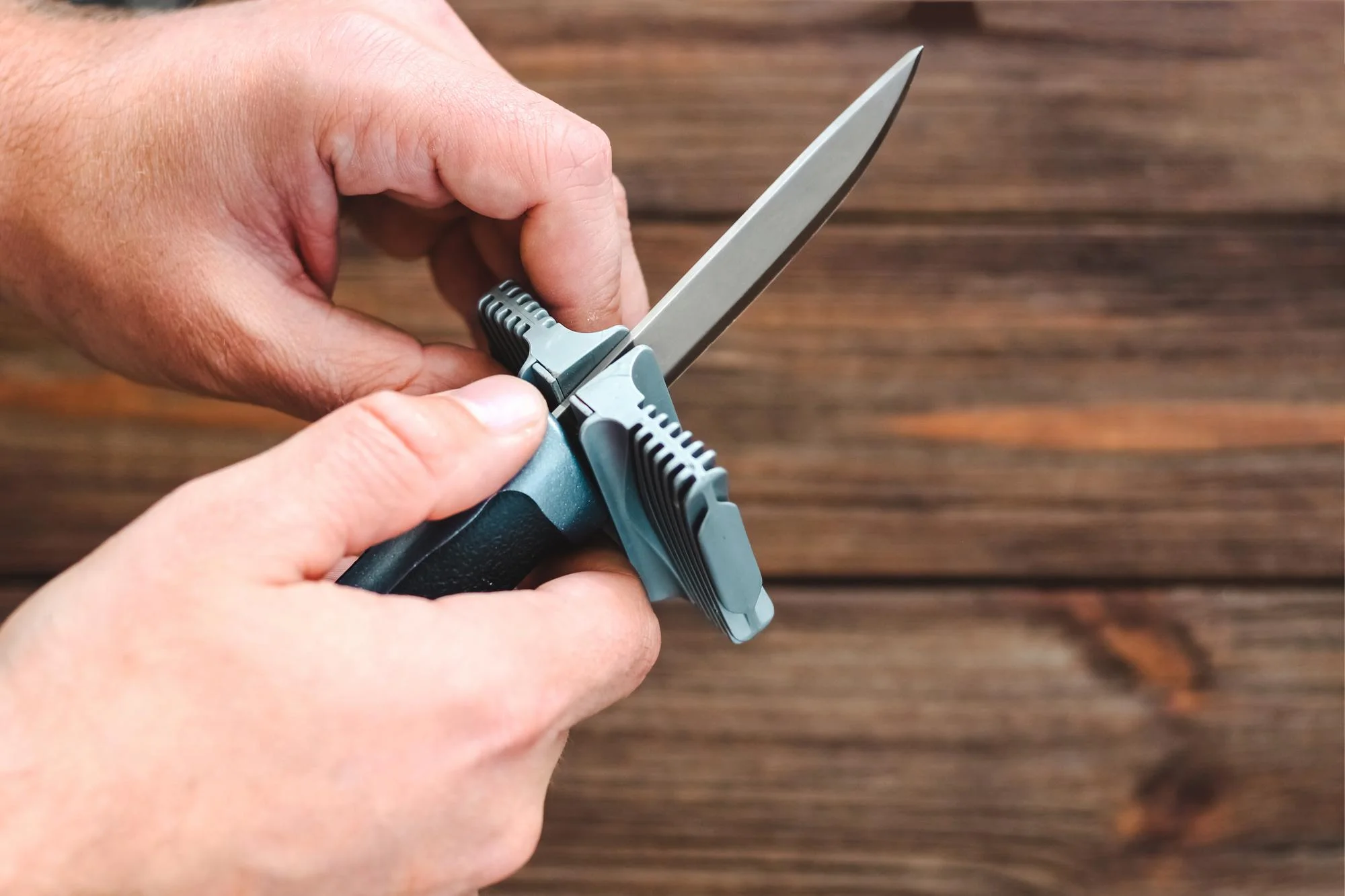
Sharpening is simple—but small mistakes can ruin your results. Here are the most common ones to avoid:
- Inconsistent angle
Changing the angle while sharpening leads to a dull, uneven edge. Keep it steady at 15–20°. - Using too much pressure
Pressing too hard removes too much metal and damages the blade. Light, controlled pressure works best. - Skipping grit progression
Jumping straight to fine grit won’t sharpen properly. Start coarse (if dull), then move to finer stones. - Not forming a burr
If you don’t create a burr, the knife isn’t fully sharpened yet. This step is essential. - Over-sharpening
Sharpening too often wears down your knife faster. Only sharpen when needed.
How Often Should You Sharpen Knives?
How often you sharpen depends on how frequently you use your knives:
- Home cooking (regular use): every 2–3 months
- Heavy or daily use: about once a month
- Light use: every 4–6 months
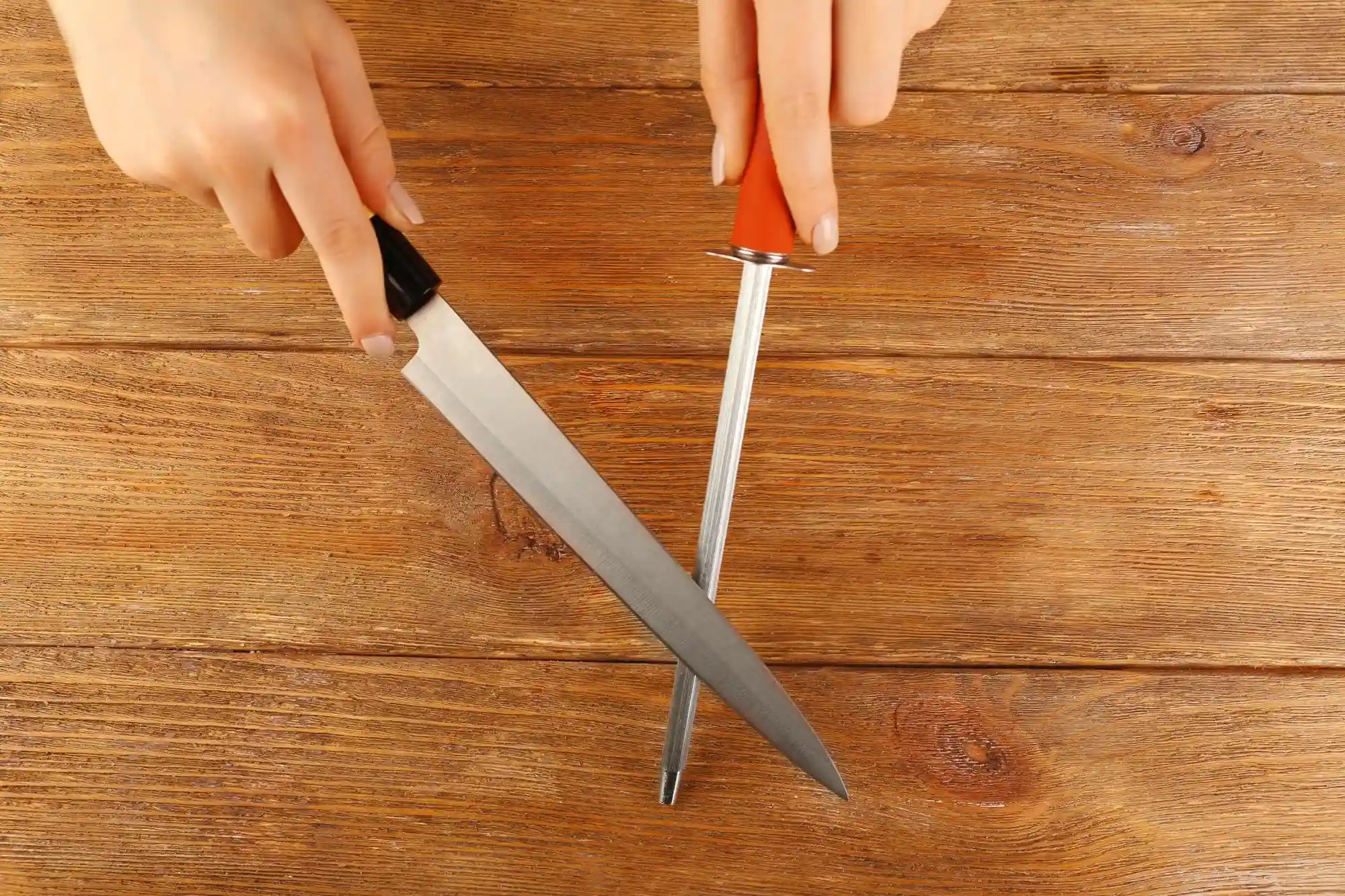
In between sharpening, use a honing rod weekly to keep the edge aligned and extend sharpness.
Key tip: If your knife struggles to cut tomatoes or slips on food, it’s time to sharpen.
FAQs
What is the best method to sharpen kitchen knives?
The best method is using a whetstone, because it gives full control over angle, pressure, and sharpness. It removes metal evenly to create a precise edge and is preferred by professionals.
What dulls a knife the fastest?
Knives dull fastest when used on hard surfaces like glass or marble, cutting bones or frozen food, and improper use like scraping or twisting the blade. These actions damage or roll the edge quickly.
Can you sharpen any kitchen knives?
Most kitchen knives can be sharpened, including stainless steel and carbon steel. However, very low-quality or heavily damaged knives may not hold a good edge and are often better replaced.
What household items can I use to sharpen a knife?
You can use simple items like a ceramic mug (bottom edge), sandpaper, or even a leather belt for basic sharpening or stropping. These are useful for quick fixes but not as effective as proper tools.





 English
  Arabic
  Spanish
  Japanese
  Russian
  Korean
  French
  Italian