


What Is SHGC?
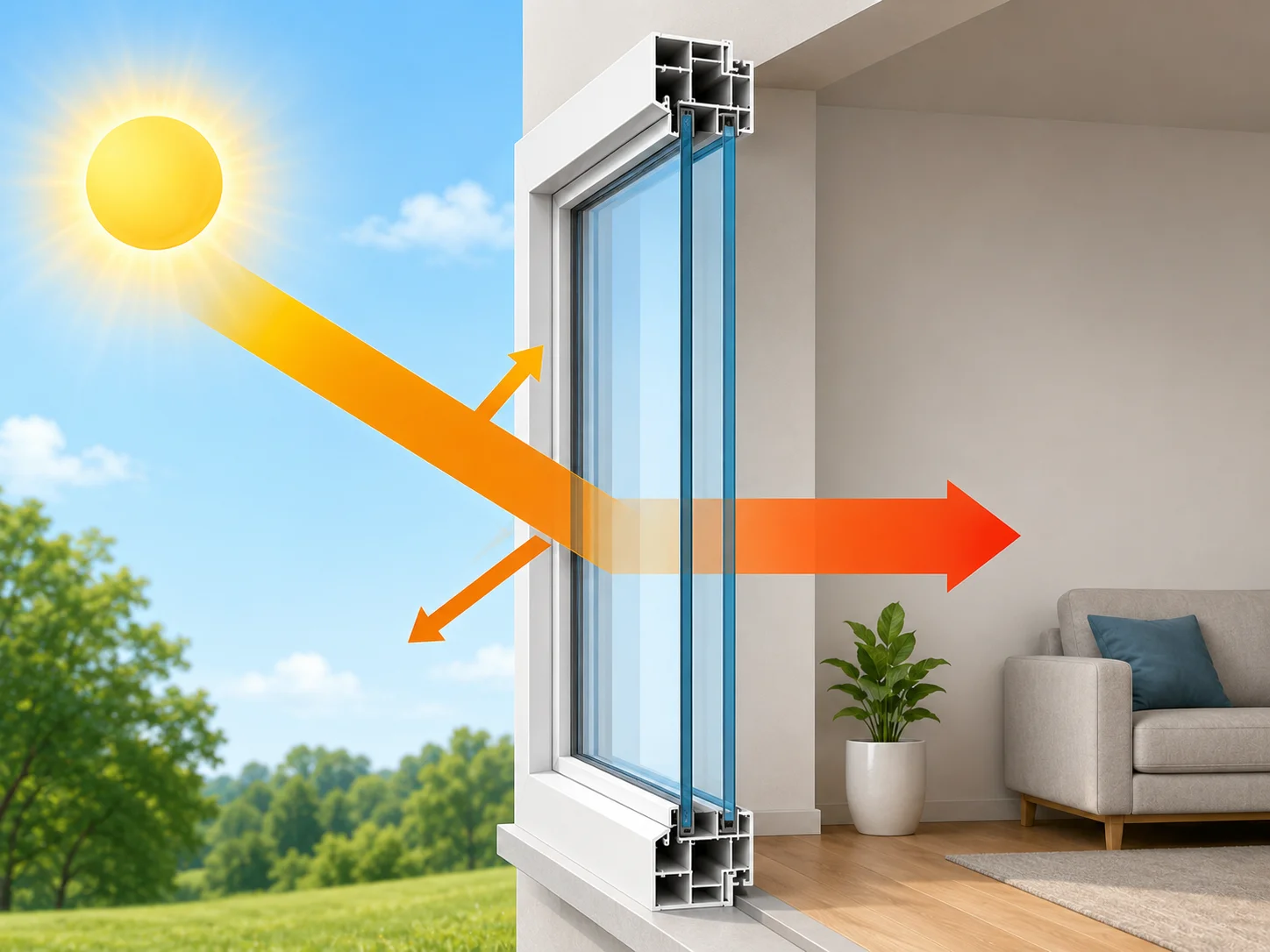
SHGC stands for Solar Heat Gain Coefficient. It measures how much solar heat passes through a window and enters a building. The rating includes both the heat that passes directly through the glass and the heat absorbed by the window that is later released indoors.
SHGC is expressed as a number between 0 and 1.
- Lower SHGC = less solar heat enters the building
- Higher SHGC = more solar heat enters the building
For example, a window with an SHGC of 0.25 allows about 25% of solar heat to pass through, while a window with an SHGC of 0.60 allows about 60%.
SHGC is one of the most important window performance ratings because it directly affects indoor comfort, cooling costs, and overall energy efficiency.
How to Read SHGC Ratings
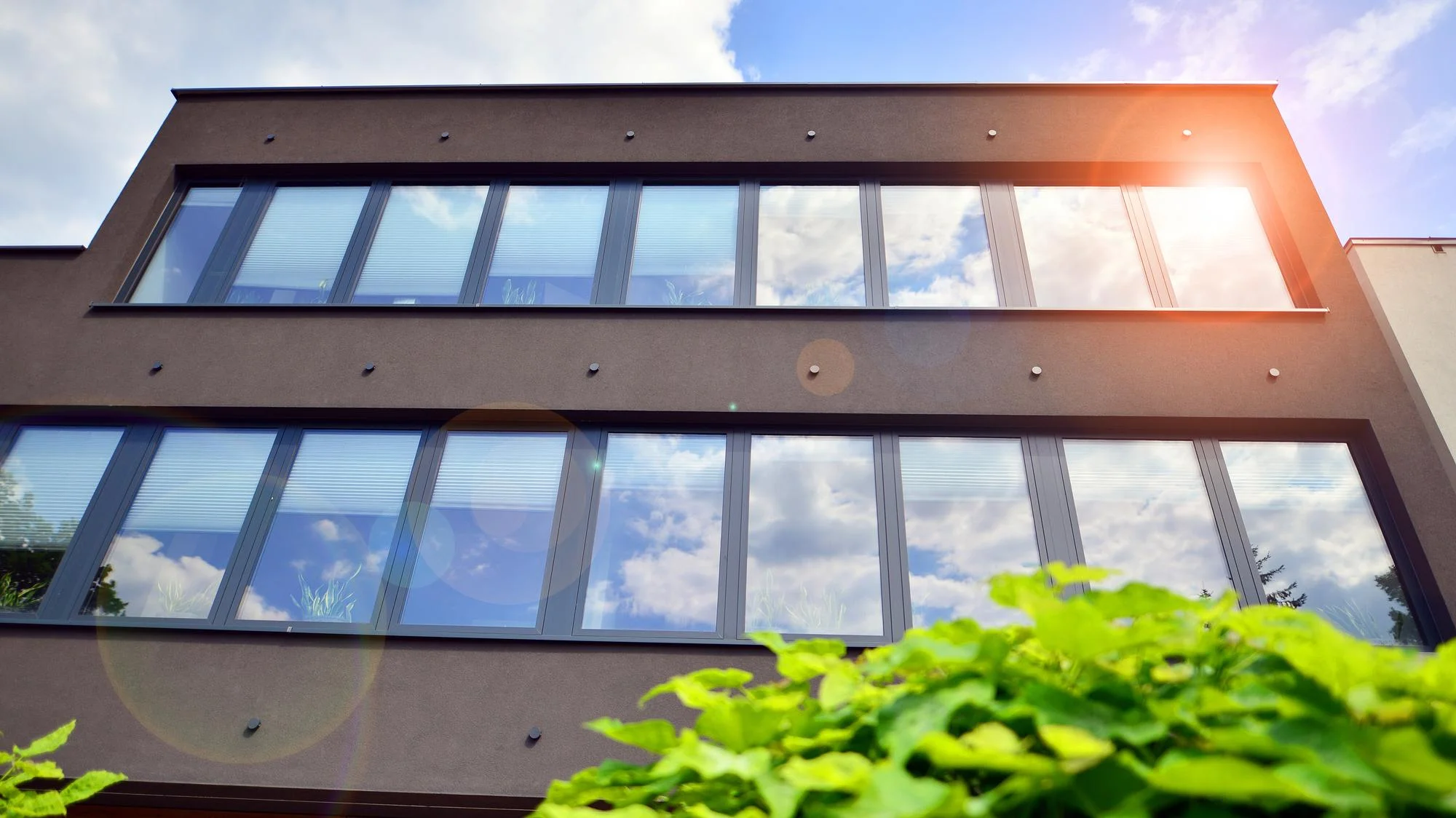
Understanding SHGC ratings helps you choose windows that match your climate and energy goals.
Understanding the SHGC Scale
The SHGC scale ranges from 0.00 to 1.00.
- SHGC 0.00 = blocks nearly all solar heat
- SHGC 1.00 = allows nearly all solar heat to enter
In real-world applications, most residential windows fall between 0.20 and 0.60.
Generally:
- Lower SHGC values help reduce cooling costs in hot climates.
- Higher SHGC values can help capture beneficial solar heat in colder climates.
SHGC Rating Guide
| SHGC Rating | Solar Heat Gain | 가장 적합한 대상 |
|---|---|---|
| Below 0.25 | Very Low | Hot climates, south- and west-facing windows |
| 0.25–0.40 | 보통의 | Most homes and mixed climates |
| 0.40–0.60 | 높은 | Cold climates where winter solar heat is beneficial |
| Above 0.60 | Very High | Passive solar homes and specialized applications |
SHGC vs Other Window Performance Ratings
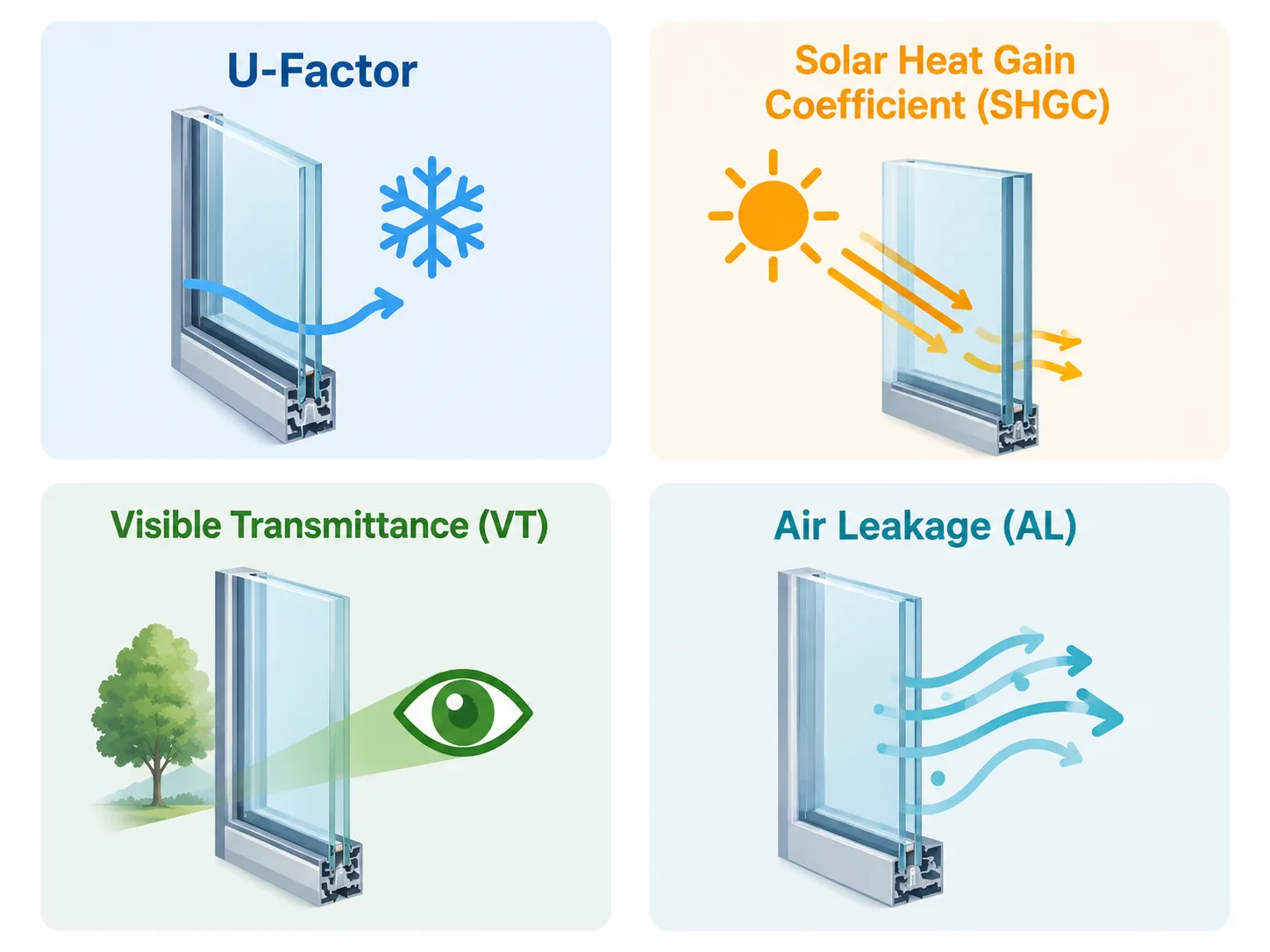
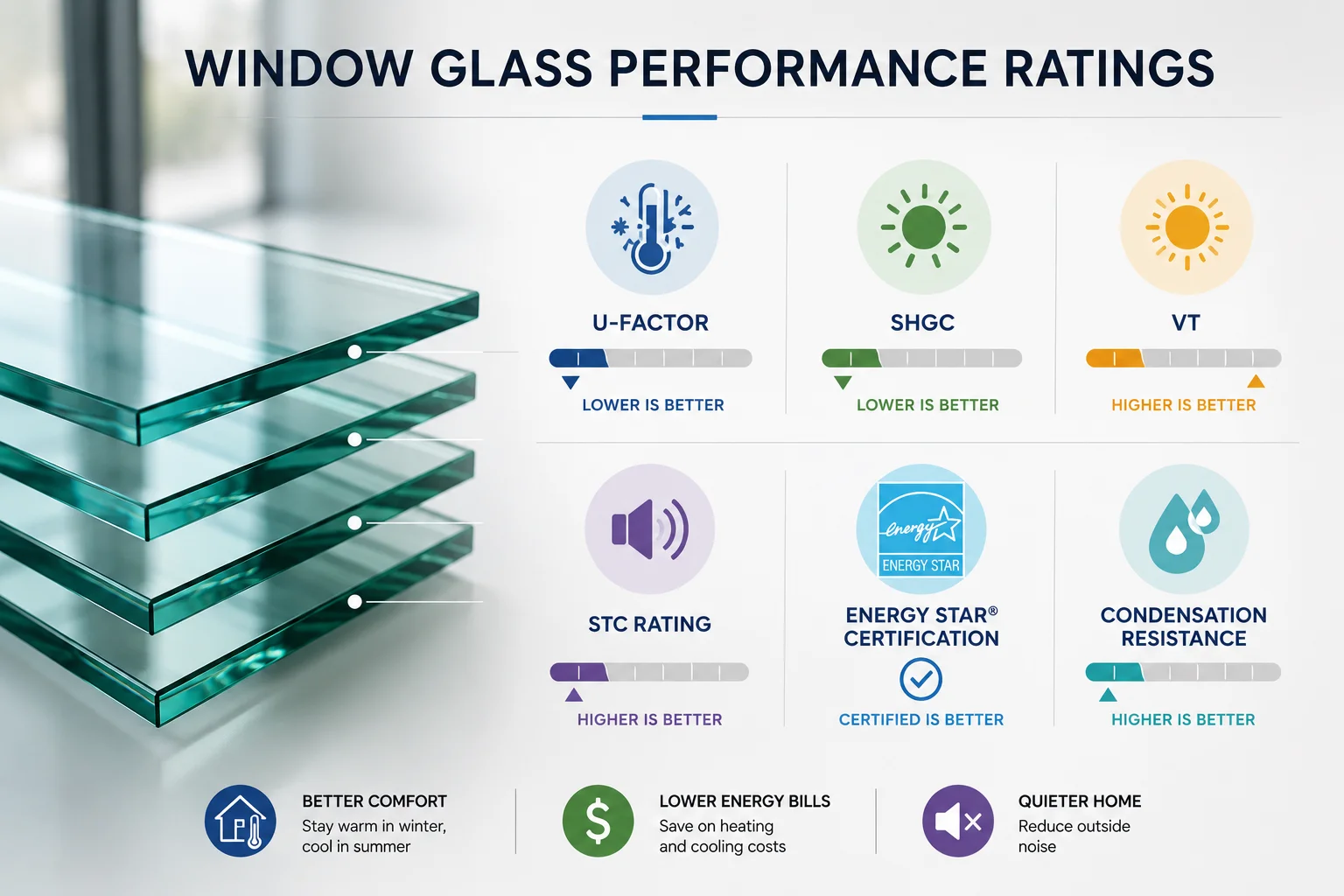
| Performance Rating | 측정 항목 | Ideal Value | Why It Matters |
|---|---|---|---|
| SHGC | Amount of solar heat entering through the window | Depends on climate | Affects cooling costs and indoor comfort |
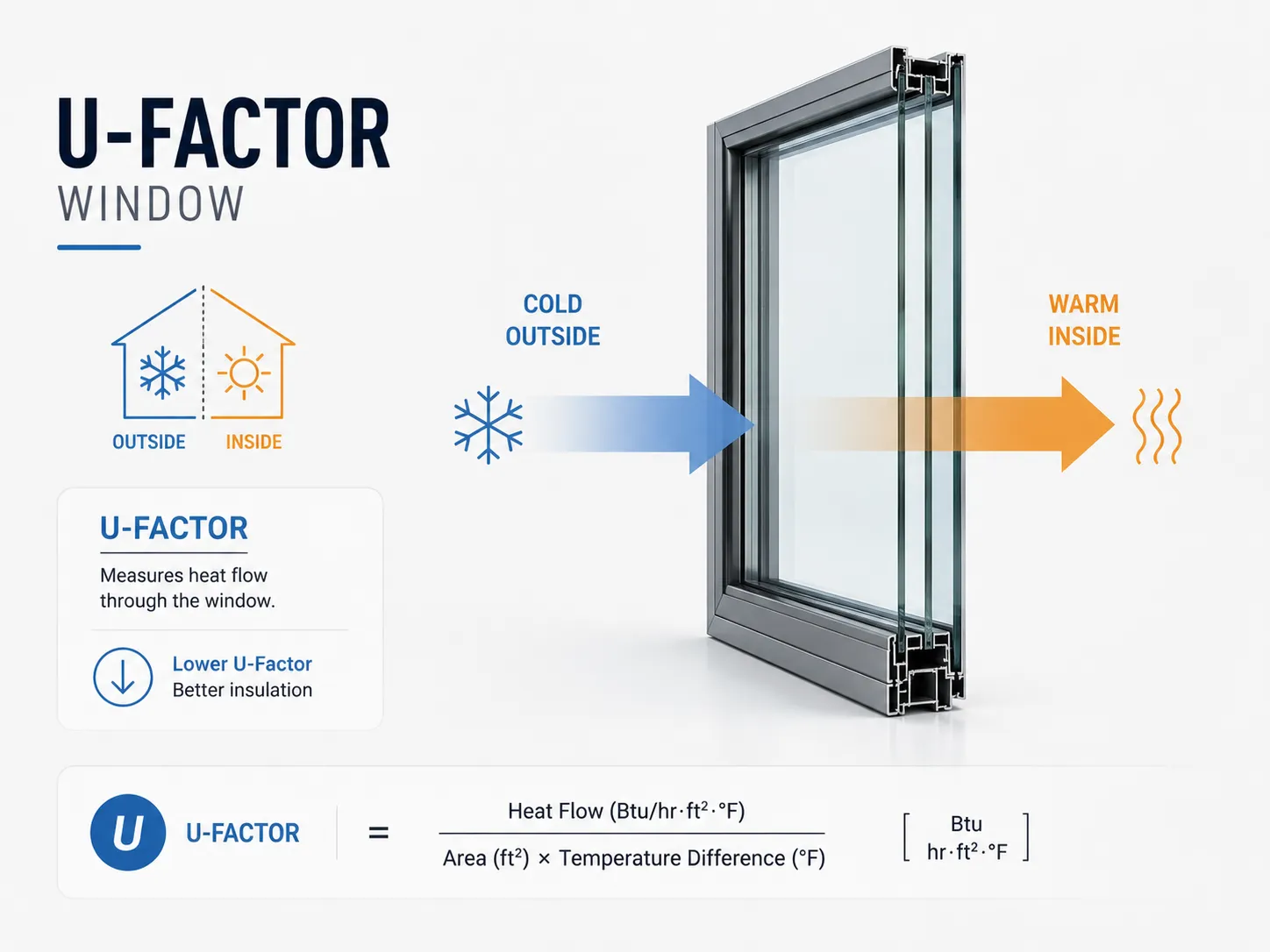
| 유-인자 | Rate of heat transfer through the window | 낮을수록 좋습니다 | Improves insulation and energy efficiency |
| 가시광선 투과율(VT) | Amount of visible daylight entering the room | 높을수록 좋다 | Provides natural light and reduces lighting needs |
| 공기 누출(AL) | Amount of air passing through the window assembly | 낮을수록 좋습니다 | Reduces drafts and improves comfort |
| 결로 저항(CR) | Ability to resist interior condensation | 높을수록 좋다 | Helps prevent moisture buildup and mold growth |
What Affects a Window’s SHGC?
Several factors influence a window’s Solar Heat Gain Coefficient (SHGC). Understanding these elements can help you choose windows that balance natural light, comfort, and energy efficiency.
유리 종류

The type of glass used has a major impact on how much solar heat enters a building.
- Clear Glass: Allows the highest amount of sunlight and solar heat to pass through.
- Tinted Glass: Reduces solar heat gain by absorbing and filtering sunlight.
- Reflective Glass: Uses a reflective coating to block a significant portion of solar radiation before it enters the building.
Different glass options can dramatically change a window’s SHGC rating.
로우-E 코팅

Low-emissivity (Low-E) coatings are one of the most effective ways to control solar heat gain.
- Solar Control Low-E: Designed for hot climates, it blocks more solar heat and helps reduce cooling costs.
- Passive Low-E: Allows more beneficial solar heat to enter, making it a good option for colder climates.
The type of Low-E coating can significantly affect both SHGC and overall energy performance.
Number of Glass Panes
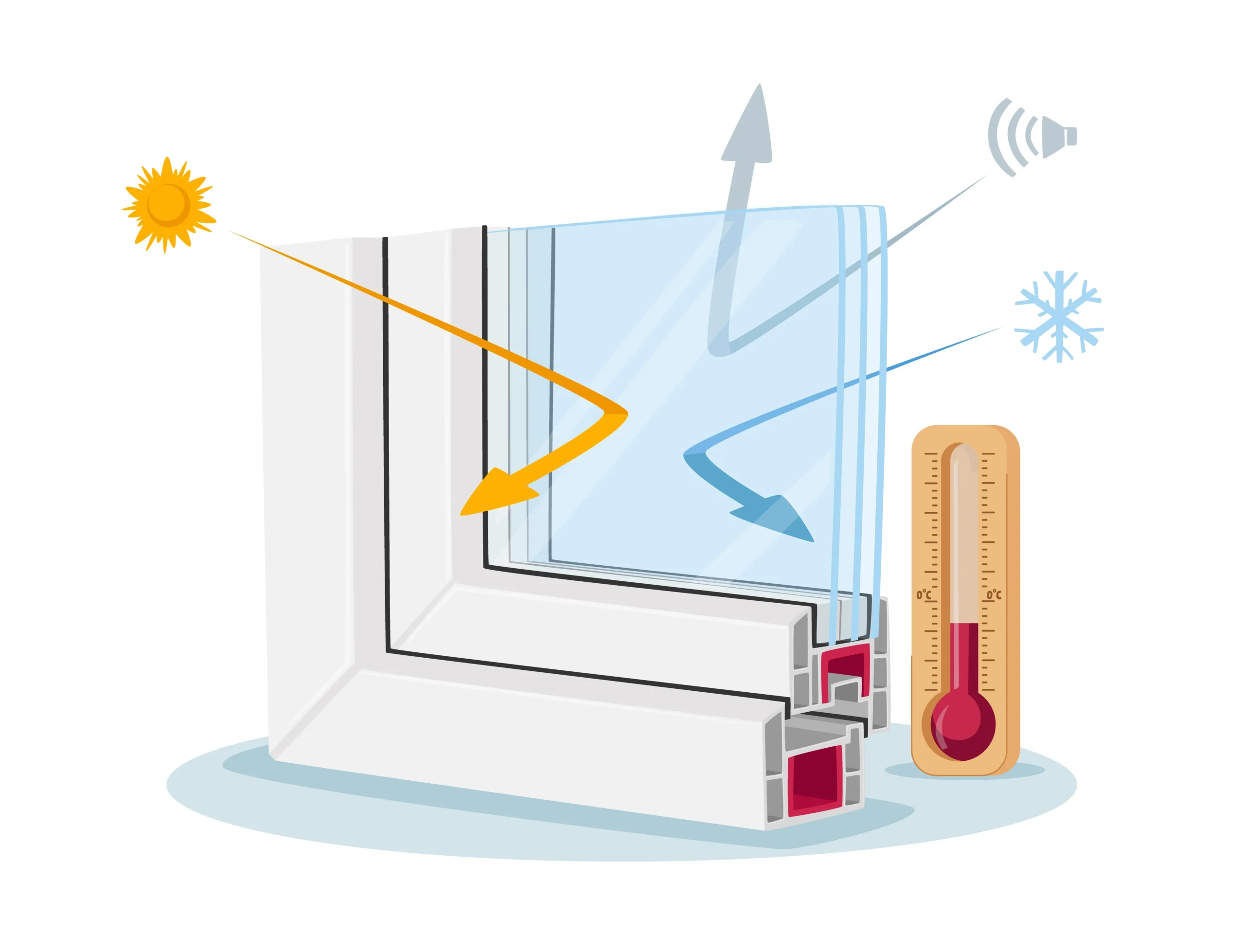
Multi-pane windows provide additional layers of insulation and can influence SHGC.
- Double-Pane Windows: Offer a balance of insulation, cost, and solar control.
- Triple-Pane Windows: Provide greater insulation and often lower SHGC values when combined with advanced coatings.
The overall performance depends on the complete glass package, not just the number of panes.
창 방향
The direction a window faces affects how much sunlight it receives throughout the day.
- North-Facing Windows: Receive the least direct sunlight and are less affected by SHGC.
- South-Facing Windows: Receive the most sunlight and often benefit from carefully selected SHGC values.
- East- and West-Facing Windows: Experience strong morning or afternoon sun and may require lower SHGC ratings to reduce overheating.
Choosing the right SHGC based on window orientation can improve comfort and energy savings.
Exterior Shading
Exterior shading devices can reduce the amount of solar heat reaching the glass.
Common shading solutions include:
- Roof overhangs
- Window awnings
- Exterior screens
- Trees and landscaping
These features help lower solar heat gain, especially during summer, while still allowing natural daylight into the home.

 English
  Arabic
  Spanish
  Japanese
  Russian
  Korean
  French
  Italian