

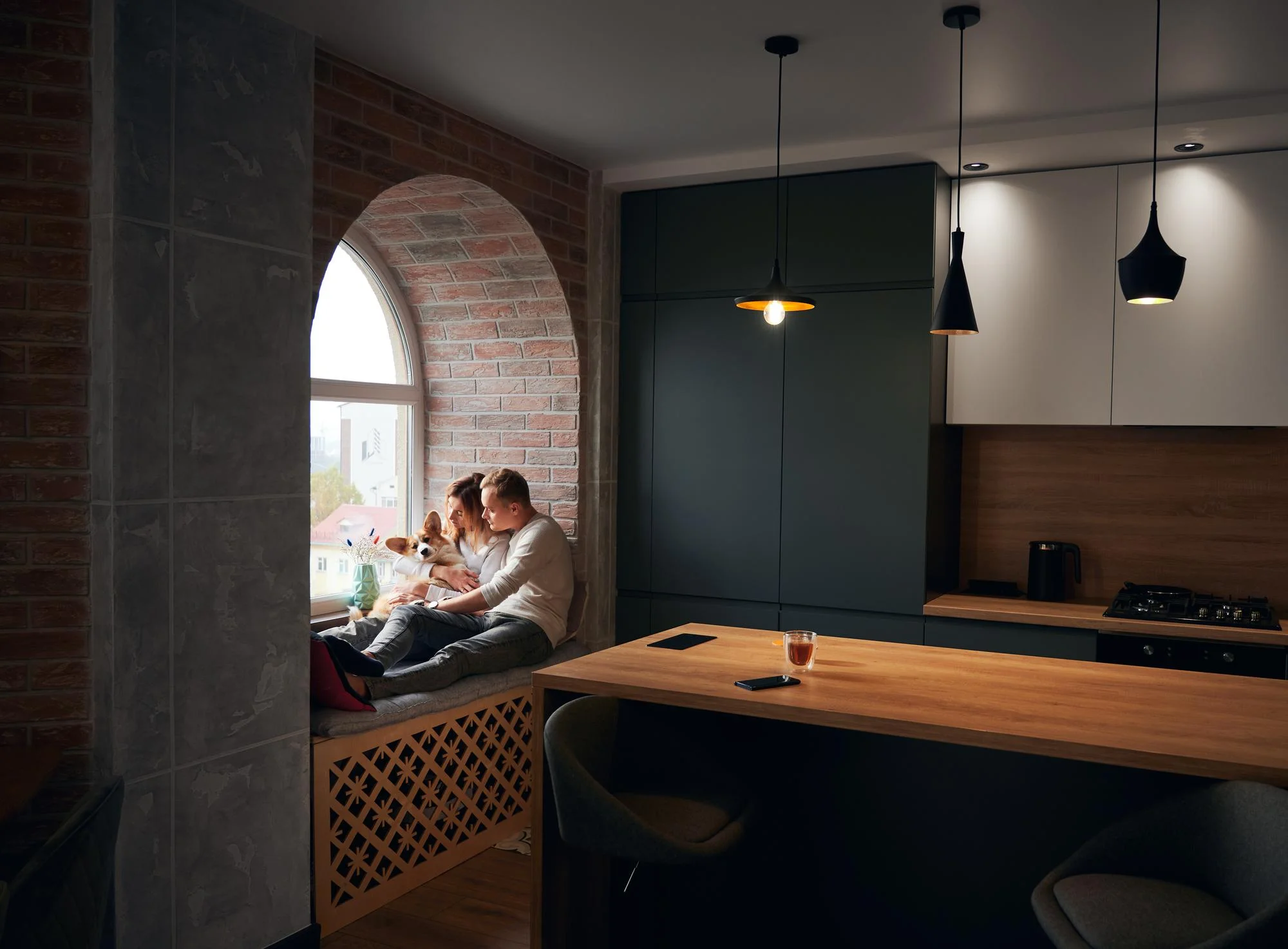
Good kitchen lighting does more than brighten a room — it makes cooking easier, keeps your space safer, and sets the mood for everyday living. Whether you’re chopping vegetables, helping kids with homework at the island, or hosting friends, the right lighting helps every moment feel more comfortable and inviting.
A simple way to think about kitchen lighting is through a layered lighting approach. This means using three types of light together:
Ambient lighting for overall brightness
Task lighting for focused work areas
Accent lighting for style, mood, and visual interest
When these layers work together, your kitchen feels warm, balanced, and easier to use. It’s the foundation of every great kitchen lighting plan and the key to creating a space that’s both beautiful and practical.
1. Recessed Ceiling Lights (Can / Pot Lights)
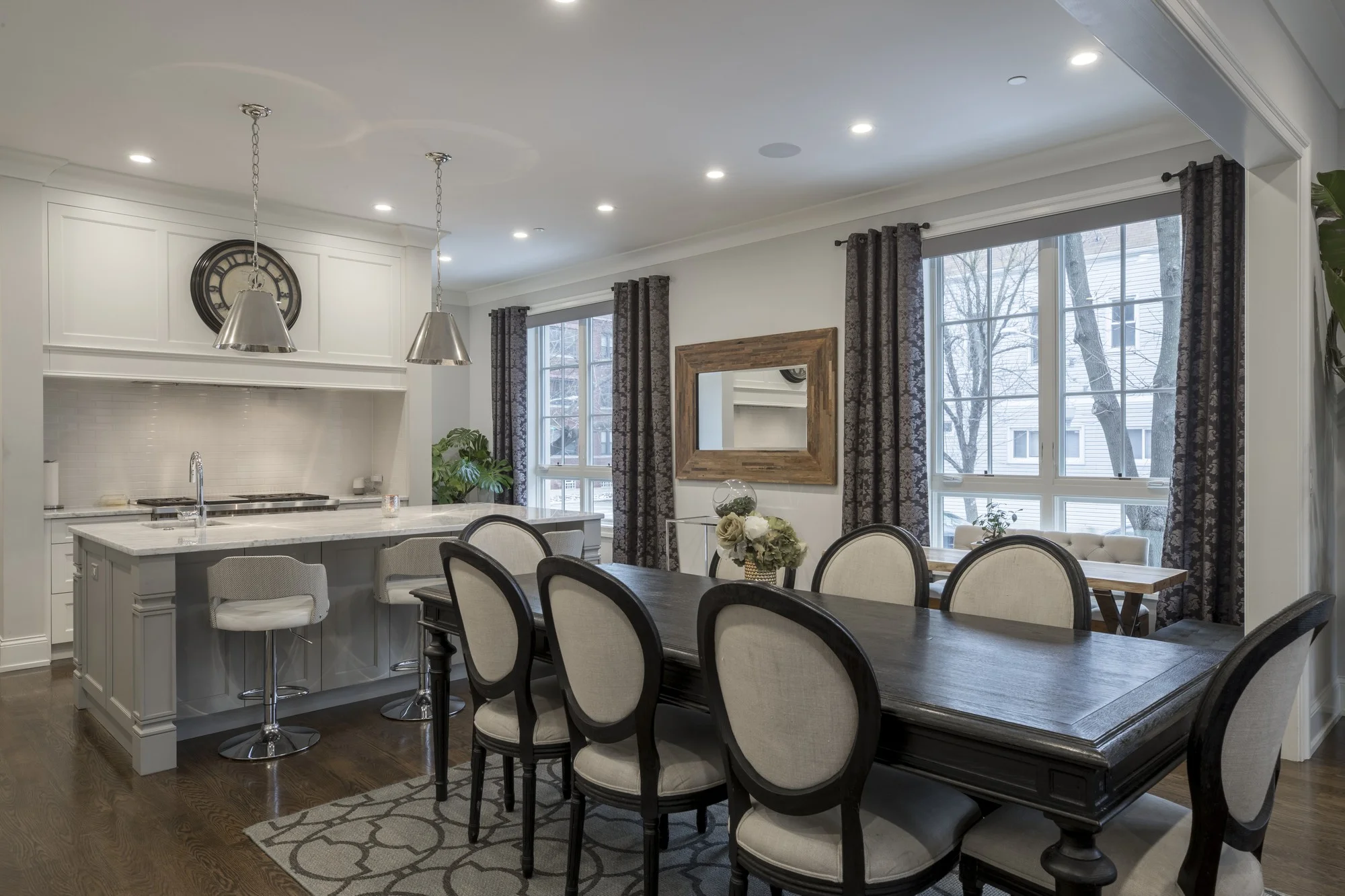
Recessed ceiling lights are one of the best ways to create smooth, even lighting across your entire kitchen. Because they sit inside the ceiling, they keep the space clean and uncluttered — perfect for modern or minimal designs. These lights work well in any kitchen size, from small galley layouts to large open plans, and provide dependable ambient light for everyday tasks.
2. Under-Cabinet LED Strips or Puck Lights
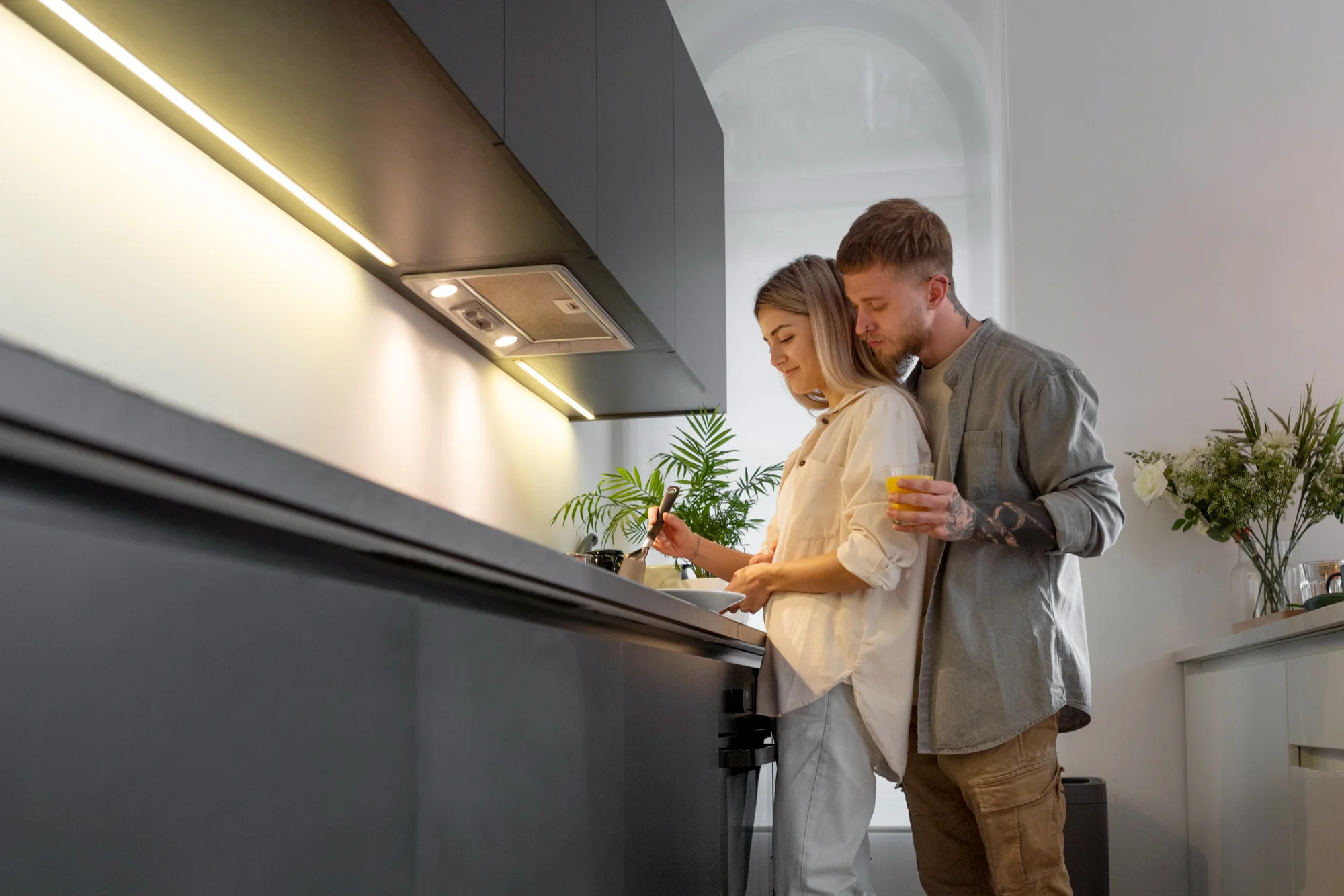
If you want brighter counters and better visibility while cooking, under-cabinet lighting is a must. LED strips or puck lights shine directly onto your work areas, reducing shadows and making food prep safer and easier. They’re simple to install — whether you choose stick-on strips, slim bars, or small puck lights — and many are energy-efficient and dimmable. This makes them a great blend of function, style, and convenience.
3. Pendant Lights Over the Island or Peninsula
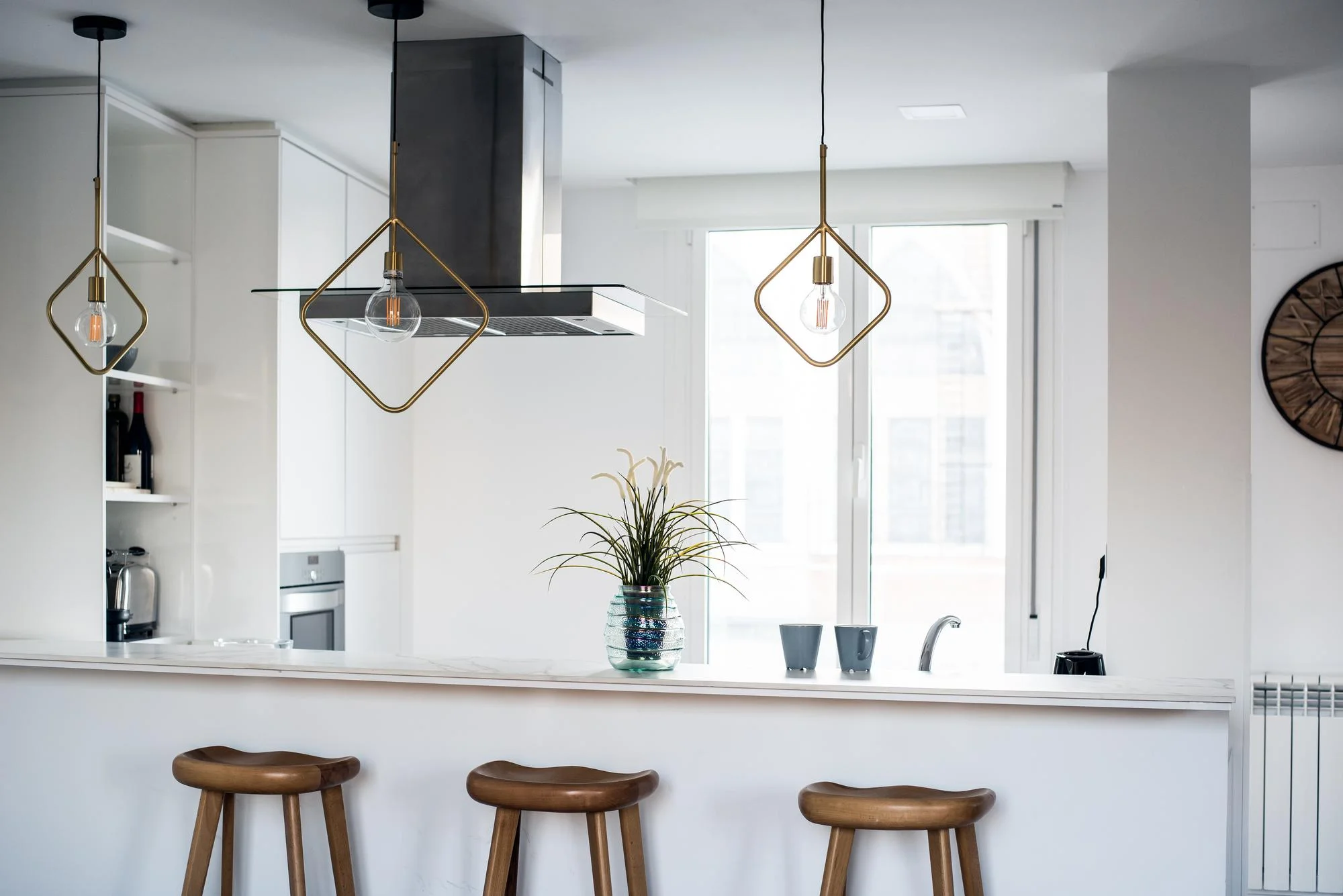
Pendant lights bring both personality and purpose to the kitchen. Hanging a pair or trio over your island adds focused light for cooking, dining, or quick conversations. They also help define the space in an open-concept kitchen, creating a visual boundary between cooking and living areas. With so many styles available, pendants are one of the easiest ways to upgrade your kitchen’s look.
4. Track Lighting with Adjustable Fixtures
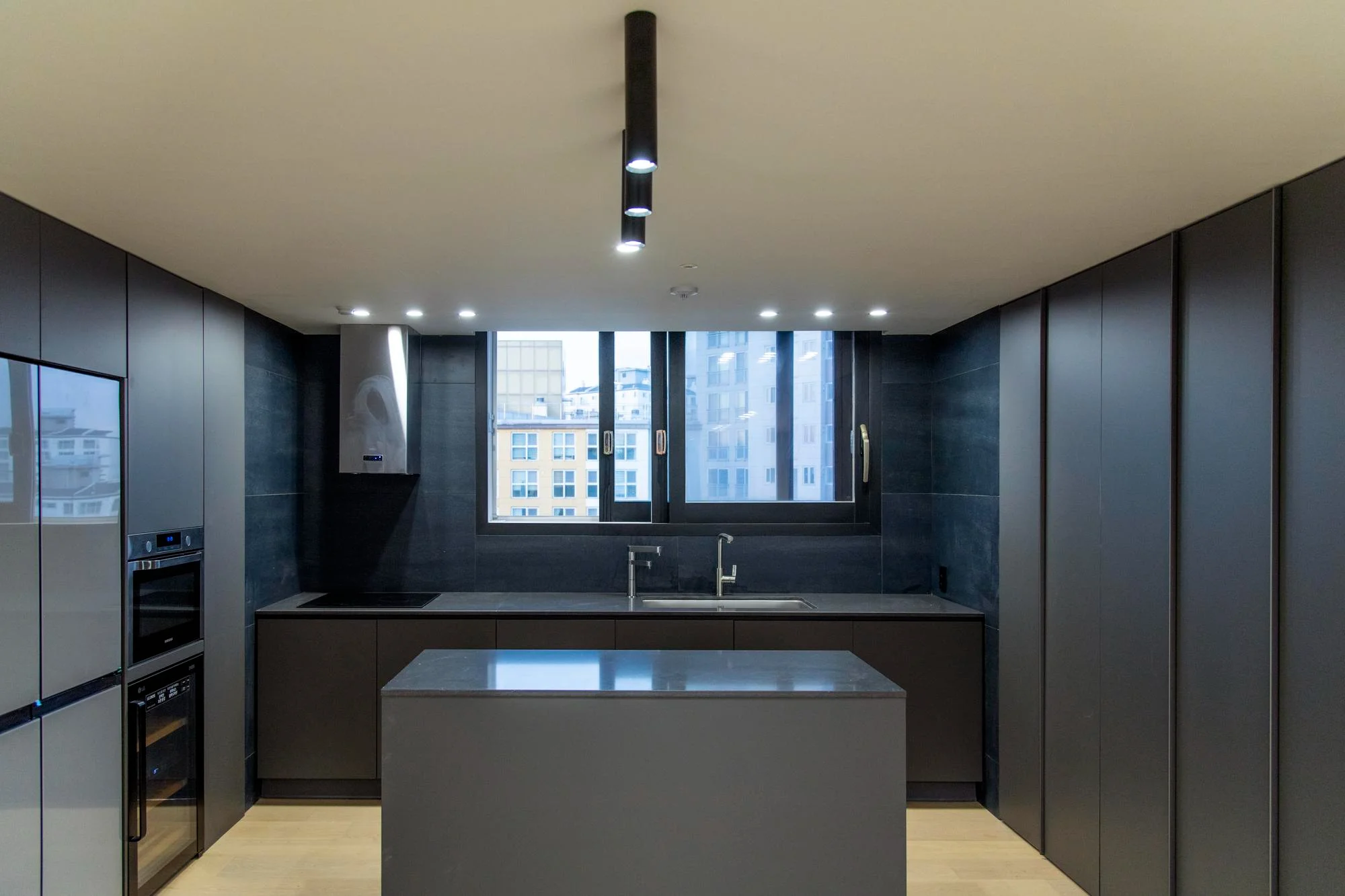
Track lighting is a flexible choice for kitchens that need adjustable, targeted light. Each head on the track can be aimed in a different direction, letting you highlight the island, sink, cabinets, shelves, or any area that needs extra brightness. It’s especially useful in kitchens with unique layouts or limited ceiling space, giving you freedom to direct light exactly where you want it.
5. Flush-Mount or Semi-Flush Ceiling Lights (for Low Ceilings)
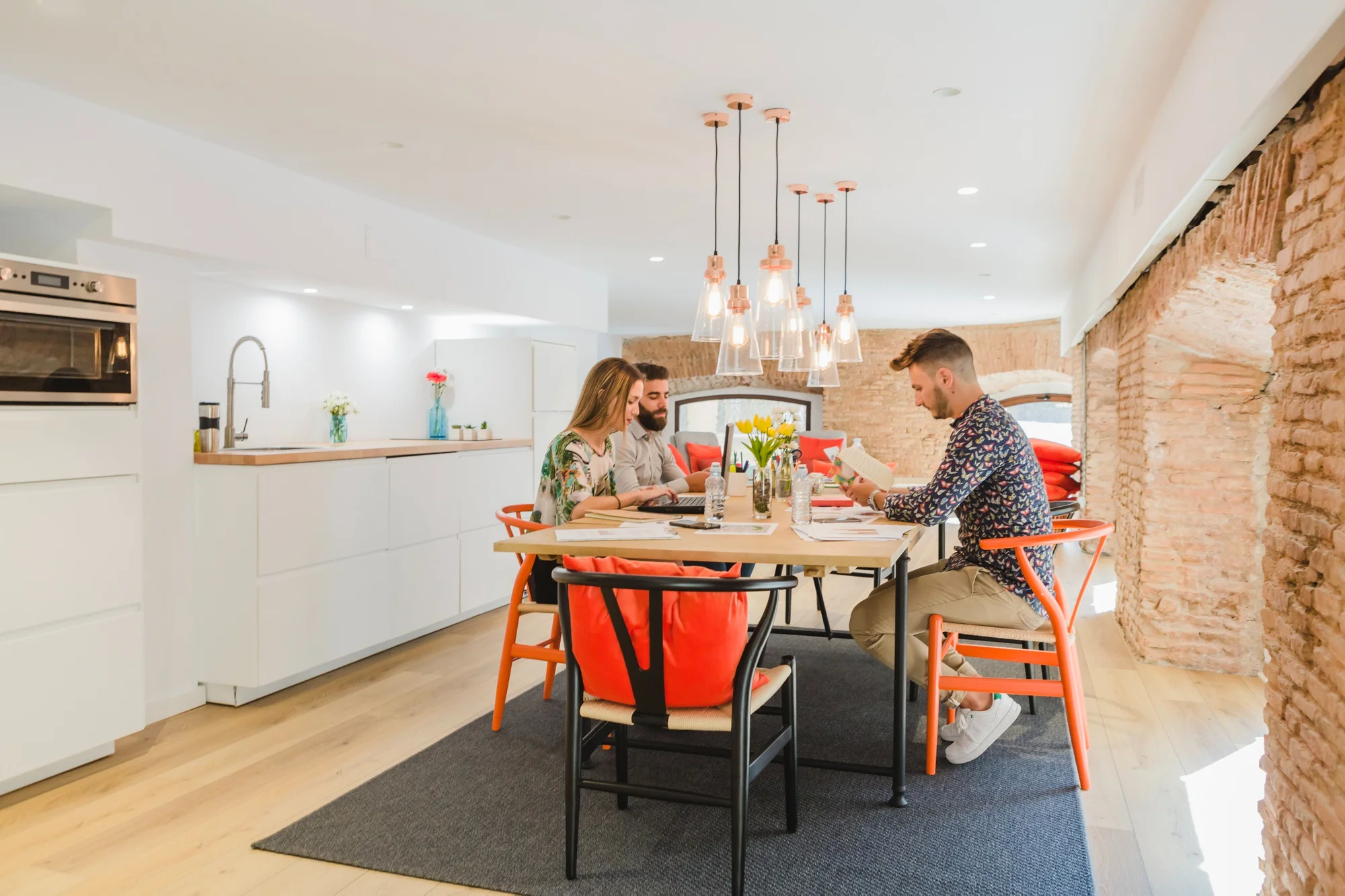
For kitchens with low ceilings, flush-mount and semi-flush lights are a smart alternative to hanging fixtures. They provide bright, even ambient light without taking up visual space or reducing headroom. These fixtures fit well in small kitchens, apartments, and older homes where ceiling height is limited, offering a clean and practical lighting solution that still looks stylish.
6. Accent / Cove / Indirect Lighting (e.g., LED Strips Above Cabinets)
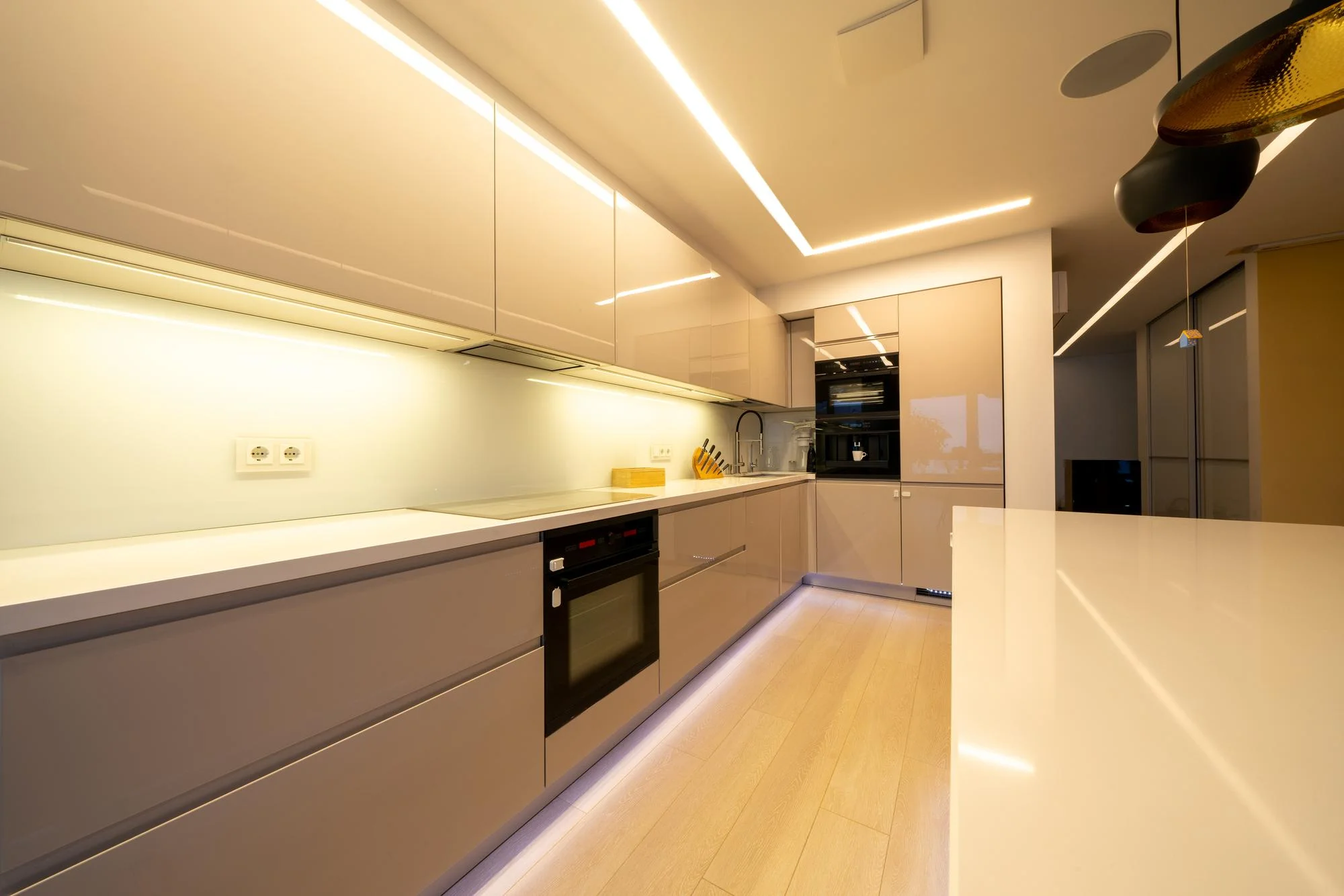
Accent and cove lighting add a soft, gentle glow that makes your kitchen feel warm and inviting. LED strips placed above cabinets or along architectural details highlight the shapes of your space without being too bright. This type of indirect lighting is perfect for evenings, hosting guests, or when you want a relaxed atmosphere while cooking. It adds style without overwhelming the room.
7. Spotlights / Directional Recessed Lights
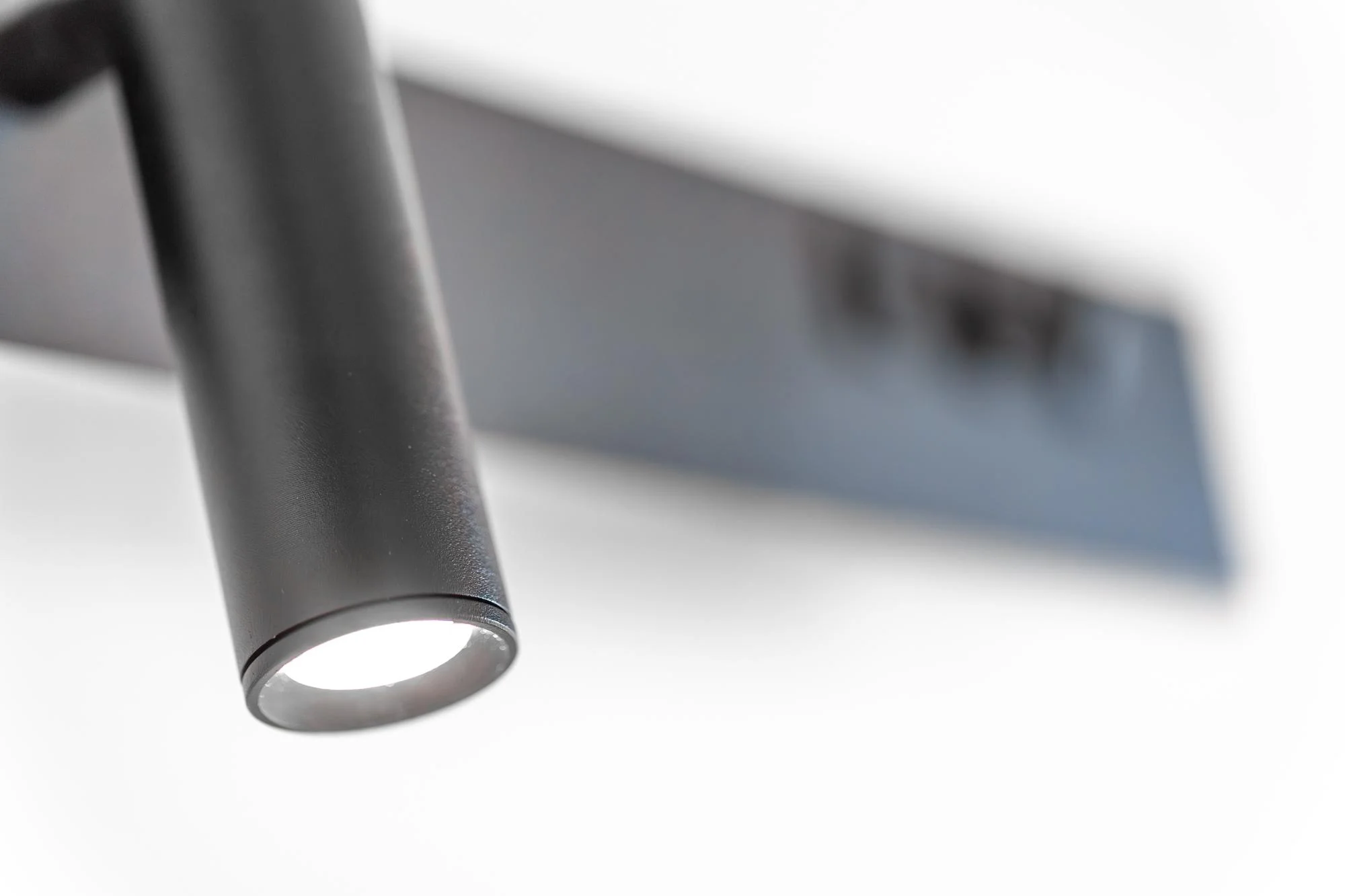
Spotlights are great when you need focused light in specific areas. You can aim them at open shelves, a pretty backsplash, artwork, or any spot that deserves attention. They’re also helpful in work zones where extra brightness improves safety. Because they sit close to the ceiling, spotlights give you targeted lighting without the bulk of larger fixtures.
8. Integrated Cabinet or Drawer Lighting (Inside Cabinets / Glass Doors)
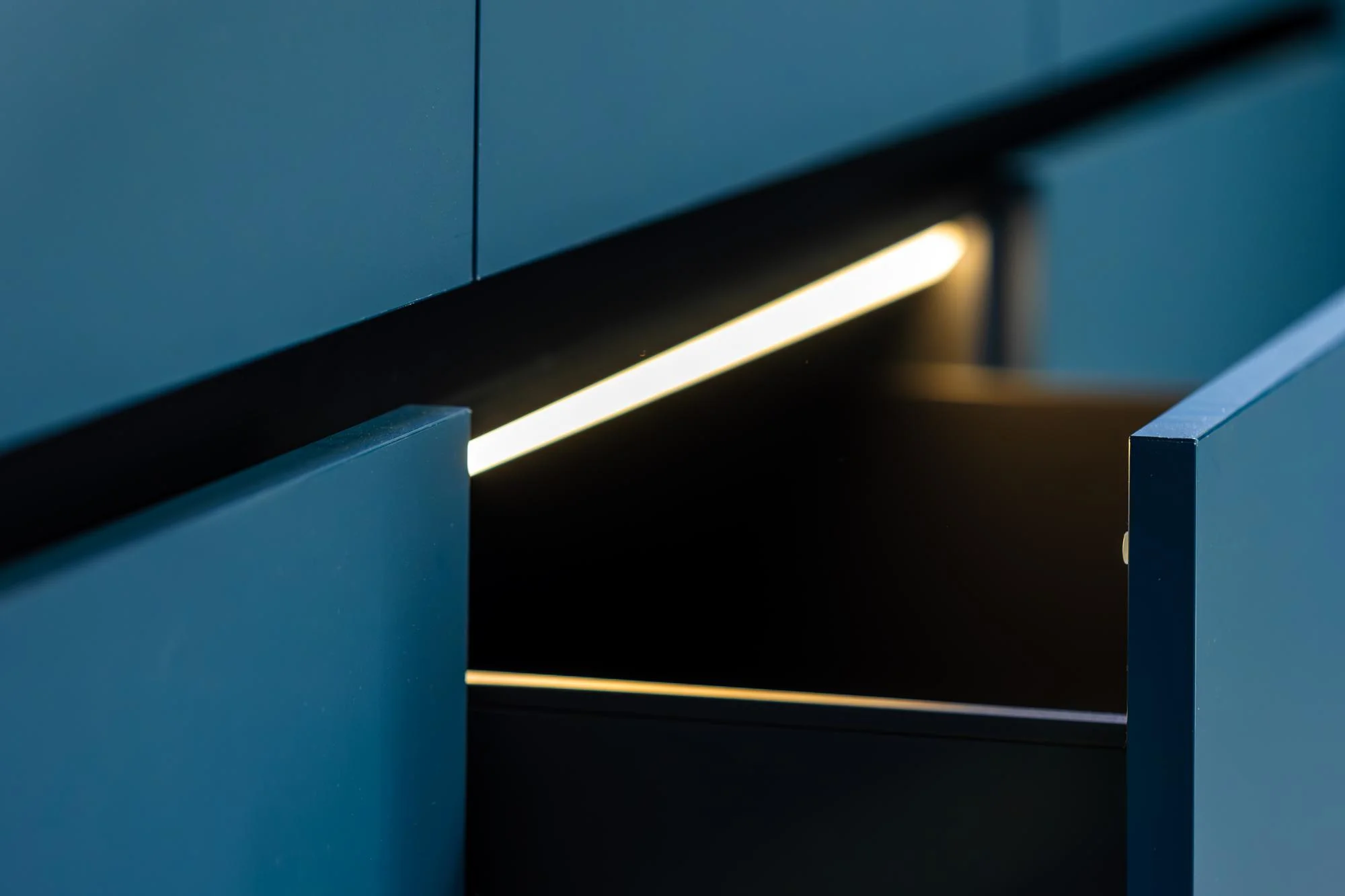
Integrated lighting brightens the inside of cabinets, drawers, or display shelves, making it both useful and beautiful. In glass-door cabinets, it highlights dishes or decor. In everyday cabinets, it helps you see what’s inside without fumbling in the dark. This small detail adds a high-end feel and makes your kitchen more functional.
9. Smart / Tunable LED Lighting
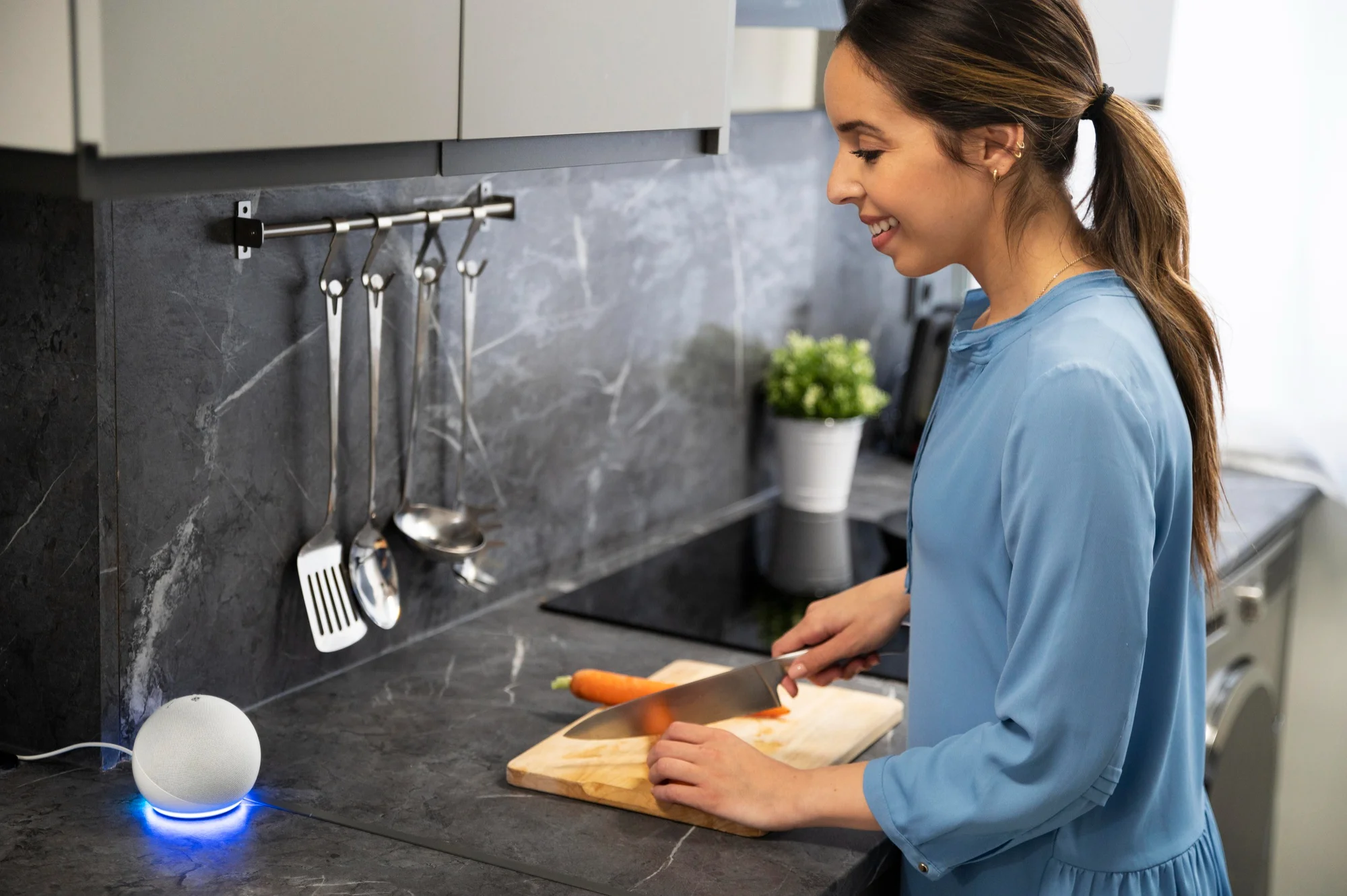
Smart lighting lets you control brightness and color temperature with a switch, remote, or app. You can choose bright, cool-toned light for cooking and softer, warm tones for dining or winding down. This flexibility is ideal for modern kitchens that serve many roles — prep space, hangout spot, and dining area. It’s an easy way to adjust the mood throughout the day.
10. Mixed Lighting — Combining Ambient, Task & Accent
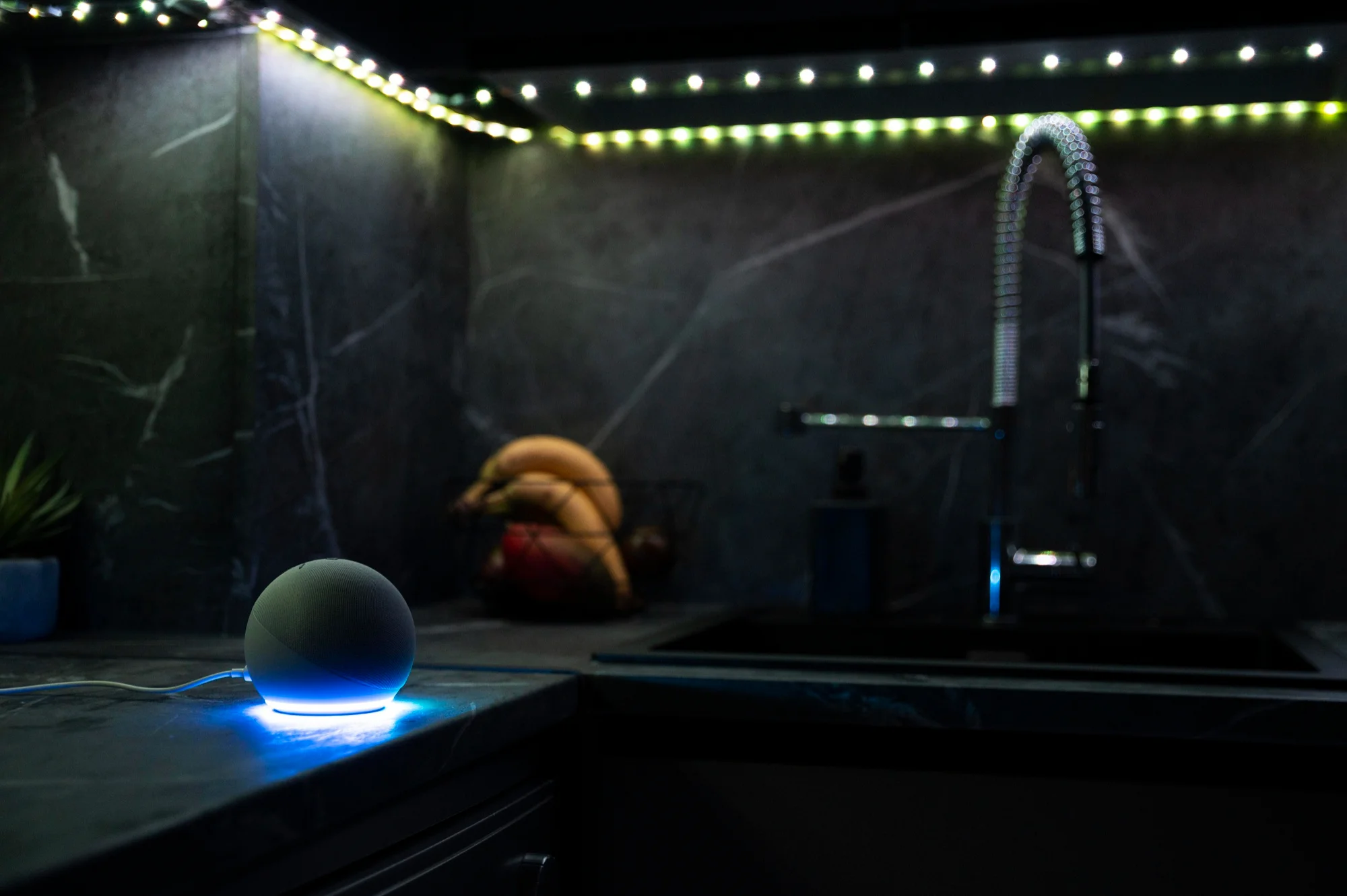
The best kitchens use a mix of lighting layers instead of relying on one bright fixture. Combining ambient, task, and accent lighting ensures your space feels bright, balanced, and comfortable. It also prevents shadows and gives you control over the room’s atmosphere. Layered lighting makes your kitchen look more polished and helps every task—from chopping veggies to hosting friends—feel easier.
11. Warm vs. Cool Light: Choosing the Right Color Temperature
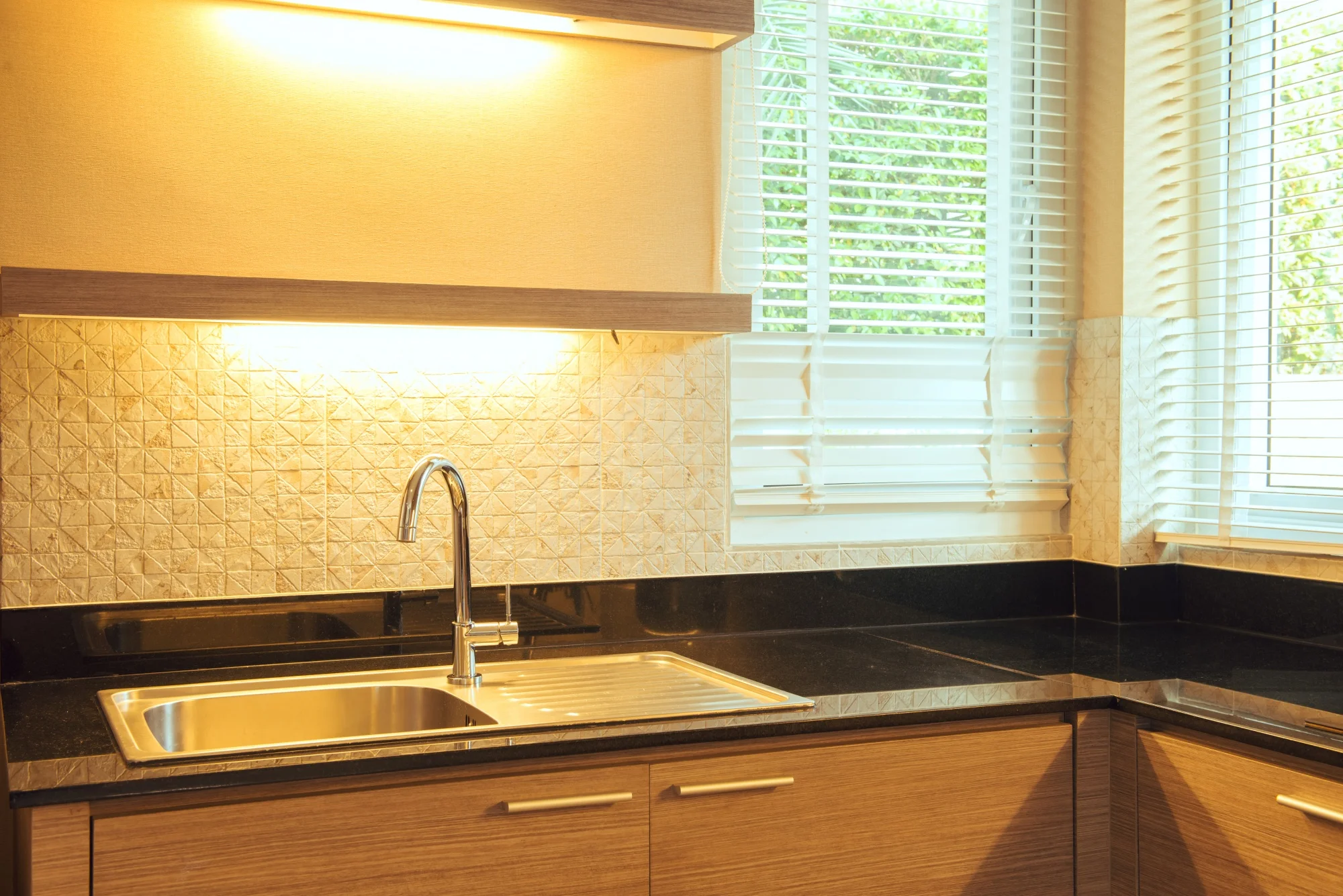
The color temperature of your lights has a big impact on how your kitchen feels and functions. Cool or neutral white light (around 3500–4500 K) is great for cooking and prep because it makes details clearer and colors more accurate. Warm light (about 2700–3000 K) creates a softer, cozier atmosphere that’s perfect for relaxing, dining, or evening gatherings.
Using the right color temperature helps you match the lighting to your activity. Bright and cool for focus, warm and gentle for comfort — a simple choice that makes your kitchen work smarter throughout the day.
12. Layered Lighting Plan + Dimmer Controls
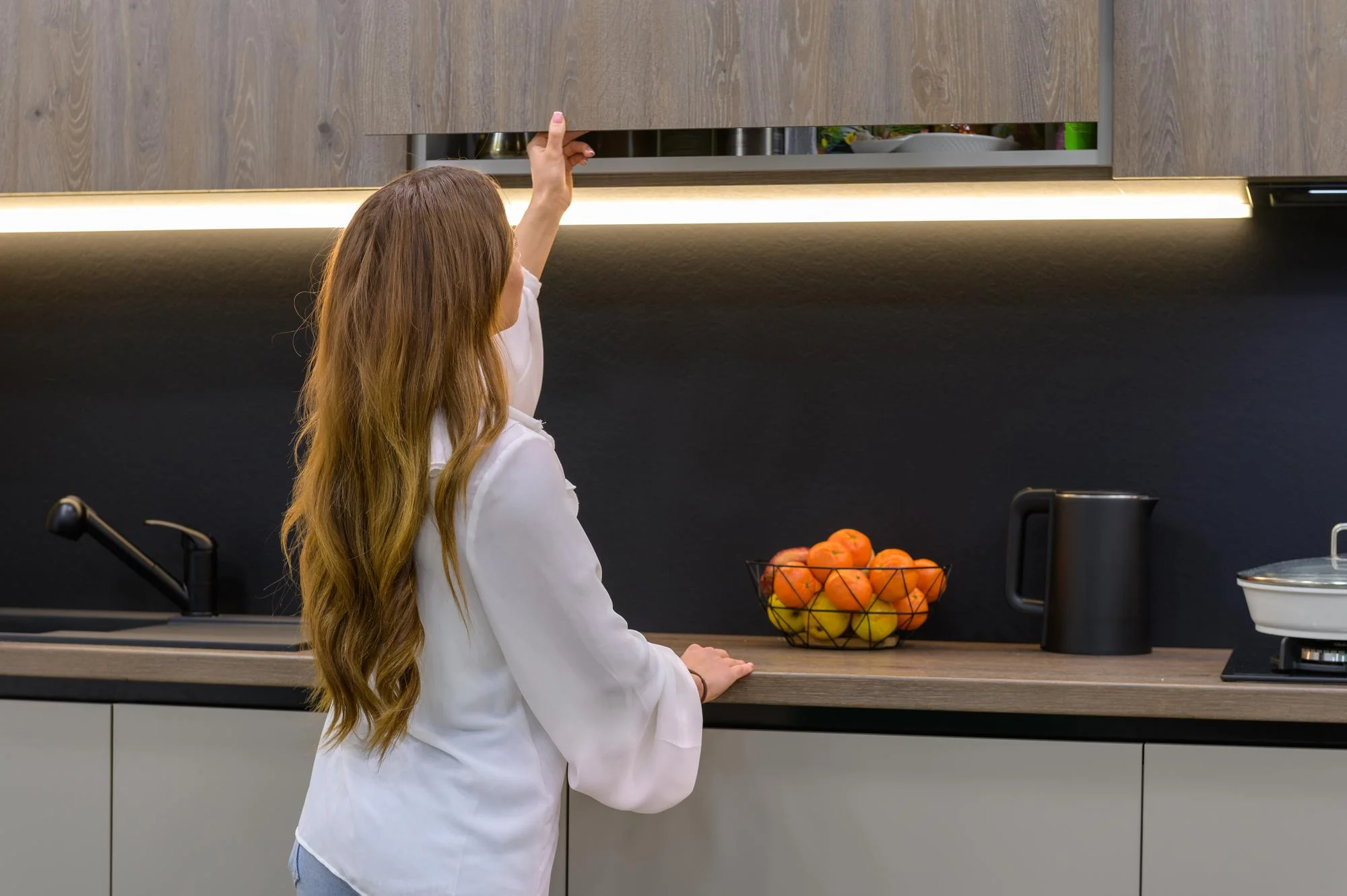
A layered lighting plan ties everything together. By combining ambient, task, and accent lighting, your kitchen stays bright where you need it and comfortable where you want it. Adding dimmers or multi-switch controls lets you adjust brightness in each zone, giving you full control over the mood and functionality.
Turn lights up for cooking, lower them for dinner, or add a soft glow at night — dimmers make your kitchen flexible, efficient, and more enjoyable to use.
Ready to Light Up Your Kitchen? Contact Us Today!
If you’re planning a kitchen upgrade and want the perfect lighting setup, we’re here to help. Whether you need guidance choosing fixtures, designing a layered lighting plan, or finding the right products for your space, our team can make the process easy and stress-free.
Get expert advice, personalized recommendations, and fast support.
Let’s create a kitchen that looks brighter, works better, and feels amazing every day.
FAQs
What type of lighting is best for kitchens?
A combination of layered lighting — ambient (overall ceiling lights), task (under-cabinet or over work areas), and accent (decorative or accent lights) — gives the best balance of brightness, function, and atmosphere.
What is the latest trend in kitchen lighting?
Recent kitchen-lighting trends favor layered schemes with smart, adjustable LED lighting, tunable color temperatures, and under-cabinet or cabinet lighting to combine style with function.
Is 3000K or 4000K better for a kitchen?
Use 3000K for warm, cozy ambiance (great for dining or relaxing) and 4000K (neutral white) for clearer, more natural light — ideal for prep and cooking tasks.
What is kitchen task lighting?
Kitchen task lighting is directed light focused on work areas (like countertops, sink, stove) to help you see clearly while cooking, chopping, or cleaning — usually provided by under-cabinet lights, spotlights, or pendant lights.
 English
  Arabic
  Spanish
  Japanese
  Russian
  Korean