

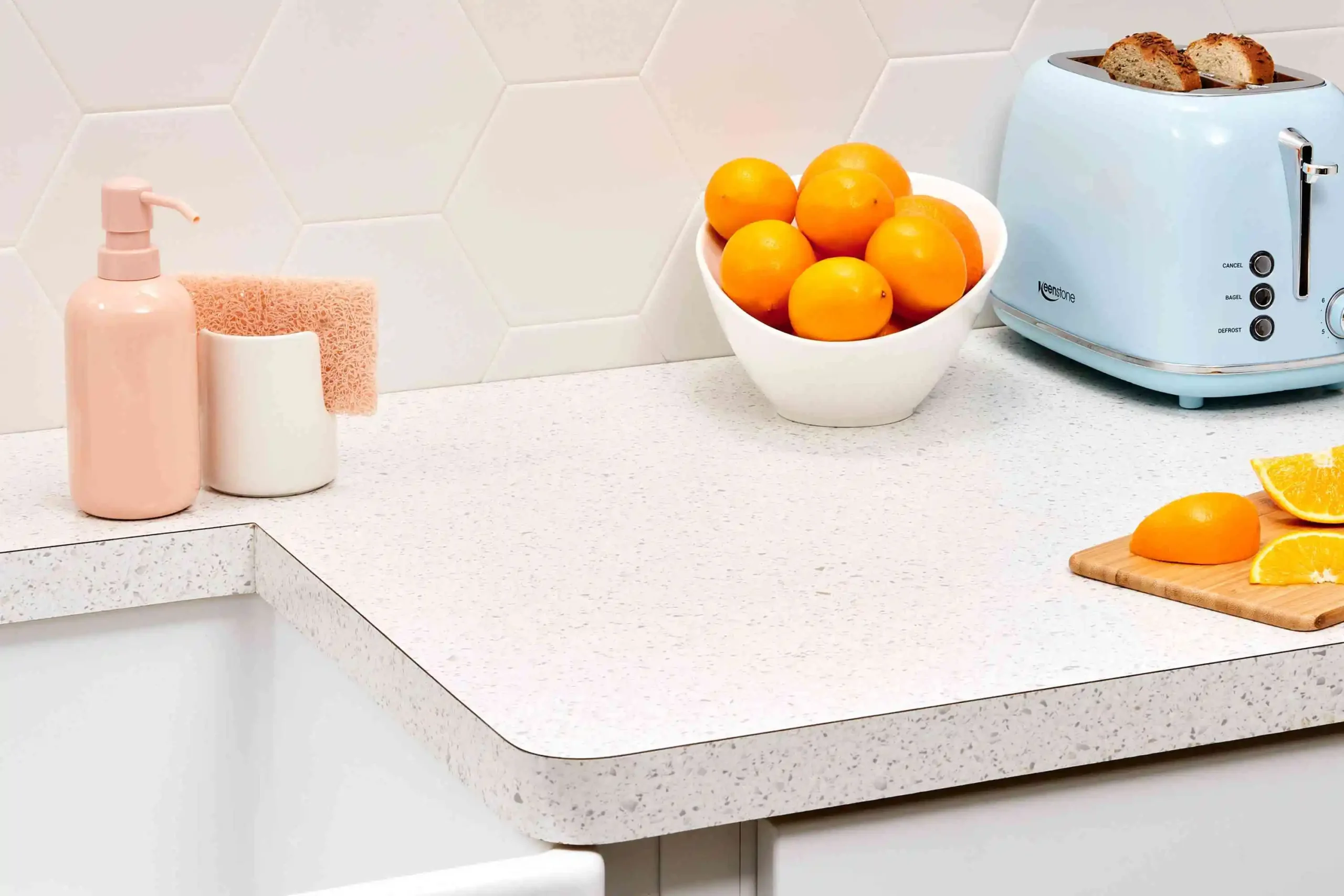
What Is a Countertop Edge Profile?
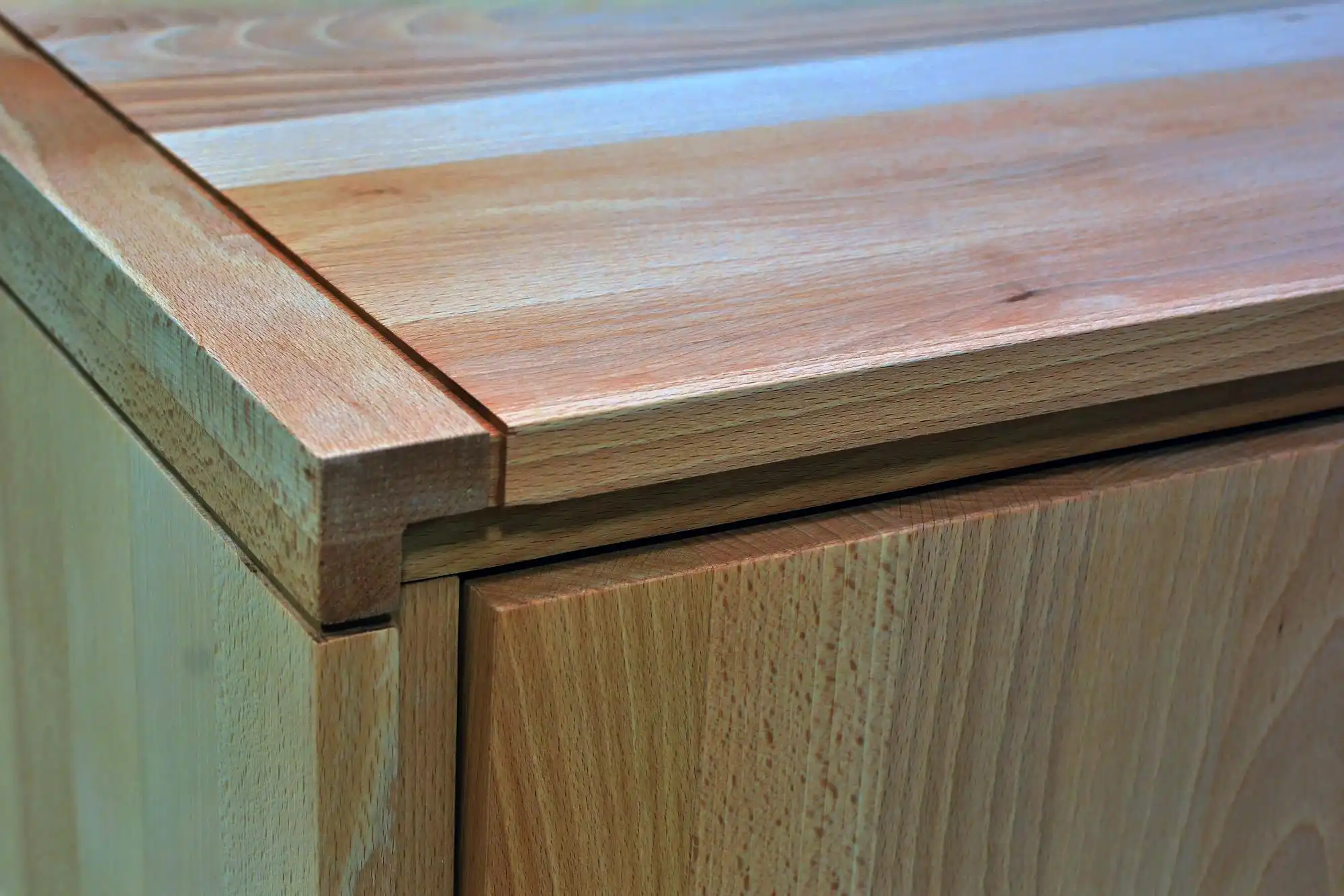
A countertop edge profile is simply the shape and finish of the exposed edge of your countertop slab. It’s the line you see and touch along the front and sides of your counters — and it quietly plays a big role in how your kitchen looks and feels.
Different edge profiles can make a kitchen feel modern, classic, soft, or bold. They also influence how easy the counter is to clean, how safe it is for families, and even how much the project costs. From simple straight edges to elegant curves or dramatic waterfall designs, the edge profile is the small detail that ties your whole countertop design together.
Common Countertop Edge Styles & Their Pros/Cons
Below are the most popular edge profiles, written in a friendly, clear way — with detailed descriptions, strengths, and drawbacks to help readers choose confidently.
Square / Straight Edge
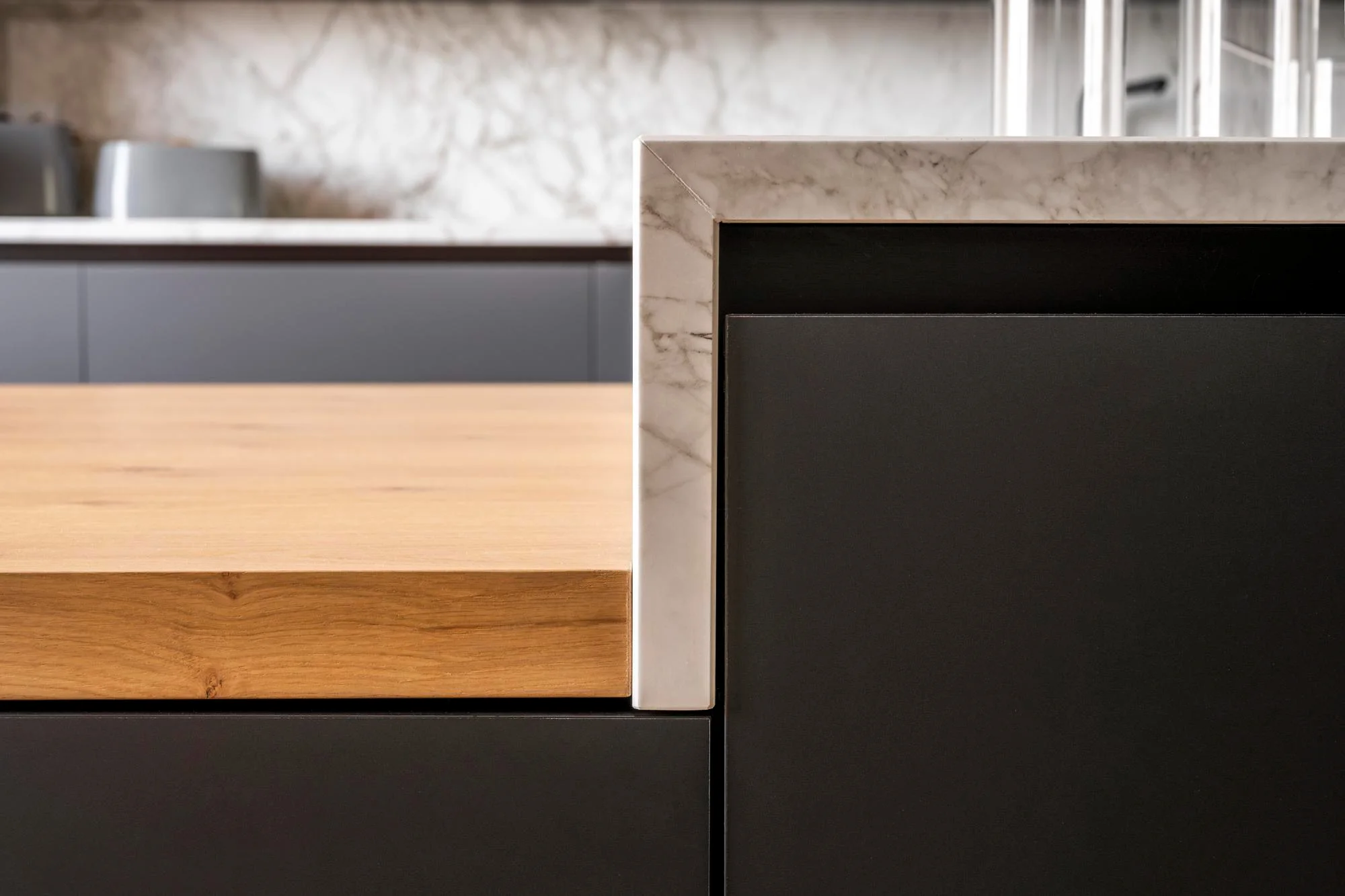
A straight edge has crisp, clean lines with a very slight flattened top edge to prevent sharpness. It’s one of the most modern-looking profiles and pairs well with minimalist kitchens.
Pros:
Sleek, contemporary appearance
Works with any material or style
Usually the most budget-friendly
Cons:
Corners may still feel a bit sharp for kids
Less forgiving if stone has natural imperfections
Eased Edge
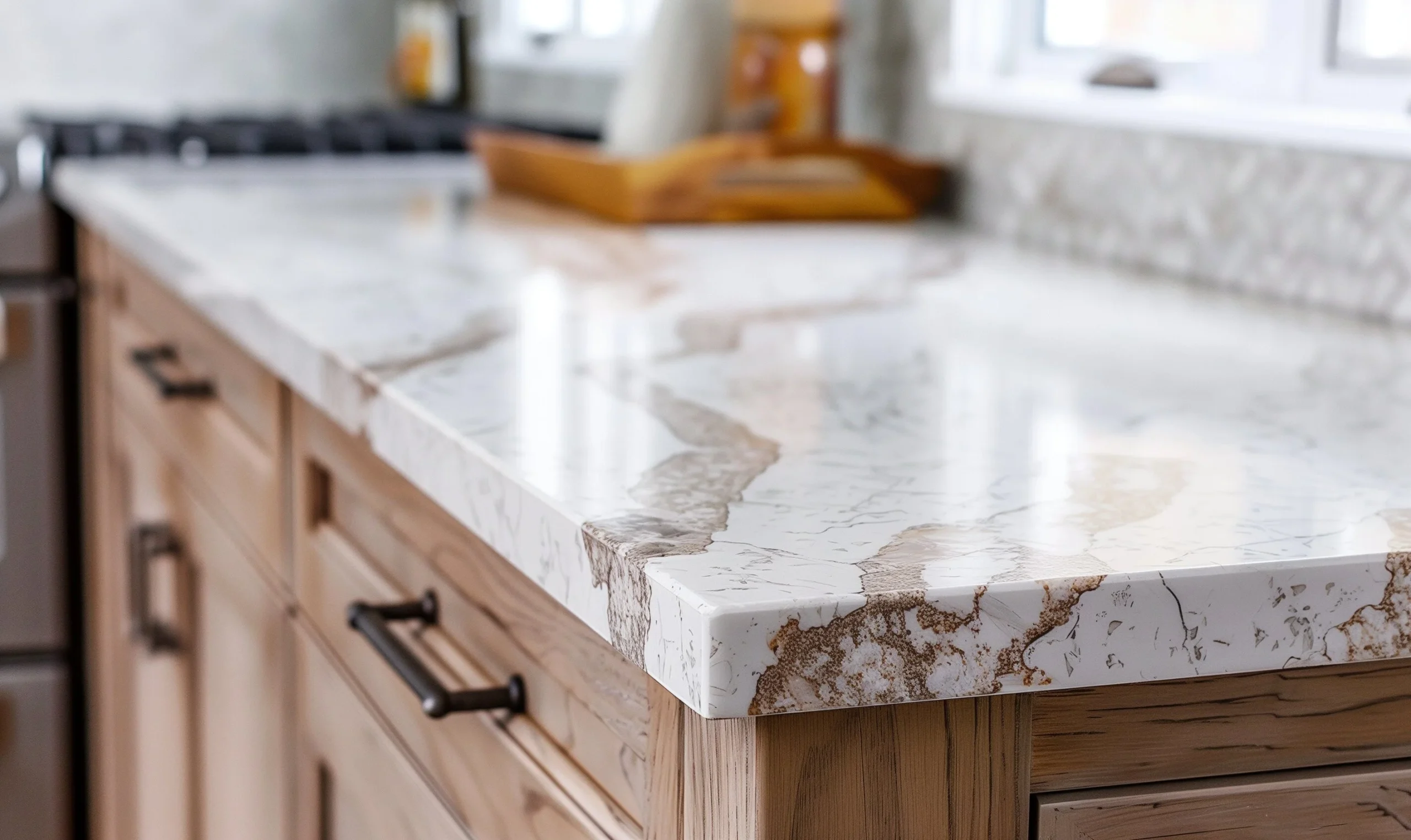
An eased edge is basically a softened square. The corners and top surface are lightly rounded so they feel smoother and safer while still looking modern.
Pros:
Comfortable to lean against
Safer for families and high-traffic kitchens
Clean look without being harsh
Cons:
More subtle than decorative edges — not a “statement” look
Still not fully rounded like bullnose
Beveled Edge
This edge adds a small angled cut along the top edge, creating a crisp shadow line. It’s a stylish option for transitional and modern kitchens.
Pros:
Adds depth and visual interest
Highlights stone patterns or veining
Easy to clean compared to more ornate edges
Cons:
The angle can catch crumbs or water
Slightly more expensive than simple edges
Bullnose Edge (Full or Half)
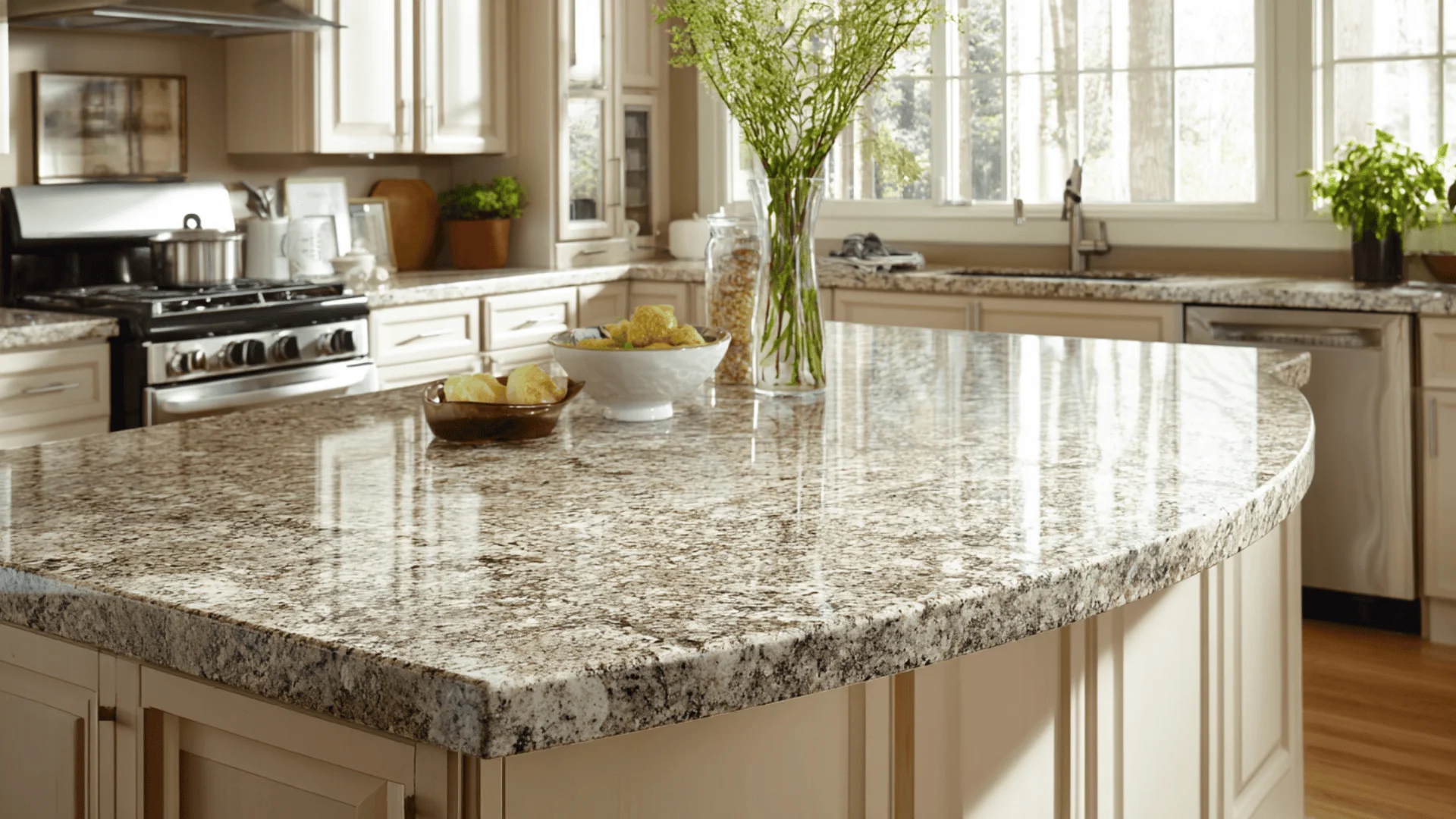
A full bullnose is rounded on both top and bottom, giving a soft, smooth curve. A half-bullnose has a rounded top edge with a flat bottom.
Pros:
Very safe for families and kids
Comfortable and timeless
Water drips less likely to run down cabinet fronts (full bullnose)
Cons:
Traditional look may not suit ultra-modern kitchens
Full bullnose can make counters look thinner
Ogee Edge
The ogee has an elegant “S”-shaped curve, often seen in luxury, classic, or ornate kitchens. It’s thicker, decorative, and eye-catching.
Pros:
High-end, timeless, upscale style
Adds strong visual character
Works beautifully with granite and marble
Cons:
One of the more expensive edge options
Curves can trap crumbs and require detailed cleaning
Waterfall Edge
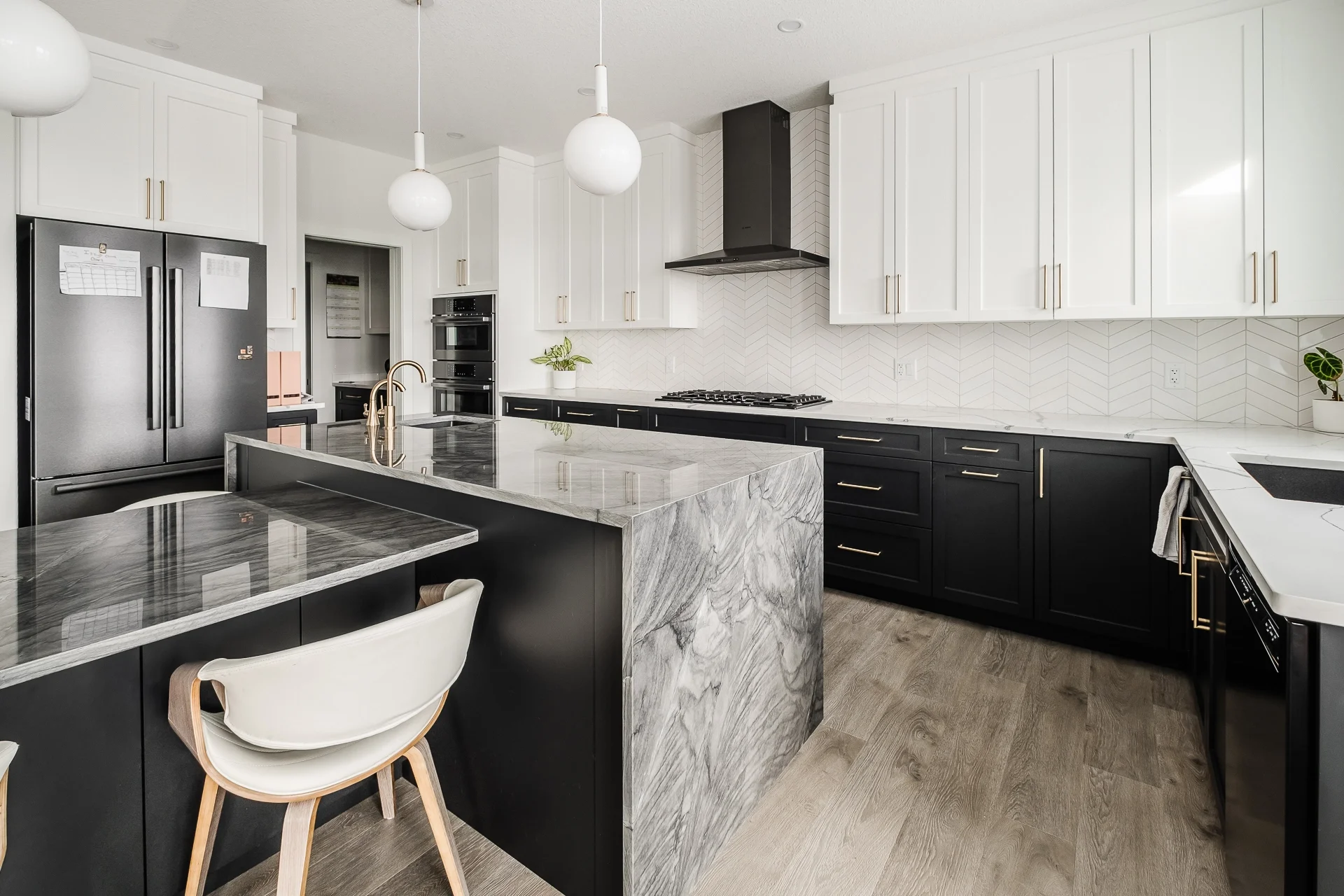
A waterfall edge extends the countertop material vertically down the sides of an island or cabinet, creating a seamless “waterfall” effect.
Pros:
Stunning modern look; a true design statement
Protects cabinetry sides
Highlights stone veining beautifully
Cons:
More material → higher cost
Not practical for all kitchen layouts
Can dominate small spaces
Miter Edge & Custom Profiles
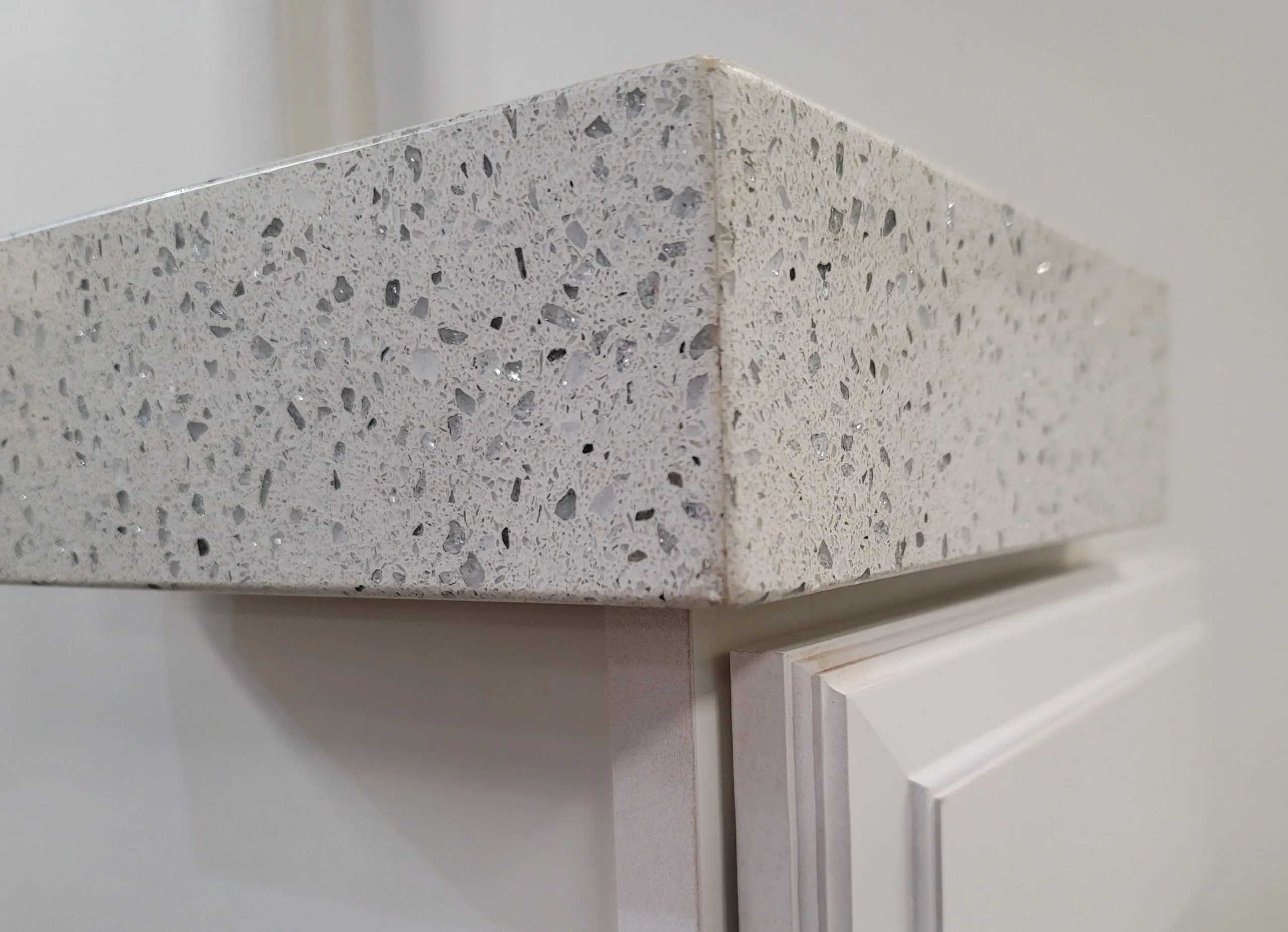
A miter edge joins two slabs at a 45° angle to create a thicker, layered look — often used to give the illusion of a 2–6 inch countertop thickness. Custom multi-layer profiles can mix ogee, bevel, and bullnose styles.
Pros:
Ultra-premium, tailored appearance
Allows extra-thick countertop look
Works with high-end stones and luxury kitchens
Cons:
Costly due to precision craftsmanship
Visible seams if not done by skilled fabricators
Less forgiving with delicate or thin countertop materials
How to Choose the Right Edge for Your Kitchen
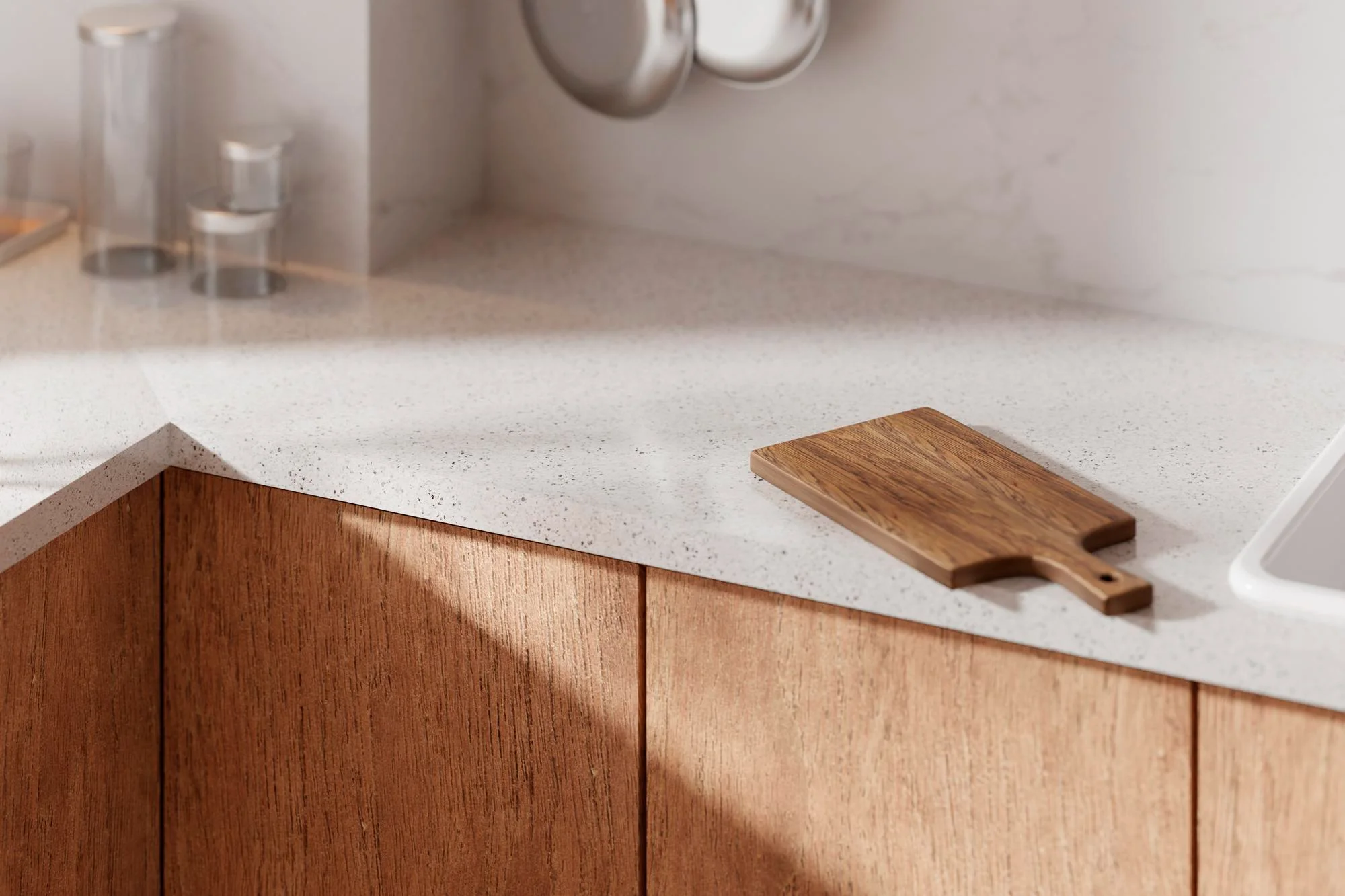
Choosing a countertop edge isn’t just about style — it affects comfort, safety, cleaning, and how your whole kitchen feels day to day. Here’s how to pick the right one with confidence.
Think About Your Layout and Who Uses the Kitchen
If your kitchen has narrow walkways or young kids running around, safer and simpler edges are the better choice. Eased or half-bullnose edges prevent bumps and feel more comfortable when you lean against them.
Match the Edge to Your Kitchen Style
Your countertop edge should enhance your design, not fight with it.
Modern kitchens: square, eased, or beveled edges keep everything clean and sleek.
Classic or traditional: bullnose and ogee add softness and timeless detail.
Luxury or statement kitchens: waterfall or custom mitered edges bring dramatic visual impact.
Factor in Budget and Maintenance
Simple edges are the most affordable and easiest to keep clean. More detailed edges — like ogee or layered custom profiles — require more craftsmanship and may need a little more cleaning around curves.
Check Material and Fabricator Capability
Not every material works with every edge. Some laminates can’t support detailed profiles, while engineered quartz may limit ultra-intricate edges. Always confirm with your fabricator that your chosen edge is suitable for your material and thickness.
Contact Us for Expert Countertop Guidance
Ready to choose the perfect countertop edge for your kitchen? Our team can walk you through materials, profiles, pricing, and custom options so you get a finish that fits both your style and daily use. Reach out today — we’re here to help you design a kitchen you’ll love for years.
FAQs
What is the most popular edge for countertops?
The most popular countertop edge is the eased (or straight) edge, loved for its clean, modern look and low cost.
What is the edge of a countertop called?
The visible finish or shape of the outer border of a countertop slab is called the countertop edge profile.
What types of edges does a counter contain?
Common edge types include square/straight, eased, beveled, bullnose, ogee, waterfall, and mitered edges.
Should a 10 or 12-inch countertop overhang be used?
Use a 12-inch overhang — ideal for seating at islands or bars, giving enough space for knees.
 English
  Arabic
  Spanish
  Japanese
  Russian
  Korean