

What Are Casement Windows?
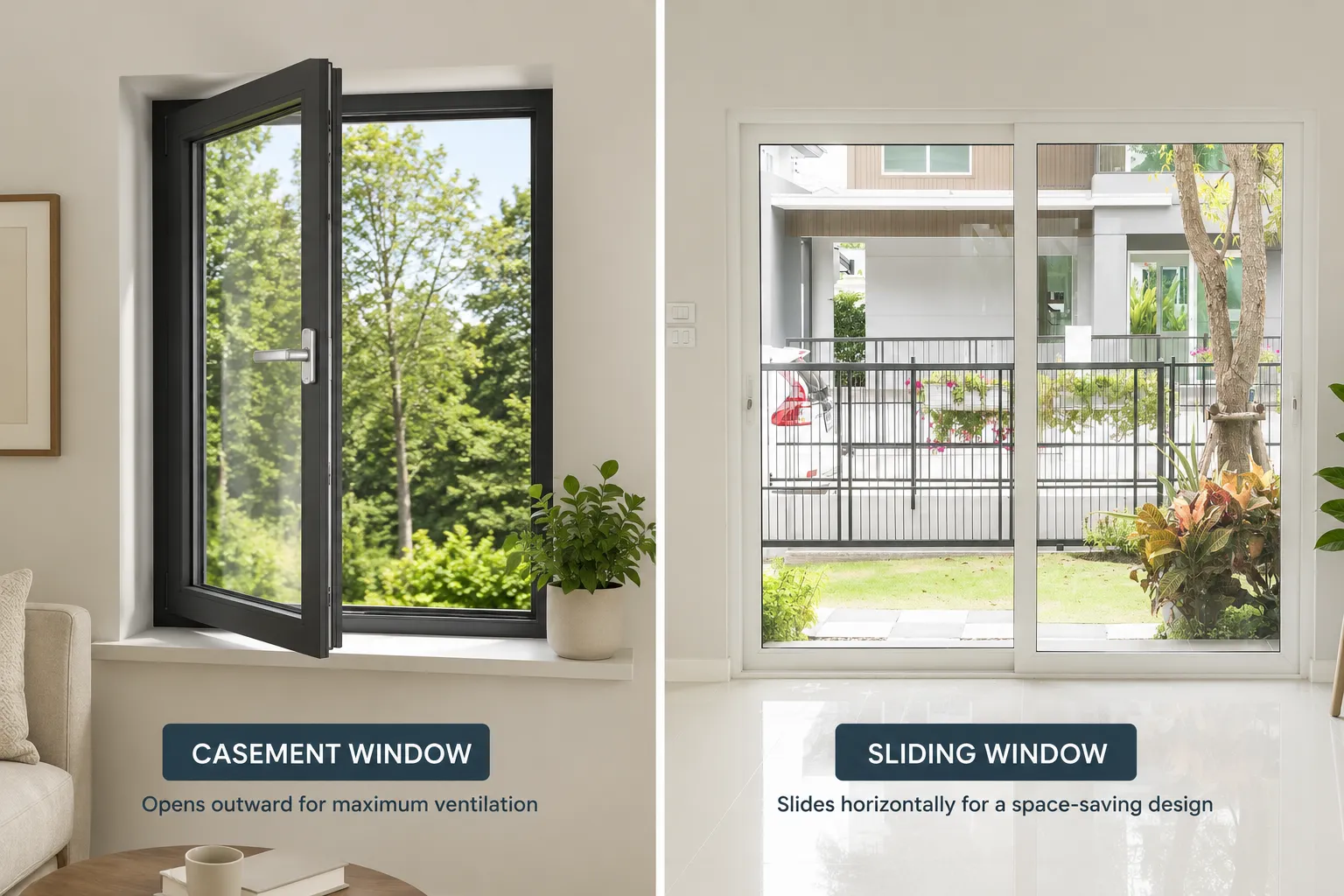
نوافذ مفصلية are hinged on one side and open outward like a door using a crank handle or push-out mechanism. They are one of the most energy-efficient window styles because the sash presses tightly against the frame when closed, creating a strong seal.
These windows are popular in kitchens, bathrooms, and areas where maximum ventilation is desired. Since the entire window opening can be used for airflow, casement windows often provide better ventilation than many other window types.
Key features of casement windows:
- Hinged on the side
- Open outward with a crank or handle
- Excellent ventilation performance
- Strong weather seal and energy efficiency
- Clear, unobstructed outdoor views
What Are Sliding Windows?
النوافذ المنزلقة, also called gliding windows, open by moving one or more sashes horizontally along a track. Instead of swinging outward, the panels slide left or right, making them ideal for spaces where exterior clearance is limited.
Sliding windows are known for their simple operation, wide viewing areas, and modern appearance. They are commonly used in living rooms, bedrooms, and large wall openings where homeowners want plenty of natural light and easy operation.
Key features of sliding windows:
- Operate by sliding horizontally
- Available in single-, double-, and three-lite designs
- Easy to open and maintain
- Great for wide window openings
- Modern appearance with large glass areas
While both styles are popular, casement windows generally offer better energy efficiency and ventilation, while sliding windows provide easier operation and are often more affordable for larger openings.
Casement vs Sliding Windows: Key Differences
Both casement and sliding windows are popular choices, but they perform differently in several important areas. Understanding these differences can help you choose the right window style for your home, climate, and budget.
| ميزة | Casement Window | Sliding Window |
|---|---|---|
| تهوية | Excellent airflow; opens fully | Good airflow; usually half opens |
| كفاءة الطاقة | Better sealing and lower air leakage | Good, but tracks may leak more air |
| يكلف | Usually higher cost | عادة ما تكون بأسعار معقولة |
| صيانة | Hinges and crank need care | Tracks and rollers need cleaning |
| Security | Strong multi-point locking options | Good with reinforced locks |
| Space Saving | Needs exterior opening space | Very space-saving design |
| الاستخدام الأمثل | Kitchens, bathrooms, windy areas | Living rooms, wide openings, patios |
Opening Mechanism
The most obvious difference is how the window opens.
Casement windows are hinged on one side and swing outward using a crank handle. Sliding windows open by moving one or more sashes horizontally along a track.
Casement windows can open fully, allowing the entire window opening to be used for ventilation. Sliding windows are generally easier to operate because they require only a simple sliding motion.
Winner: Sliding windows for simplicity; casement windows for full opening access.
Ventilation Performance
When it comes to airflow, casement windows usually have the advantage.
An open casement sash can act like a sail, catching side breezes and directing fresh air indoors. Since the entire opening is available, airflow is often stronger than with sliding windows.
Sliding windows typically allow only half of the window area to open at one time. However, double-sliding models can improve ventilation flexibility.
Winner: Casement windows.
كفاءة الطاقة
Casement windows are often considered one of the most energy-efficient window styles.
When closed, the sash presses tightly against the frame, creating a strong weather seal that helps reduce air leakage. Sliding windows rely on weatherstripping and tracks, which may allow slightly more air infiltration over time.
Better sealing can lead to lower heating and cooling costs, especially in extreme climates.
Winner: Casement windows.
الإضاءة الطبيعية والمناظر الخلابة
Both window types provide excellent natural light, but sliding windows often offer wider uninterrupted views.
Sliding windows are commonly used for large horizontal openings and typically have slimmer sightlines. Casement windows may include more frame components depending on the configuration.
For homeowners who want panoramic outdoor views, sliding windows are often the preferred choice.
Winner: Sliding windows.
متطلبات المساحة
Casement windows require exterior clearance because the sash swings outward. This can be an issue near walkways, patios, decks, or landscaping.
Sliding windows remain within their frame when opened, making them ideal for areas where space is limited.
They also work well behind furniture since no interior space is needed for operation.
Winner: Sliding windows.
Security Features
Both styles can be secure when equipped with quality hardware.
Casement windows typically use multi-point locking systems that pull the sash tightly against the frame. This design can make forced entry more difficult.
Sliding windows usually use latch locks and may benefit from additional security bars or reinforced locking systems.
Winner: Casement windows.
Weather Performance
Casement windows generally perform better in harsh weather conditions.
Their compression seal helps resist wind-driven rain, drafts, and heat loss. Sliding windows perform well in most conditions but can be more vulnerable to air and water infiltration if tracks or seals wear over time.
For cold climates and windy regions, casement windows often provide superior protection.
Winner: Casement windows.
متطلبات الصيانة
Maintenance needs differ based on the operating system.
Sliding windows require regular cleaning of tracks to prevent dirt buildup. Rollers may also need occasional adjustment or replacement.
Casement windows have no tracks but include hinges, crank handles, and other hardware that may require lubrication and maintenance over time.
Overall maintenance demands are similar, but the tasks are different.
Winner: Tie.
Lifespan and Durability
Both window styles can last for decades when properly maintained.
Casement windows have more mechanical components, including hinges and crank mechanisms. Sliding windows use rollers and tracks that experience regular wear.
The lifespan often depends more on material quality and maintenance than the operating style itself.
Winner: Tie.
مقارنة التكاليف
Sliding windows are usually more affordable than casement windows.
Their simpler design and hardware often result in lower manufacturing and installation costs. Casement windows typically cost more because of the hinges, crank systems, and enhanced sealing features.
While sliding windows may save money upfront, casement windows can deliver greater energy savings over the long term.
Winner: Sliding windows for initial cost; casement windows for long-term efficiency.
Best Rooms for Casement Windows
Casement windows work best in areas where ventilation, energy efficiency, and ease of operation are important. Because they open fully and can catch passing breezes, they are often chosen for rooms that benefit from maximum airflow.
Kitchens
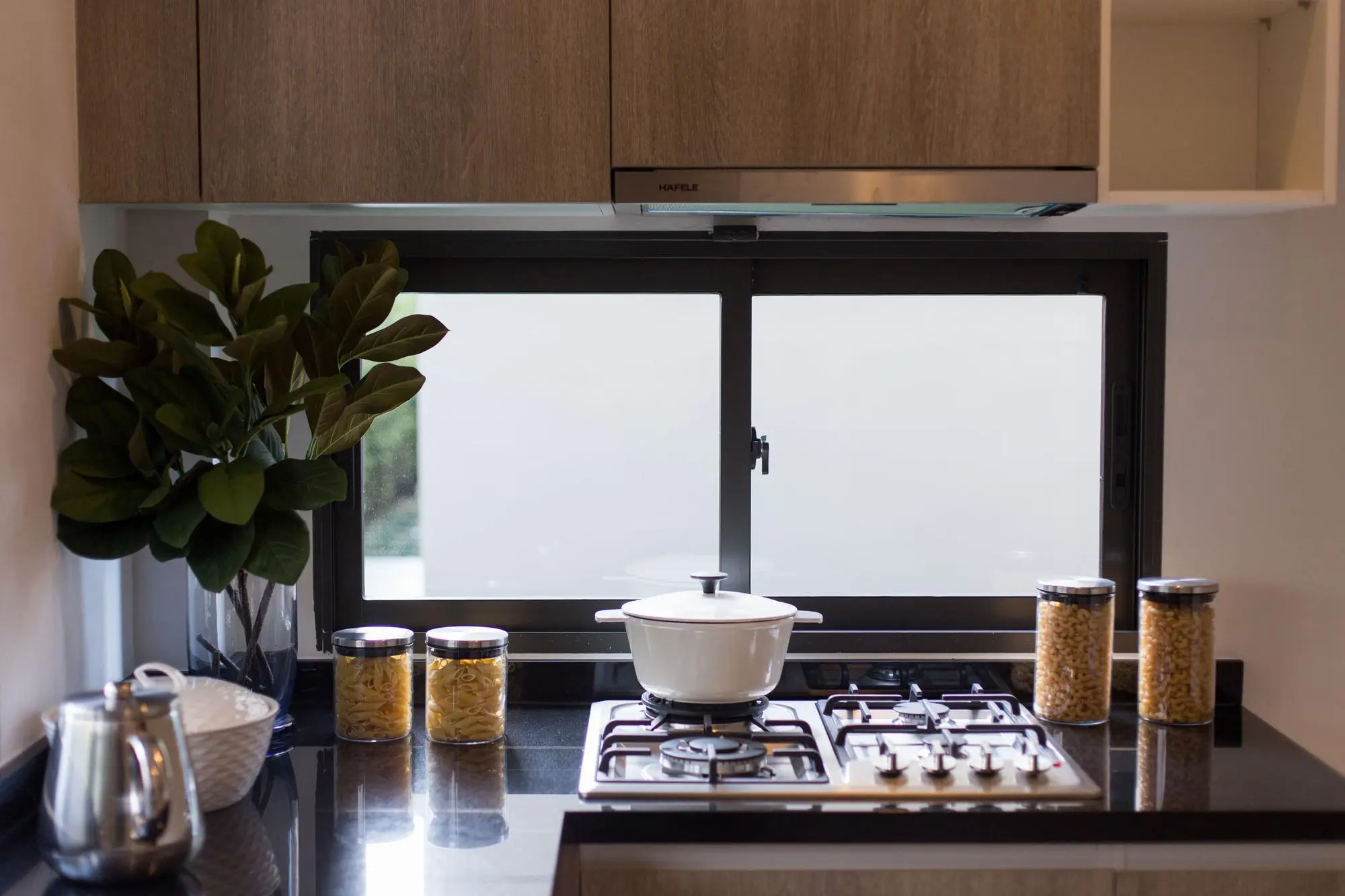
Casement windows are commonly installed above sinks and countertops where reaching a sliding sash may be difficult. The crank handle allows easy operation, even in hard-to-reach locations.
Bathrooms
Bathrooms often need effective ventilation to remove moisture and reduce condensation. Casement windows provide excellent airflow while maintaining privacy when paired with frosted or textured glass.
Bedrooms
Good airflow helps create a more comfortable sleeping environment. Casement windows can bring in fresh air efficiently and are often used in bedrooms where ventilation is a priority.
Hard-to-Reach Areas
Locations above cabinets, countertops, bathtubs, or furniture are ideal for casement windows because the crank mechanism allows convenient opening and closing.
Best Rooms for Sliding Windows
Sliding windows are a great choice for spaces that require wide views, abundant natural light, and a space-saving design.
Living Rooms
Large sliding windows provide expansive outdoor views and allow plenty of sunlight to enter the room. Their clean lines also complement modern home designs.
Wide Wall Openings
For large horizontal openings, sliding windows are often more practical than casement windows. Two-lite and three-lite configurations can cover wider areas while maintaining easy operation.
Basements
Sliding windows are commonly used in basements because they are simple, durable, and fit well in lower-profile wall openings.
Contemporary Homes
Modern homes often feature sliding windows due to their minimalist appearance, large glass areas, and ability to connect indoor and outdoor spaces visually.
Which Window Is Better for Different Homeowners?
The best choice depends on your priorities, budget, and local climate.
Choose Casement Windows If…
Casement windows may be the better option if:
Maximum ventilation matters
Energy efficiency is a top priority
You live in a cold or windy climate
You want stronger weather sealing
Security is an important concern
Because of their tight compression seal, casement windows often provide superior thermal performance and weather resistance.
Choose Sliding Windows If…
Sliding windows may be the better choice if:
You need a space-saving design
You have large horizontal window openings
Budget is a major factor
You want wide outdoor views
Easy operation is important
Sliding windows are often more affordable and are especially well suited for modern homes, living rooms, and areas where an outward-opening window would be impractical.
الأسئلة الشائعة
What are the disadvantages of casement windows?
Casement windows can be more expensive than sliding windows and require exterior space to open. Their hinges and crank mechanisms may also need maintenance over time.
What are the 4 types of windows?
Four of the most common window types are:
- نوافذ مفصلية
- النوافذ المنزلقة
- نوافذ مزدوجة الفتح
- نوافذ قابلة للطي
Each style offers different benefits for ventilation, operation, and appearance.
What are the disadvantages of sliding windows?
Sliding windows usually provide less ventilation because only part of the window opens. They may also require regular track cleaning and often do not seal as tightly as casement windows.
Why do people choose casement windows?
Homeowners often choose casement windows because they offer excellent ventilation, strong energy efficiency, tight weather sealing, and enhanced security. They are especially popular in kitchens, bathrooms, and windy climates.

 English
  Arabic
  Spanish
  Japanese
  Russian
  Korean
  French
  Italian