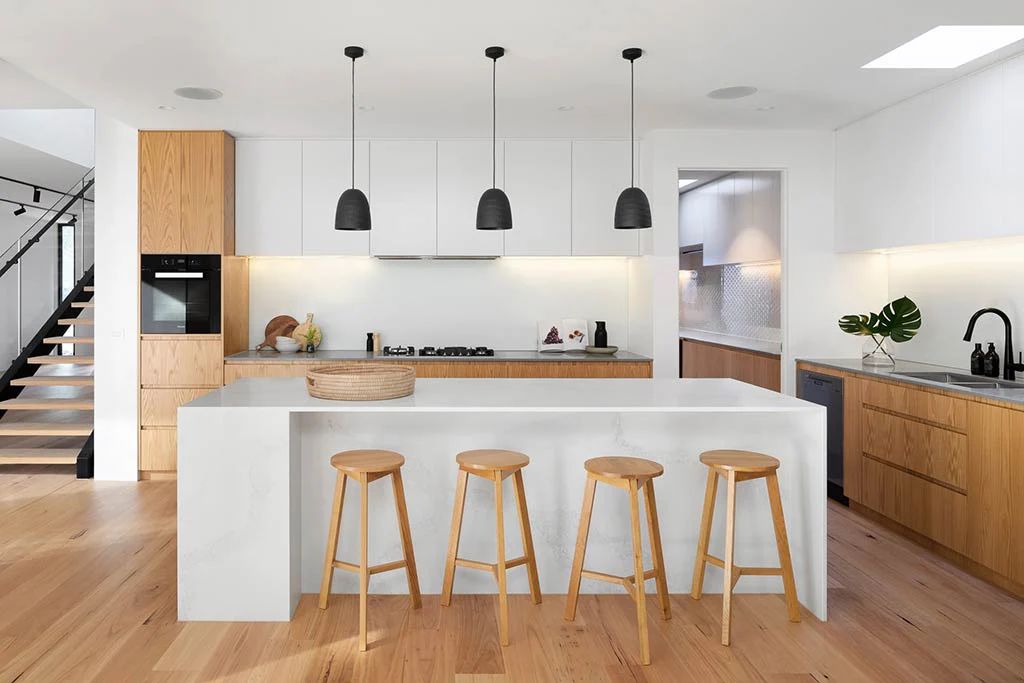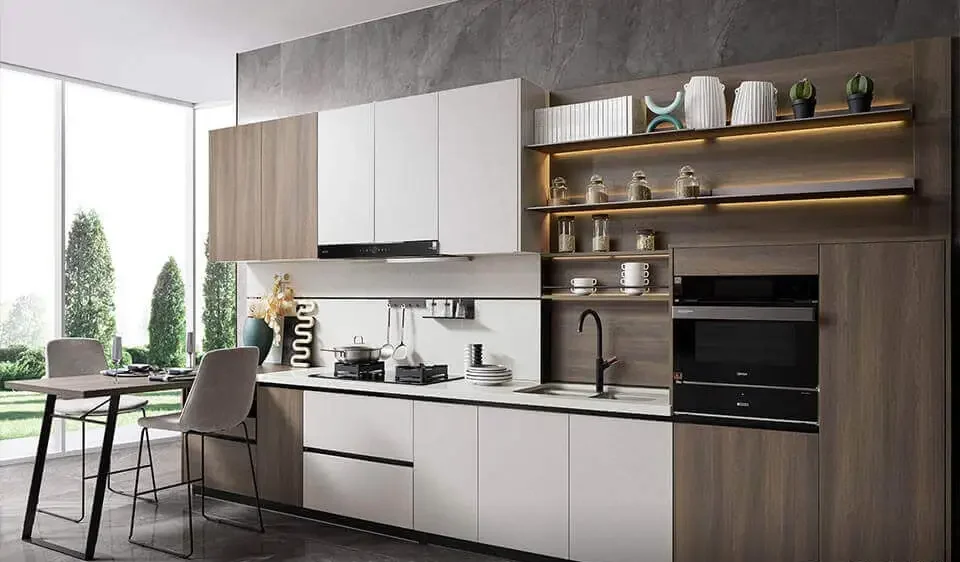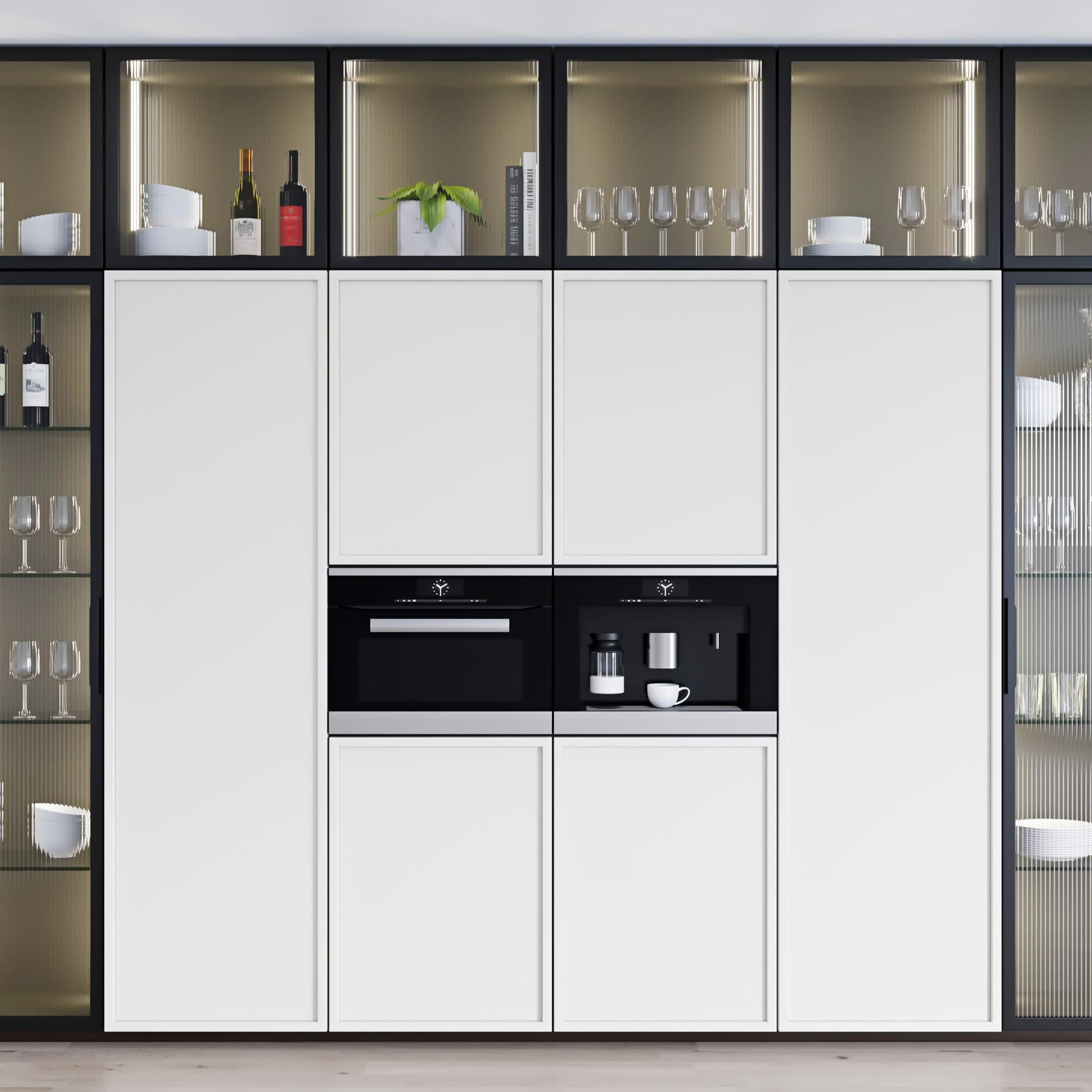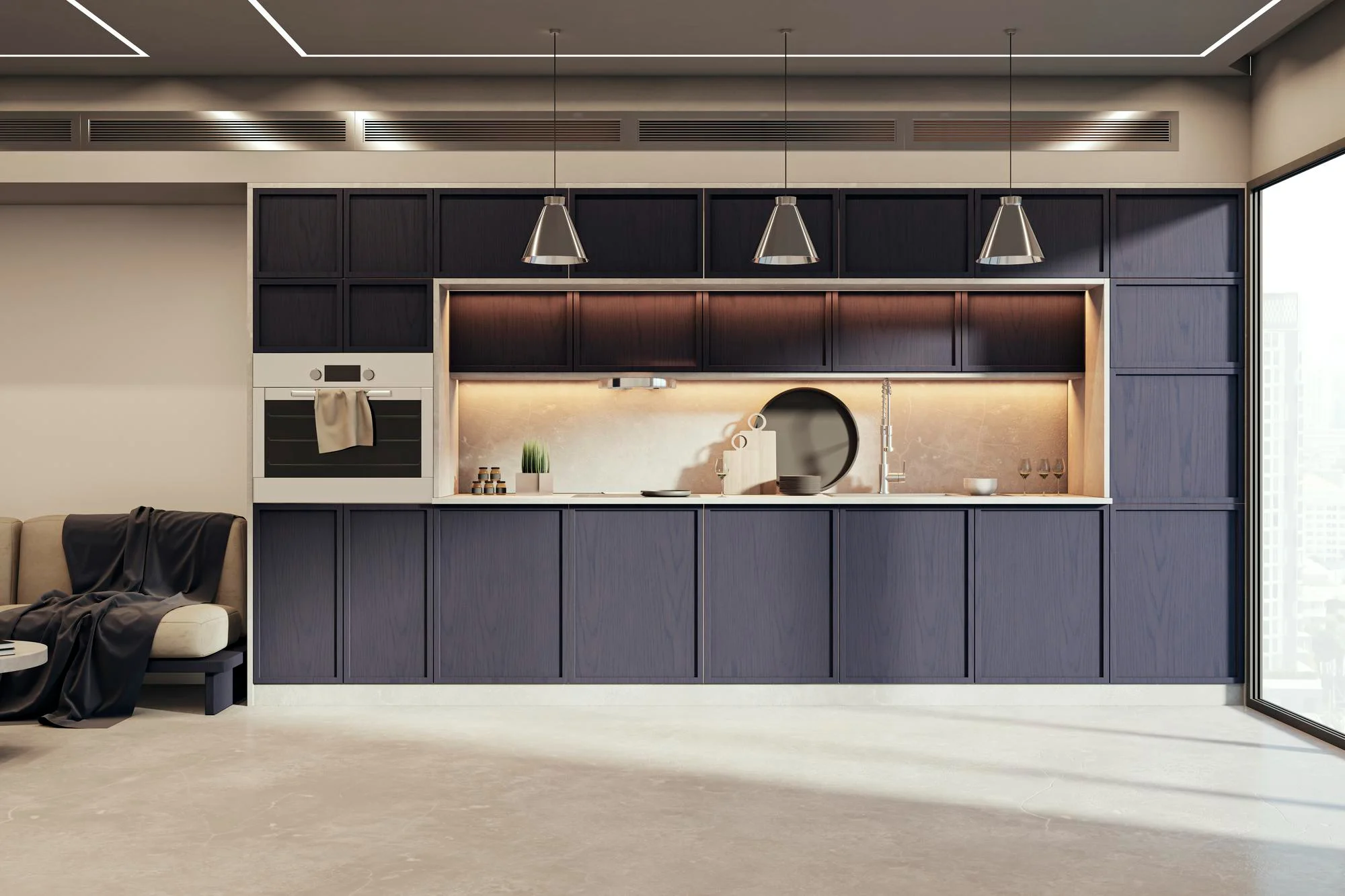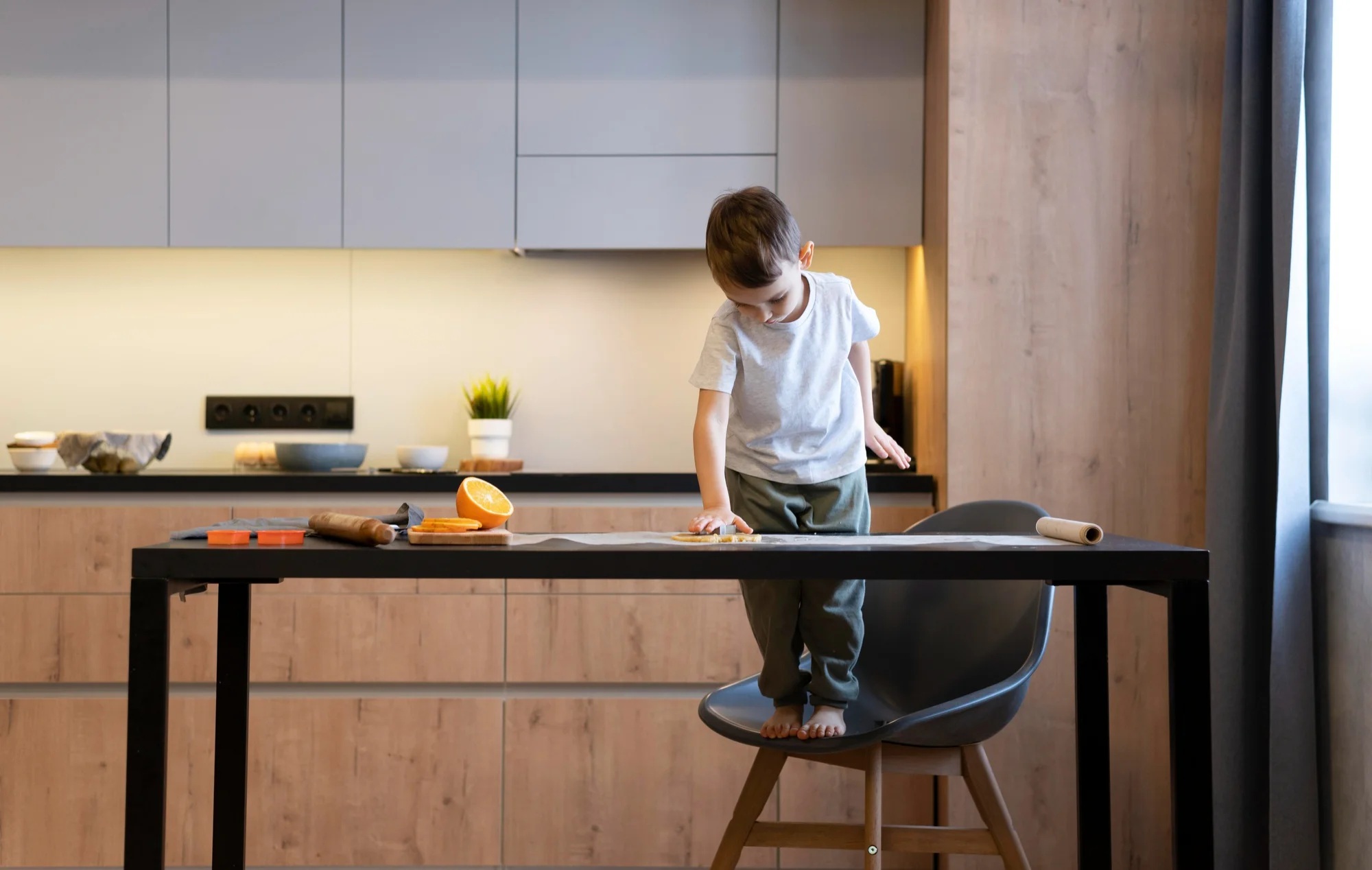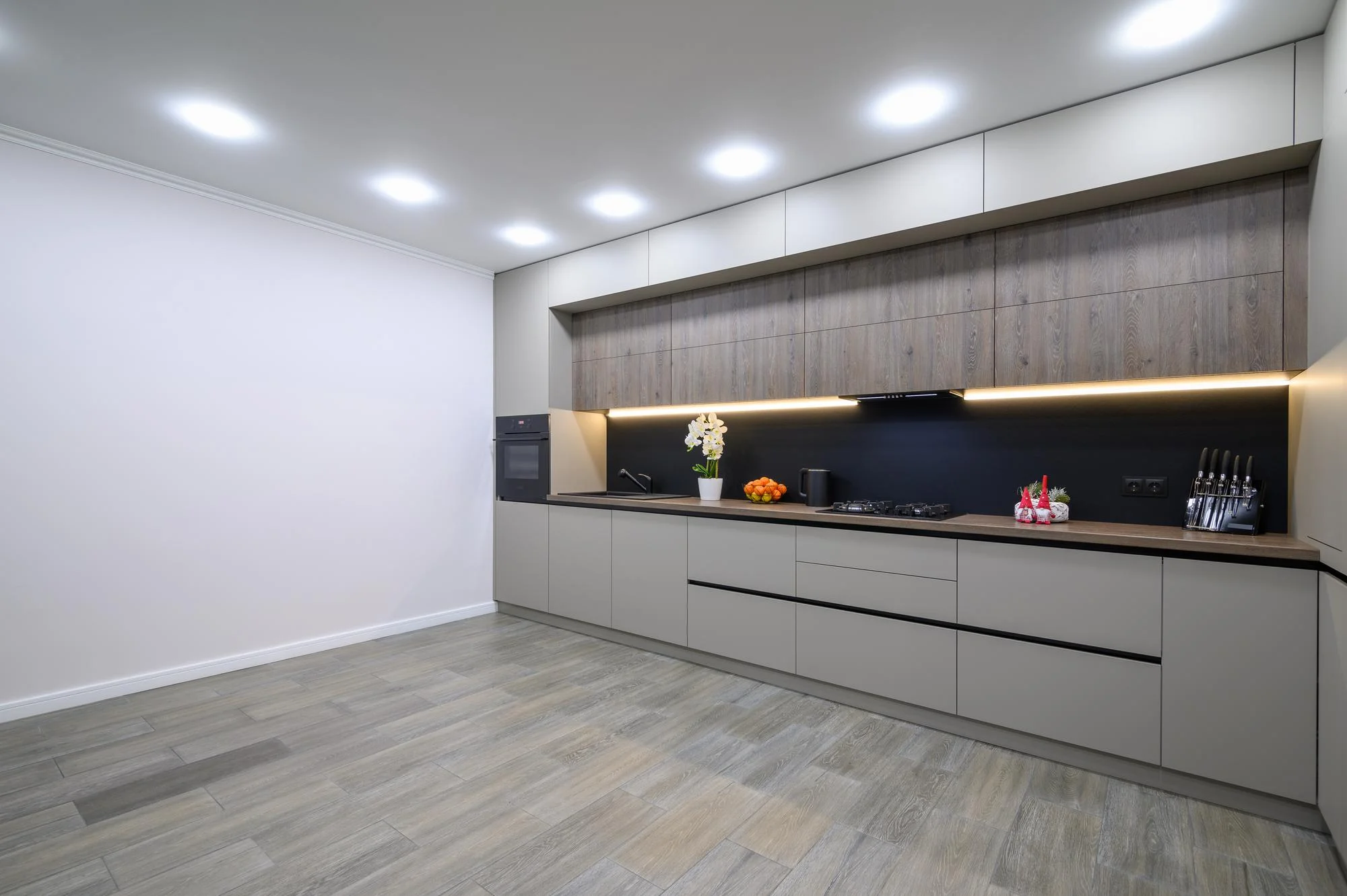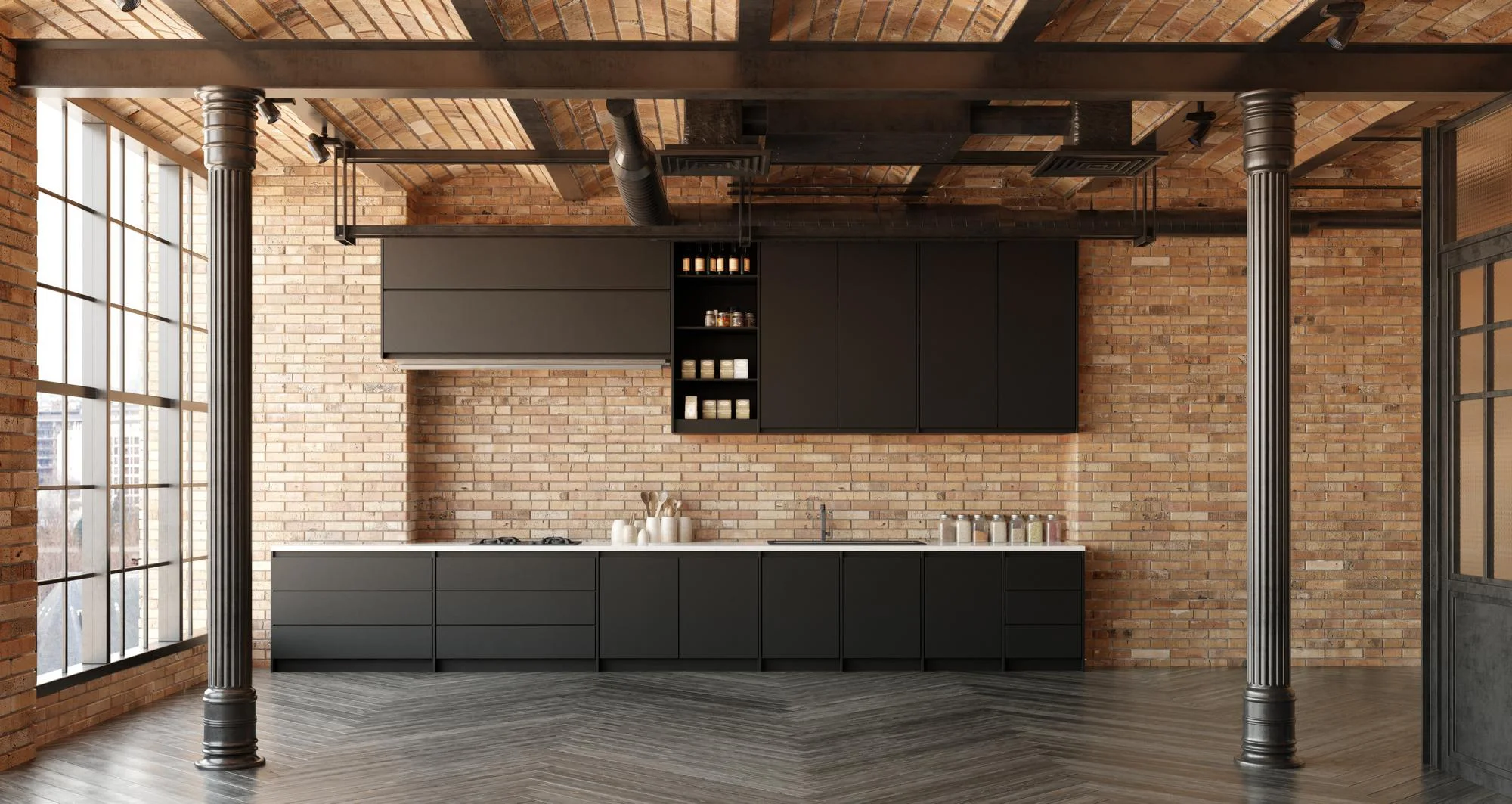
A straight kitchen, also known as a single-wall or linear layout, is one of the most efficient and space-saving designs for modern homes. By placing all cabinets, appliances, and work zones along one wall, it creates a sleek, functional flow perfect for apartments and open-plan spaces.

This design simplifies cooking, cleaning, and storage while reducing construction complexity—ideal for both new builds and renovations. In this guide, we’ll share over ten modern straight kitchen design ideas with practical insights on layout, materials, lighting, and workflow to help you create a beautiful, efficient kitchen.
Why Choose a Straight Kitchen Layout?

Functional benefits
Efficient cooking flow: Even though the traditional “work triangle” is compressed, it still functions effectively in a straight configuration.
Open feel: The single-wall setup leaves more floor space for dining or movement, ideal for small or shared living areas.
Simplified installation: Electrical wiring, plumbing, and ventilation are all concentrated along one wall, reducing renovation complexity and cost.
Best suited for
Compact apartments and studio units
Open-plan lofts and modern family homes
Secondary kitchens, such as in granny flats or outdoor extensions
Challenges and solutions
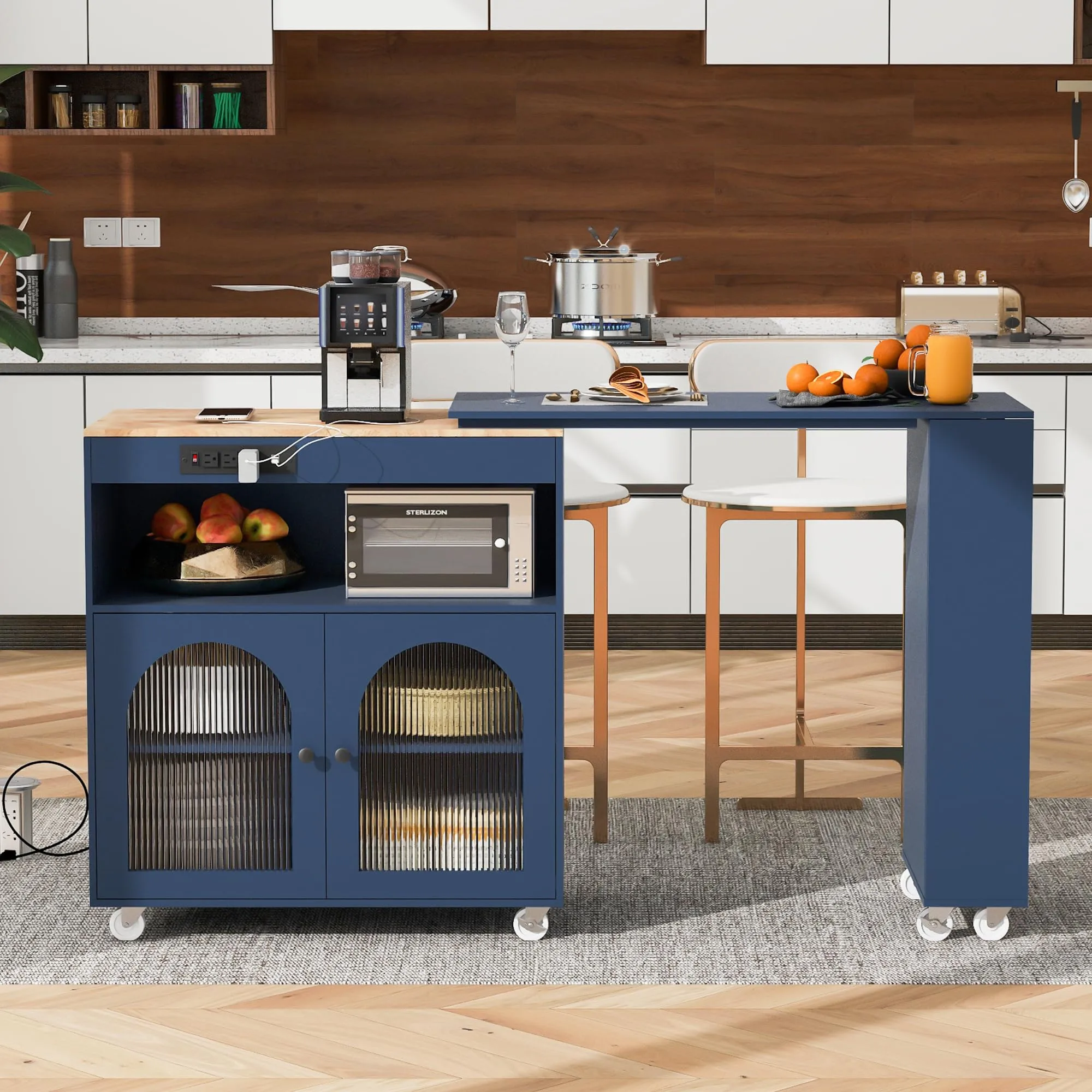
Limited counter space: Extend the benchtop at one end to form a breakfast bar or install a movable island.
Storage constraints: Use tall cabinetry or modular shelves to maximize vertical capacity.
Traffic interference: Keep the layout against a quieter wall or use lighting and flooring to subtly define the zone.
Core Design Elements for a Modern Straight Kitchen

Designing a straight kitchen involves precision. Every electrical outlet, light fitting, and appliance connection must align with the workflow while maintaining visual harmony.
Cabinetry and Storage
Tall, ceiling-height cabinets are ideal for maximizing vertical space. Combine deep drawers for pots and pans with pull-out pantries to increase storage without adding bulk. Use handle-less or push-to-open doors for a clean and seamless façade.
Materials and Finishes
Modern interiors are moving toward natural warmth. Instead of plain white, consider muted tones, wood accents, and textured surfaces. These finishes complement efficient LED lighting and make small spaces feel inviting without glare.
Lighting and Ambiance
Effective lighting design is essential for both aesthetics and safety. A three-layer system works best:
Task lighting: Under-cabinet LED strips for cooking and preparation.
Ambient lighting: Recessed or track lights for even brightness.
Accent lighting: Soft wall or shelf lights to highlight textures or display zones.
Workflow and Ergonomics
Arrange the sequence logically: storage → prep → cook → clean. Even though space is linear, this flow supports minimal movement between steps. Keep outlets evenly spaced for small appliances and plan switch locations before cabinet installation.
Visual Continuity and Simplicity
The straight kitchen naturally supports a minimalist look. Maintain consistent materials between upper and lower cabinets, use concealed wiring channels, and align lighting to reinforce the geometry.
10+ Modern Straight Kitchen Design Ideas & Inspirations
A straight kitchen doesn’t have to be plain or predictable. With the right materials, lighting, and layout, it can be both stylish and highly efficient. Below are five modern straight kitchen ideas that combine practical engineering logic with design finesse. Each one balances function, aesthetics, and comfort—perfect for modern homes where every detail counts.
1. Minimalist Matte Finish Straight Kitchen

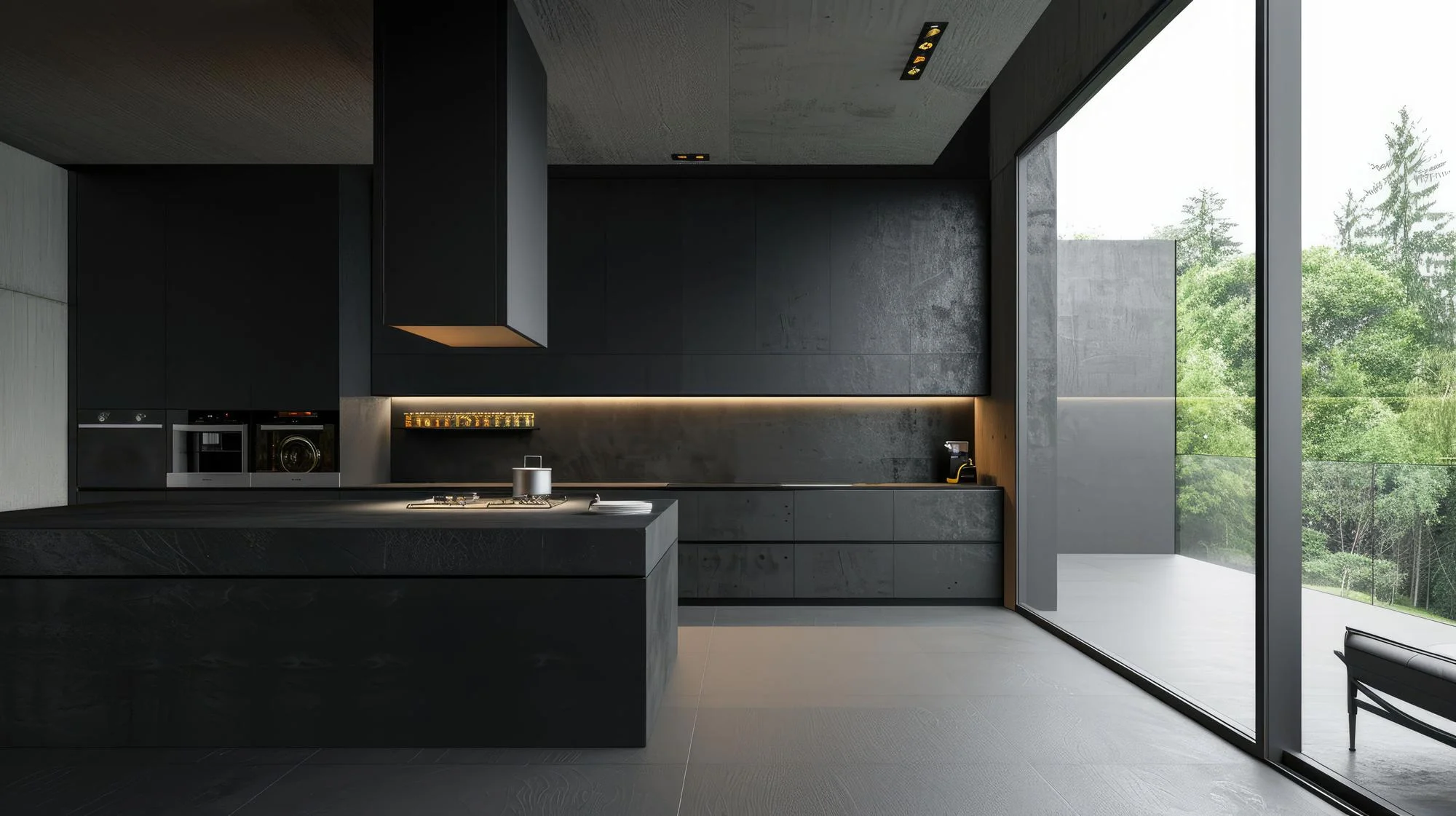
Matte finishes have become a leading trend for homeowners who prefer a clean, modern look. A matte surface diffuses light, reducing glare and fingerprints—ideal for busy households.
Key features
Flat-panel cabinetry with push-to-open doors for a seamless appearance
Neutral color palette—soft gray, white, or taupe—for calm visual balance
Slim LED strip lighting to highlight linear geometry
Professional insight: From an electrical perspective, matte surfaces reflect less ambient light, so it’s essential to design an effective lighting system. Combine under-cabinet task lights with recessed downlights to ensure uniform brightness without casting shadows.
Action tips
Choose high-quality matte laminates with anti-fingerprint coating
Add warm lighting (2700–3000 K) to keep the space inviting
Use dimmable switches for flexible brightness control
2. Warm Wood & Stone Straight Kitchen

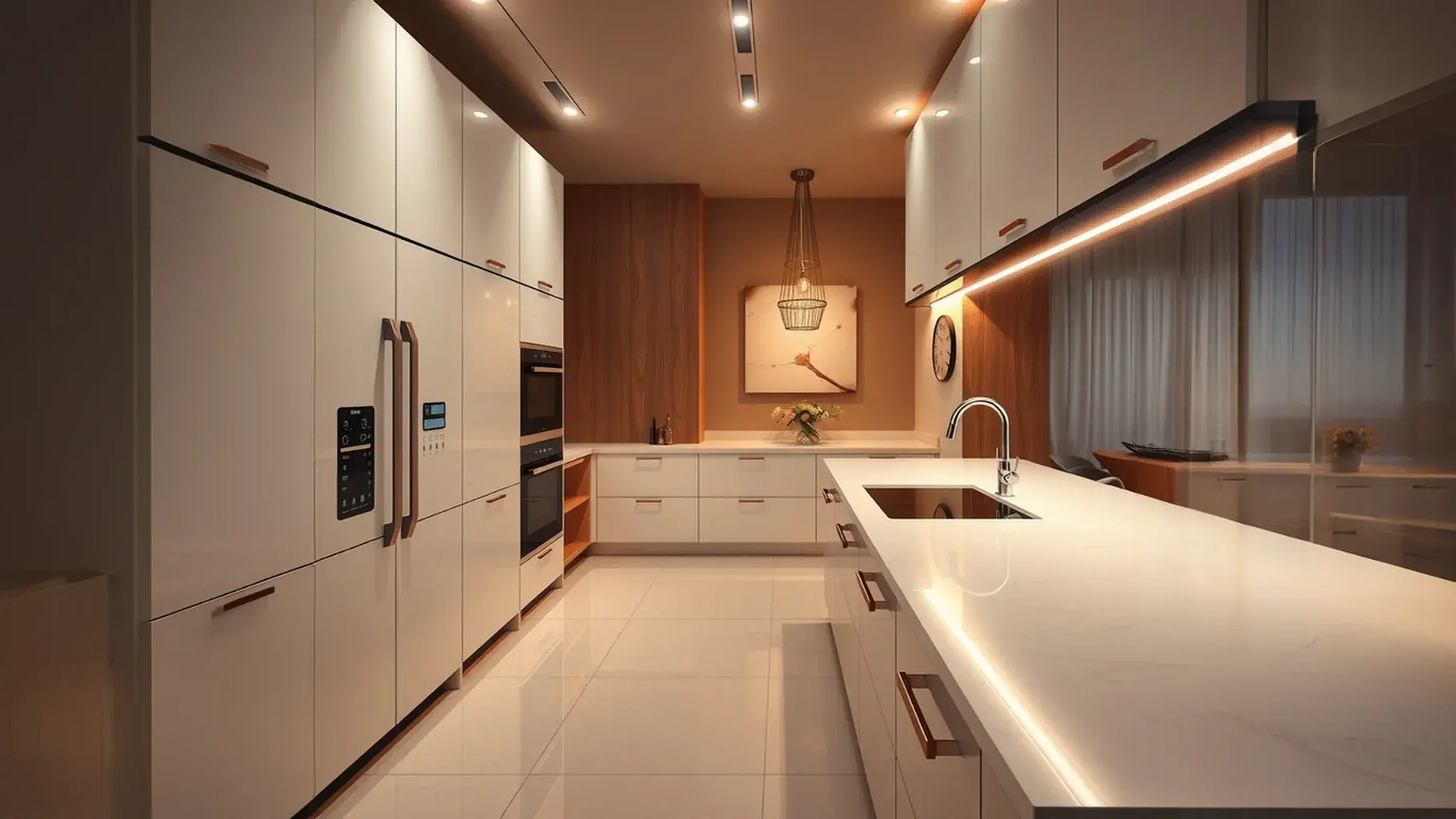
This concept celebrates natural textures. The warmth of wood and the durability of stone create a balanced contrast that feels both grounded and luxurious.
Key features
Timber-look base cabinets with stone or quartz countertops
Textured backsplash or slab wall for visual depth
Soft lighting that enhances natural tones
Professional insight: Wood and stone surfaces often have varying reflectance levels. Use adjustable LED lighting to maintain even illumination across materials. Position power outlets carefully—avoid interrupting stone backsplash lines for a cleaner finish.
Action tips
Seal natural stone properly to prevent staining near outlets or appliances
Use concealed wiring channels inside cabinets to maintain a clean façade
Combine warm-tone lights to highlight the texture of natural materials
3. High-Contrast Colour-Block Straight Kitchen

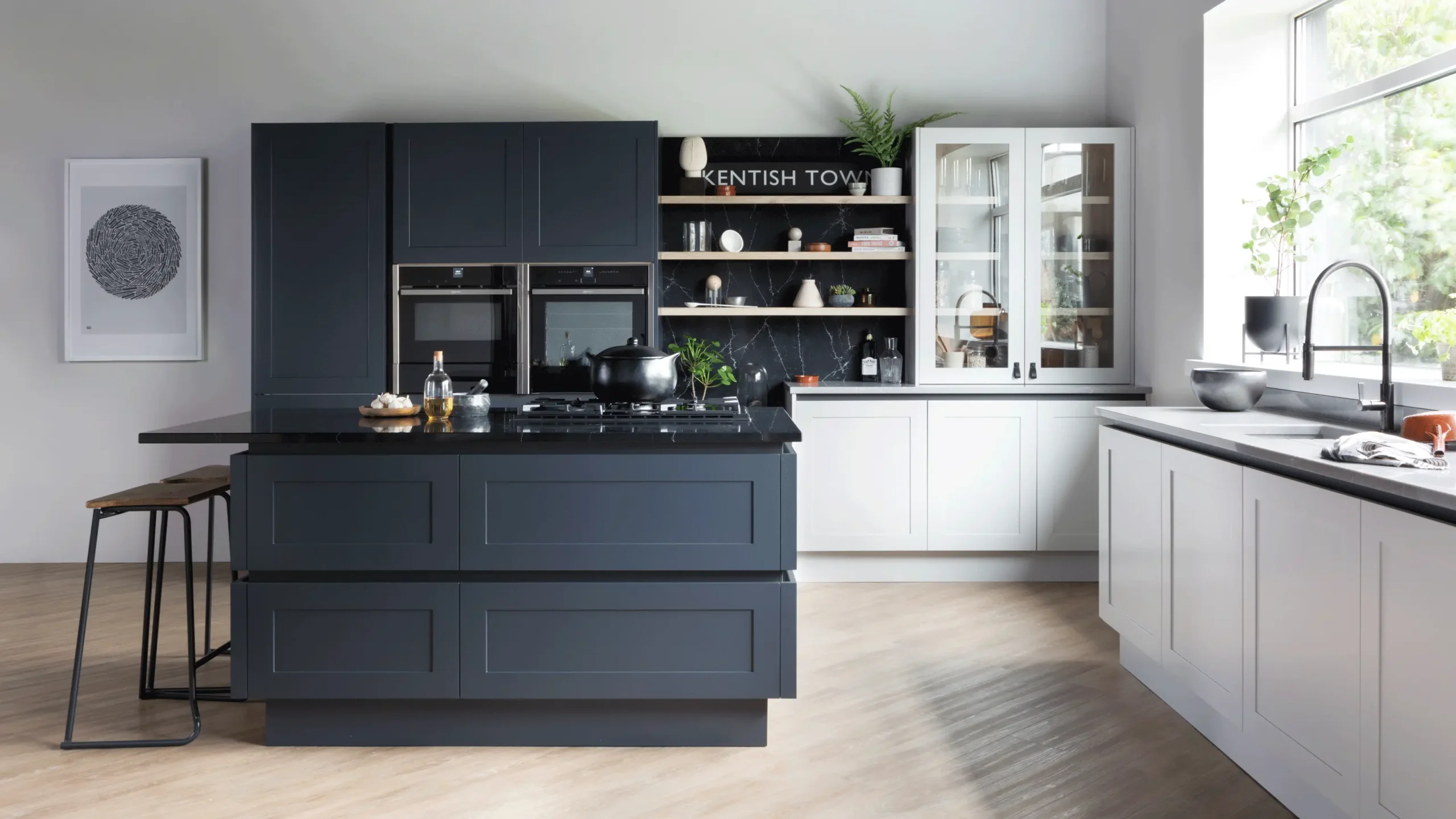
Bold contrasts can make a straight kitchen dynamic without cluttering the design. Pair dark lower cabinets with light upper ones to visually ground the space.
Key features
Dual-tone cabinetry (e.g., charcoal base, white upper)
Metallic handles or trims for accent lines
Minimal backsplash to emphasize geometry
Professional insight: When using contrasting colors, electrical components such as sockets and switches should match their background surfaces to avoid visual interruption. Modern flat-panel outlets in matte finishes work well here.
Action tips
Keep color transitions horizontal for balance
Use concealed LED strips under upper cabinets to define the boundary line
Plan switch and outlet locations early—prefer symmetry to maintain clean visual rhythm
4. Integrated Appliances & Hidden Storage Straight Kitchen

A truly modern kitchen values both beauty and efficiency. Integrated appliances create a flush, cohesive surface while maintaining full functionality.
Key features
Built-in ovens, dishwashers, and range hoods aligned with cabinetry
Concealed storage compartments for small appliances
Flush-mounted switches and socket outlets
Professional insight: Integration requires precise electrical planning. Each appliance must have its own circuit with proper load calculation and accessible isolation switch. Concealing appliances should never compromise ventilation—use engineered vents behind panels to prevent overheating.
Action tips
Confirm the total power load before finalizing the wiring layout
Allow service access panels for maintenance and inspection
Use cabinet lighting sensors that switch on automatically when opened
5. Mixed-Material Straight Kitchen

Combining different materials can add depth and personality without overwhelming the space. A mix of wood, metal, and glass balances warmth, strength, and lightness.
Key features
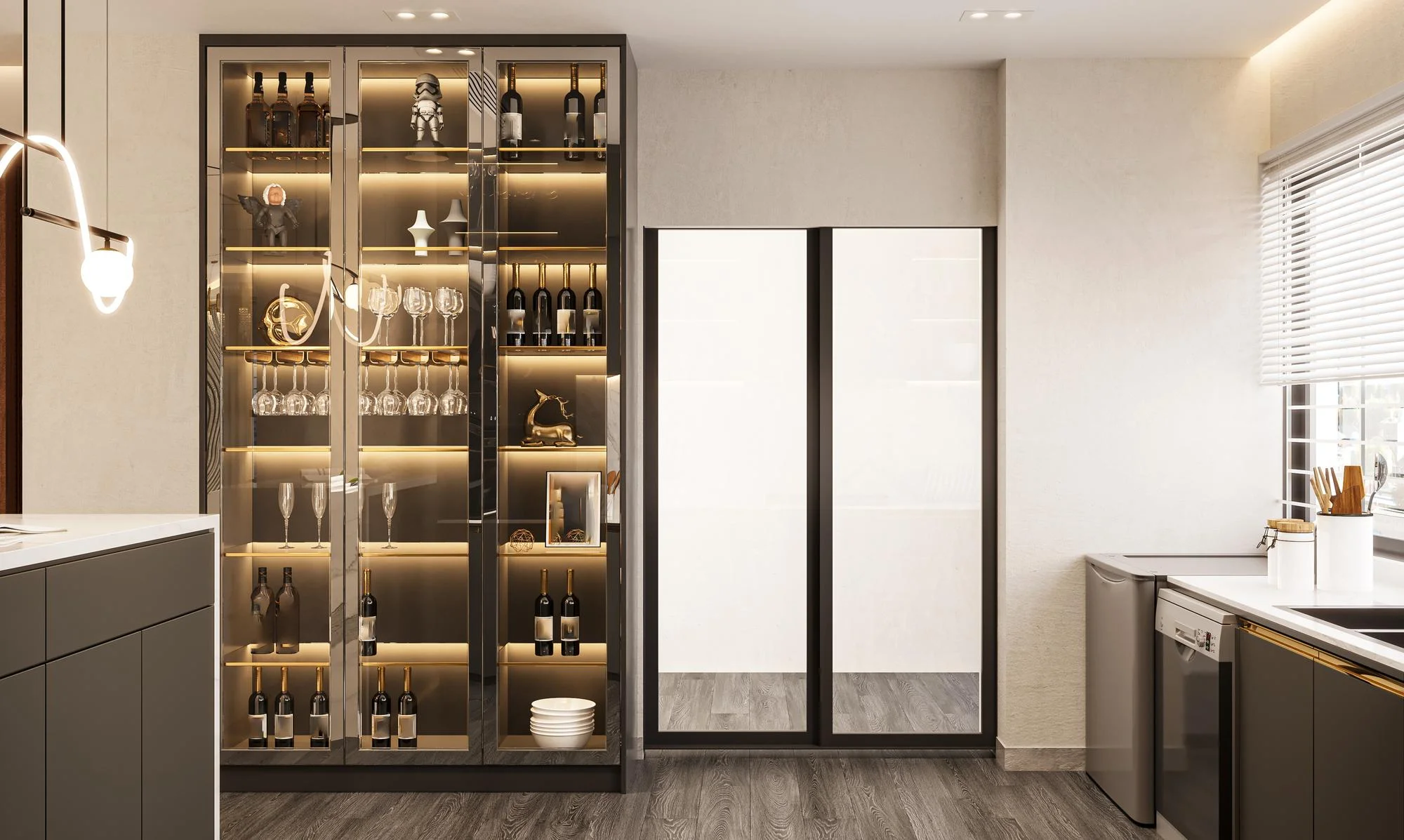
Metal-framed glass upper cabinets and wooden lower drawers
Textured backsplash with brushed steel or bronze finish
Floating shelves illuminated with concealed LED strips
Professional insight: Different materials interact differently with light and heat. When mixing metal and glass, ensure proper electrical insulation and grounding for nearby appliances. Avoid reflective glare by using diffused or frosted light covers.
Action tips
Match metallic tones across handles, trims, and light fittings
Use low-voltage LED strips (12 V or 24 V) for safety and energy efficiency
Test lighting color temperature against each surface before installation
6. Straight Kitchen with Open-Shelving Accent Wall
Open shelving brings a light, airy feel to a straight kitchen and adds personality to the wall space above the counter. It allows for easy access to everyday items and gives room to display décor or glassware.
Key features
Floating wood or metal shelves in place of upper cabinets
Accent lighting underneath each shelf
Neutral or textured backsplash for depth and contrast
Professional insight: Open shelves require careful lighting design. Concealed linear LED strips under each shelf improve visibility on the worktop. Low-voltage systems (12 V) are safer around open shelving where moisture and heat may occur. Also, route electrical wiring neatly within the wall cavity before installation to keep the surface uncluttered.
Action tips
Use tempered glass or sealed timber for shelf surfaces near the cooktop
Install dimmable shelf lighting to balance brightness and prevent glare
Keep wiring accessible behind removable panels for easy maintenance
7. Straight Kitchen for Small Footprint / Studio Home

In compact apartments or studio layouts, a straight kitchen must combine maximum efficiency with visual simplicity. Every square centimeter should contribute to comfort and functionality.
Key features
Compact appliances such as a two-burner cooktop or slimline dishwasher
Tall cabinets integrated with a built-in microwave or storage tower
Foldable or pull-out dining surfaces to extend counter use
Professional insight: For small kitchens, the electrical circuit should be designed to handle simultaneous appliance use without tripping breakers. Use a separate circuit for high-load devices like induction cooktops and ovens. Optimize socket placement along the backsplash so you don’t overload a single outlet.
Action tips
Plan electrical outlets before finalizing cabinetry to avoid later adjustments
Combine under-cabinet task lighting with a single ceiling track light for balanced coverage
Consider multi-function appliances that save space and energy
8. Straight Kitchen in Open-Plan Living / Seamless Transition

An open-plan home often blends the kitchen, dining, and living areas into one continuous environment. A straight kitchen layout keeps the flow unobstructed and helps unify the overall look.
Key features
Same flooring and color scheme across kitchen and living zones
Island or dining table as a soft divider
Consistent lighting style throughout
Professional insight: Electrical planning in open layouts should focus on creating visual balance. Use separate lighting circuits for task, accent, and ambient lighting. This allows flexible control—bright for cooking, softer for dining or entertaining. Ensure noise-producing appliances have proper power isolation to minimize electrical interference with audiovisual systems in the living area.
Action tips
Use dimmable lighting or smart switches for smooth mood transitions
Conceal power outlets within cabinetry or under the countertop to maintain a clean view
Align ceiling light positions with kitchen lines to maintain visual symmetry
9. Statement Backsplash or Wall Feature in Straight Kitchen

The backsplash area provides an ideal canvas for texture and creativity in a straight kitchen. It’s also a focal point that benefits from strategic lighting and electrical integration.
Key features
Materials such as glass, mosaic tile, or natural stone for visual texture
LED backlighting or edge-lighting for ambient effect
Flush-mounted outlets that blend into the backsplash
Professional insight: When installing electrical outlets on a feature wall, select waterproof or splash-resistant sockets (IP-rated) to comply with safety codes. Backlit glass panels require low-voltage LED modules and proper heat dissipation to extend their lifespan. Always use non-combustible backing materials behind lighted panels.
Action tips
Match the outlet color to the backsplash for a seamless look
Keep switches and outlets aligned horizontally for visual order
Use a timer or smart dimmer for decorative lighting to reduce energy use
10. Sustainable / Eco-Friendly Straight Kitchen

Modern homeowners increasingly value sustainability. A straight kitchen can easily adopt eco-friendly principles without sacrificing comfort or performance.
Key features
Recycled or renewable materials such as bamboo fronts and composite countertops
Low-VOC finishes and non-toxic sealants
Energy-efficient LED lighting and appliances
Professional insight: From an electrical standpoint, sustainability means designing for efficiency. Use motion sensors or daylight sensors to control lighting automatically. Select appliances rated for low standby power. Ensure circuits are properly grounded and sized to support future energy upgrades like solar or smart energy monitors.
Action tips
Choose low-energy LED drivers to minimize consumption
Install switchable power strips to reduce phantom load
Opt for durable wiring and fittings that minimize long-term waste
11. Smart Home & Tech-Enabled Straight Kitchen

Smart technology has become integral to modern kitchens, allowing homeowners to manage lighting, appliances, and energy from their phones or voice assistants.
Key features
Smart switches, dimmers, and power monitoring systems
Voice or app-controlled lighting and ventilation
USB-C integrated outlets for modern device charging
Professional insight: Integrating smart systems requires structured wiring and stable Wi-Fi coverage. Use a central hub or dedicated circuit for connected devices to prevent overloads. Prioritize safety—smart controls should not replace required isolators for fixed appliances. Always ensure compatibility between smart devices and your electrical standards (such as 230 V systems in Australia).
Action tips
Plan data and power cabling early in the renovation
Use surge protection to safeguard connected devices
Combine task and ambient lighting scenes for cooking, dining, or relaxing
Sizing, Layout & Practical Considerations

For a smooth kitchen experience, spatial and electrical planning must work hand in hand.
| Element | Minimum Width | Notes |
|---|---|---|
| Worktop depth | 600 mm | Standard bench space |
| Clearance in front | 900–1100 mm | Comfortable movement zone |
| Sink–Cooktop distance | 600–900 mm | Ideal workflow separation |
Appliance placement
Group the fridge, sink, and cooktop logically along the wall but maintain at least 300 mm of buffer space between sink and stove for safety.
Install power outlets at 1100 mm height above the floor for benchtop appliances and ensure they’re protected from water splashes.
Combining with an island
If space allows, add a freestanding island parallel to the kitchen wall. It can serve as both prep surface and dining zone without breaking the linear aesthetic. Include under-counter outlets for portable appliances.
Budget and renovation tips
Evaluate whether to refit or replace existing cabinets—refacing may be enough if the layout works.
Allow budget for lighting circuits and wiring upgrades during renovation.
Factor in inspection costs and appliance isolation switches, often required by electrical codes.
Storage & Organisation Hacks for Straight Kitchens

Efficient storage keeps a straight kitchen uncluttered and functional.
Smart storage ideas
Install vertical pull-outs beside the oven or fridge for condiments and utensils.
Use overhead cabinets for rarely used items and deep drawers for pots and plates.
Include appliance garages to hide small devices while keeping them plugged in.
Countertop management
Plan outlet positions carefully to avoid overloading a single circuit. Hidden pop-up sockets are useful for clean surfaces.
Maintaining a clean look
Keep finishes continuous—matching splashbacks, benchtops, and cabinetry panels give the illusion of extra width. Handle-less doors and soft-close systems enhance the seamless effect.
Finishes, Materials & Trend Forecast for Straight Kitchens

Modern straight kitchens combine performance materials with natural tones for a balanced feel.
Current trends
Textured laminates, natural timber, and stone-look surfaces
Warm neutral color palettes replacing sterile white schemes
Mixed materials—wood and metal combinations for depth
| Component | Popular Choice | Notes |
|---|---|---|
| Benchtop | Engineered stone or quartz | Durable, heat resistant |
| Splashback | Tempered glass or tile | Easy to clean, moisture-proof |
| Flooring | Vinyl plank or porcelain tile | Low maintenance, long lifespan |
Sustainability focus
Opt for low-VOC paints, LED lighting, and energy-efficient appliances to reduce long-term running costs. Incorporate motion sensors or dimmers to control lighting energy use.
Looking ahead
Future kitchens will continue integrating smart controls, wireless charging surfaces, and modular power systems that allow homeowners to adapt layouts as lifestyles change.
Common Mistakes to Avoid & Troubleshooting

Even simple designs can go wrong if electrical and spatial details are overlooked.
Frequent issues
Insufficient power points: leads to extension cords cluttering benches.
Unbalanced layout: all appliances crowded at one end.
Poor lighting distribution: dark zones near corners or sinks.
Solutions
Add extra outlets early in the design stage; plan one outlet every 1.2 meters of bench space.
Use lighting layers—task, ambient, and accent—to eliminate shadows.
If your straight run is long, visually break it with contrasting finishes or a change in cabinet height.
Ready to Plan Your Straight Kitchen?

Transform your kitchen into a modern, efficient, and beautifully lit space. Our electrical design experts can help you plan safe wiring, smart lighting, and appliance layouts tailored to your home. Contact us today to discuss your project and get professional guidance for your next kitchen renovation.
FAQs
What is the 3×4 kitchen rule?
The 3 × 4 kitchen rule suggests designing your kitchen with three separate counter areas, each about four feet long. One zone for preparation, one for cooking, and one for cleaning helps create a smooth workflow and reduces crossover of tasks.
What is a straight-line kitchen called?
A straight-line kitchen is commonly referred to as a single-wall kitchen or one-wall kitchen. In this layout all cabinets, appliances and work zones are arranged along one wall.
What kitchen design never goes out of style?
Kitchen designs that emphasise neutral colours, simple cabinetry (like Shaker style), natural materials, and functional layouts tend to remain timeless. For example: white or off-white cabinets, classic countertops, and durable finishes.