

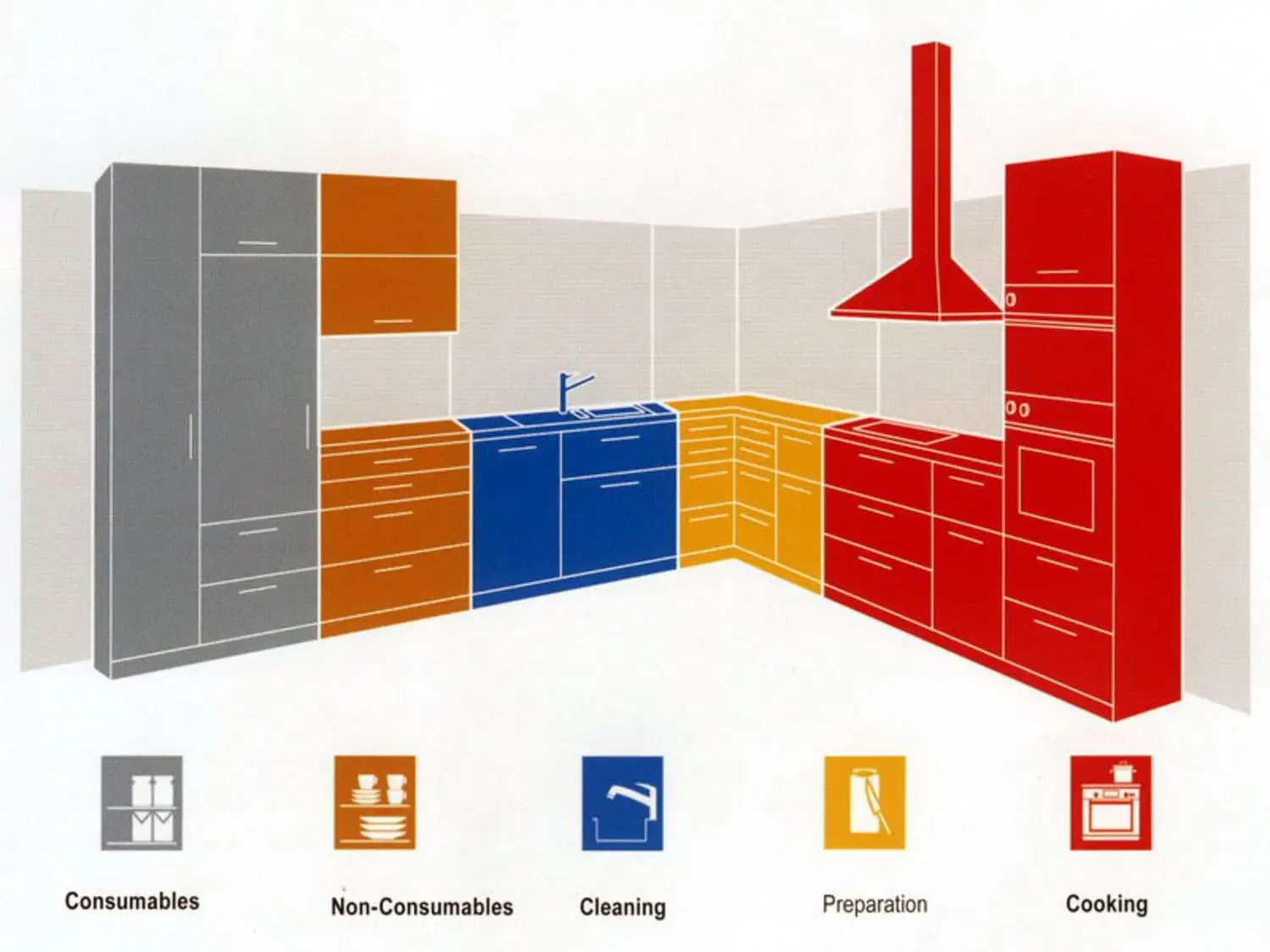
Kitchen zones are a way of organizing your kitchen by tasks rather than by strict distances or appliance rules. Instead of focusing only on where the sink, stove, and fridge sit, zoning groups items and work areas based on how you actually cook, clean, store, and move through the space.
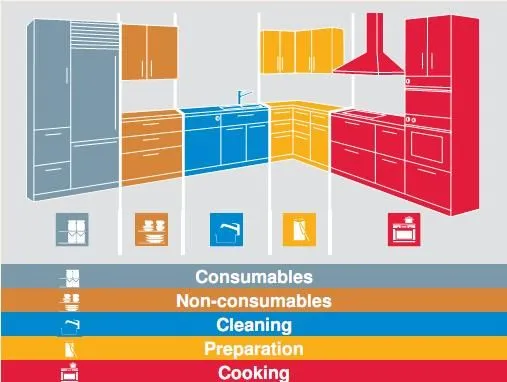
This approach fits modern lifestyles much better—especially for open-plan homes, multi-cook households, and kitchens used for more than just cooking. While the traditional “work triangle” still helps in some layouts, kitchen zones offer far more flexibility and efficiency for today’s daily routines.
Core Kitchen Zones Defined
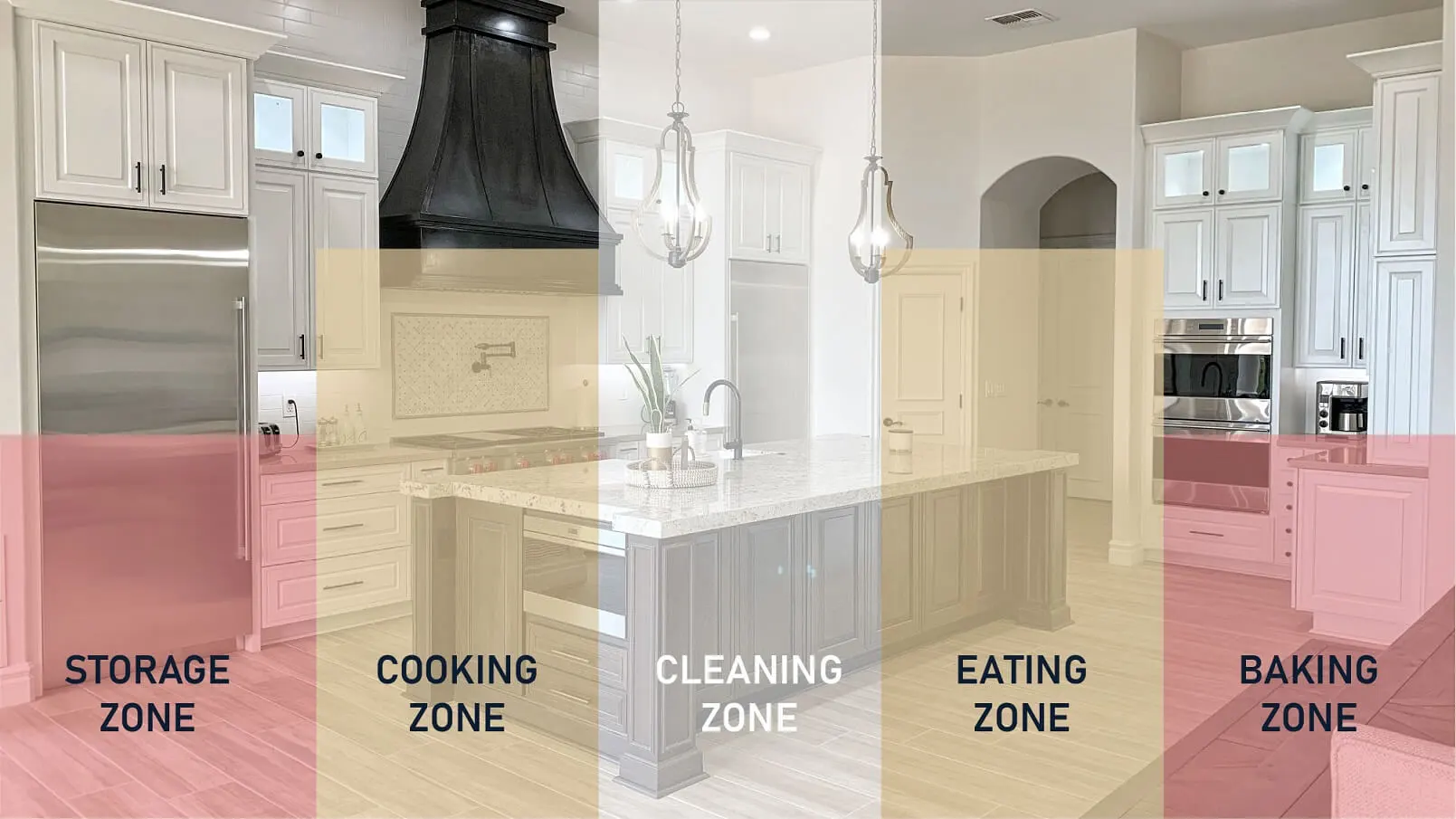
1. Food Storage Zone
This zone includes anything related to storing ingredients—your pantry, fridge, freezer, and dry-goods cabinets. Keep snacks, canned foods, spices, and baking supplies close together so grabbing ingredients is fast and intuitive.
2. Preparation Zone
The prep zone is where most hands-on work happens. It should include your main counter space for chopping, mixing, seasoning, and assembling meals. Store knives, mixing bowls, cutting boards, and small appliances (like a blender) within reach to keep prep smooth and clutter-free.
3. Cooking Zone
This zone revolves around heat. It includes the stove, oven, cooktop, microwave, and any pots, pans, cooking utensils, or oils you use while cooking. Keeping everything in arm’s reach helps you stay focused—and safe—when working with heat.
4. Cleaning Zone
Located around the sink and dishwasher, this zone includes waste bins, compost, cleaning tools, and dishware storage if possible. A well-designed cleaning zone keeps dirty dishes contained and helps maintain a tidy, easy-to-reset kitchen.
5. Optional Modern Zones
Today’s kitchens often serve more than one purpose, so extra zones can make the space even more functional:
Entertainment/Leisure Zone: Bar seating, coffee counter, or a social corner for guests or kids.
Baking Zone: A dedicated counter for rolling dough, using mixers, and storing baking tools.
Beverage Zone: Coffee station, wine fridge, drink shelves, or smoothie area.
These optional zones help transform your kitchen into a flexible living space that supports cooking, hosting, working, and relaxing—all in one harmonious layout.
Why Zones Work Better Today
Kitchen zones have become the new standard because they fit the way we live now. Modern homes often use open-plan layouts, which blend cooking, dining, and socializing into one shared space. Instead of forcing everything into a strict triangle, zoning lets you organise the kitchen by tasks—so multiple people can cook, prep, clean, or make coffee without getting in each other’s way. It also reduces cross-traffic and creates a smoother flow, making the kitchen feel more comfortable and efficient. Whether you’re hosting friends or helping kids with homework at the counter, zones support real-life routines.
How to Plan Your Kitchen Zones
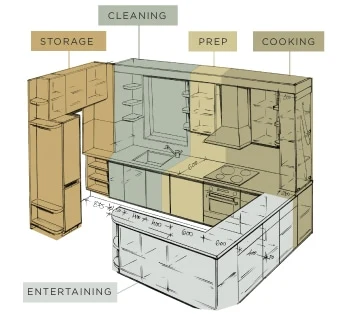
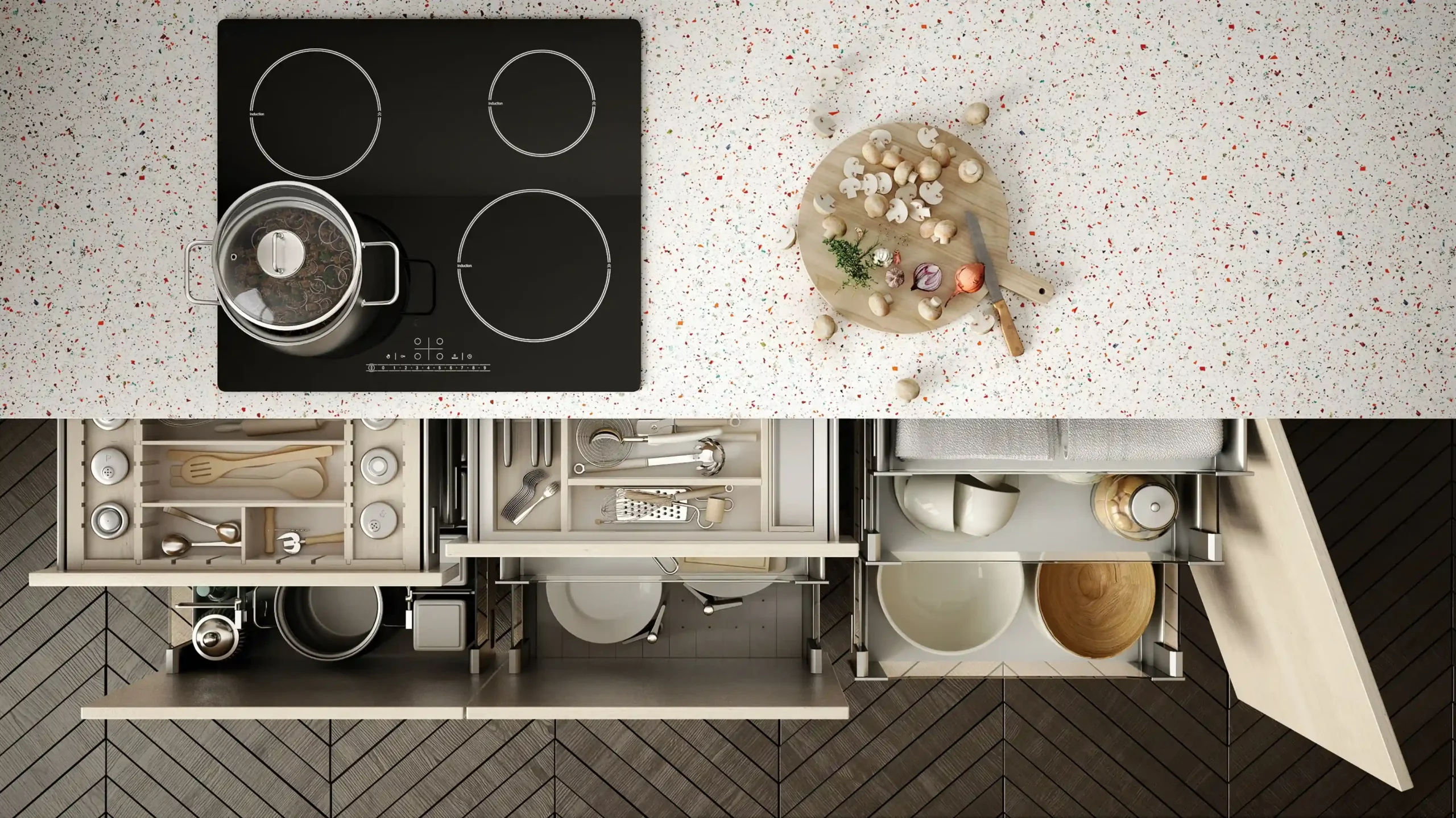
Start by mapping out all the daily tasks in your kitchen—storing, prepping, cooking, cleaning, and any extras like coffee or baking. Once you know what happens where, sketch the layout and group related activities together. Keep items you use for each task within arm’s reach inside that zone. For example, chopping boards and knives belong near your prep counter, while pots, pans, and oils should live close to the cooktop.
Measure how you move through the space and make sure traffic paths don’t cut through key areas like the prep or cooking zone. Allow zones to overlap naturally where it makes sense, such as keeping some prep tools near the sink. Using simple tools like zone checklists, color-coded drawings, or digital planning apps can help you visualise everything clearly and build a kitchen that truly matches your lifestyle.
Design & Storage Tips by Zone
Storage Zone
Keep this area simple and efficient. Pull-out pantries, clear bins, and deep drawers make it easy to see everything at a glance. Group dry goods, snacks, and bulk items together so you don’t waste time searching.
Prep Zone
Your prep space should feel open and easy to use. Protect counter space, keep knives and daily tools close by, and make sure this area has bright, shadow-free lighting. A small cutting-board drawer or utensil organizer helps keep things tidy.
Cooking Zone
Place your most-used pots, pans, oils, and utensils right next to the stove. Add heat-safe landing spaces on both sides of the cooktop so you can set down hot pans quickly. This keeps cooking smooth and prevents clutter from creeping in.
Cleaning Zone
Position your rubbish, recycling, and compost bins near the sink for quick cleanup while you prep and cook. Store plates, cups, and everyday dishware close to the dishwasher to speed up unloading and reduce back-and-forth steps.
Leisure / Drink Zone
Create a small, flexible corner for coffee, tea, or casual seating. A mini beverage area or breakfast bar helps keep traffic away from the main work areas and supports modern multi-tasking—chatting, reading, or unwinding.
Common Mistakes & How to Avoid Them
Zones placed too far apart, leading to more steps and slower workflow.
Overlapping zones that cause congestion, especially around sinks or cooktops.
Ignoring sight-lines in open layouts, making the kitchen feel disconnected from the living area.
Not planning lighting or storage for each zone, resulting in dark corners or cluttered counters.
Designing with zones in mind keeps your kitchen organised, efficient, and enjoyable—no matter how busy life gets.
Ready to Build a Smarter, More Organized Kitchen?
If you’re planning a new kitchen or updating an existing one, thoughtful zoning can completely transform how your space works. Our team can help you design a layout that fits your cooking habits, lifestyle, and home perfectly. From electrical planning to storage strategy, we make the process simple and practical. Contact us today for personalized guidance and start creating a kitchen that feels both effortless and beautifully designed.
FAQs
What are the five zones in a kitchen?
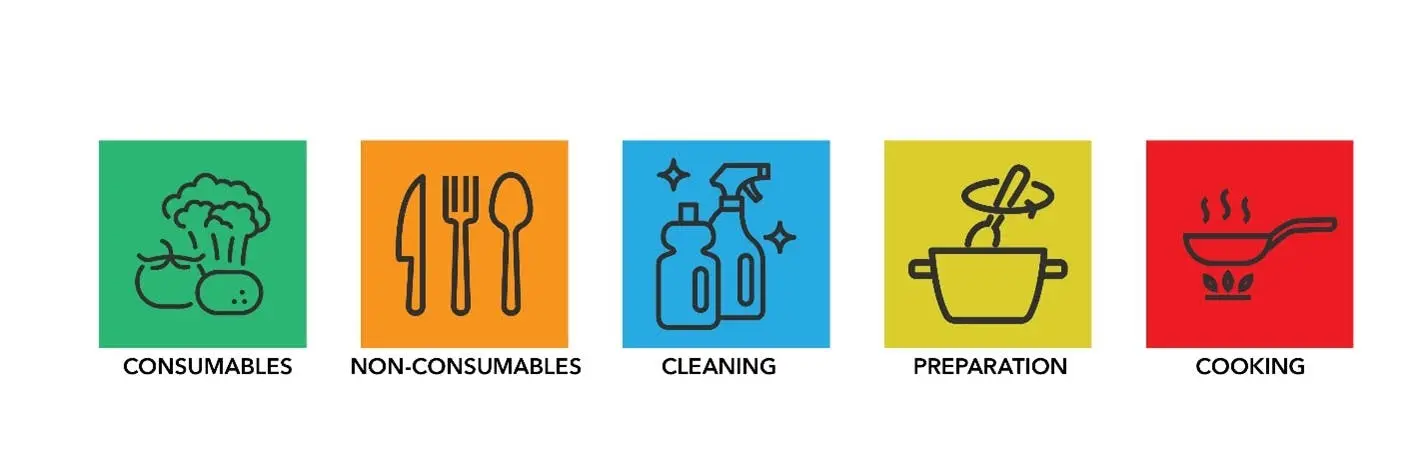
Most designers divide the kitchen into five zones: food storage, non-consumables (like dishes/cookware), preparation, cooking, and cleaning.
What is the 3×4 kitchen rule?
The “3×4” rule recommends having three separate counters, each about four feet long, to support distinct workflow areas like prep, cook, and cleanup.
What goes in each kitchen zone?
Storage zone: pantry, fridge, dry goods.
Non-consumables: plates, cookware, mugs.
Preparation zone: chopping boards, knives, mixing bowls.
Cooking zone: stove, oven, cookware, utensils.
Cleaning zone: sink, dishwasher, bins, cleaning supplies.
Is $10,000 enough for a kitchen remodel?
On a tight budget, $10,000 can cover cosmetic updates or small kitchens, but it’s generally not enough for a full remodel with structural changes or high-end finishes.
 English
  Arabic
  Spanish
  Japanese
  Russian
  Korean