

Cabinet finishes play a major role in how your kitchen looks, feels, and performs. The finish protects the cabinet surface from daily wear—moisture, fingerprints, cooking splatters—while also shaping the overall style of the room. It’s one of the biggest contributors to budget as well, since different finishes require different materials, techniques, and levels of labour.
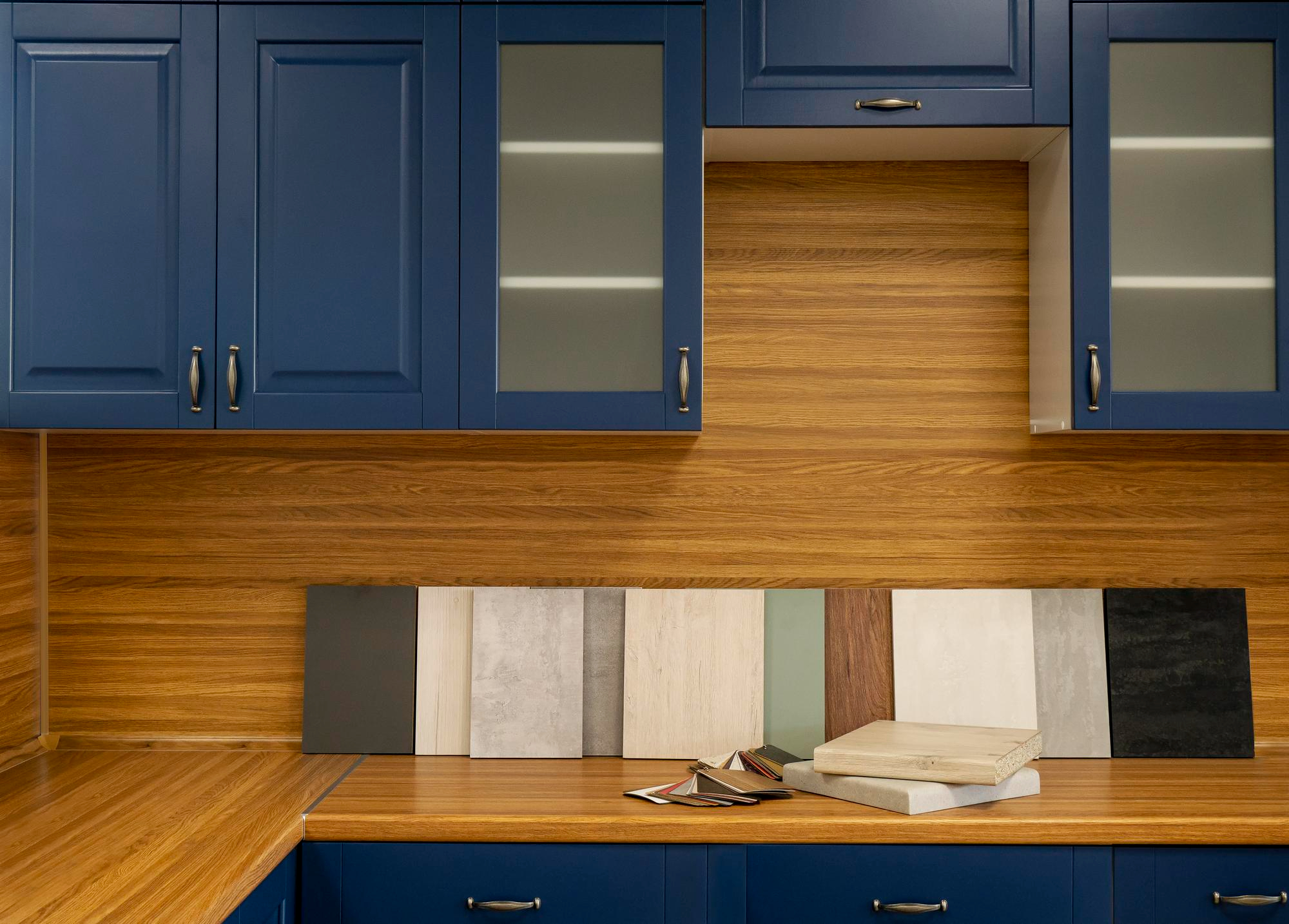
In today’s kitchens, homeowners can choose from several finish categories, including paint, stain, laminate, veneer, thermofoil, and modern textured or matte coatings. Each option varies in durability, maintenance needs, and how well it complements current design trends. Warm wood tones, matte finishes, and natural textures are becoming more popular, while overly glossy or plastic-looking finishes are gradually fading out.
Key Considerations for Cabinet Finishes
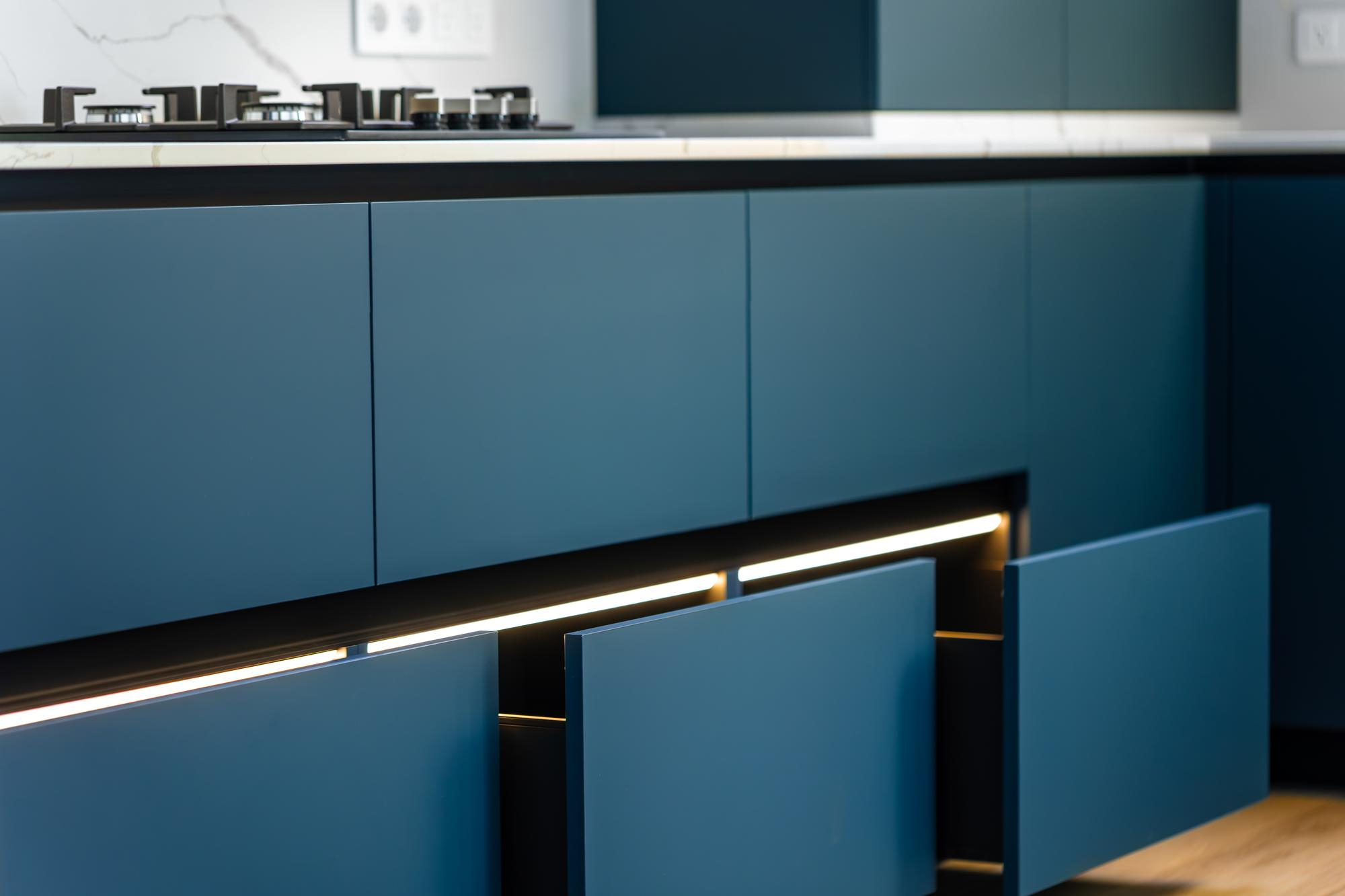
Before choosing a finish, it helps to understand how your cabinets will be used and what look you want to achieve.
Durability
The finish should stand up to daily cooking, humidity, and heat. Some coatings resist scratches and moisture better, while others may fade or chip over time.Maintenance
Painted or high-gloss finishes may show fingerprints, while textured or matte options hide wear more easily. Stained wood may need occasional refinishing but ages gracefully when cared for.Appearance & Style
Think about grain visibility, sheen (matte, satin, semi-gloss), and how easily the finish can be painted or updated. Stain shows natural grain; paint offers full colour flexibility.Cost & Installation
Factory finishes like laminate or thermofoil are budget-friendly, while painted or lacquered finishes require more labour and higher cost. Custom textures or multi-layer coatings raise the price further.Sustainability & Trends
Low-VOC paints and eco-friendly coatings improve indoor air quality. Current trends favour matte finishes, warm woods, and subtle textures, while ultra-gloss thermofoil and dated colours are becoming less common.
Popular Cabinet Finish Types
Stain & Natural Wood
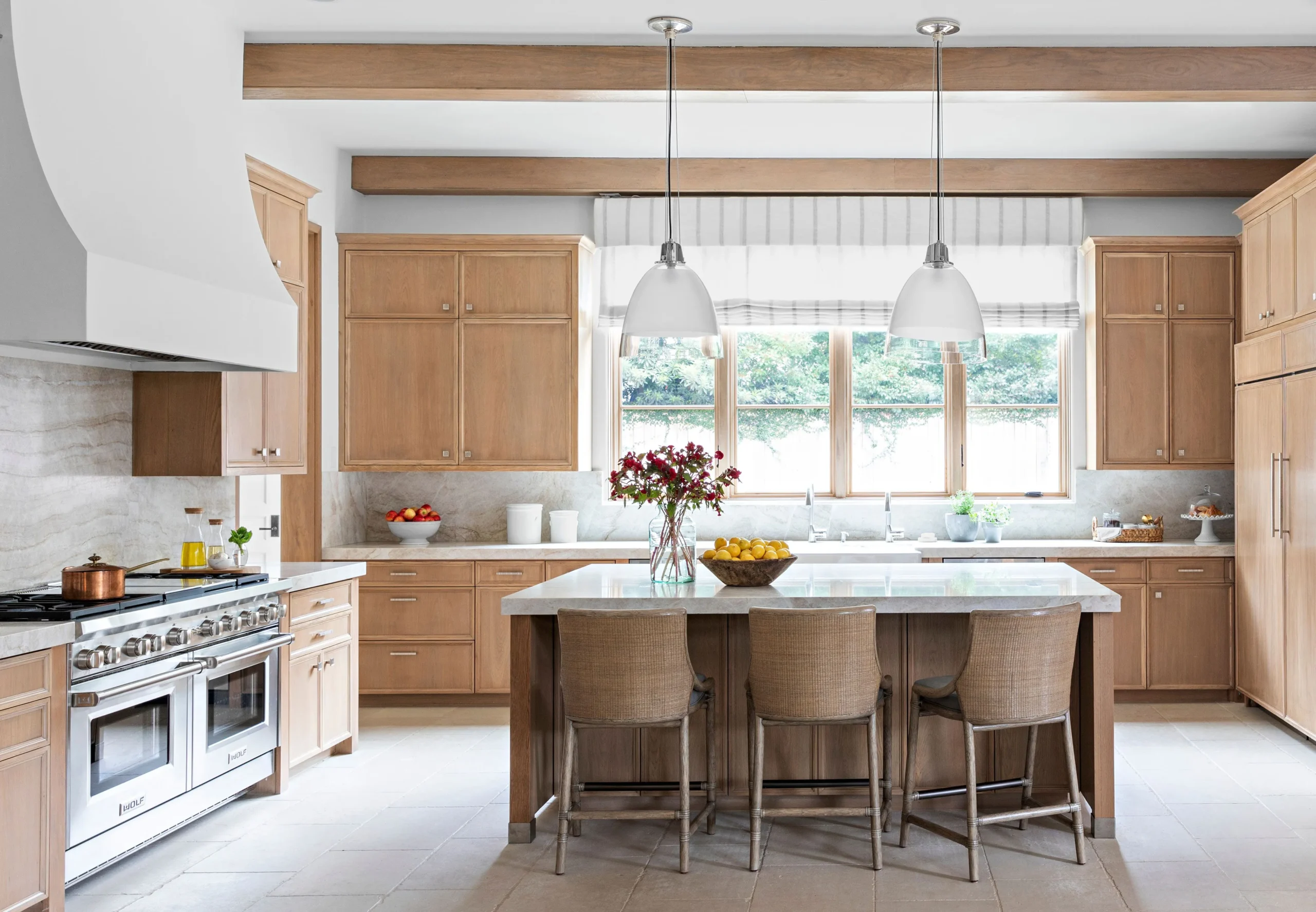
Stained cabinets highlight the natural grain and texture of the wood, giving the kitchen a warm and timeless look. They’re great for traditional, rustic, or organic styles. Stain penetrates the wood, making scratches less noticeable and touch-ups easier. However, stained finishes depend heavily on the wood species, and they may require occasional resealing to maintain colour and protection.
Paint
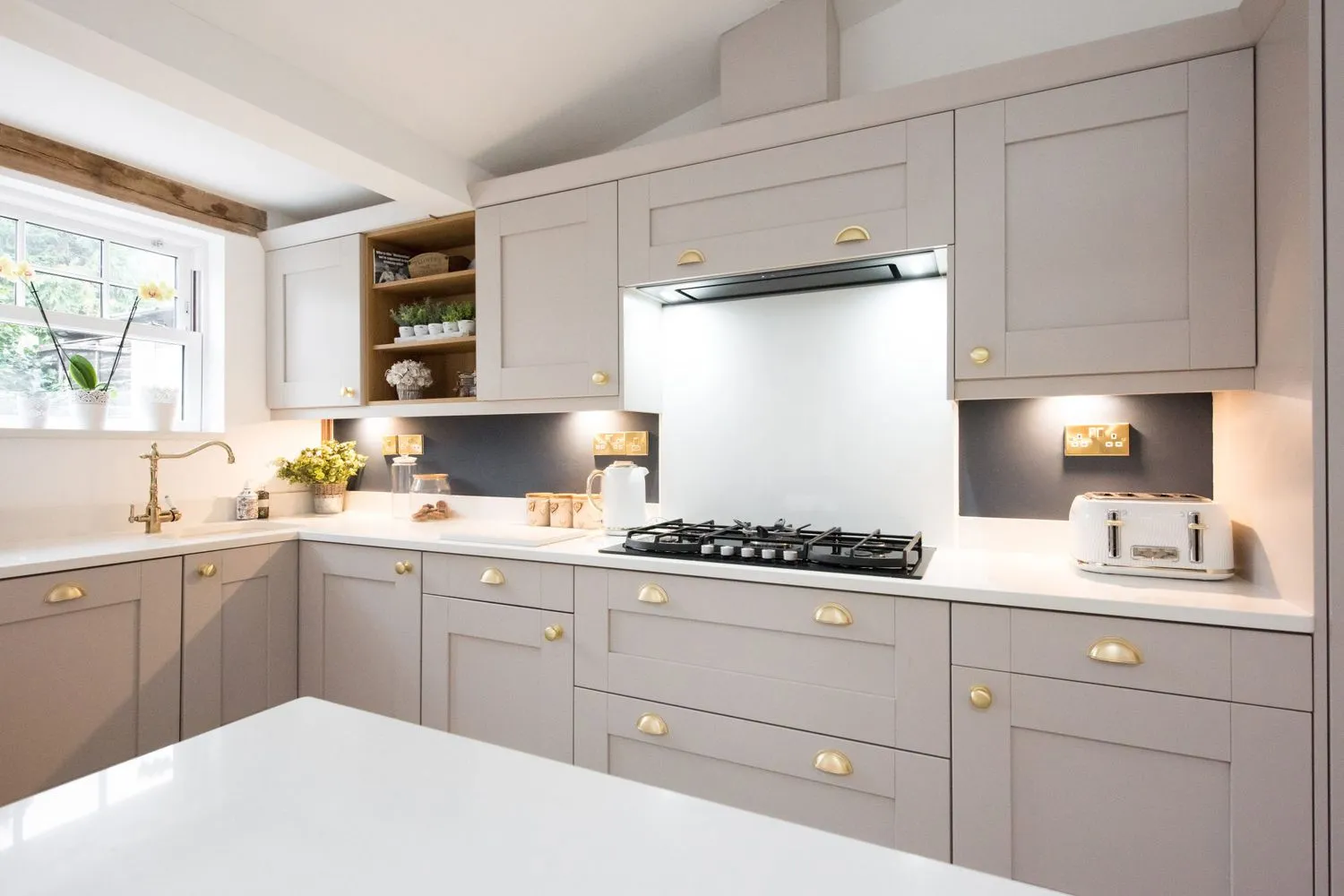
Painted cabinets offer full colour flexibility, from crisp whites to bold modern tones. The finish is smooth, uniform, and works well for both classic shaker doors and sleek flat-panel designs. Paint is easy to refresh in the future, but it can show dents or chips more easily than stain, especially in high-use areas like under the sink or near hardware.
Laminate / Melamine
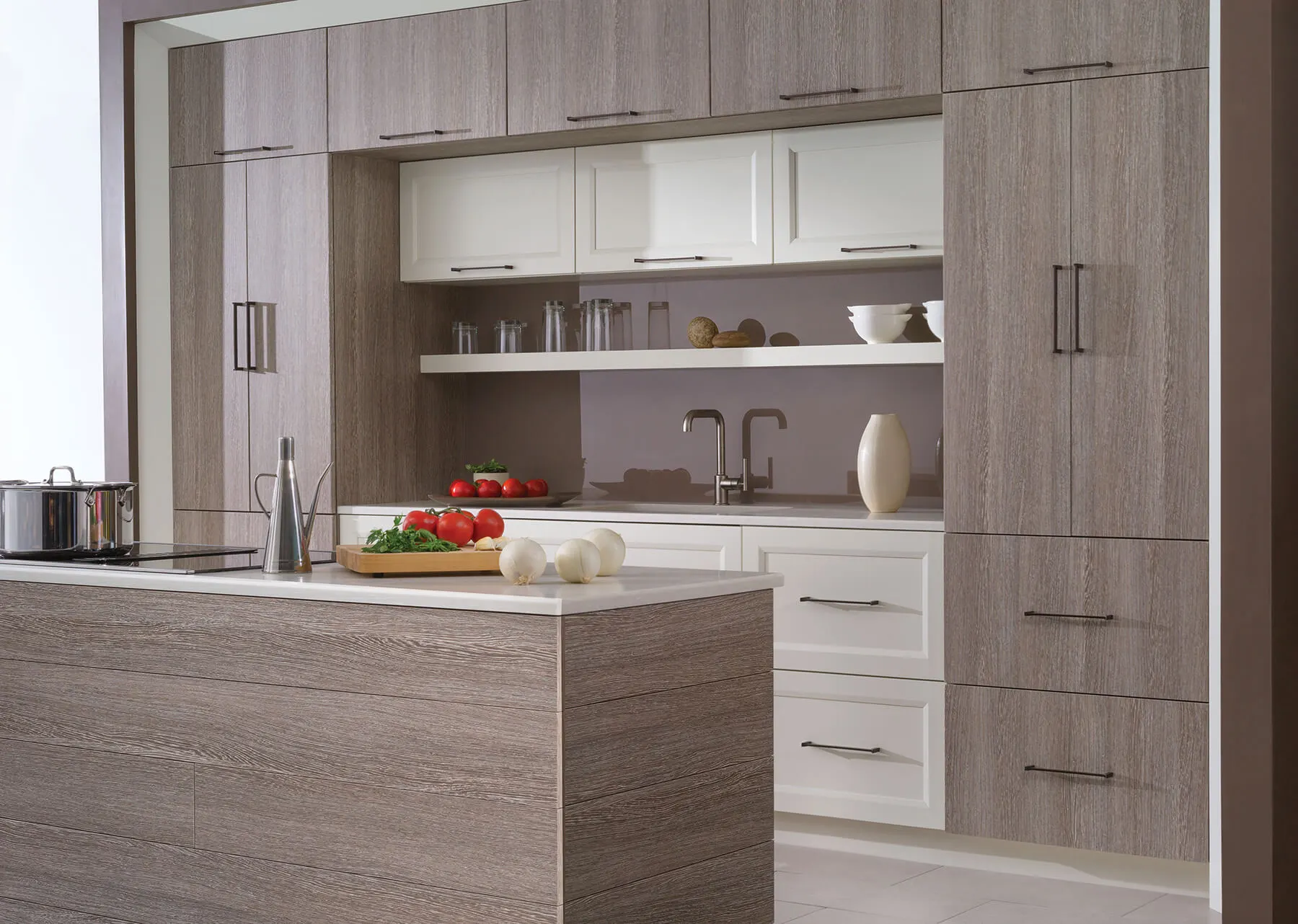
Laminate and melamine finishes are budget-friendly and come in a huge variety of colours, patterns, and textures—including realistic wood grains. They’re durable, easy to clean, and resistant to stains and fading. However, they cannot be refinished, and lower-quality versions may chip at the edges. For modern or minimalist kitchens, they offer a clean and affordable option.
Vinyl / Foil Finishes (Thermofoil)
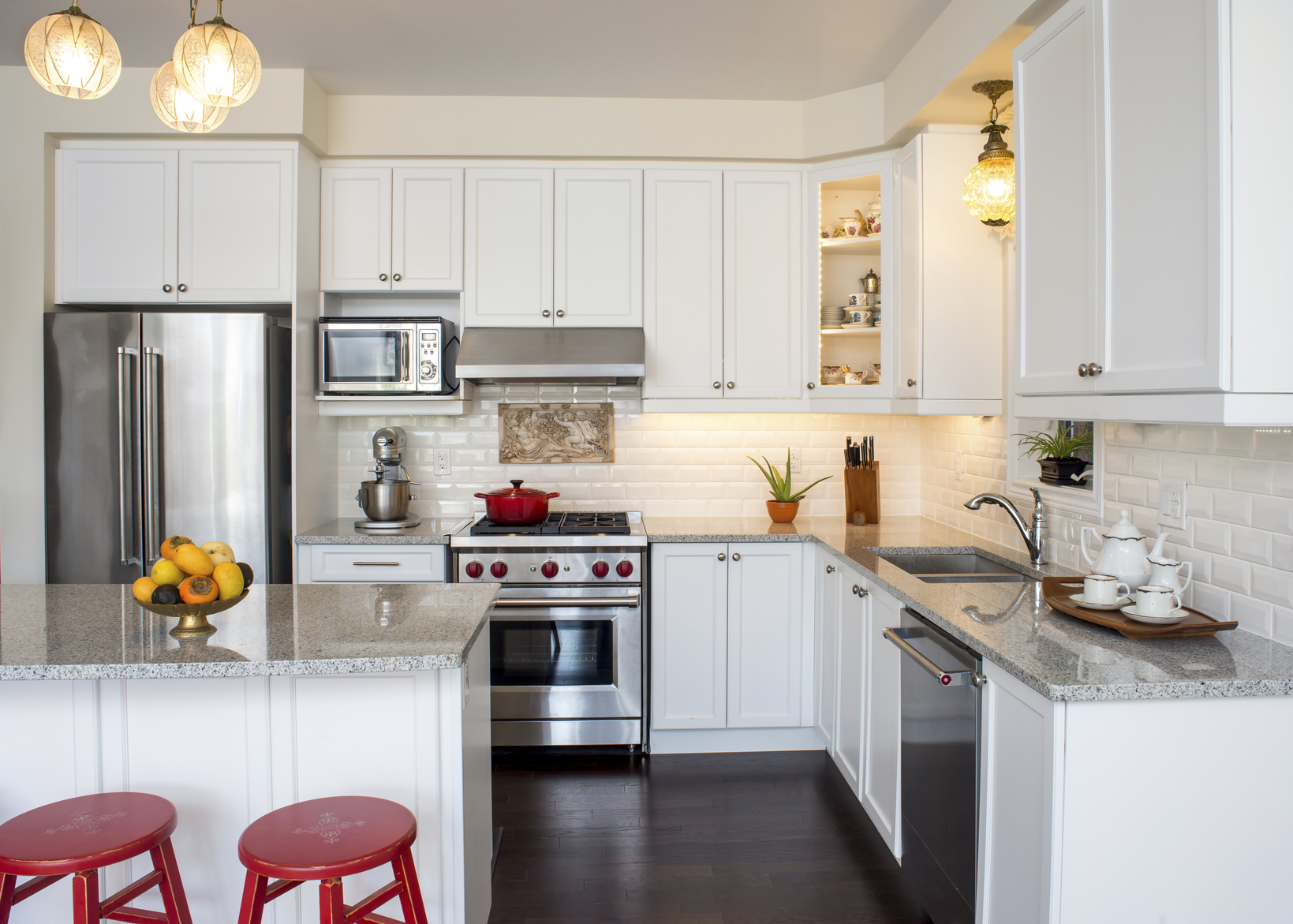
Thermofoil is a smooth vinyl layer heat-pressed over MDF, creating a seamless, easy-to-clean surface. It’s affordable and ideal for achieving a modern, uniform look. The downside is heat sensitivity—thermofoil can peel or discolor if placed too close to high heat sources unless protected with heat shields.
Wood Veneer
Wood veneer provides the look of real wood while using a thinner layer of natural material bonded to a strong core. It’s more affordable than solid wood and allows for consistent grain patterns. Veneer offers a high-end appearance but can chip or peel if hit or exposed to moisture. Proper sealing and care help extend its lifespan.
Lacquer / High-Gloss
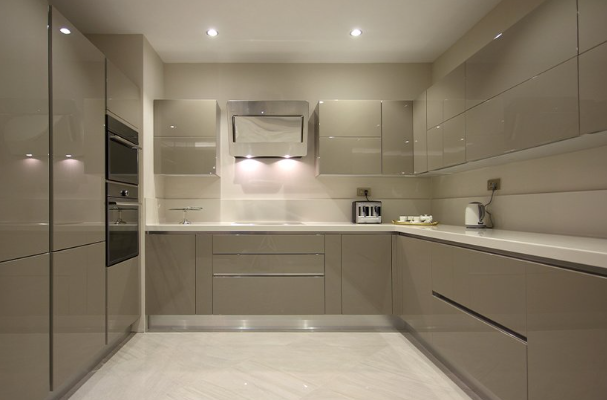
Lacquered finishes offer a sleek, reflective look that suits contemporary kitchens. They create a smooth, polished surface that feels luxurious. The tradeoff is maintenance—high-gloss finishes show fingerprints, smudges, and scratches easily, requiring frequent cleaning to keep them looking pristine.
Specialized Textures & Modern Coatings
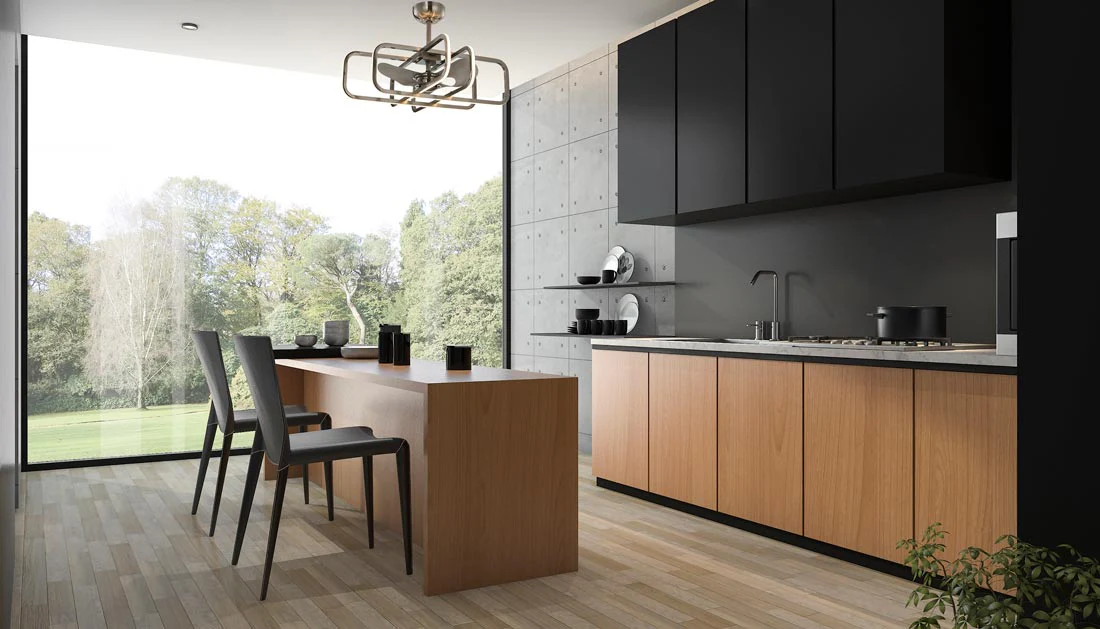
Matte finishes, textured foils, and TFL (Thermally Fused Laminate) surfaces are gaining popularity for their modern, tactile feel. These finishes hide fingerprints well, resist wear, and give the kitchen a premium designer look. They tend to be more expensive than basic laminates but offer long-lasting style without the fragility of high-gloss coatings.
Matching Finish to Your Kitchen & Lifestyle
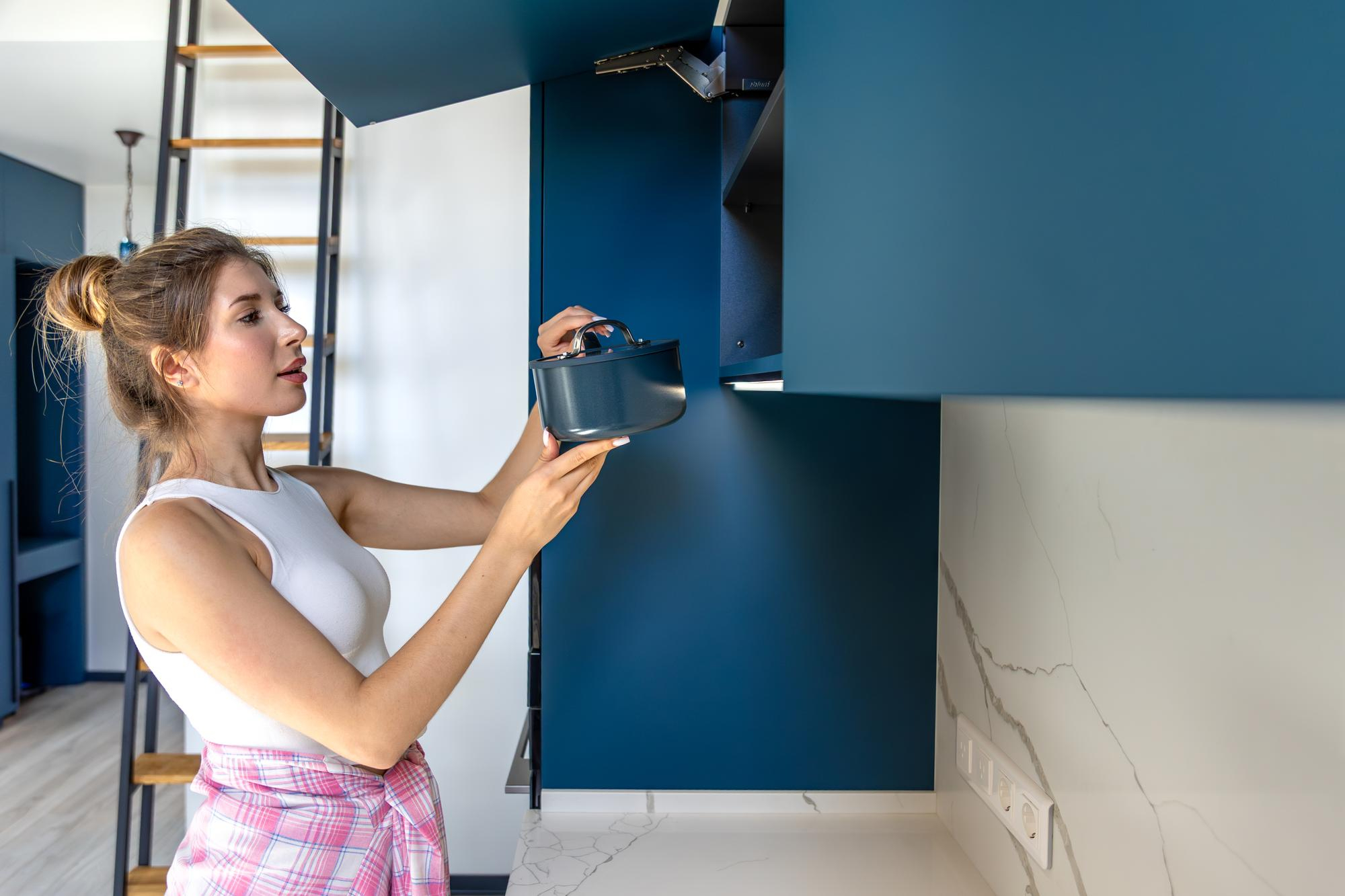
Choosing the right cabinet finish isn’t just about colour—it’s about how your kitchen looks, works, and ages over time. The best finish is the one that fits both your style and your daily routine.
Align with your kitchen style (traditional vs modern)
Natural stains and visible grain suit traditional or warm, organic kitchens. Painted or matte textured finishes work well for modern, minimalist, or Scandinavian-inspired designs. High-gloss lacquers fit ultra-contemporary spaces but require more upkeep.Consider traffic, cooking habits, and cleaning needs
Busy households benefit from durable, easy-clean finishes like laminate, melamine, or matte TFL. Homes with heavy cooking may want stain or veneer that hides wear better, while paint may require touch-ups in high-use zones.Choose sheen and texture based on lighting and space size
Matte hides fingerprints and softens bright light, while semi-gloss reflects more light and can brighten darker kitchens. Textured finishes add depth but may feel heavy in small spaces.Maintenance willingness
If you prefer low-maintenance surfaces, choose laminate, melamine, or modern textured coatings. If you enjoy the look of natural wood and don’t mind occasional care, stain or veneer offers a richer, more timeless aesthetic.
By matching the finish thoughtfully, you ensure your cabinets look good, function well, and stay beautiful for years.
Ready to Choose the Perfect Cabinet Finish?
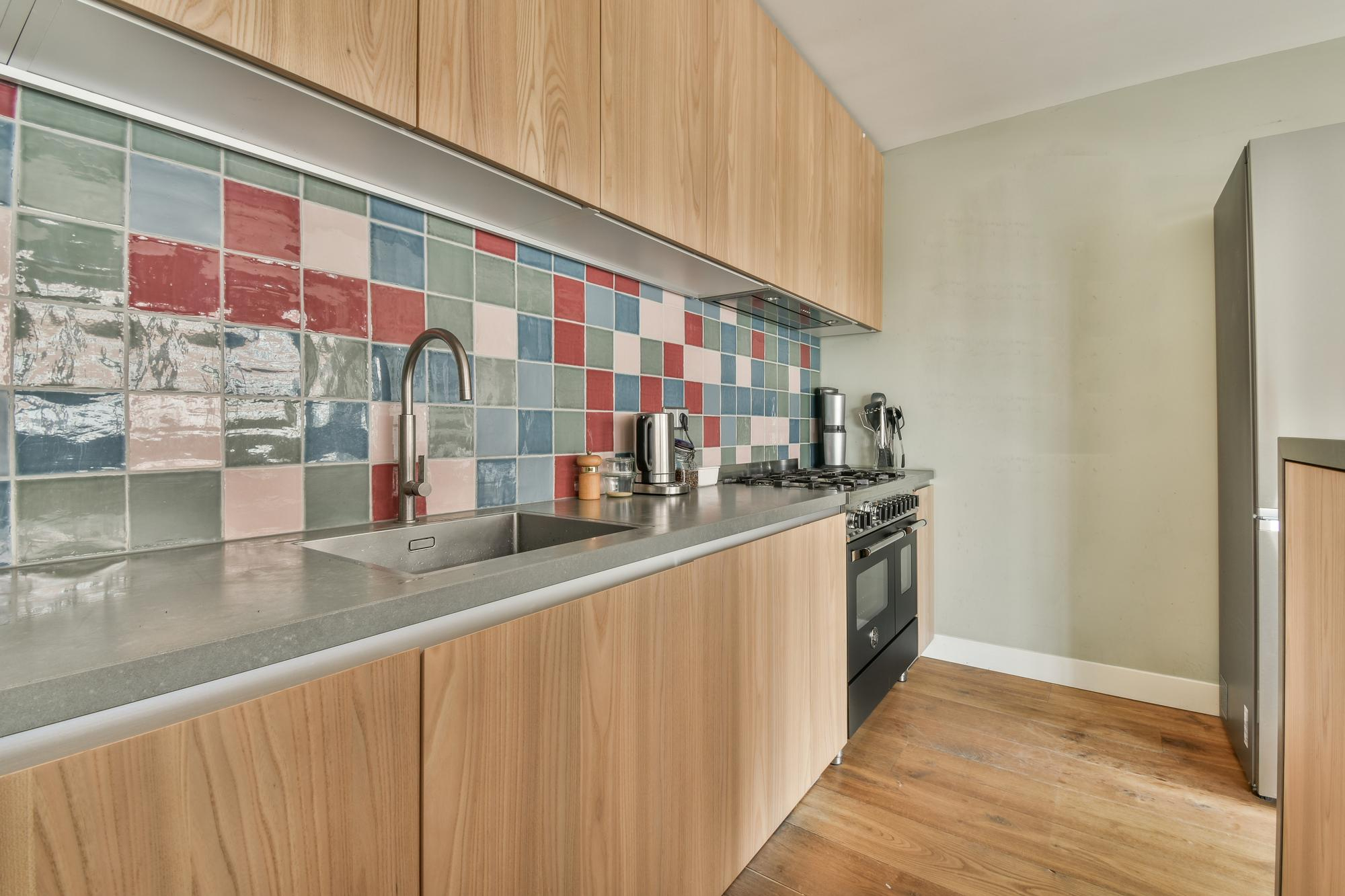
Your cabinet finish shapes the look, durability, and daily experience of your kitchen. If you’re unsure which option fits your style, lighting, and lifestyle, we’re here to help. Contact us today for personalised advice, material comparisons, and expert support to design cabinets that stay beautiful and functional for years.
FAQs
What type of finish is best for cabinets?
A durable finish such as polyurethane, conversion varnish, or high-quality laminate is often best, since it protects wood from moisture, wear, and heat.
What is the coating on cabinets called?
The smooth protective layer on cabinet doors is commonly called a “finish” or “topcoat”—examples include lacquer, polyurethane, thermofoil, or laminate.
Should cabinets be gloss or satin?
It depends on your style and cleaning needs:
Gloss and semi-gloss finishes are easy to clean and reflect light, making small kitchens feel larger.
Satin or matte finishes hide imperfections better and offer a softer look, but may require more maintenance.
How to tell what finish is on cabinets?
Look for signs such as high shine (gloss), subtle sheen (satin), visible wood grain without paint (stain), or vinyl/foil wrap (thermofoil). You can also ask your installer or manufacturer for the finish type and coating used.
 English
  Arabic
  Spanish
  Japanese
  Russian
  Korean