

A kitchen backsplash is the vertical surface that protects the wall behind your counters, stovetop, and sink. It shields your kitchen from splashes, grease, and everyday mess—but it also plays a major role in the room’s overall style. The right material can completely change the look and function of your kitchen, adding personality while keeping maintenance simple.
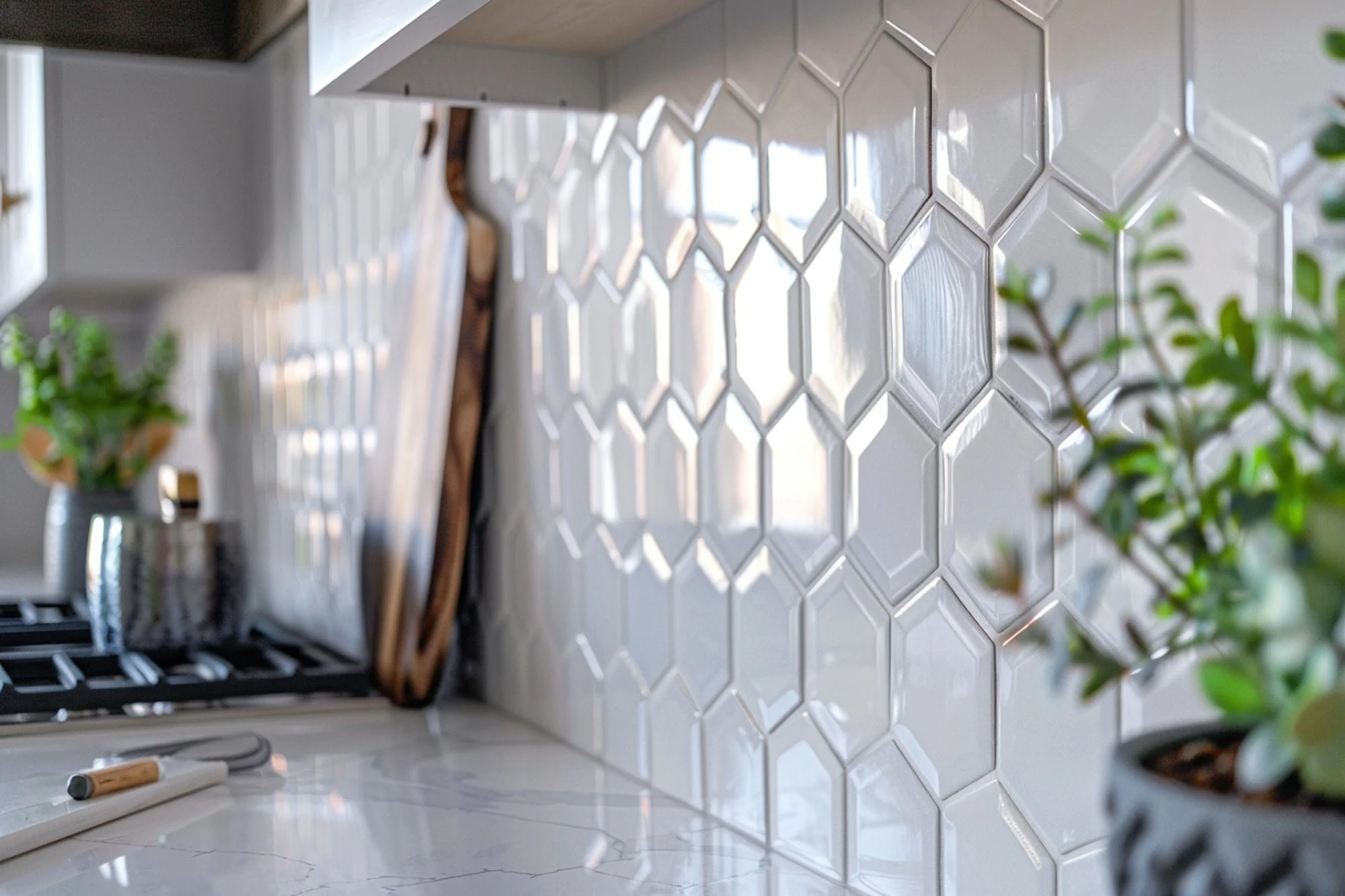
In this guide, we’ll walk through the most popular backsplash materials, how they perform, what they cost, and which trends are shaping modern kitchen design. You’ll get a clear understanding of tile, stone, glass, metal, and more—so you can confidently choose a material that fits your cooking habits, cleaning routine, and design preferences.
Key Considerations Before You Choose
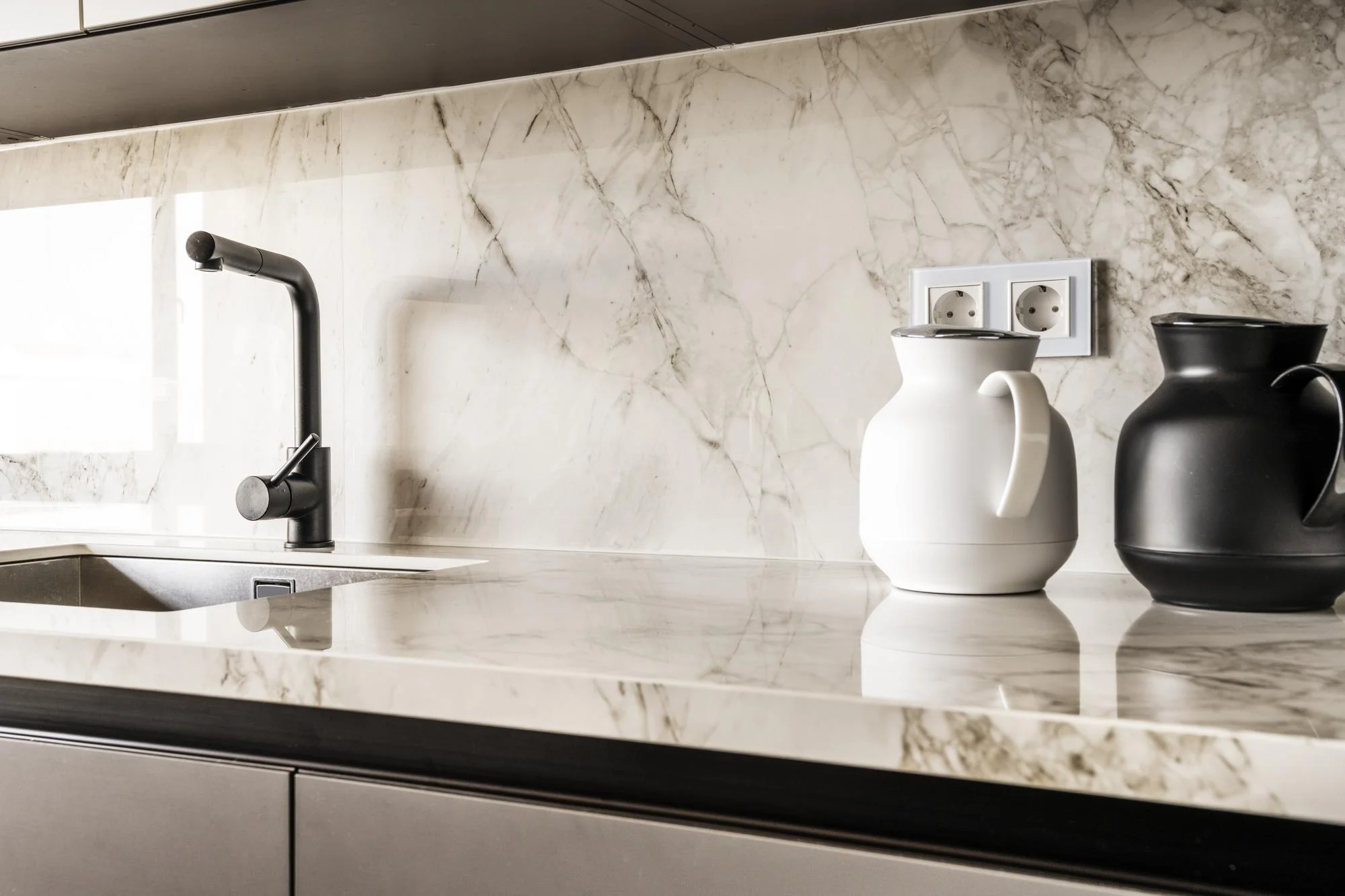
Selecting a backsplash is more than picking something pretty. The material needs to stand up to heat, moisture, and daily wear—especially around the stove and sink. Here’s what to consider before narrowing your choices:
Durability (heat, moisture, stain resistance)
Your backsplash takes on steam, grease, and occasional spills. Ceramic, porcelain, stainless steel, and many stones handle heat well. Glass and specialty tiles also perform strongly when properly installed.Maintenance (sealing, cleaning, grout upkeep)
Tile backsplashes with grout lines may need regular scrubbing or sealing. Natural stone requires sealing to prevent stains. Metal and glass are easy to wipe clean but may show fingerprints or streaks.Style & Aesthetics (color, pattern, finish)
Your backsplash should coordinate with cabinets, countertops, flooring, and overall mood. Whether you prefer classic subway tile, textured stone, bold mosaics, or sleek slabs, choose a material that supports your kitchen’s visual flow.Budget & Installation Complexity
Ceramic tile is affordable and DIY-friendly. Porcelain, stone slabs, stainless steel sheets, and hand-made tiles cost more and often require professional installation. Your budget should account for both material and labor.Trend & Longevity
Some styles—like fluted tiles, matte textures, and large-format slabs—are rising in popularity. Others may date quickly. Aim for a backsplash that feels current but still timeless enough to last through design trends.
These factors will help you choose a backsplash that not only looks good on day one but continues to perform and stay stylish for years.
Popular Backsplash Material Types (with Pros & Cons)
| Material | Look & Style Fit | Best Placement & Use | Maintenance Level |
|---|---|---|---|
| Ceramic Tile | Classic or modern; works with most counters. | Behind sink and stove; full wall or short splash. | Low–moderate; clean grout regularly. |
| Porcelain Tile | Durable, can mimic stone or concrete. | High-traffic kitchens; full-height backsplashes. | Low; very resistant to stains and wear. |
| Glass Tile | Bright, reflective, modern look. | Great behind sink and as feature walls. | Low; easy to wipe, shows smudges. |
| Natural Stone | Luxury, organic texture; suits premium kitchens. | Feature wall or behind stove with good ventilation. | Medium–high; needs sealing and gentle cleaners. |
| Stainless / Metal | Industrial or professional style. | Behind cooktop; high-heat, high-splash zones. | Low; wipe clean, may show fingerprints. |
| Recycled & Specialty | Eco-aware, unique patterns and colors. | Accent areas, bar splash, or full focal wall. | Varies; follow maker’s specific care advice. |
| Mixed-Media Designs | Layered, custom look; blends textures. | Feature sections, niches, and open-plan kitchens. | Varies; consider grout and joint details. |
Ceramic Tile
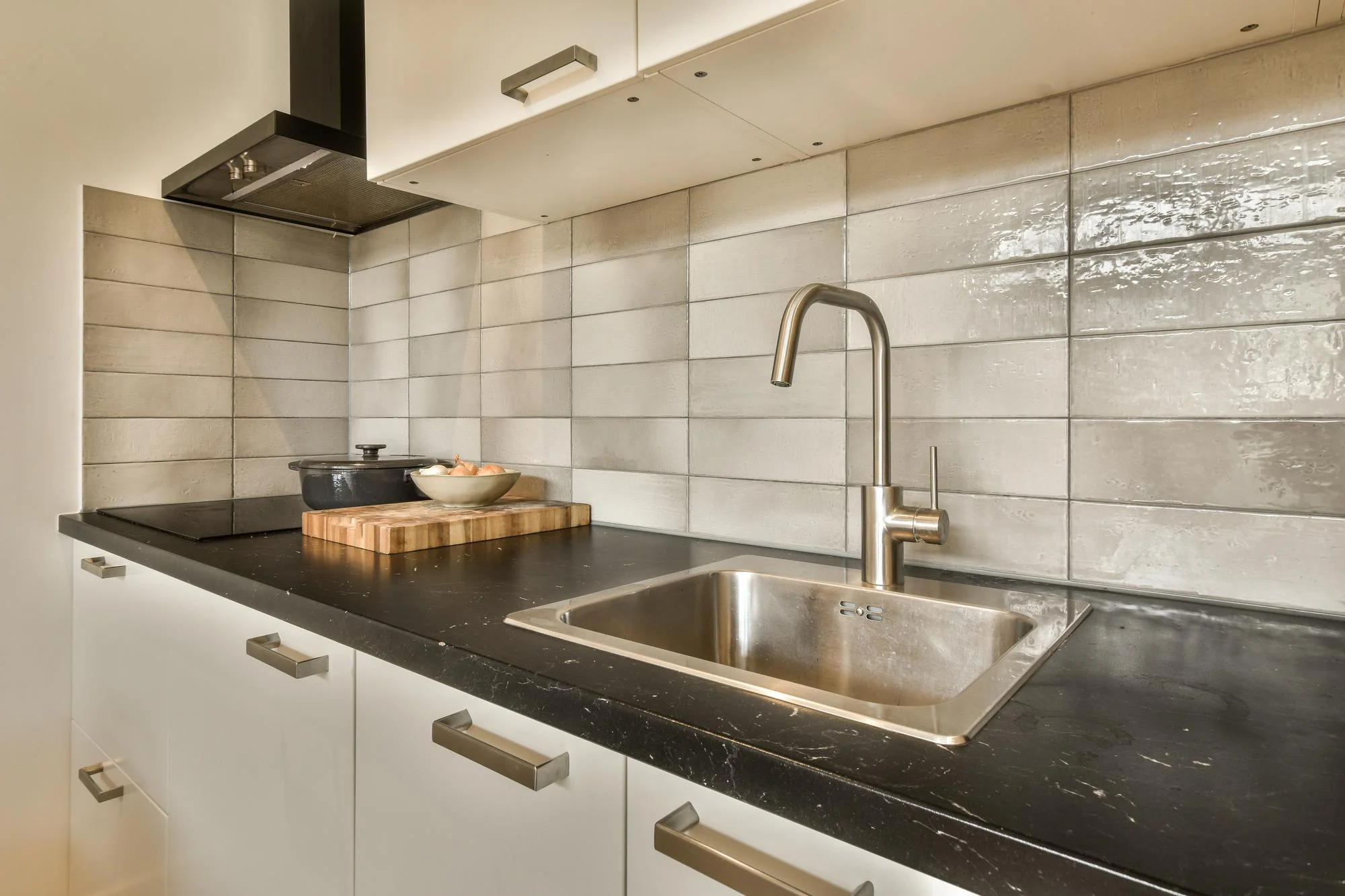
Ceramic tile is one of the most common backsplash choices because it’s affordable, easy to clean, and available in nearly every shape and color. It works well for classic subway layouts, patterned designs, or simple neutrals. Ceramic is resistant to everyday heat and moisture, making it reliable behind sinks and stovetops. The main downside is the grout—regular cleaning or sealing may be needed to keep it looking fresh.
Porcelain Tile
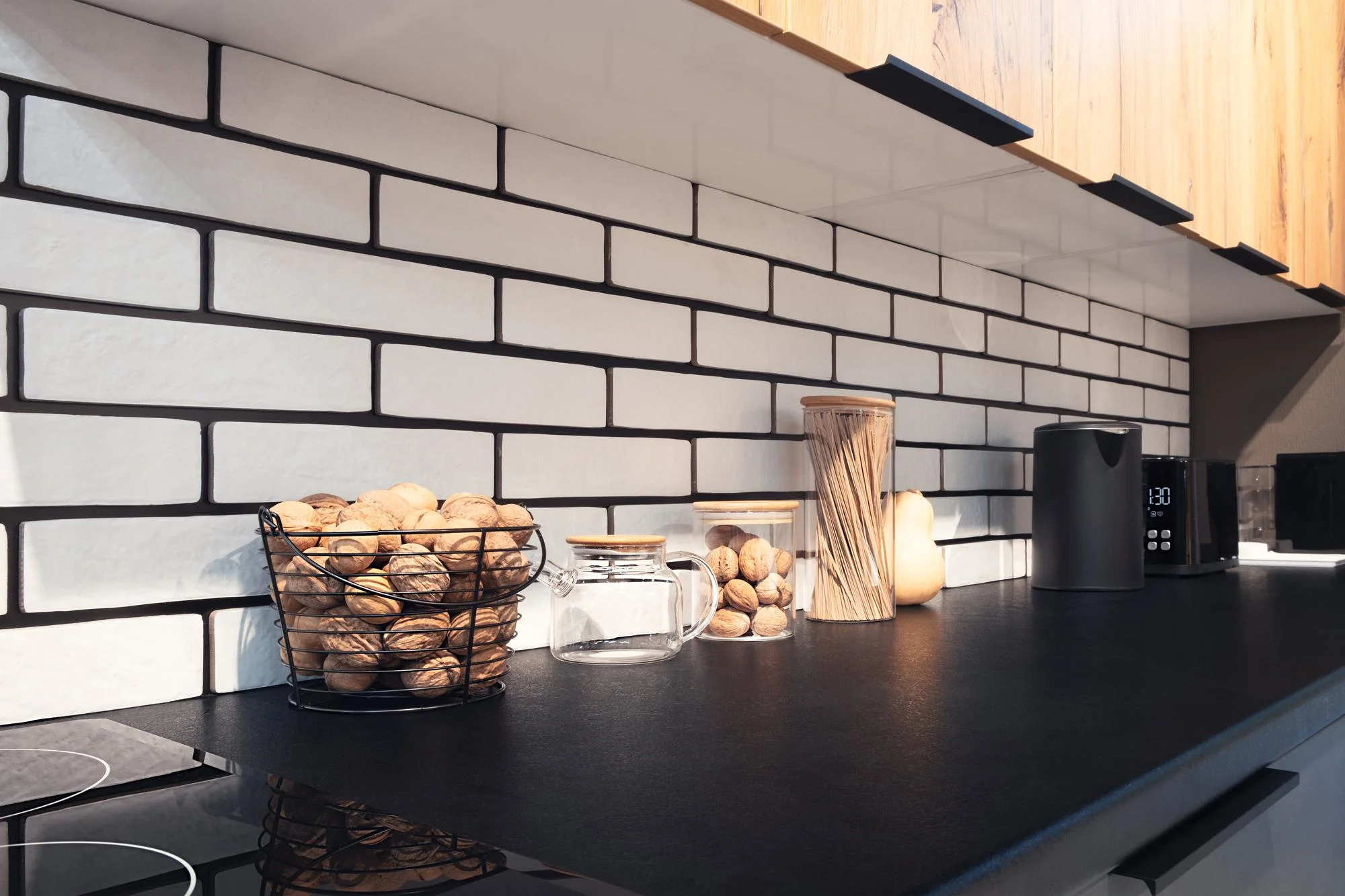
Porcelain is denser and stronger than ceramic, offering excellent durability with higher resistance to chips, stains, and heat. It’s great for busy kitchens or homes that want a long-lasting backsplash with minimal care. Porcelain tiles often mimic stone or concrete for a modern look, but the higher cost and heavier weight usually require professional installation.
Glass Tile
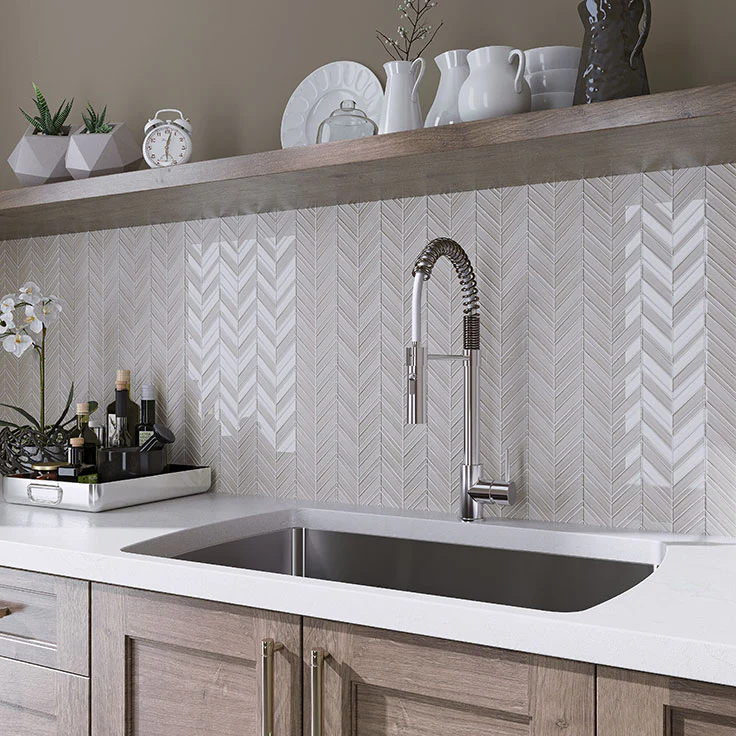
Glass tiles give the kitchen a bright, reflective surface that bounces light and visually enlarges the space. They’re ideal for modern designs or areas needing more brightness. Glass cleans easily but may show fingerprints or smudges more than matte surfaces. When installed well, it offers a sleek, elegant look that pairs beautifully with both dark and light cabinetry.
Natural Stone (Marble, Granite, Slate)
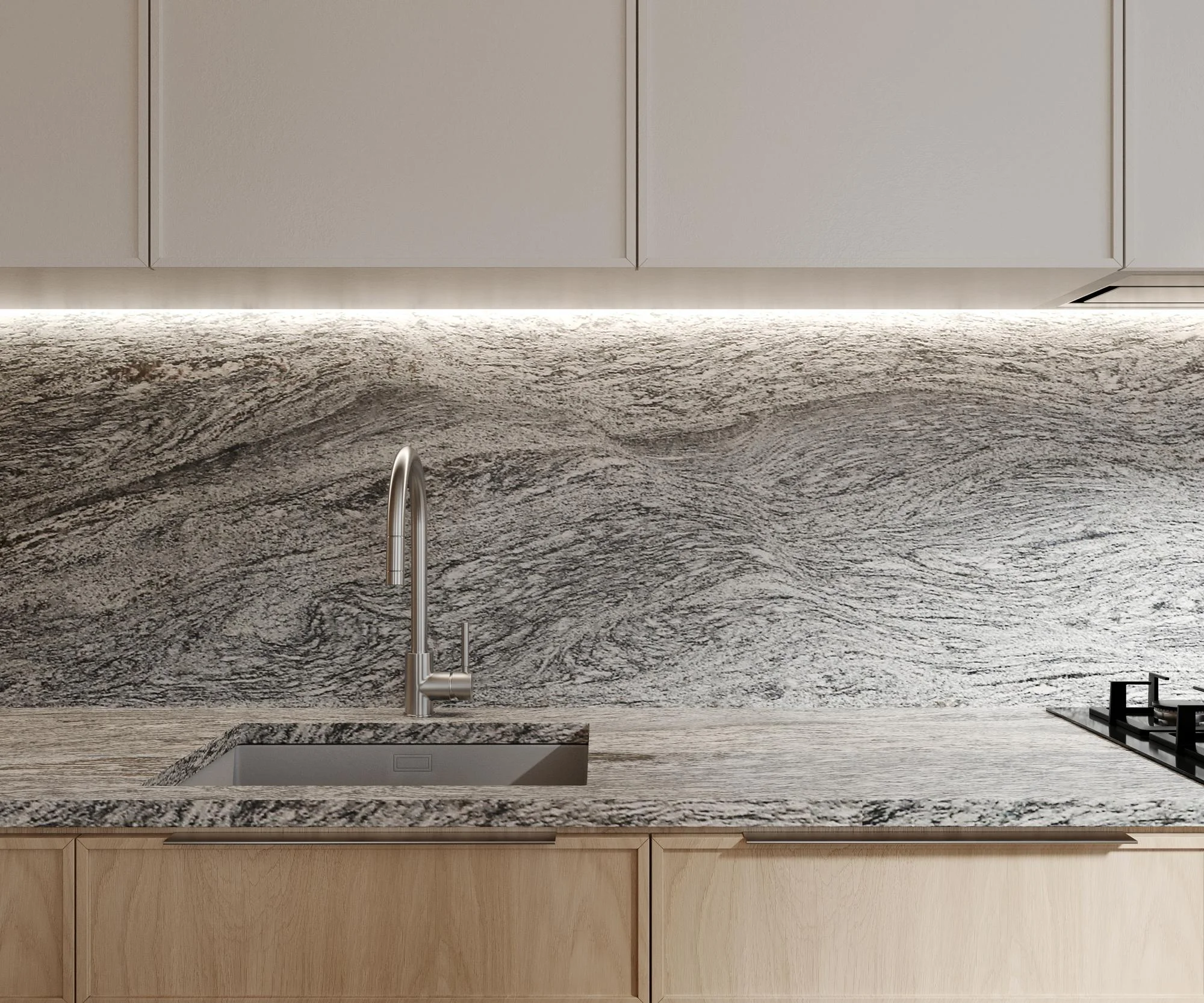
Natural stone backsplashes add warmth and luxury to a kitchen with unique veining and natural texture. Marble creates a timeless, high-end appearance; granite adds durability; slate offers a rich, organic feel. However, stone requires sealing to protect against stains and moisture. It’s also more sensitive to acidic foods and cleaners, so it suits homeowners willing to maintain it regularly.
Stainless Steel & Metal Sheets
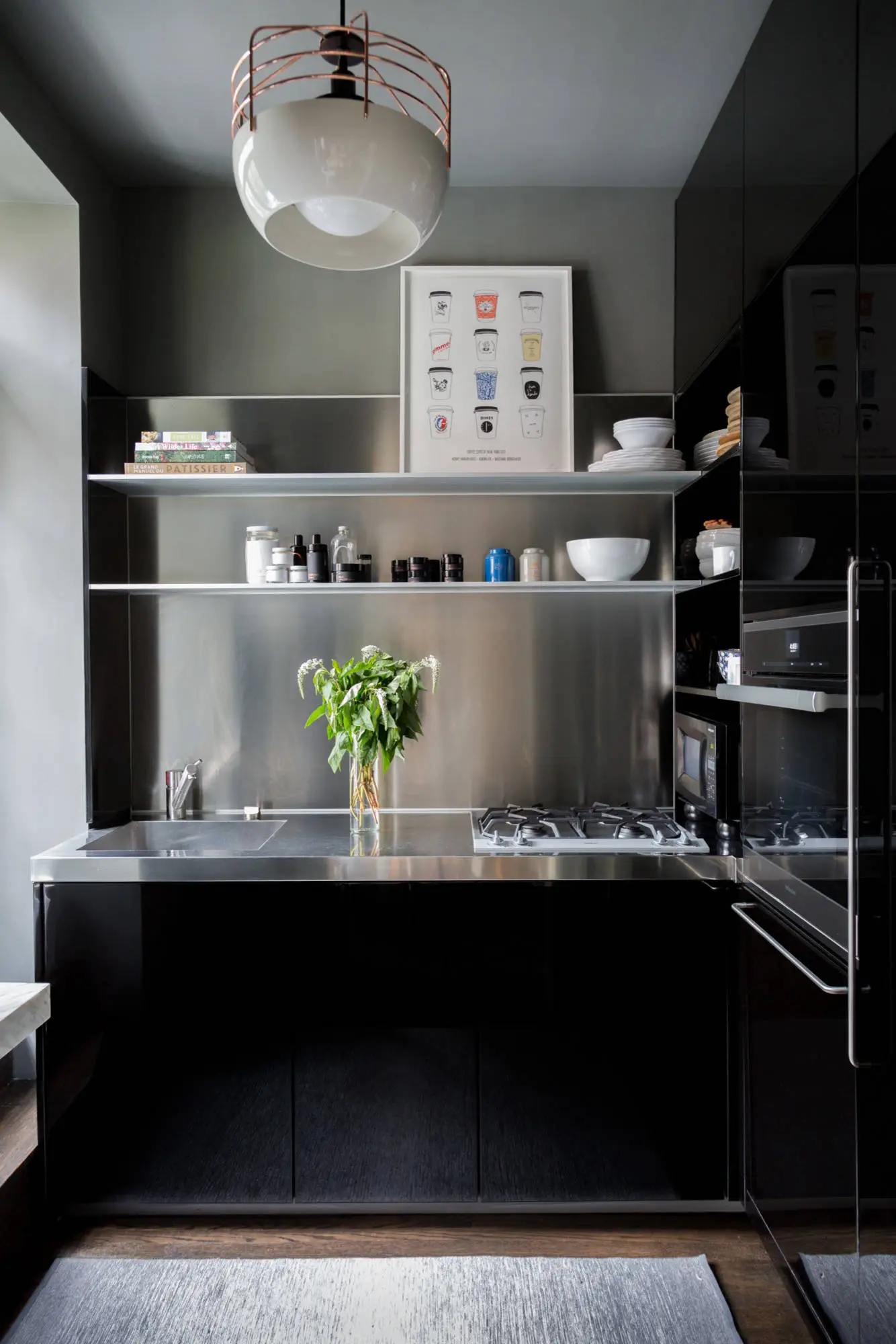
Metal backsplashes—such as stainless steel, brushed aluminum, or copper—perform extremely well around high-heat zones. They’re durable, non-porous, and commonly seen in professional kitchens. Stainless steel brings an industrial look, while copper adds warmth and character. The smooth surface makes cleaning easy, although some metals can scratch or show smudges over time.
Recycled & Specialty Materials (Terrazzo, Sintered Stone, Recycled Glass)
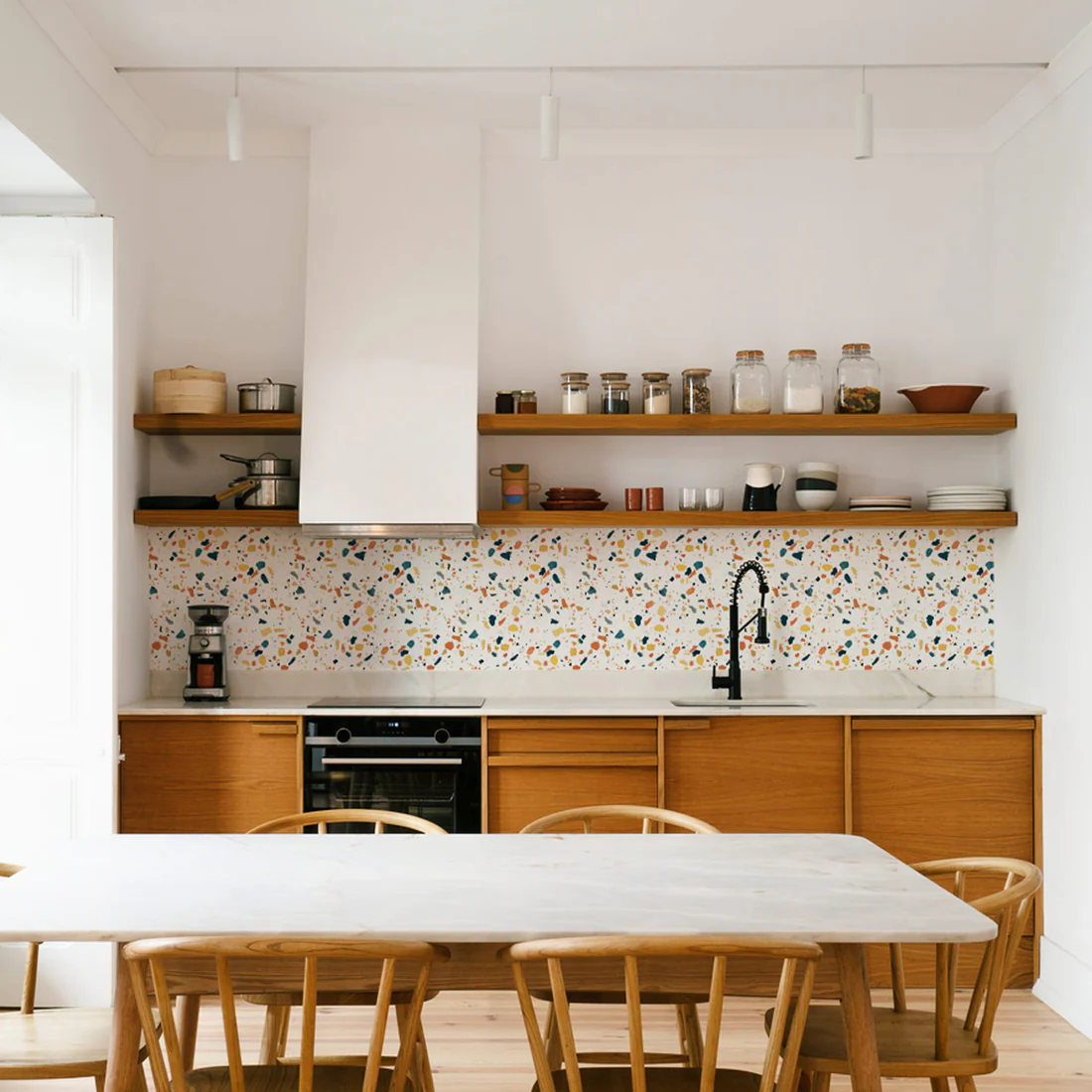
Eco-aware homeowners often choose recycled glass tiles, terrazzo slabs, or sintered stone for a sustainable and stylish backsplash. These materials offer unique colors and textures, excellent durability, and resistance to water and heat. Sintered stone, in particular, has become popular for seamless backsplash–countertop combinations. Costs vary based on the material and fabrication.
Combination & Mixed-Media Designs
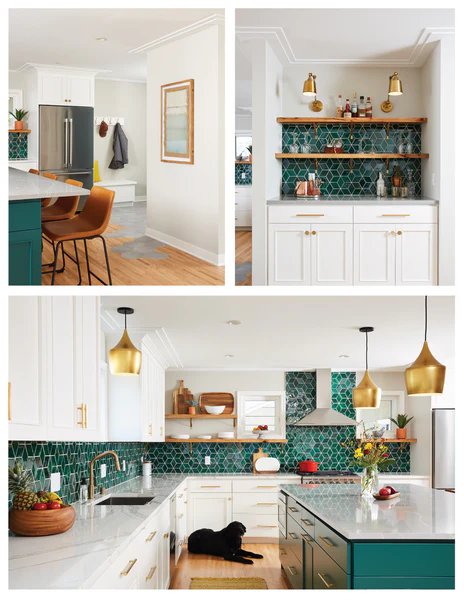
Many designers mix materials to create depth and contrast—for example, pairing marble with metal trims, adding glass inserts to tile runs, or combining textured and smooth surfaces. Mixed-media designs work well in open kitchens where the backsplash acts as a focal point. The key is maintaining color harmony and a balanced layout so the look stays cohesive rather than busy.
Matching Your Backsplash to Your Kitchen Style & Use
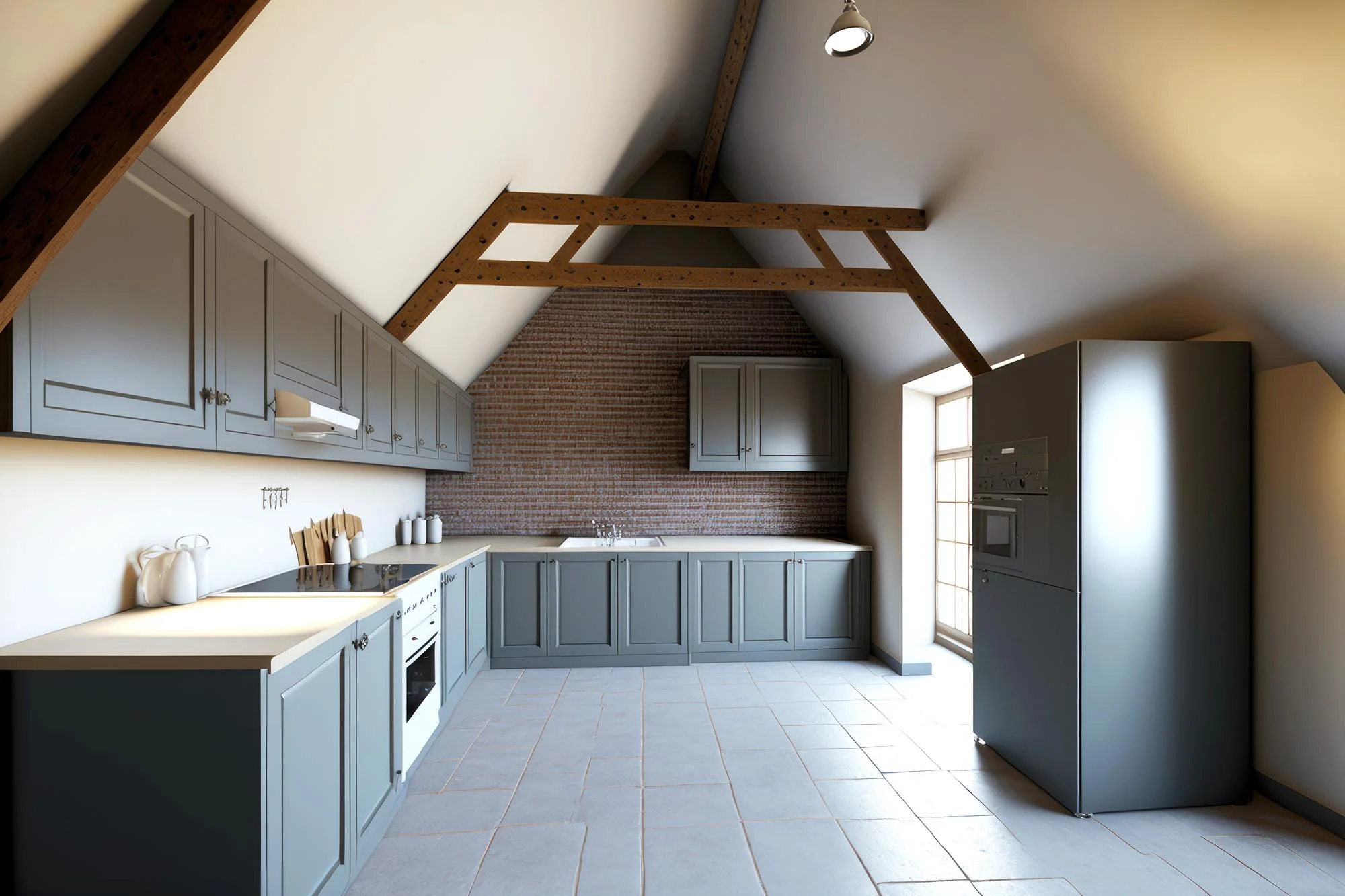
Choosing the right backsplash starts with how your kitchen looks and how you use it every day. Think about the materials already in place—your countertop, cabinet finish, flooring, and overall layout—and select a backsplash that supports that style rather than competing with it. Practical placement matters too:
Match tones or textures with your benchtop for a cohesive feel.
Use heat-safe materials behind the stove and moisture-resistant options near the sink.
Decide between a short 4–6 inch backsplash or a full wall design for extra impact.
Consider how often you cook, clean, or entertain; low-maintenance materials suit busier homes.
Watch emerging trends like fluted tiles, matte textures, and full-slab stone backsplashes for a modern look.
 English
  Arabic
  Spanish
  Japanese
  Russian
  Korean