

What Is Soft Flooring for Kitchens?
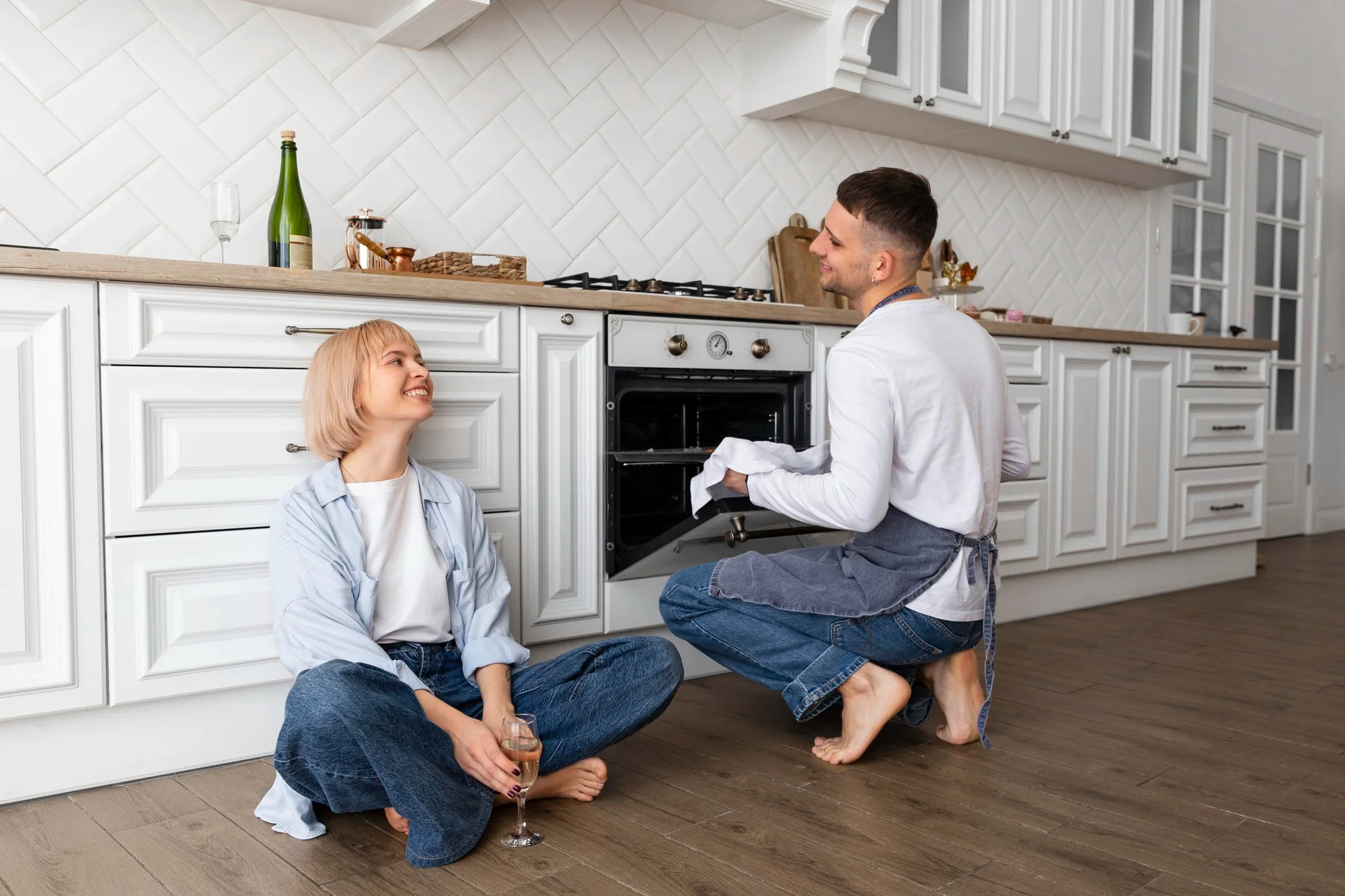
Soft flooring refers to materials that provide cushioning underfoot, making them more comfortable for long periods of standing or walking. These materials, such as vinyl, cork, and cushioned wood, absorb impact, reducing strain on joints and feet.
Soft Options Include:
- Luxury Vinyl Plank (LVP): Highly durable, moisture-resistant, and often designed to mimic hardwood.
- Cork Flooring: Natural, eco-friendly, and offers a soft underfoot experience.
- Cushioned Laminate: An affordable alternative with a comfortable feel, but typically less durable than other soft options.
Benefits:
- Easier on feet and joints: Perfect for kitchens where you stand for long periods.
- Quieter to walk on: Soft floors dampen sound, making for a quieter kitchen.
- Warmer underfoot: Ideal for colder climates as soft floors are naturally warmer than hard ones.
Typical Drawbacks:
- Less scratch resistance: Soft flooring is more prone to scratches and dents, especially in high-traffic areas.
What Is Hard Flooring for Kitchens?

Hard flooring materials are firm, sturdy surfaces that offer exceptional durability. They include tiles, stone, and concrete, which are ideal for kitchens that experience heavy foot traffic and frequent spills.
Common Hard Choices:
- Porcelain/Ceramic Tile: Moisture-resistant, easy to clean, and available in various designs.
- Natural Stone (e.g., Granite, Marble): Known for its timeless look and long-lasting qualities.
- Concrete: Offers a modern aesthetic and is highly durable, though it may require sealing.
Benefits:
- Exceptional durability: Hard floors can withstand heavy use without showing wear.
- Moisture and stain resistance: These floors are perfect for kitchens prone to spills and moisture.
Challenges:
- Cold and hard underfoot: Hard floors can be uncomfortable to stand on for long periods and feel cold in colder climates.
- Can feel loud and unforgiving: Hard surfaces don’t absorb sound, which can make them feel noisier, and they are less forgiving if you drop something.
Comparing Soft vs Hard Kitchen Flooring
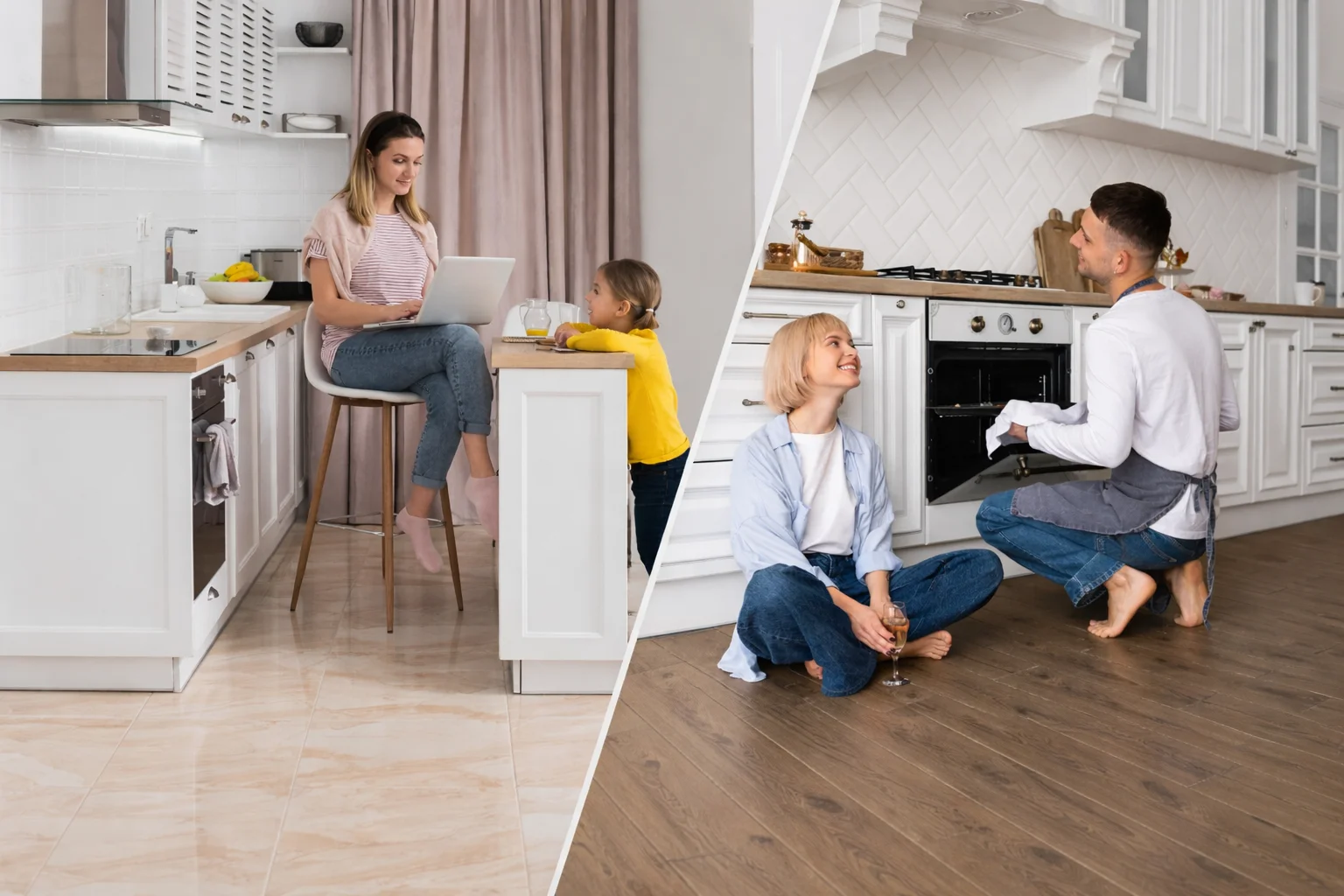
When deciding between soft and hard kitchen flooring, it’s important to evaluate several factors. Both options offer unique benefits, but understanding how they compare can help you make the best choice for your kitchen.
Durability & Wear
- Hard Floors: Materials like porcelain or ceramic tiles are extremely durable and can withstand heavy foot traffic, moisture, and stains. They are perfect for high-use areas but may crack under extreme pressure.
- Soft Floors: Soft options like vinyl are also durable and long-lasting, but they aren’t as resistant to scratches as hard flooring. Over time, they may show signs of wear in high-traffic areas but are less likely to crack.
Comfort & Fatigue
- Soft Floors: Soft flooring materials like cork and vinyl provide added cushioning, which helps reduce fatigue during long cooking or standing sessions. They are ideal if you spend a lot of time in the kitchen and want something easier on your feet and joints.
- Hard Floors: Hard floors, such as tile and stone, can be hard on the feet, especially when standing for long periods. Consider adding rugs or mats to alleviate discomfort, but even then, hard floors can still cause strain over time.
Water & Spill Resistance
- Hard Floors: Hard floors excel at spill resistance, especially when the grout is properly sealed. They’re easy to clean and won’t absorb liquids, making them ideal for kitchens that deal with frequent spills.
- Soft Floors: Soft flooring options like vinyl are fully waterproof, making them easier to maintain. However, they can show wear or become damaged if exposed to standing water over time.
Style & Design Flexibility
- Hard Floors: Hard flooring materials offer timeless appeal, with a wide range of designs, colors, and finishes to choose from. You can find classic looks in wood, stone, or tile finishes, and patterns such as herringbone or checkerboard.
- Soft Floors: Soft floors like luxury vinyl plank (LVP) have come a long way in mimicking wood, stone, or other textures. They allow you to achieve a cohesive aesthetic with a softer feel underfoot.
Cost & Installation
- Hard Floors: Hard flooring materials like ceramic tile or stone are often more expensive to install. They require professional installation and may include additional costs for subfloor preparation and sealing.
- Soft Floors: Soft flooring options like LVP are typically more affordable and easier to install, especially if you’re considering a DIY project. These floors can often be installed quickly and don’t require specialized tools or adhesives.
Top Soft Flooring Options for Kitchens
When choosing soft flooring for your kitchen, comfort and practicality are key. Soft floors are easier on your feet, making them great for kitchens where you spend a lot of time standing. Here are some top soft flooring options:
- Luxury Vinyl Plank (LVP): LVP is one of the most popular kitchen flooring choices. It’s waterproof, comfortable underfoot, and easy to clean. LVP mimics the look of hardwood or stone, giving your kitchen a high-end feel without the high maintenance.
- Cork Flooring: Cork is a sustainable, eco-friendly material with natural cushioning. It’s soft, warm, and absorbs sound, making it ideal for kitchens where you want comfort and quiet. Cork also has a slight texture, which can add a natural look to your space.
- Engineered Wood: Engineered wood floors are softer and warmer than tile, providing a welcoming feel to your kitchen. They give you the aesthetic of real wood with added durability, as they are made to resist moisture and scratches better than solid wood.
Top Hard Flooring Options for Kitchens
Hard flooring offers durability and resistance to moisture, making it ideal for high-traffic kitchen areas. Here are the top hard flooring options:
- Porcelain & Ceramic Tile: Both porcelain and ceramic tiles are known for their strength, water resistance, and ease of cleaning. They come in various styles, sizes, and patterns, giving you plenty of design flexibility. They’re perfect for kitchens prone to spills and heavy use.
- Natural Stone (Slate, Granite): For a more luxurious and long-lasting option, natural stone floors like slate and granite are tough, timeless, and visually striking. They’re perfect if you want a high-end look that stands up to moisture and heavy foot traffic.
- Concrete: Concrete floors provide a sleek, modern look that can be customized with stains, patterns, or textures. They’re highly durable, resistant to moisture, and low-maintenance, making them a great option for contemporary kitchens.
How to Choose Between Soft and Hard Flooring
When deciding between soft and hard flooring for your kitchen, consider these factors:
- High Traffic & Spills: Hard floors like tile or stone are the best choice for kitchens with heavy foot traffic and frequent spills. They are durable and easy to clean.
- Comfort & Standing Long Hours: Soft floors such as vinyl or cork are gentler on your feet, reducing fatigue during long cooking sessions.
- Budget & Maintenance: Soft floors, especially waterproof vinyl or laminate, tend to be more budget-friendly and easier to maintain. They’re a great option if you want an affordable, low-maintenance solution.
- Aesthetic & Resale: Hard floors generally have higher resale value and a more classic appeal, making them ideal for kitchens aiming for long-term value and a polished look.
Weigh these factors to make the best choice for your space!
Need Help Choosing the Right Flooring for Your Kitchen?
Choosing the perfect flooring for your kitchen can be a big decision, but we’re here to help! Whether you’re leaning towards soft vinyl for comfort or hard tile for durability, we’ve got the expertise to guide you.
Contact us today to explore your flooring options and get personalized advice. Let us help you create a beautiful, functional kitchen that fits your style and needs!
FAQs
What is the best type of flooring to put in a kitchen?
For most kitchens, durable, moisture‑resistant floors like porcelain tile, ceramic tile, luxury vinyl plank (LVP), or engineered wood are excellent choices. These materials handle spills, heavy traffic, and frequent cleaning well.
What is the rule of 3 flooring?
The Rule of 3 in flooring design suggests you should use no more than three different flooring types throughout your home to keep spaces feeling cohesive and visually balanced.
Is hard flooring better than soft flooring?
Not always. Hard flooring (like tile or stone) is more durable and moisture‑resistant, while soft flooring (like vinyl or cork) is easier on feet and quieter. The best choice depends on your lifestyle and kitchen use.
What is the best flooring for asthma sufferers?
Hard, smooth surfaces like hardwood, tile, stone, or linoleum are best for asthma and allergies because they don’t trap dust, pollen, or pet dander and are easy to clean.
 English
  Arabic
  Spanish
  Japanese
  Russian
  Korean
  French
  Italian