

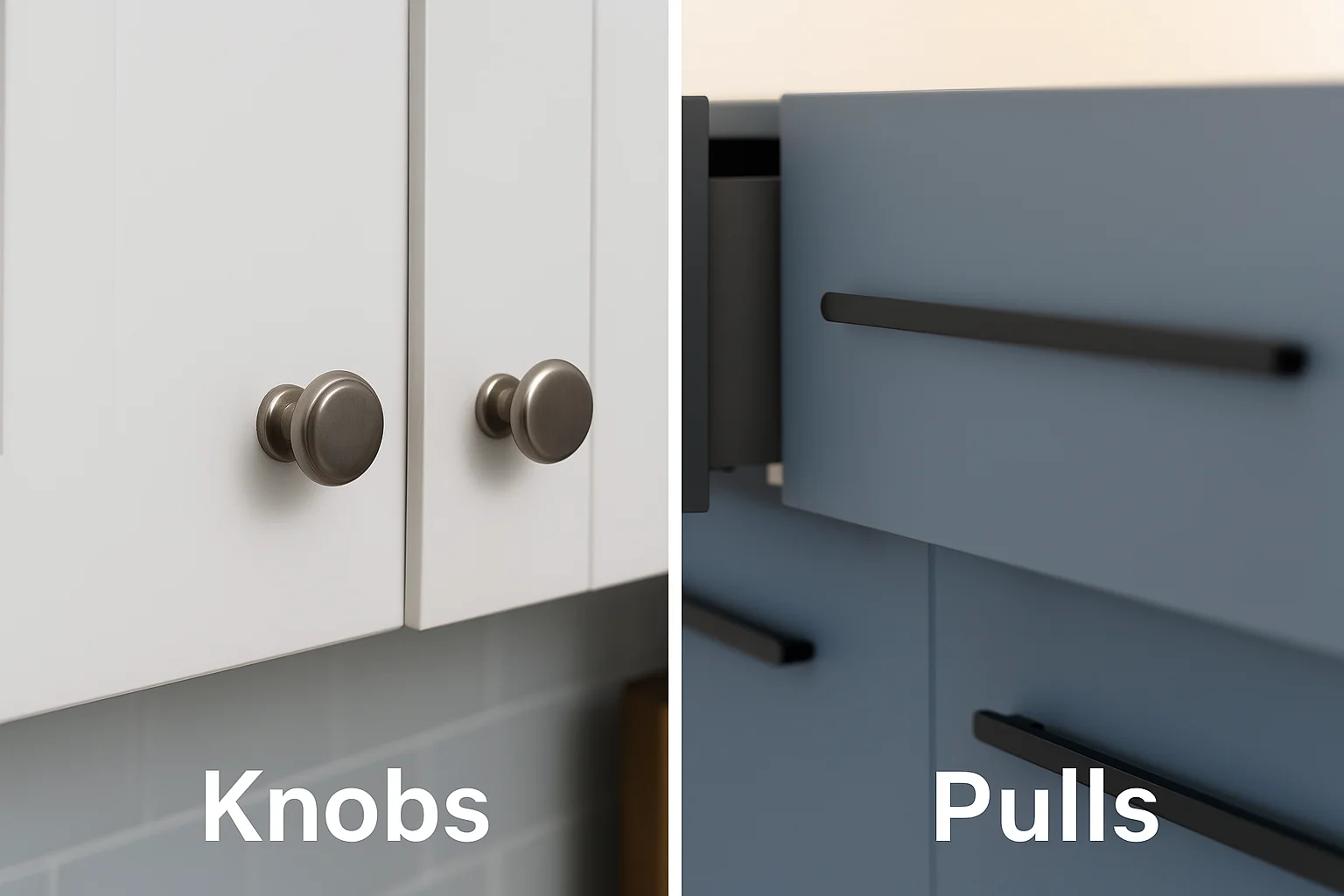
What Are Cabinet Knobs?
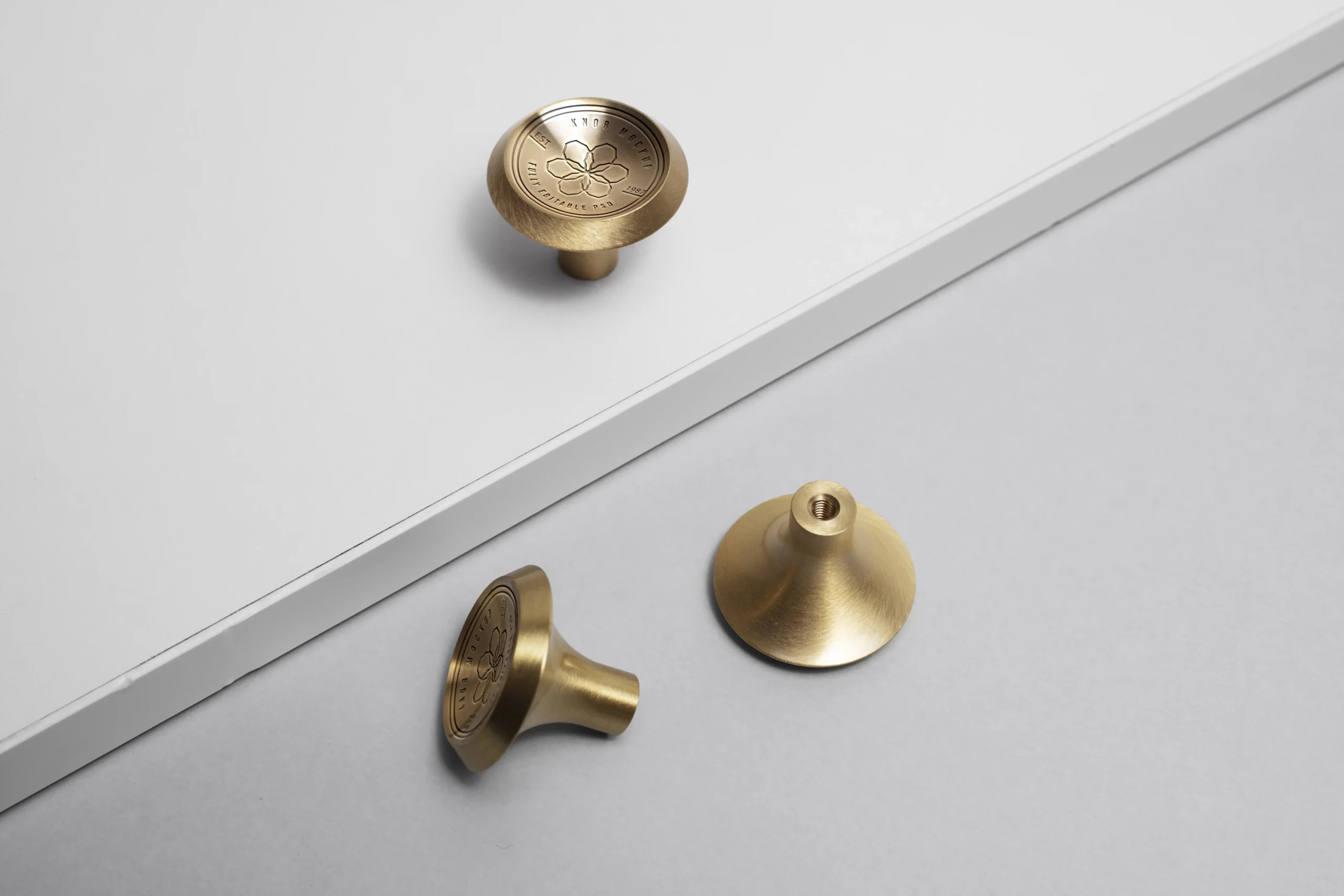
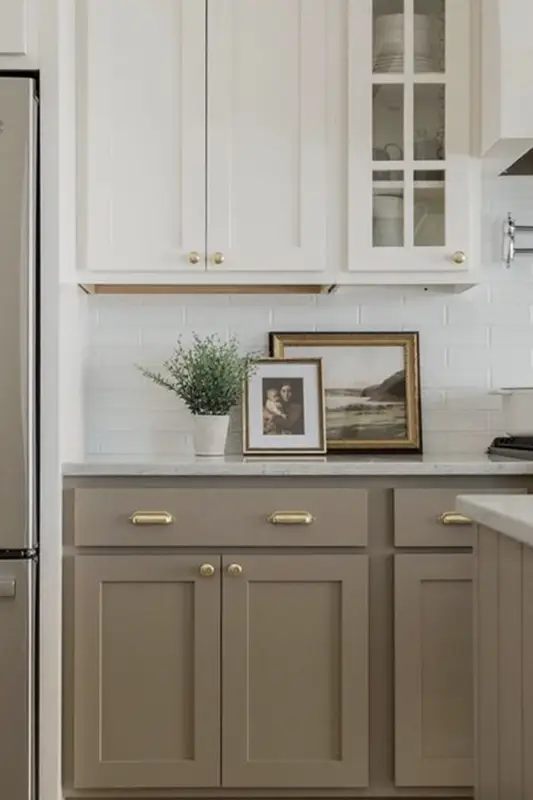
Cabinet knobs are small hardware pieces attached to cabinet doors or drawers with a single screw. They are one of the most common choices for kitchen cabinets because they are simple, affordable, and easy to install.
Knobs come in many shapes and materials, including:
-
Round knobs
-
Square knobs
-
Brass, stainless steel, and matte black finishes
-
Ceramic, glass, and wood styles
Many homeowners choose cabinet knobs because they:
-
Create a clean and classic look
-
Cost less than pulls
-
Work well in traditional and farmhouse kitchens
-
Require only one mounting hole
Knobs are commonly used on:
-
Cabinet doors
-
Small drawers
-
Decorative cabinetry
-
Budget-friendly kitchen projects
However, knobs may be less comfortable for heavy drawers because they provide less grip than pulls.
Overall, cabinet knobs are a timeless option for homeowners who want a simple and elegant kitchen design.
What Are Cabinet Pulls?
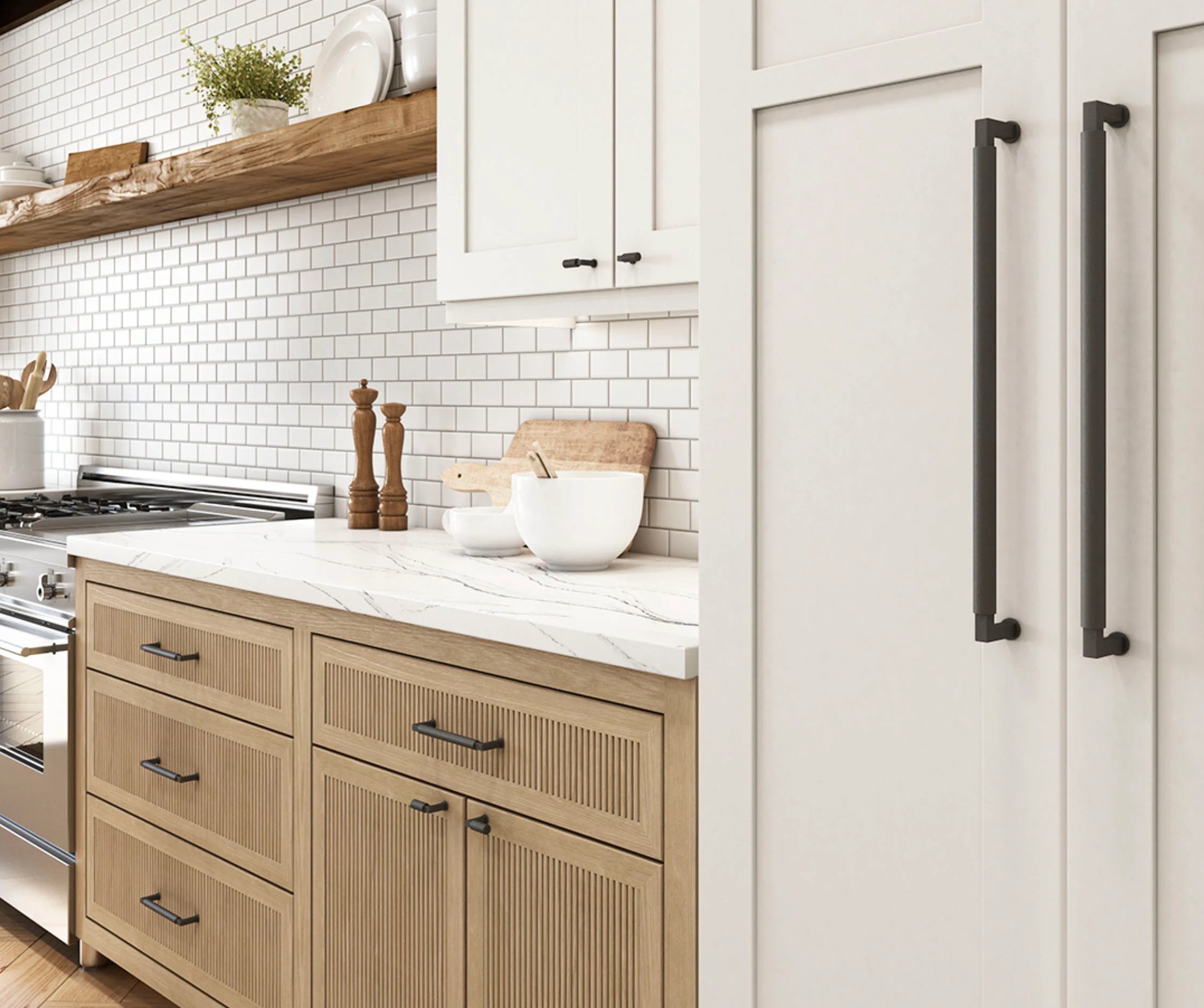
Cabinet pulls are longer handles attached with two screws. They are designed for a stronger grip and are especially popular in modern kitchens.
Pulls come in many styles, such as:
-
Bar pulls
-
Cup pulls
-
Edge pulls
-
Arch and finger pulls
Cabinet pulls are popular because they:
-
Feel easier to grab
-
Work better for large or heavy drawers
-
Create a modern kitchen appearance
-
Improve accessibility for daily use
Pulls are often used on:
-
Wide drawers
-
Pull-out cabinets
-
Pantry storage
-
Contemporary kitchen designs
Compared with knobs, pulls usually cost more and require more precise installation. But many homeowners prefer them for comfort and functionality.
If you want a modern, practical, and easy-to-use kitchen, cabinet pulls are often the better choice.
Knobs vs Pulls: Key Differences
Both knobs and pulls can look great on kitchen cabinets, but they offer different benefits in style, comfort, installation, and daily use. Here’s how they compare.
| Feature | Cabinet Knobs | Cabinet Pulls |
|---|---|---|
| Style | Classic, subtle, and timeless | Modern, bold, and noticeable |
| Best For | Cabinet doors and small drawers | Large drawers and pull-out storage |
| Comfort | Good for light use | Easier to grip and pull |
| Installation | One-hole installation, easier for DIY | Two-hole installation, needs alignment |
| Cleaning | Smaller and easier to wipe | Larger surface may collect fingerprints |
| Cost | Usually more affordable | Usually more expensive |
| Durability | May loosen faster on heavy drawers | Better for long-term heavy use |
| Overall Value | Best for budget and classic style | Best for comfort and modern function |
Appearance and Kitchen Style
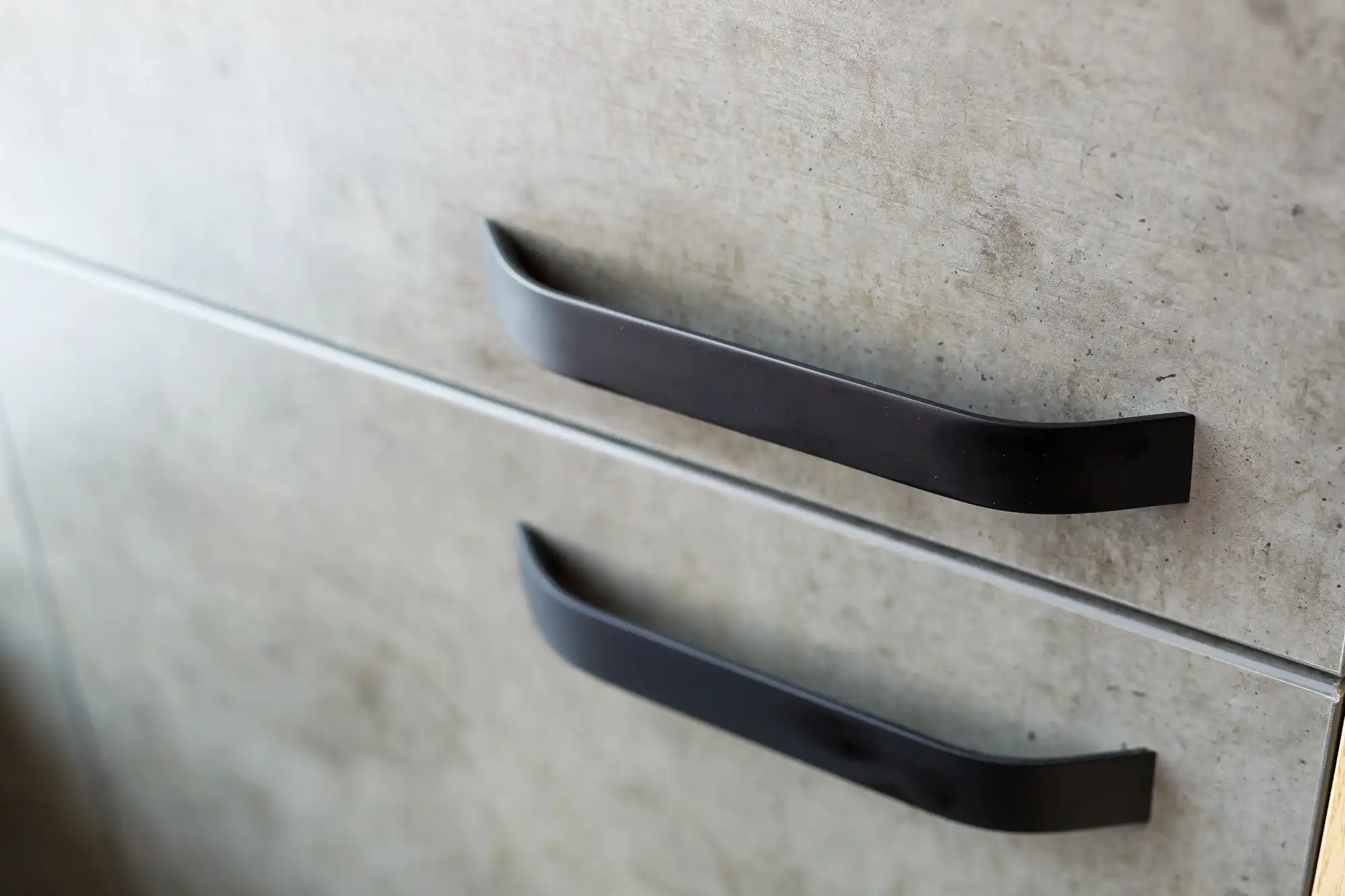
Knobs are often linked with traditional, farmhouse, and classic kitchens. Their smaller size creates a simple and timeless look.
Pulls usually feel more modern and noticeable. They work especially well in contemporary and minimalist kitchens.
Style differences:
-
Knobs: classic and subtle
-
Pulls: modern and bold
-
Knobs: softer visual appearance
-
Pulls: stronger design statement
Many homeowners also mix both styles for a balanced kitchen design.
Comfort and Ease of Use
Pulls are generally easier to grip because they provide more hand space and leverage.
This makes pulls better for:
-
Heavy drawers
-
Large cabinet doors
-
Busy family kitchens
-
Seniors and children
Knobs still work well for light cabinet doors, but they may feel less comfortable on larger drawers.
If daily convenience matters most, pulls usually offer better usability.
Installation Differences
Knobs use a single screw, making installation faster and easier.
Pulls require two screws, so proper alignment is more important during installation.
Installation comparison:
-
Knobs: one-hole installation
-
Pulls: two-hole installation
-
Knobs: easier to replace or swap
-
Pulls: require precise spacing
For DIY projects, knobs are usually more beginner-friendly.
Cleaning and Maintenance

Both hardware types are easy to maintain, but pulls may collect more grease and fingerprints because of their larger surface area.
Knobs are smaller and simpler to wipe clean, especially in busy kitchens.
Maintenance overview:
-
Knobs: easier quick cleaning
-
Pulls: more surface area to maintain
-
Matte finishes hide fingerprints better
-
Quality finishes improve long-term appearance
Choosing durable finishes can help both knobs and pulls stay looking new longer.
Cost Comparison
Knobs are usually more affordable than pulls because they use less material and simpler hardware.
Pulls often cost more, especially longer designer styles or premium finishes.
Cost differences:
-
Knobs: lower hardware cost
-
Pulls: higher material and installation cost
-
Knobs: budget-friendly upgrades
-
Pulls: premium modern appearance
For large kitchens with many cabinets, the price difference can become significant.
Durability and Long-Term Use
Both knobs and pulls can last many years when made from quality materials.
However, pulls often handle daily stress better because the force is spread across two mounting points.
Durability comparison:
-
Pulls: stronger for heavy drawers
-
Knobs: may loosen faster over time
-
Pulls: better long-term grip support
-
Both: durable with proper installation
For high-use kitchens, pulls are often the more practical long-term choice.


 English
  Arabic
  Spanish
  Japanese
  Russian
  Korean
  French
  Italian