How to Cover and Refresh Kitchen Countertops

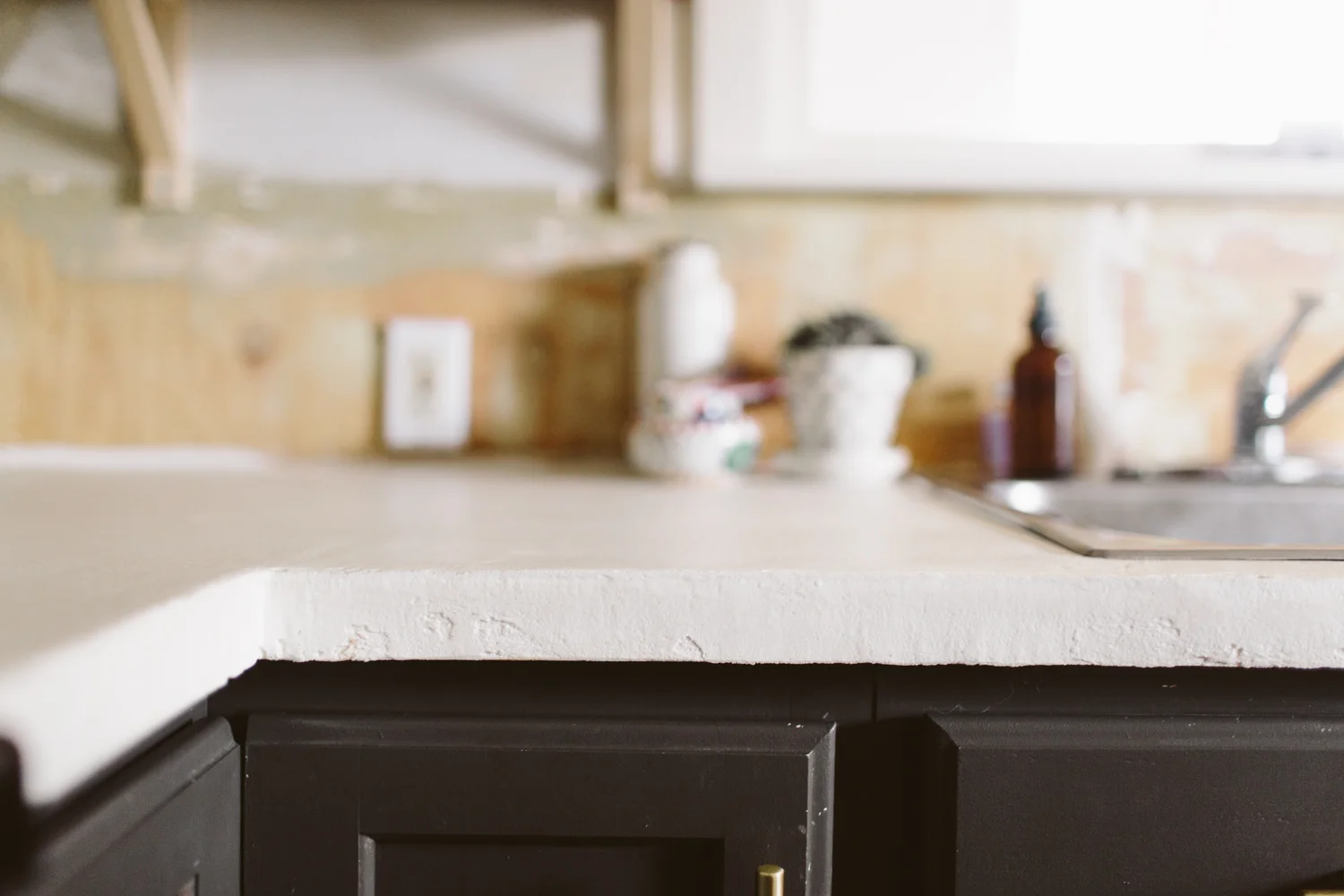
Concrete skim coat overlay on an existing kitchen countertop
Learn how to cover kitchen countertops affordably — from peel-and-stick vinyl and paint to concrete overlays — and compare methods to pick the best for your kitchen.

Table of Contents

Main Methods to Cover Kitchen Countertops

MethodProsConsBest Use Case
Peel-and-Stick / Contact PaperCheapest, quick, DIY-friendly, reversibleShort lifespan, scratches/peels easily, not suitable for heavy useRenters, short-term refresh, tight budget
Paint / Refinishing KitAffordable, DIY, refreshes large surfacesLess durable than stone, may need maintenanceBudget remodels, outdated laminate, moderate-use kitchens
Tile OverlayHeat-resistant, many styles, durableMore difficult DIY, grout upkeep, not seamlessKitchens needing heat resistance and decorative style
Laminate OverlayCost-effective, many finishes, DIY-feasibleLower heat resistance, prone to chipping, lower resale valueBudget-conscious homeowners, DIY remodels
Concrete / Epoxy OverlayDurable, customizable, modern lookNeeds skill/prep, requires sealing, less durable than stoneMedium upgrade with industrial or modern aesthetic
Solid-Surface / Engineered OverlaySeamless, non-porous, hygienic, durableMore costly, may require pro installation, heat sensitivityLong-term renovation, modern clean kitchens, high-use spaces

1. Peel-and-Stick / Contact Paper / Vinyl Film

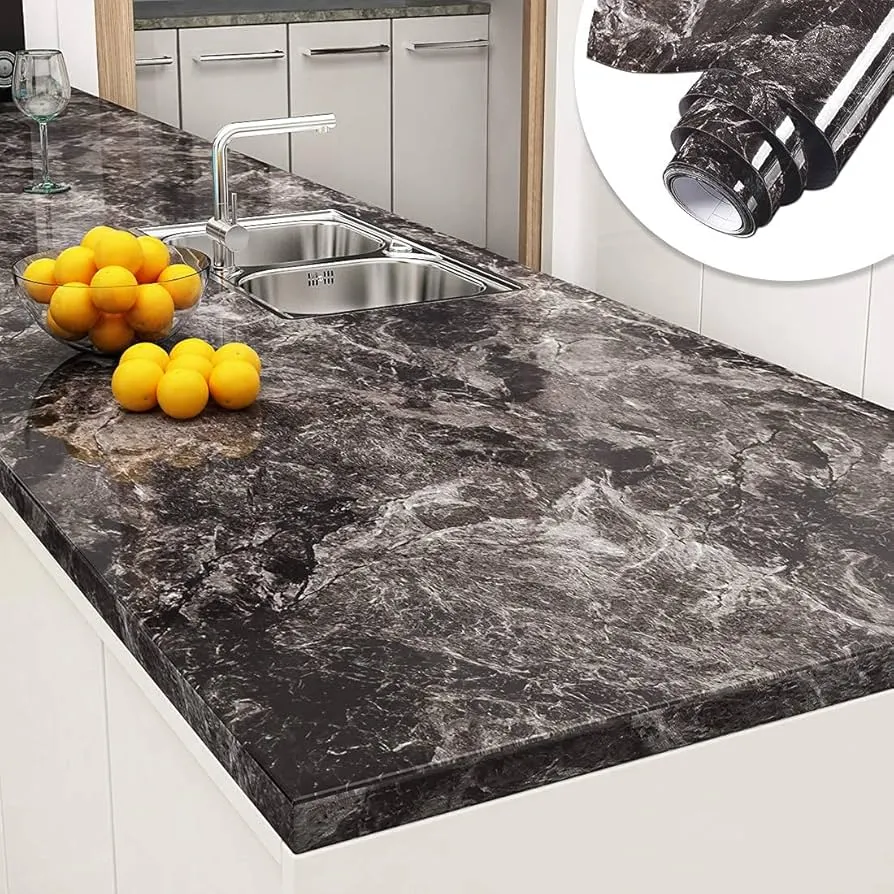
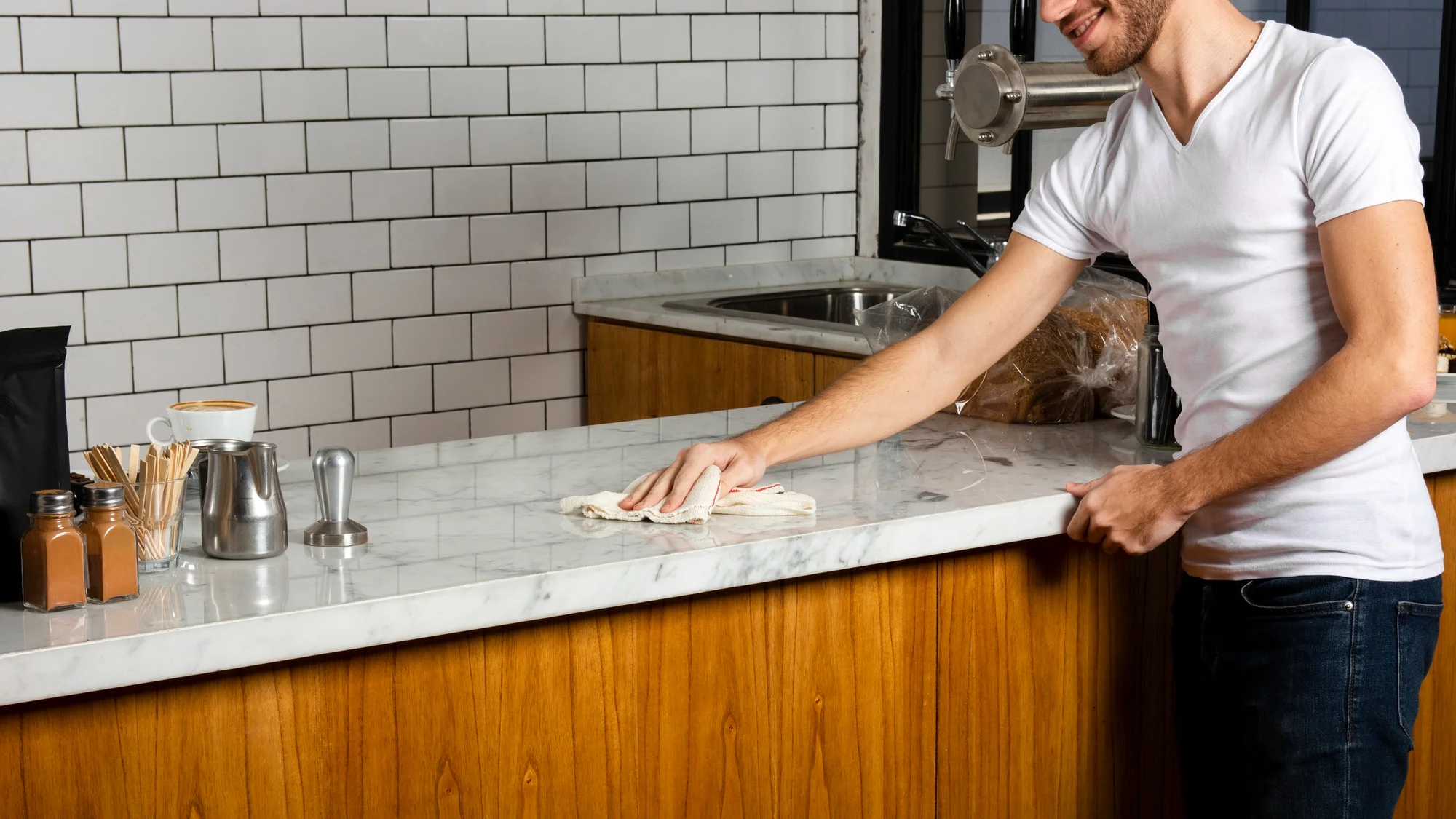
Black marble contact paper applied to kitchen counter surface

If you want a quick and budget-friendly way to refresh your countertops, peel-and-stick vinyl is one of the easiest options. These self-adhesive films come in many designs—marble, slate, wood grain, concrete, or solid colors—so you can switch up the look without spending much.

How to apply:

  • Clean the surface well and let it dry completely.

  • Make sure the countertop is smooth and free of gaps or chips.

  • Cut the vinyl to roughly fit the area.

  • Peel a small section of the backing and press the film down slowly.

  • Use a squeegee or card to push out air bubbles as you go.

  • Trim edges neatly for a clean finish.

When it works best:

This method is perfect for renters, small spaces, or anyone who wants a short-term makeover. It’s inexpensive and reversible, but it’s not designed for heavy cooking or long-term durability.

2. Paint / Coating / Countertop Refinishing Kits

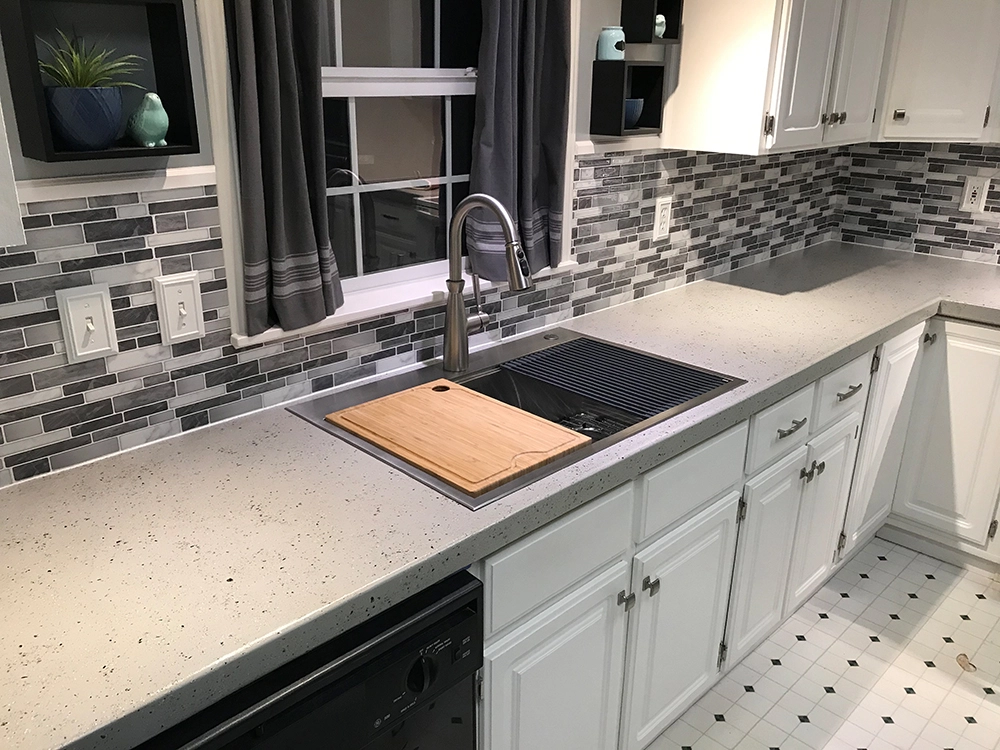
Painted and refinished kitchen countertop with faux stone look

Painting your countertop is another affordable way to update old laminate or other worn surfaces. Modern refinishing kits make the job easier, and many include primer, decorative color coats, and a tough sealer to protect the finish.

Basic steps:

  • Clean the countertop and remove grease or residue.

  • Lightly sand the surface so the new coating sticks better.

  • Apply primer if the kit requires it.

  • Roll or brush on the paint or coating in thin layers.

  • Finish with a protective topcoat to improve durability and stain resistance.

Why people choose it:

Painting is low-cost, DIY-friendly, and can refresh a large area without replacing anything. It also lasts longer than peel-and-stick film when properly sealed.

Things to keep in mind:

Painted countertops are still softer than natural stone or engineered overlays. They may scratch or chip over time, especially in busy kitchens, and may need occasional touch-ups.

3. Tile Overlay (Ceramic / Porcelain Tile)

New laminate sheet overlay installed on old countertop base

Tiling over your existing countertop gives you a more durable, heat-resistant surface with tons of design possibilities. Ceramic and porcelain tiles come in endless colors, shapes, and textures—from matte stone looks to glossy modern finishes.

Why tile is a strong option:

Tile handles heat well, offers excellent style flexibility, and can last for many years when installed correctly. It’s a great way to create a high-impact look on a reasonable budget.

Important considerations:

  • Tiling requires more skill than painting or applying vinyl.

  • The existing countertop surface must be level, clean, and structurally sound.

  • Grout lines can trap dirt if not sealed, and the surface won’t be completely smooth for cutting or food prep.

Tile is ideal for homeowners who want something durable, decorative, and long lasting, and who don’t mind a bit of DIY skill—or hiring a pro—to get a solid finish.

4. New Laminate Overlay / Laminate Sheets

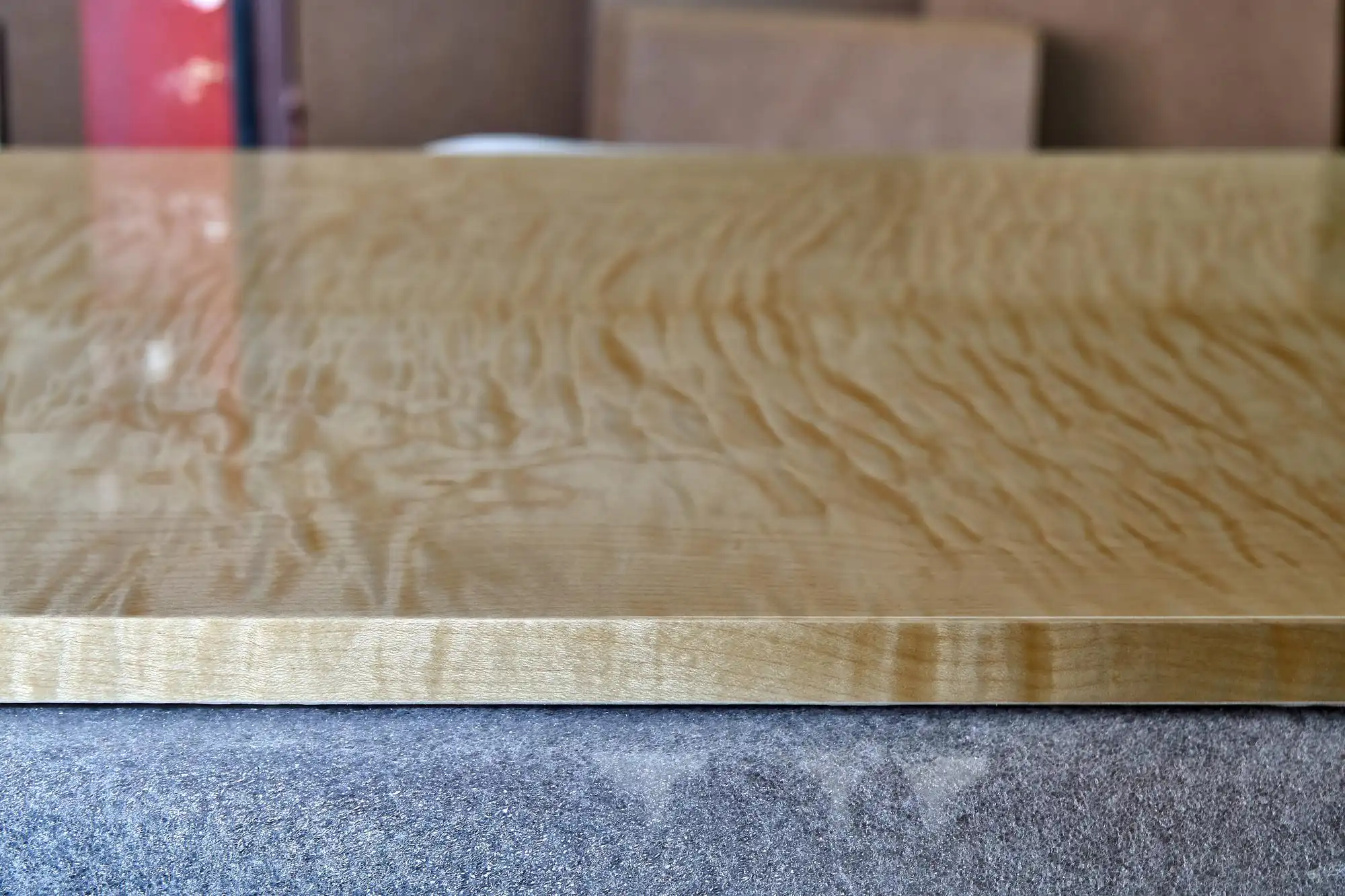
New laminate sheet overlay installed on old countertop base

If your countertop looks dated but the base is still sturdy, adding a new laminate sheet is an affordable way to refresh the surface. Laminate overlays come in many styles—stone-look, marble-look, solid colors, wood grain—so it’s easy to match your kitchen design without paying for a full replacement.

Pros:

  • Very budget-friendly and ideal for DIY projects.

  • Many patterns and finishes to choose from.

  • Smooth, easy-to-clean surface that works well for everyday cooking.

Cons:

  • Laminate is not highly heat-resistant, so hot pots can cause damage.

  • Edges may chip with heavy use.

  • Adds less resale value compared to premium surfaces like stone or solid surface.

Laminate overlays work best for homeowners who want a quick, clean update that looks modern without a huge investment.

5. Concrete or Epoxy Overlay / Skim-Coat Concrete Finish

A concrete or epoxy overlay gives your countertop a fresh, modern look without removing the existing surface. These systems create a smooth, sleek finish that can mimic industrial concrete, stone, or even glossy epoxy designs.

How it works:

  • Sand and deep-clean the countertop so the overlay bonds well.

  • Apply thin layers of concrete or epoxy, working evenly across the surface.

  • Finish with a sealer or protective topcoat for strength and stain resistance.

Benefits:

  • Creates a durable and stylish finish that fits modern or industrial kitchens.

  • Offers plenty of color and texture options.

  • Great for medium-term renovations where you want a noticeable upgrade without full demolition.

Limitations and cautions:

  • Requires careful surface prep; poor prep leads to cracking or peeling.

  • Not as tough as natural stone or quartz over many years.

  • Needs regular sealing and gentle cleaning to stay in good condition.

  • Avoid placing hot pans directly on the surface and use cutting boards to prevent scratches.

Concrete and epoxy overlays are best for homeowners who want a custom look and don’t mind a little maintenance.

6. Solid Surface or Engineered Overlay (e.g., Solid-Surface Material)

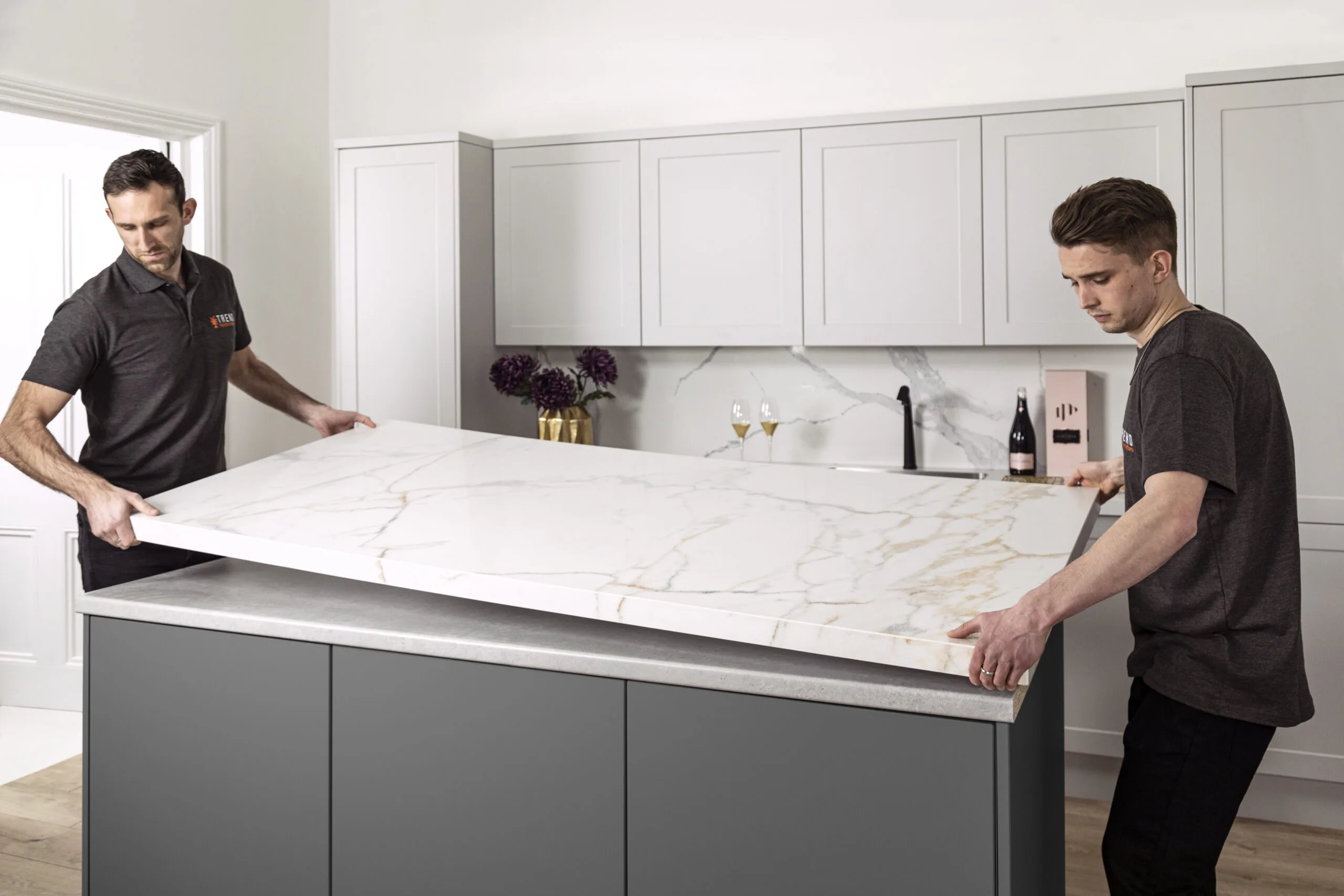
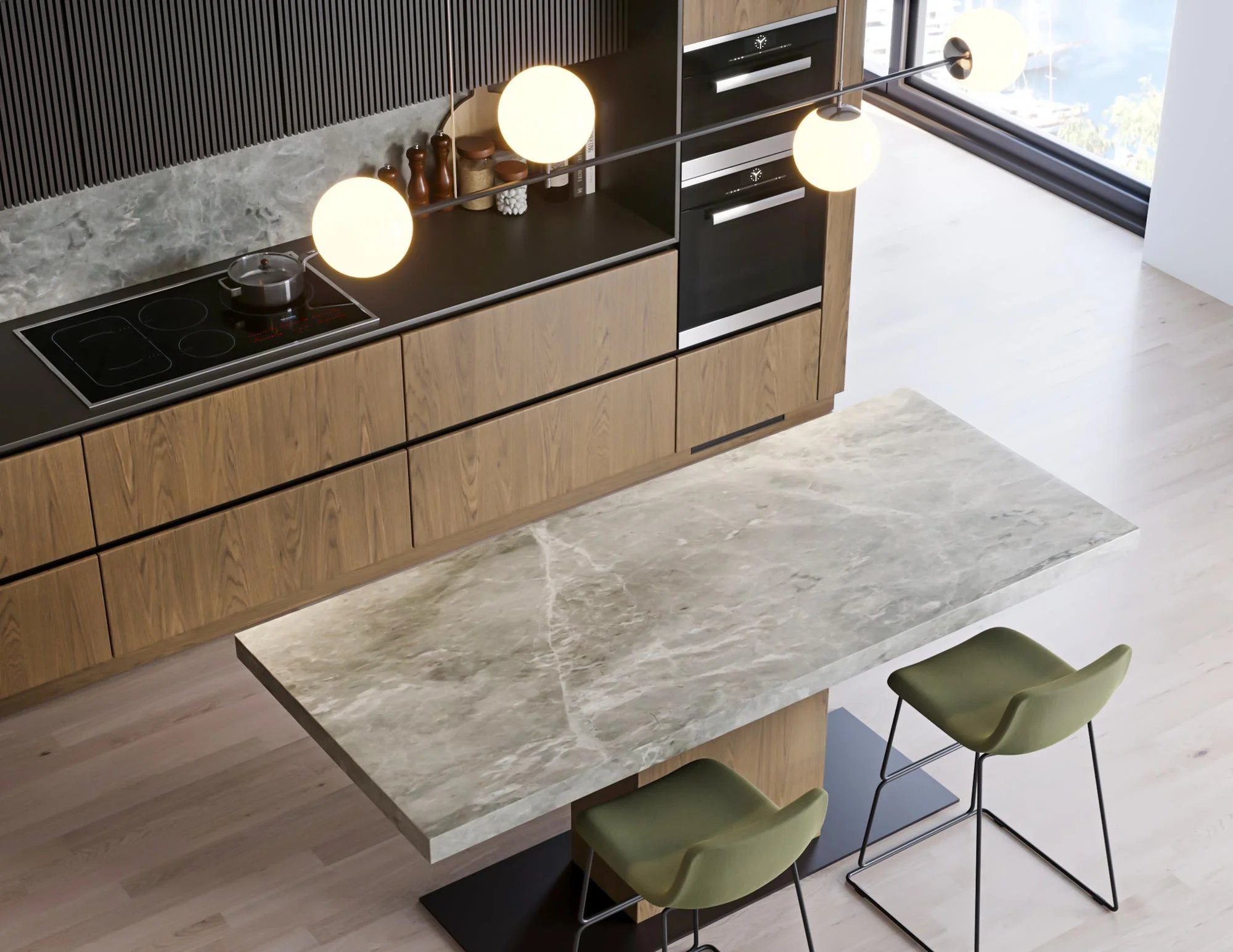
Solid surface engineered overlay installed on kitchen island

Solid-surface overlays—made from resin-based composite materials—give your countertop a smooth, seamless finish that looks clean and modern. These materials are often used in higher-end kitchens because they feel substantial and have strong everyday performance.

Benefits:

  • Non-porous and stain-resistant, making them easy to clean and very hygienic.

  • Seamless joints for a sleek, continuous look.

  • Repairs are possible if the surface gets scratched or slightly damaged.

  • Better heat resistance than laminate, though still not suitable for extreme heat.

When to consider this option:

Choose a solid-surface overlay if you want a long-lasting update that looks polished but don’t want the cost or weight of a full stone countertop. It’s also a smart choice if you’re already planning a major remodel and want something durable, modern, and low-maintenance.

Ready to Upgrade Your Countertops? Let’s Talk!

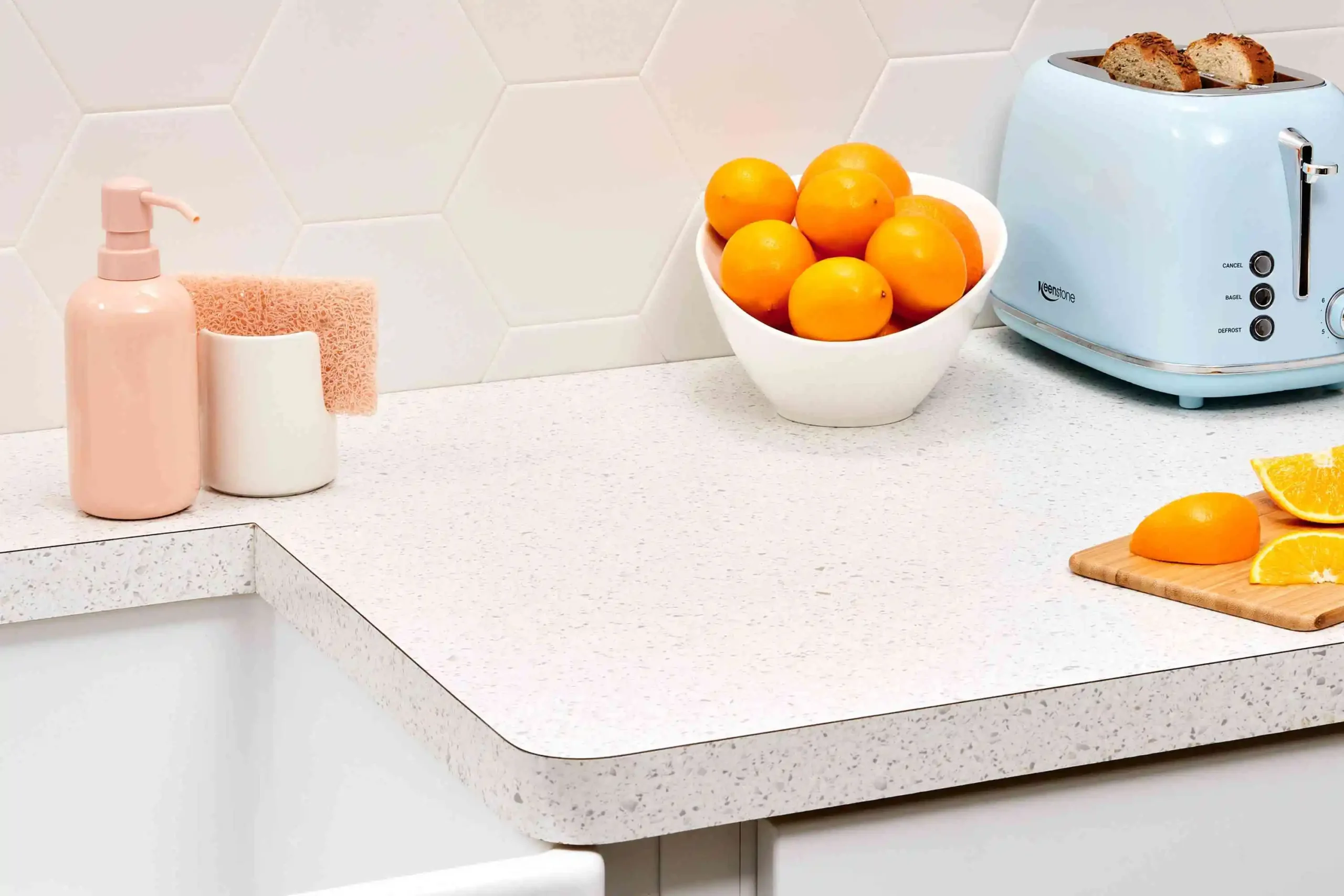
Colorful terrazzo peel and stick vinyl on kitchen counter

If you’re planning to refresh your kitchen and aren’t sure which countertop covering method fits your budget, lifestyle, or design style, we’re here to help. Our team can guide you through the best options, compare materials, and even recommend solutions based on your kitchen’s layout and daily use.

Get expert advice, fast quotes, and practical recommendations — all in one place.

FAQs

Can you cover over existing countertops?

Yes — you can overlay new materials (vinyl film, laminate sheets, tile, epoxy, engineered overlays, etc.) directly over existing countertops, so you don’t need a full replacement.

How can I update my kitchen countertops without replacing them?

You can update them by using peel-and-stick film or contact paper, painting or refinishing, applying laminate sheets, tiling over the surface, using epoxy or concrete overlays, or installing engineered/solid-surface overlays — all applied over the existing countertop.

How long do peel-and-stick countertops last?

Peel-and-stick countertop films typically last from about 3 up to 5 years, depending on usage, maintenance, and surface prep.

What can be used to cover countertops?

Common materials to cover countertops include self-adhesive vinyl/film, laminate sheets, paint or refinishing kits, ceramic or porcelain tiles, epoxy or concrete overlays, and engineered solid-surface overlays.

Related Posts

Share the Post: