

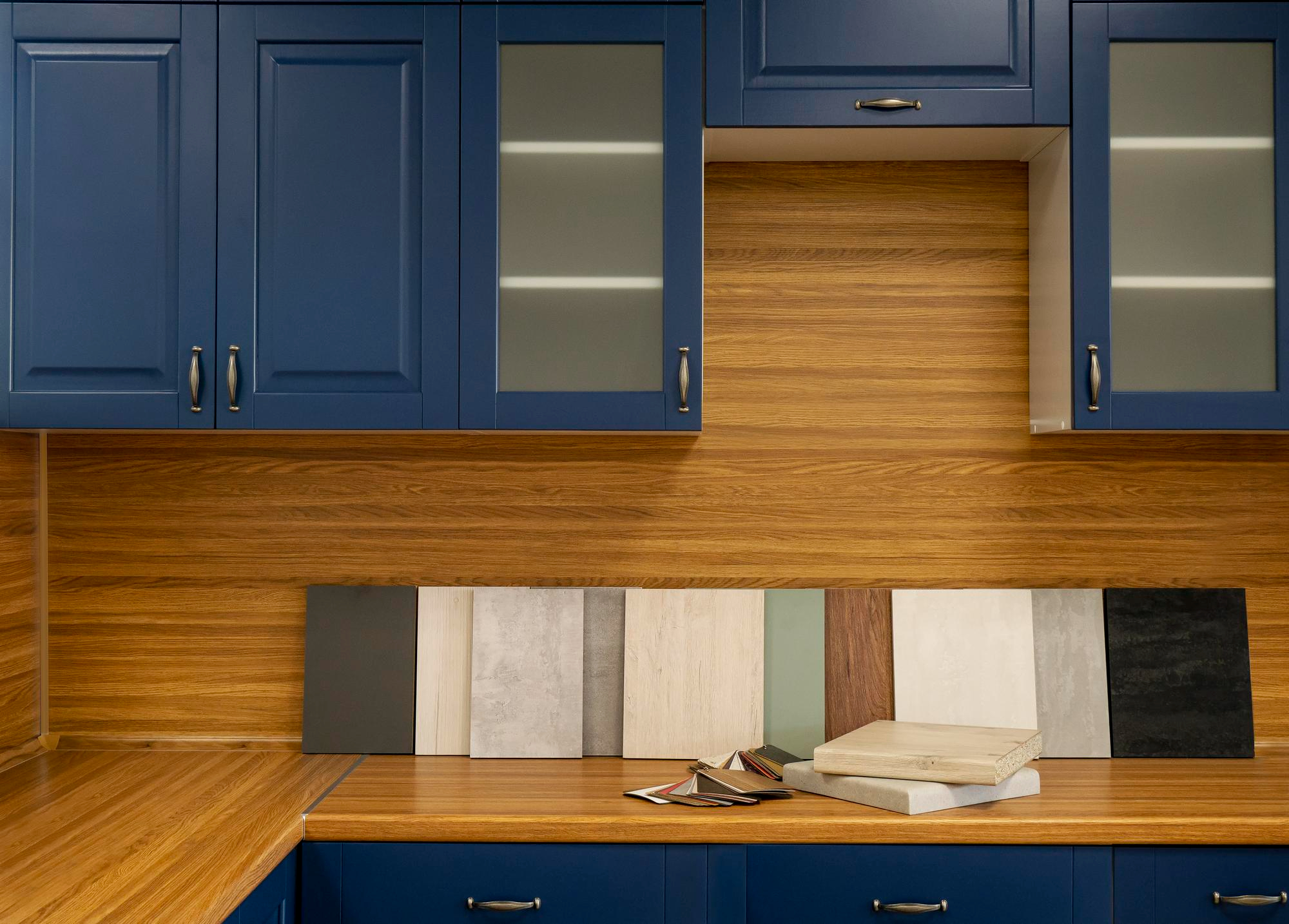
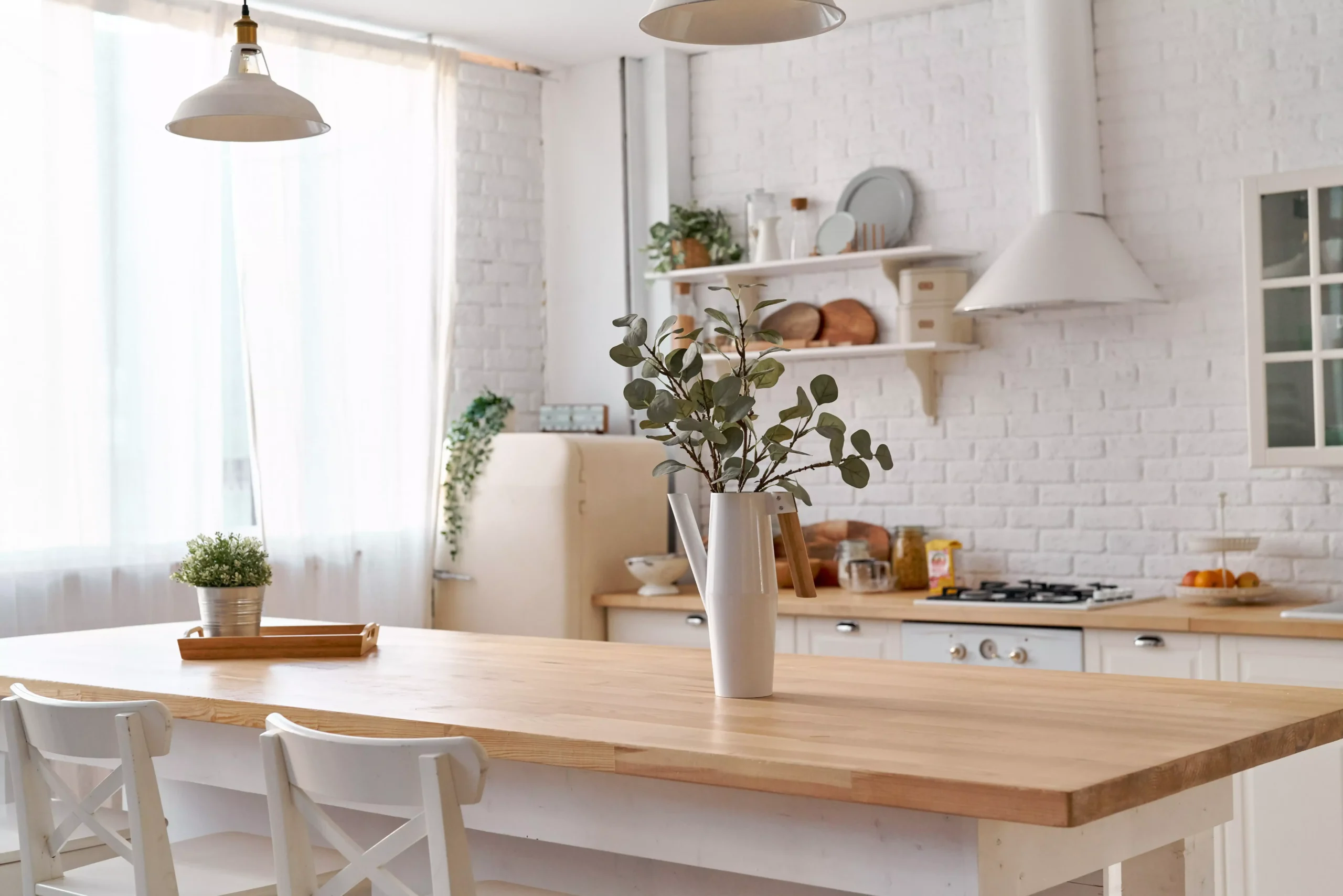
Wood has a warmth and character that other countertop materials simply can’t match. It brings a natural, welcoming feel to any kitchen—whether you love a modern look, a cozy farmhouse style, or something in between. Homeowners choose wood because it’s beautiful, repairable, and adds a handcrafted touch that ages gracefully over time.
In this article, we’ll walk through the best wood species for kitchen countertops, what makes certain woods perform better than others, their strengths and weaknesses, and how to choose the right one for your lifestyle and design vision. By the end, you’ll know exactly which wood fits your kitchen—both in style and daily use.
What Makes Good Wood for Countertops
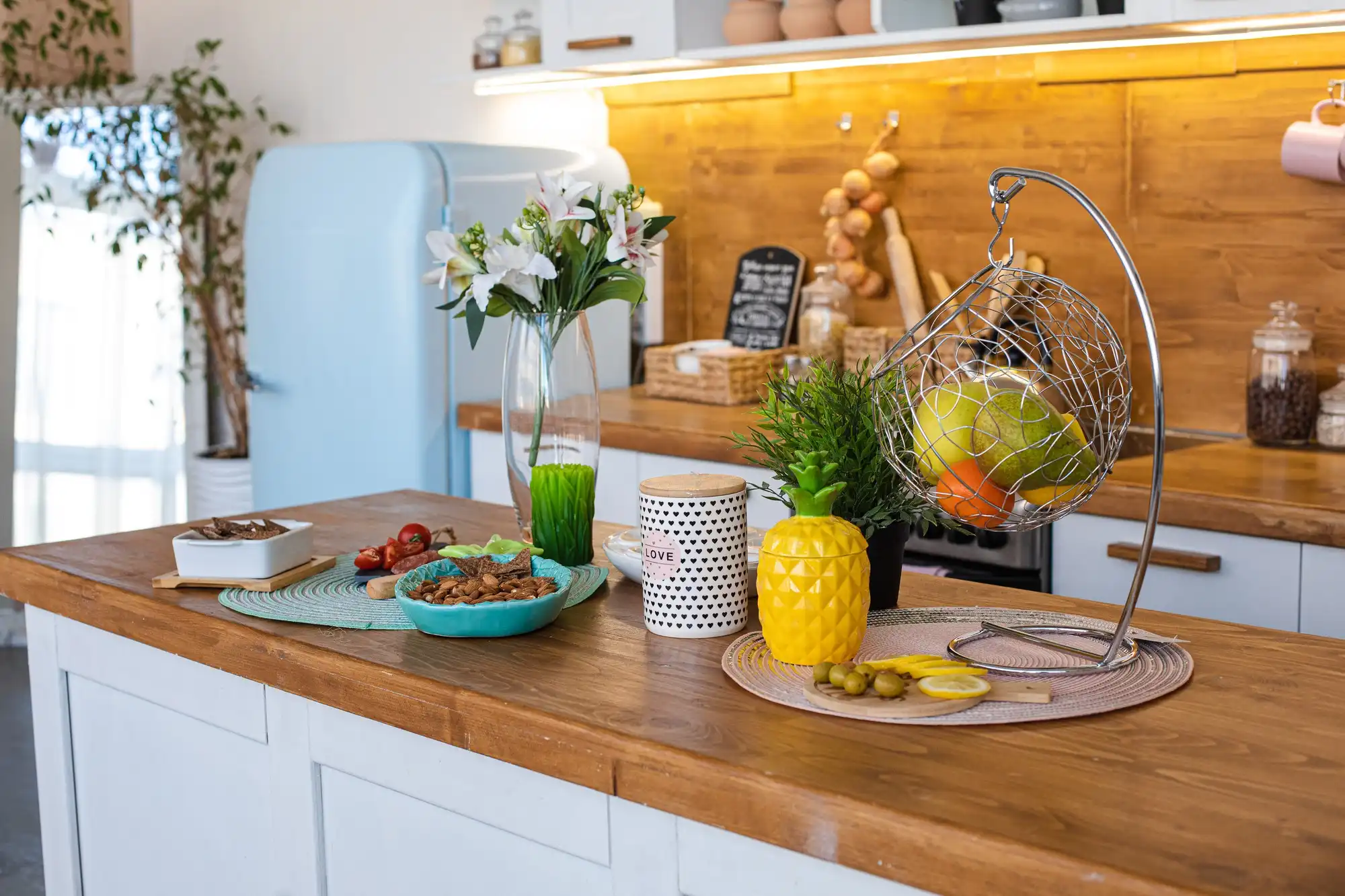
Choosing the right wood starts with understanding what actually makes a countertop durable and easy to live with. The best woods share a few important traits:
Hardness & durability: Hardwoods like maple, oak, and walnut resist dents, knife marks, and daily wear much better than softwoods.
Tight grain & low porosity: Woods with fine, even grain absorb less moisture, making them easier to clean and less likely to swell or stain.
Visual appeal: Grain patterns, natural colour variations, and the way the wood ages all shape the style of your kitchen. These qualities help match the countertop to the look you want—whether rustic, modern, or timeless.
Maintenance considerations: According to Mountain State Kitchen & Bath, sealing, refinishing, and proper care play a big role in long-term performance. Some woods require more upkeep, while others stay stable with minimal effort.
Together, these factors help you pick a wood that’s both beautiful and practical for everyday cooking.
Top Wood Species for Kitchen Countertops
| Wood Type | Key Traits | Why It’s Good for Countertops |
|---|---|---|
| Maple (Hard Maple) | Dense, light-colored, tight grain | Durable, knife-friendly, easy to clean, classic look |
| Oak (White & Red Oak) | Strong, visible grain, warm tone | Affordable, long-lasting, great character and texture |
| Walnut | Dark, rich color, smooth grain | Premium, elegant aesthetic with versatile design appeal |
| Cherry | Reddish tone, fine grain, darkens over time | Warm, refined look, ages beautifully |
| Acacia | Water-resistant, varied grain, eco-friendly | Durable and great near sinks; stylish natural variation |
| Teak / Exotic Woods | Oil-rich, highly durable, bold grain | Moisture-resistant and extremely durable; luxury appeal |
| Bamboo / Birch / Beech | Sustainable, light-toned, smooth texture | Budget-friendly, eco-conscious, modern aesthetic |
Below are the most trusted and popular wood choices for kitchens today. Each one brings its own personality, level of durability, and maintenance needs—so you can match the wood to your cooking habits and design style.
Maple (Hard Maple)
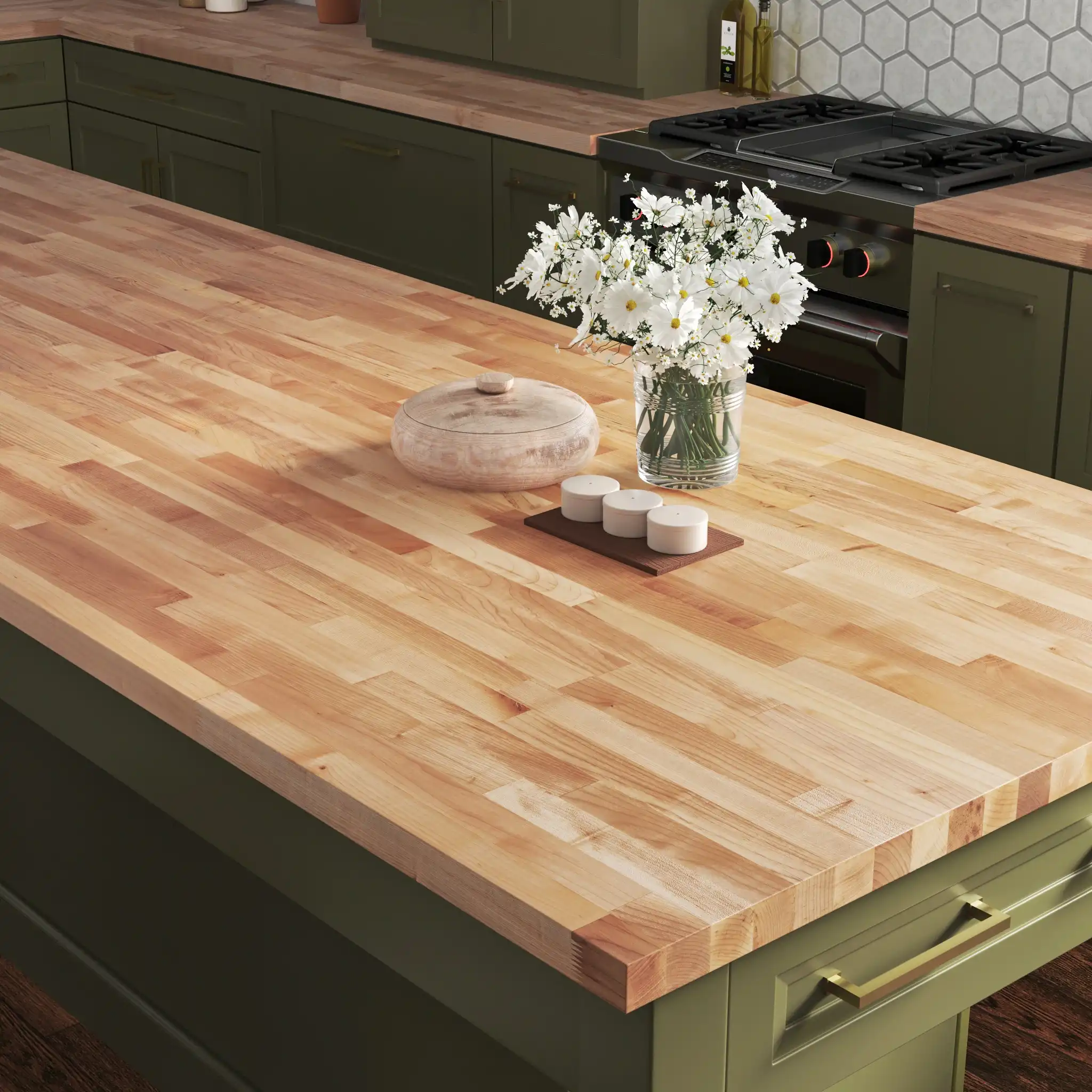
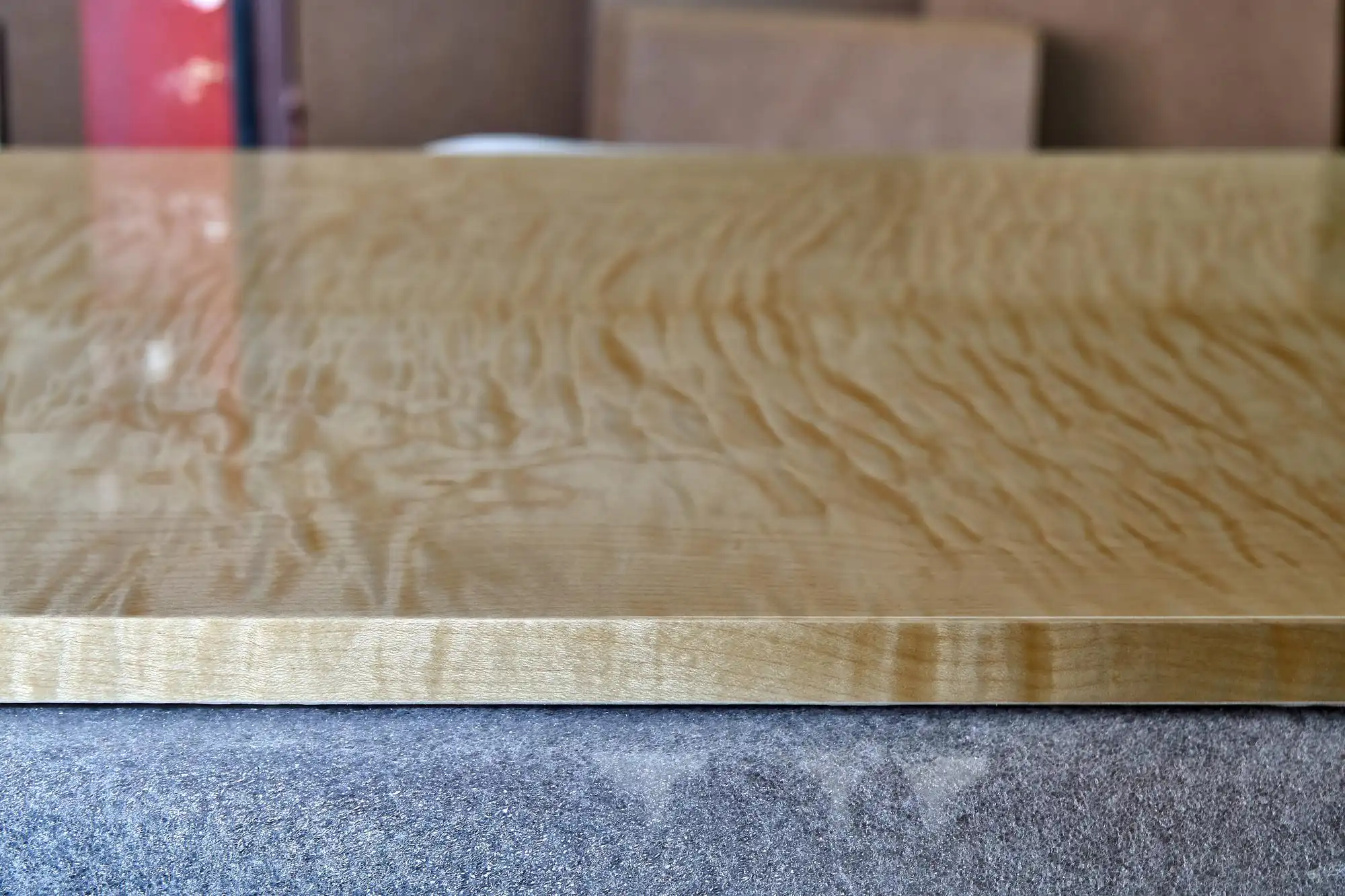
Maple is one of the most common choices for butcher-block countertops because it’s dense, durable, and naturally light in colour. Its fine, tight grain resists moisture and makes cleaning easy. Maple also handles knives well, so it’s great for busy kitchens that see daily chopping.
Oak (White Oak / Red Oak)
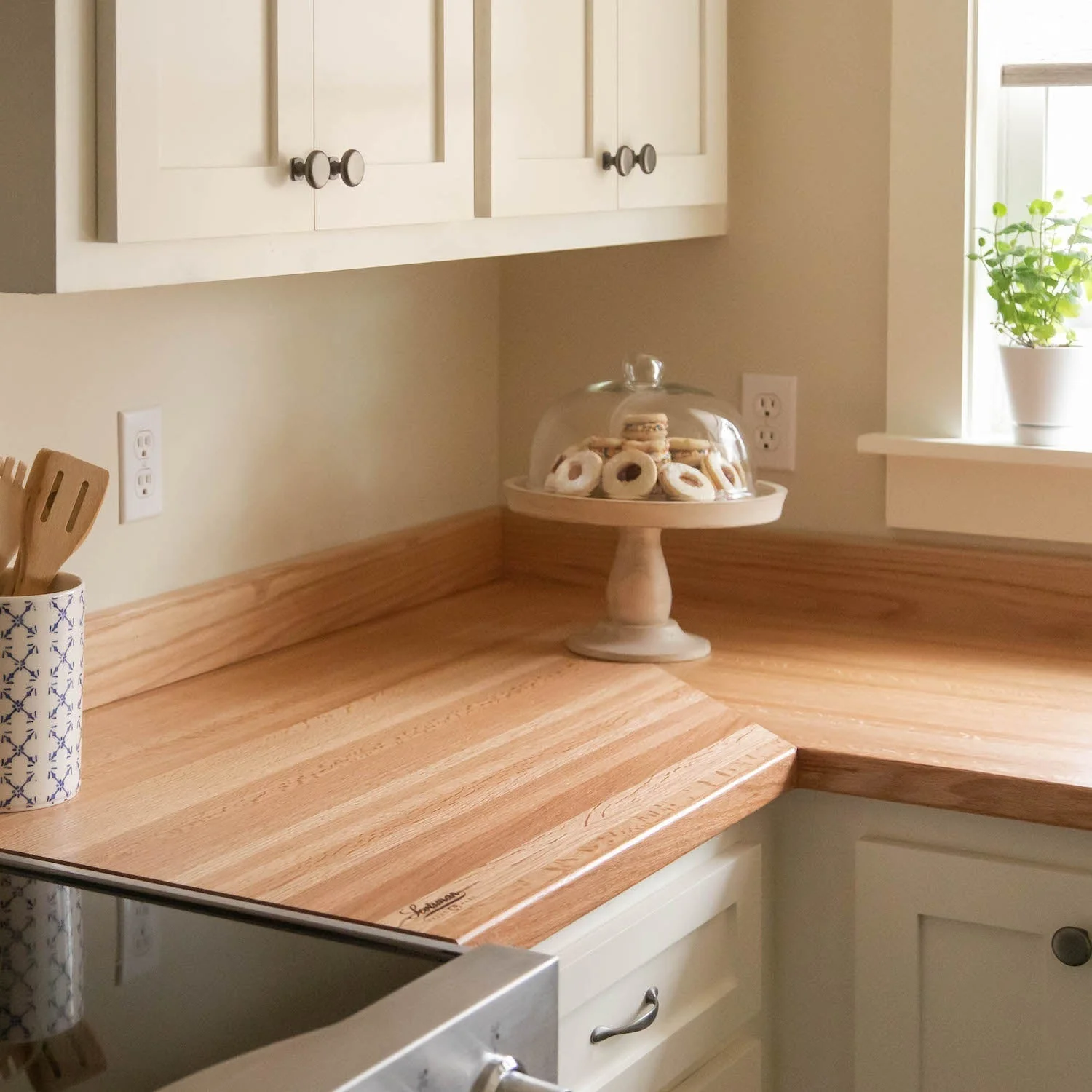
Oak is strong, long-lasting, and budget-friendly. It has a more pronounced grain pattern, giving your countertop a textured, character-rich look. White oak is especially popular for its water-resistance and warm, timeless tone.
Walnut
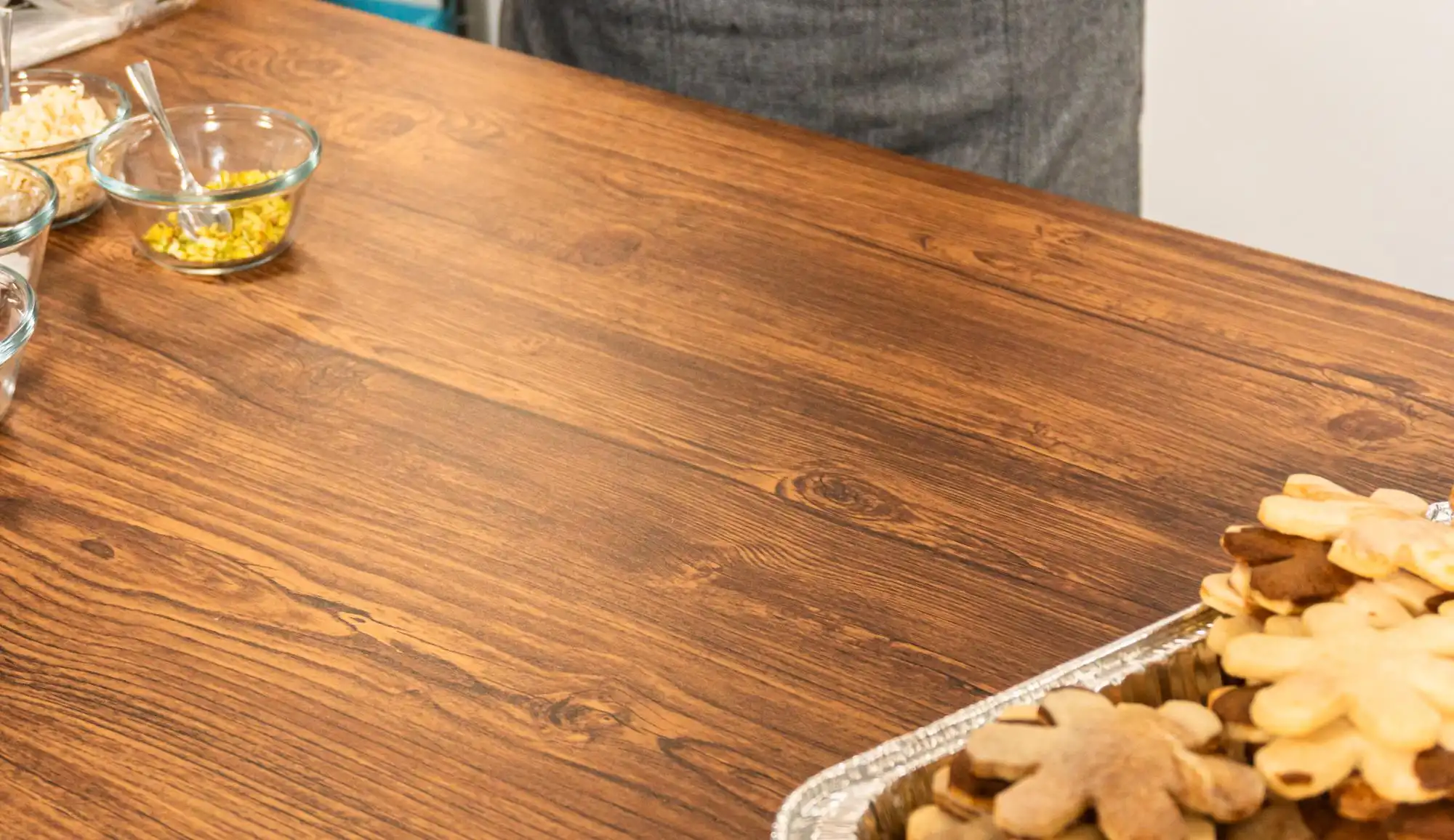
Walnut brings deep, rich colour and a beautifully smooth grain that instantly elevates a kitchen. It’s slightly softer than maple and oak, but homeowners love it for its luxurious look and the way it pairs with modern, rustic, or mixed-style kitchens.
Cherry
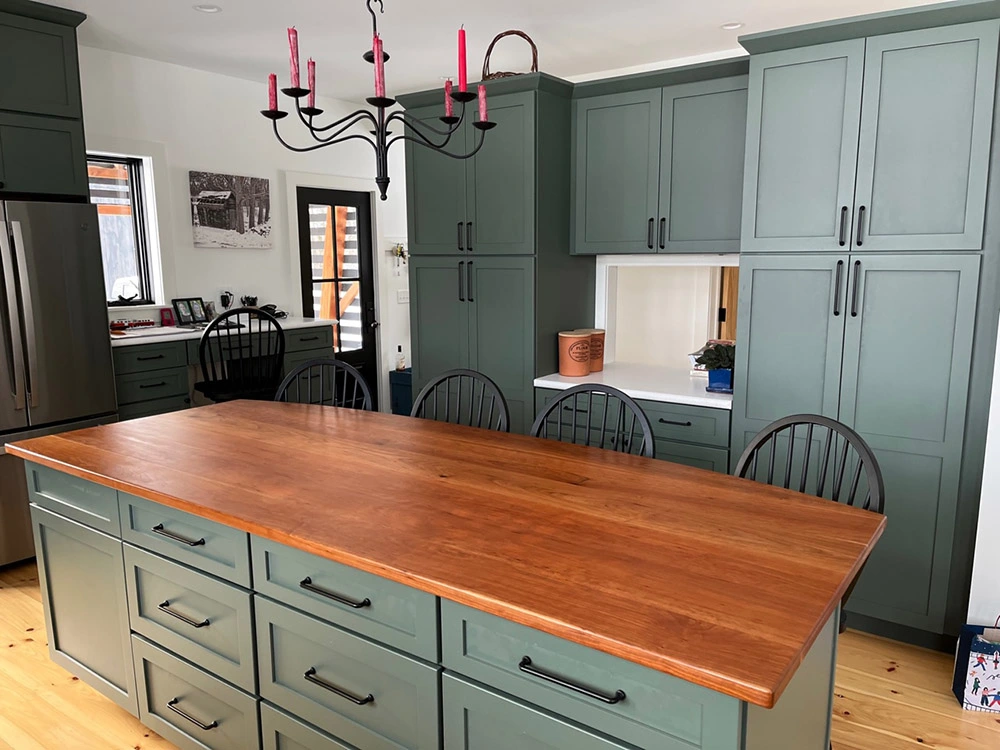
Cherry wood starts with warm reddish-brown tones and gradually deepens as it ages. It offers a smooth, refined grain that works beautifully in classic and transitional kitchens. While not as hard as maple, it still performs well with proper sealing.
Acacia
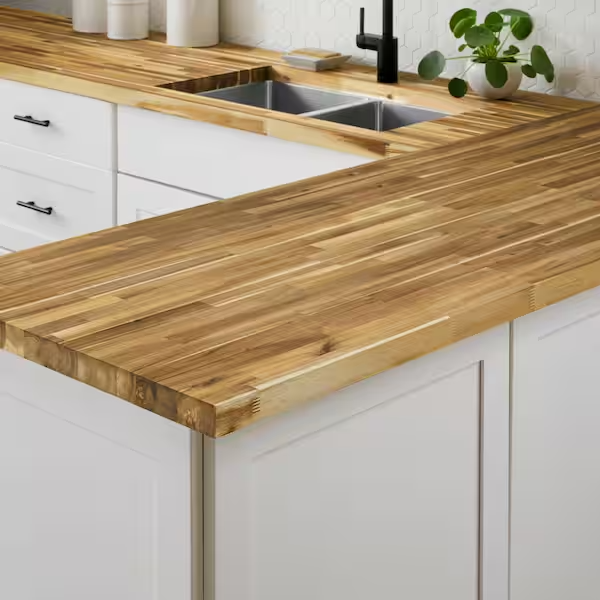
Acacia is naturally water-resistant and very durable, making it a strong option for wet zones around sinks. Its warm, varied grain adds exotic flair. Acacia is also known for being an eco-conscious choice due to its fast growth.
Teak & Other Exotic Woods (Iroko, Hickory, etc.)
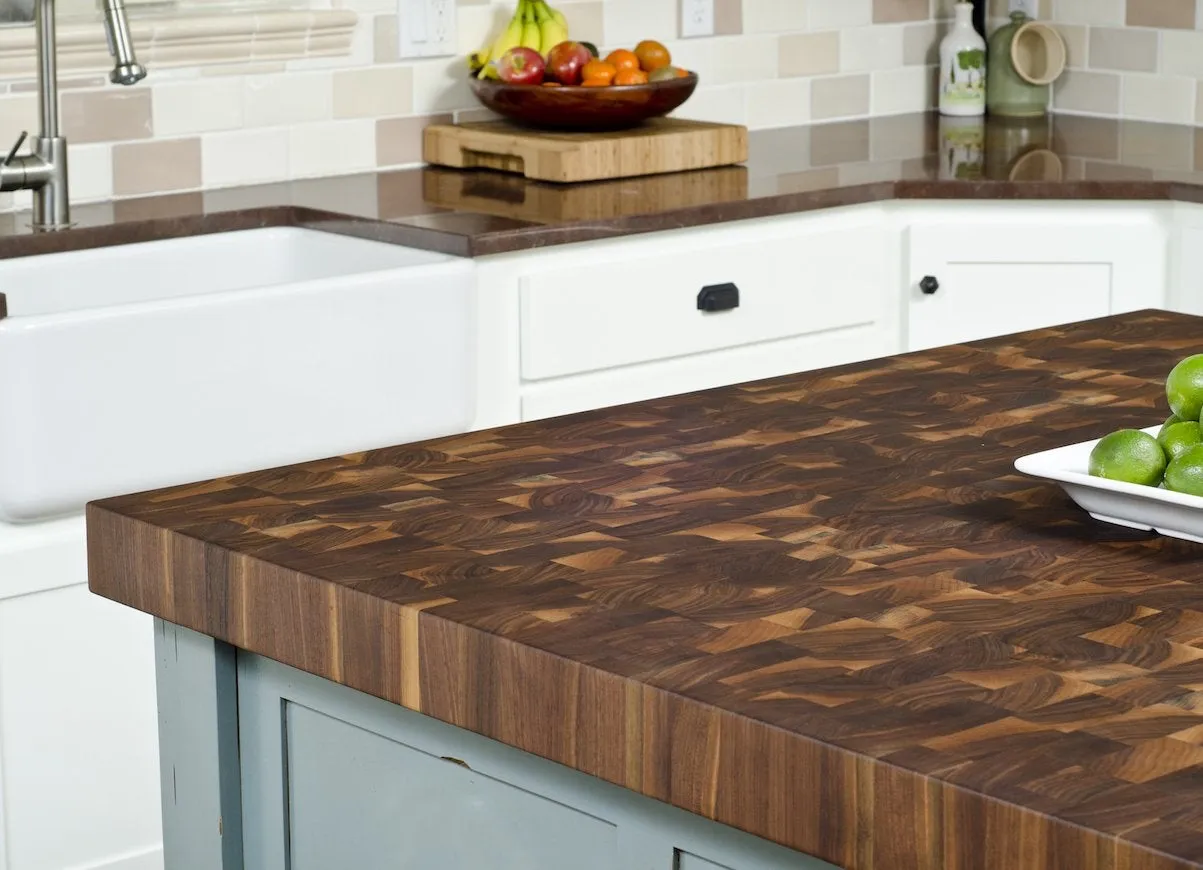
Teak, Iroko, and similar exotic woods are prized for their exceptional stability and natural oils that resist moisture and bacteria. They’re excellent in heavy-use kitchens but come at a higher price point. Hickory offers extreme hardness and a bold grain for rustic or cabin-inspired designs.
Bamboo, Birch & Beech (Budget- or Eco-Friendly Options)
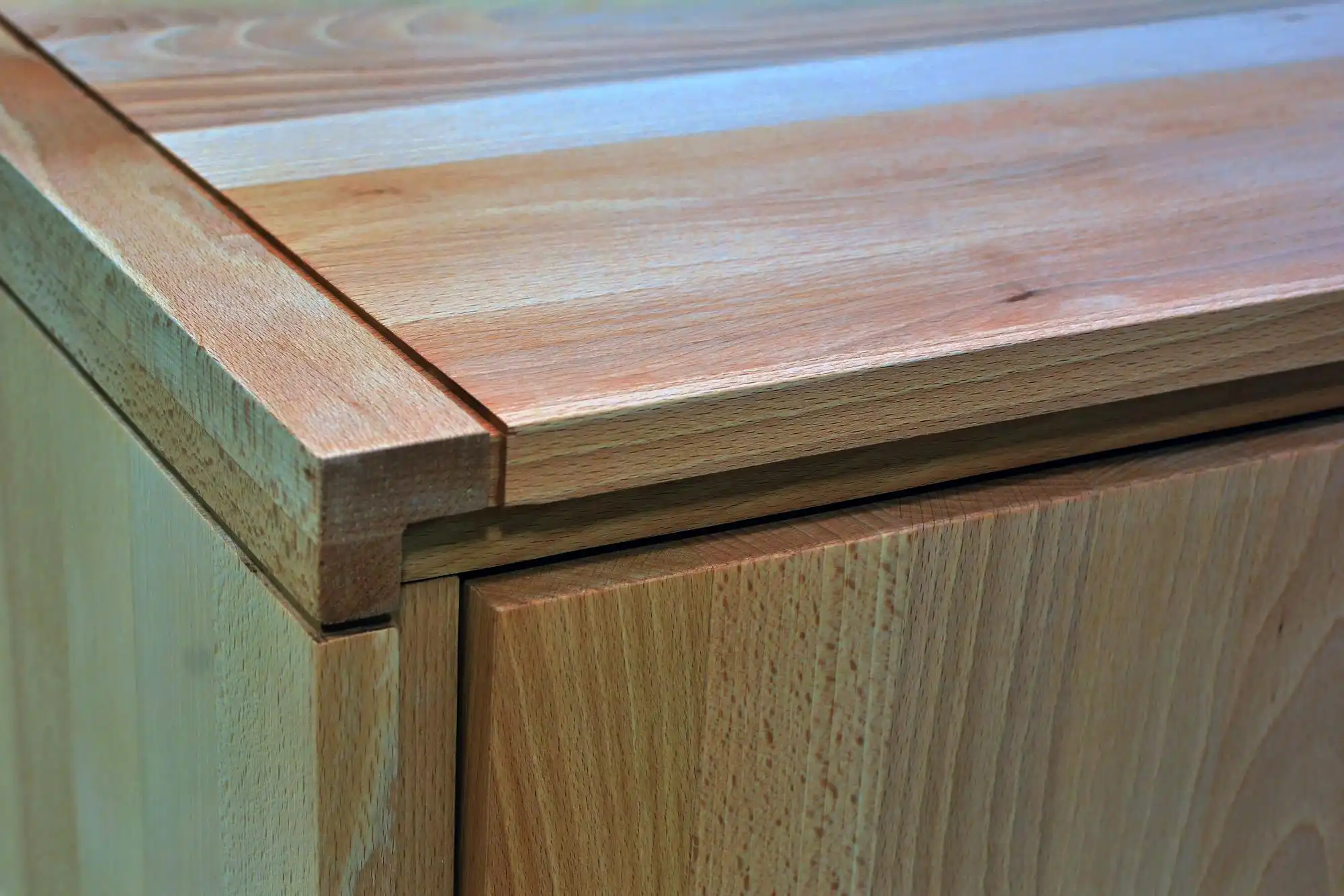
These lighter woods deliver a clean, modern look at a lower cost. Bamboo is highly sustainable and surprisingly strong due to its layered construction. Birch and beech offer decent durability with a smooth grain, making them good entry-level choices for budget-friendly remodels.
Pros & Cons of Wood Countertops
Wood countertops bring a warm, timeless feel to any kitchen, but they also require the right care to stay beautiful. Here’s a simple breakdown to help you decide if they fit your lifestyle:
Pros
Warm, natural look that adds character and softens modern or minimalist spaces.
Gentle on dishes and knives, unlike stone or tile surfaces that can chip or dull.
Renewable and eco-friendly when using sustainably sourced woods like bamboo or FSC-certified hardwoods.
Repairable — scratches, stains, and dents can often be sanded and refinished, making wood a long-lasting option.
Cons
Requires regular sealing to protect from moisture, staining, and daily wear.
Can warp or discolor if exposed to standing water or inconsistent humidity.
Not heat-resistant — hot pans can burn or mark the surface.
Prone to dents and scratches, especially softer species, if not maintained properly.
How to Choose the Right Wood for Your Kitchen
Choosing the best wood countertop isn’t just about appearance — it’s about matching the right material to your habits and home. Here’s how to make a smart choice:
Match durability to your lifestyle
Think about how often you cook, chop, and prep. Hardwoods like maple, oak, or walnut work better for busy kitchens, while softer or exotic woods suit light-use or showpiece spaces.Pick wood tones and grain patterns that fit your style
Modern kitchens: walnut, teak, or bamboo with clean lines.
Farmhouse or rustic: oak, cherry, and reclaimed wood.
Scandinavian/minimal: light maple, birch, or beech.
Consider care and maintenance levels
If you want low maintenance, choose harder species with tighter grain. If you enjoy the lived-in patina, softer woods or butcher block may be perfect.Think about sustainability
Bamboo, acacia, reclaimed wood, and FSC-certified hardwoods are great for homeowners who want an eco-friendly and renewable option.
Ready to Find the Perfect Wood Countertop?
Choosing the right wood makes all the difference in how your kitchen looks and works. If you need help comparing species, durability, finishes, or design options, our team is here to guide you.
Contact us today and let’s create a kitchen that feels beautifully crafted and built to last.
FAQs
What wood is best for kitchen countertops?
Hardwoods such as Maple, Oak, walnut, cherry, and acacia are widely regarded as the best choices because they balance durability, appearance, and ease of maintenance.
Is oak or maple better for countertops?
Maple is slightly harder and more dent-resistant than oak, making it better for heavy daily use and cutting tasks.
Oak offers more distinct grain and character and may be favored for rustic or traditional styles.
What is the best wood for kitchen worktops?
The “best” wood depends on how you use your kitchen. For durability and day-to-day cooking, maple is top-rated. For a warm, classic appearance, walnut or cherry works well. For moisture-prone areas near sinks, acacia or teak offer added water resistance.
Are wooden countertops a good idea?
Yes — wood countertops add warmth, character, and a friendly surface that’s gentle on dishes. With regular sealing, proper maintenance, and care, they can last many years and age beautifully.


 English
  Arabic
  Spanish
  Japanese
  Russian
  Korean
  French
  Italian