Galley Kitchen Designs: Layouts, Style & Smart Tips

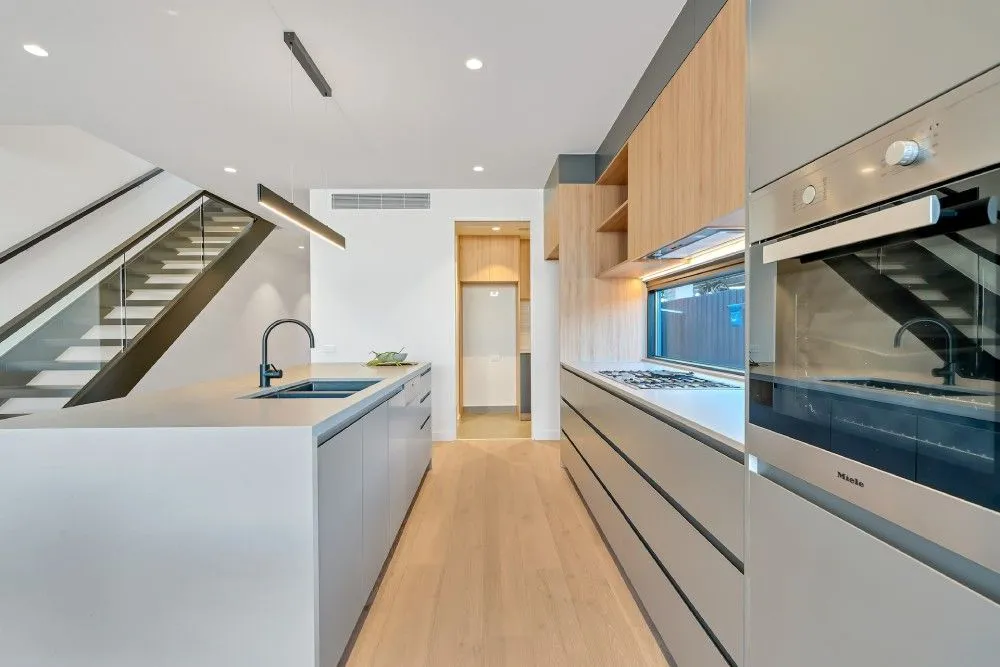
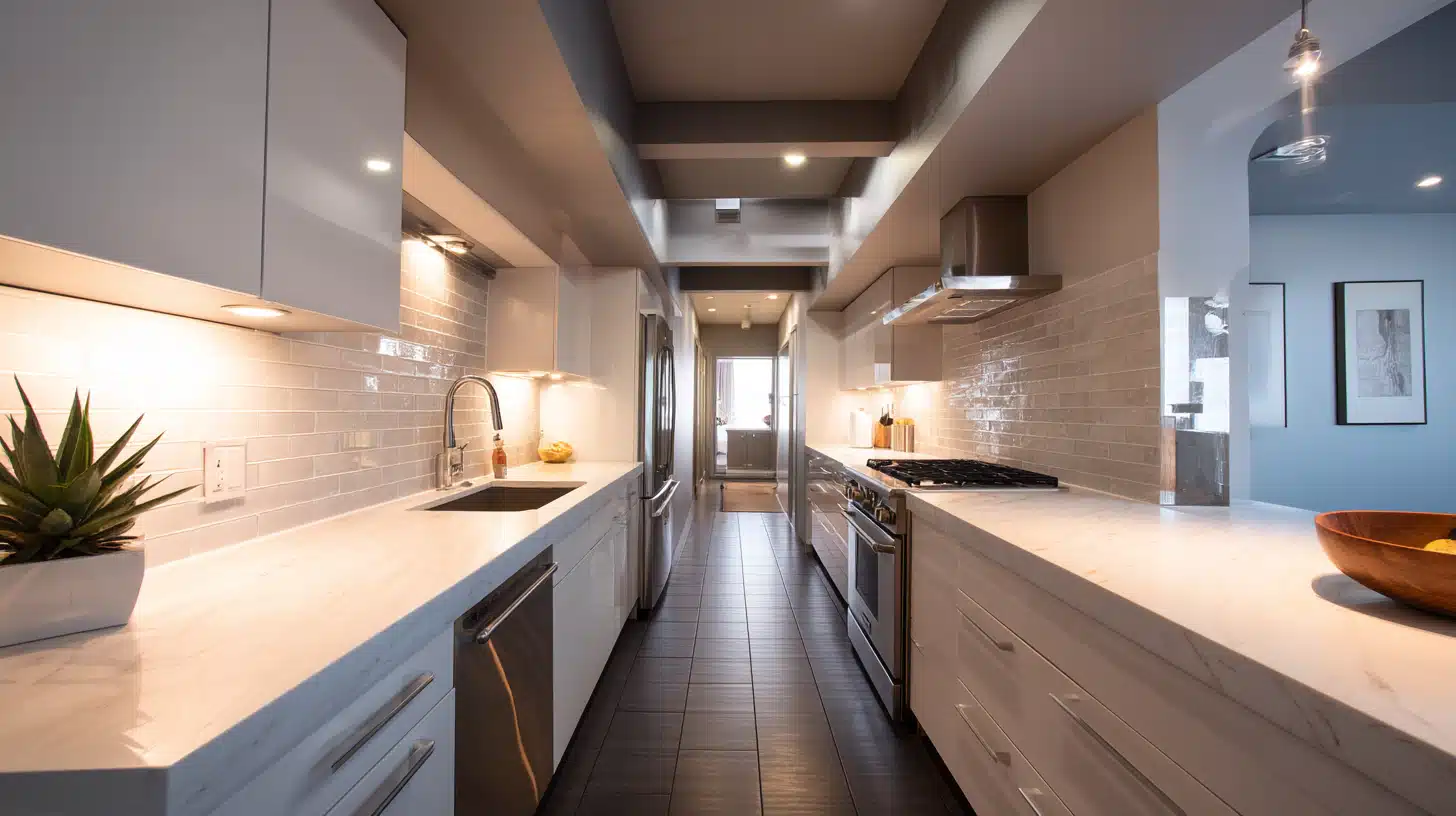
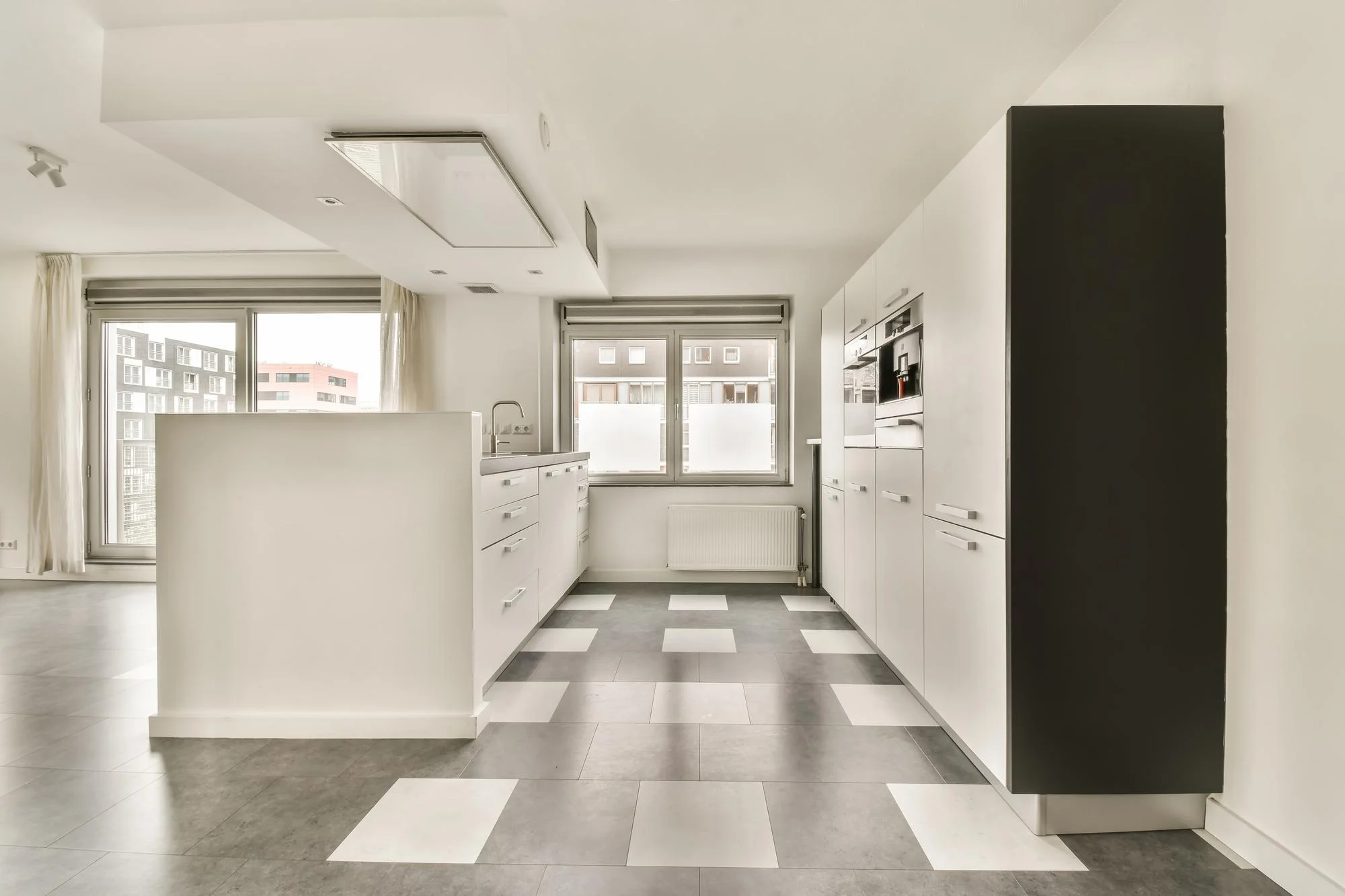
Contemporary galley kitchen with dual counters and window
Explore galley kitchen designs—from single-wall to parallel layouts—packed with storage hacks, lighting strategies and style ideas to optimise narrow kitchens.

Table of Contents

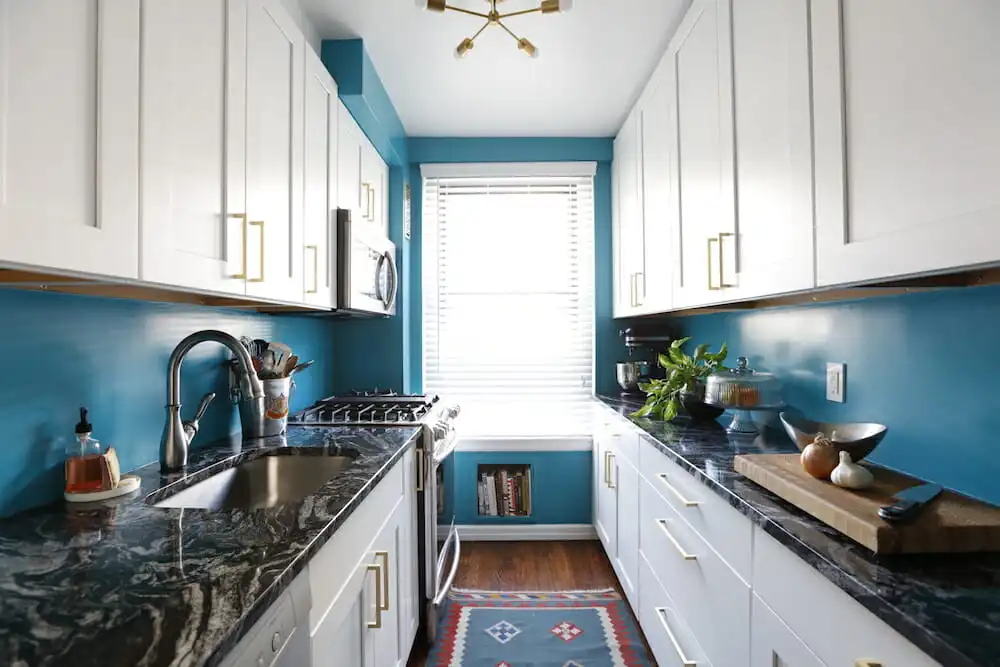
A galley kitchen, often called a corridor or dual-wall layout, features two parallel countertops that create an efficient, walk-through workspace. This design is perfect for narrow homes, apartments, or remodels where space and functionality must work hand in hand. The galley layout maximizes every centimeter, offering a streamlined workflow and clear separation between cooking and cleaning zones.

Contemporary galley kitchen with blue countertops and oven

In this guide, we’ll explore over ten modern galley kitchen design ideas, covering practical layouts, smart lighting, materials, storage optimization, and the latest design trends to help you create a kitchen that feels both efficient and inviting.

10+ Galley Kitchen Design Ideas & Inspirations

Galley kitchens are admired for their efficiency and clean geometry. Each design variation uses electrical, lighting, and spatial planning principles to create balance and flow. Below are seven proven ideas that show how thoughtful design and proper electrical layout can make even a narrow galley kitchen feel open, functional, and elegant.

1. Classic Single-Wall Galley Design

Classic Single Wall Galley Design

The single-wall galley layout is the simplest and most efficient form. All cabinets, appliances, and electrical fittings line up along one wall, making it ideal for smaller apartments or compact homes.

Key features

  • Straight-line setup with sink, cooktop, and refrigerator aligned

  • Overhead cabinets and under-counter storage to save space

  • Compact lighting and electrical plan with outlets evenly spaced along the backsplash

Professional insight: When all appliances are on one wall, plan dedicated circuits for high-power units such as ovens and induction cooktops. To maintain safety, outlets near the sink should have residual current devices (RCDs). Combine under-cabinet LEDs with ceiling-mounted task lighting for balanced brightness.

Action tips

  • Space outlets at 1200 mm intervals for accessibility

  • Install dimmable lighting to adjust brightness during food prep or dining

  • Use flush-mount sockets to maintain a clean visual line

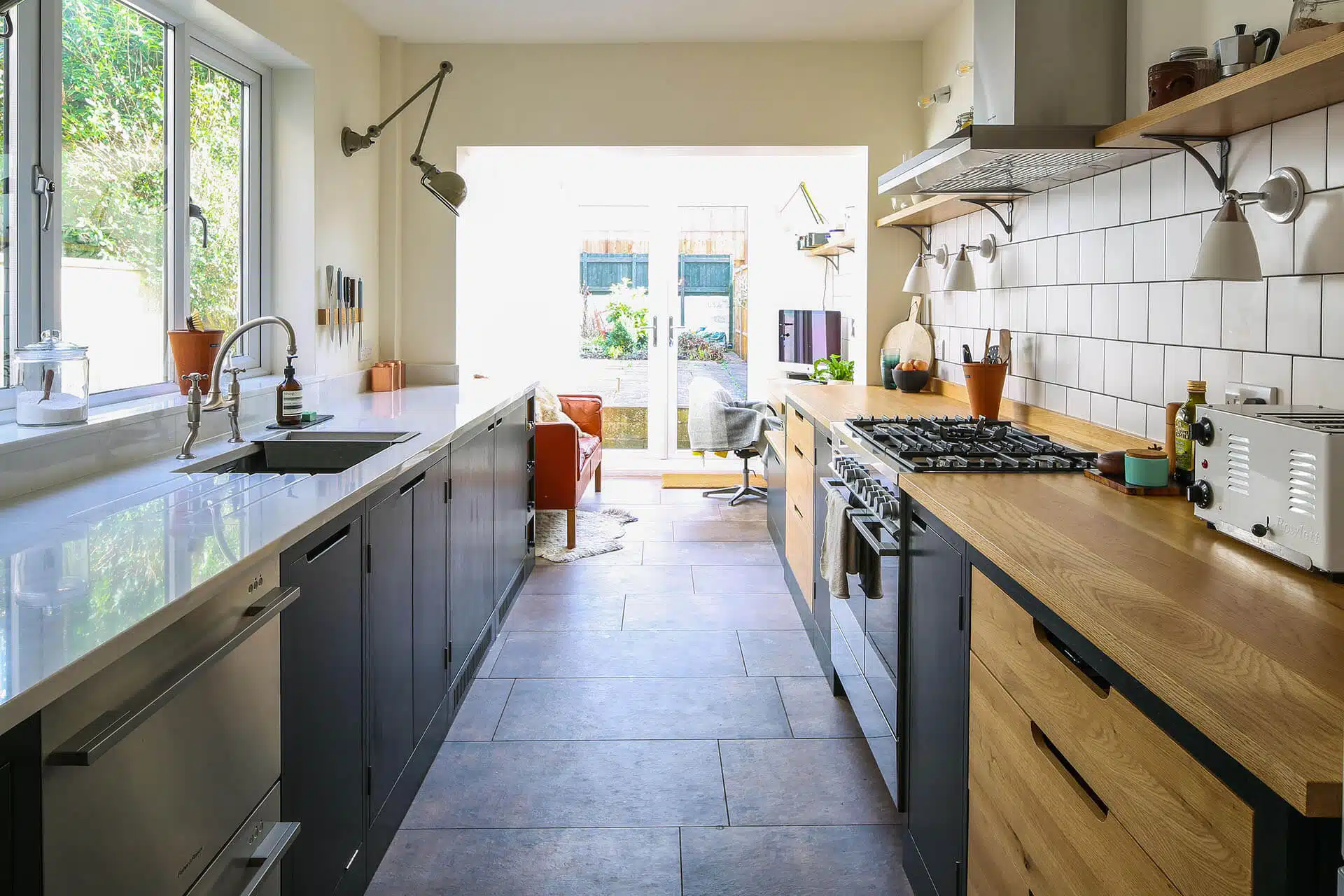
2. Double-Wall Parallel Galley Design

Double Wall Parallel Galley Design

A double-wall galley places work areas on opposing sides, forming a corridor-like kitchen. This design enhances efficiency and allows for more counter and storage space while keeping the workflow smooth.

Key features

  • Two parallel countertops for cooking and prep

  • Ideal work triangle between sink, cooktop, and refrigerator

  • Option to add overhead cabinets on one side and open shelving on the other for visual balance

Professional insight: Adequate aisle clearance is essential—maintain 1000–1200 mm between runs for safe movement and electrical access. Use cross-lighting from both sides to prevent shadows. Plan outlets for both benches and ensure wiring is concealed within cabinetry for a polished finish.

Action tips

  • Use recessed ceiling lights along both sides for uniform lighting

  • Position outlets symmetrically to avoid cord clutter across the walkway

  • Consider under-cabinet lighting to enhance depth and visibility

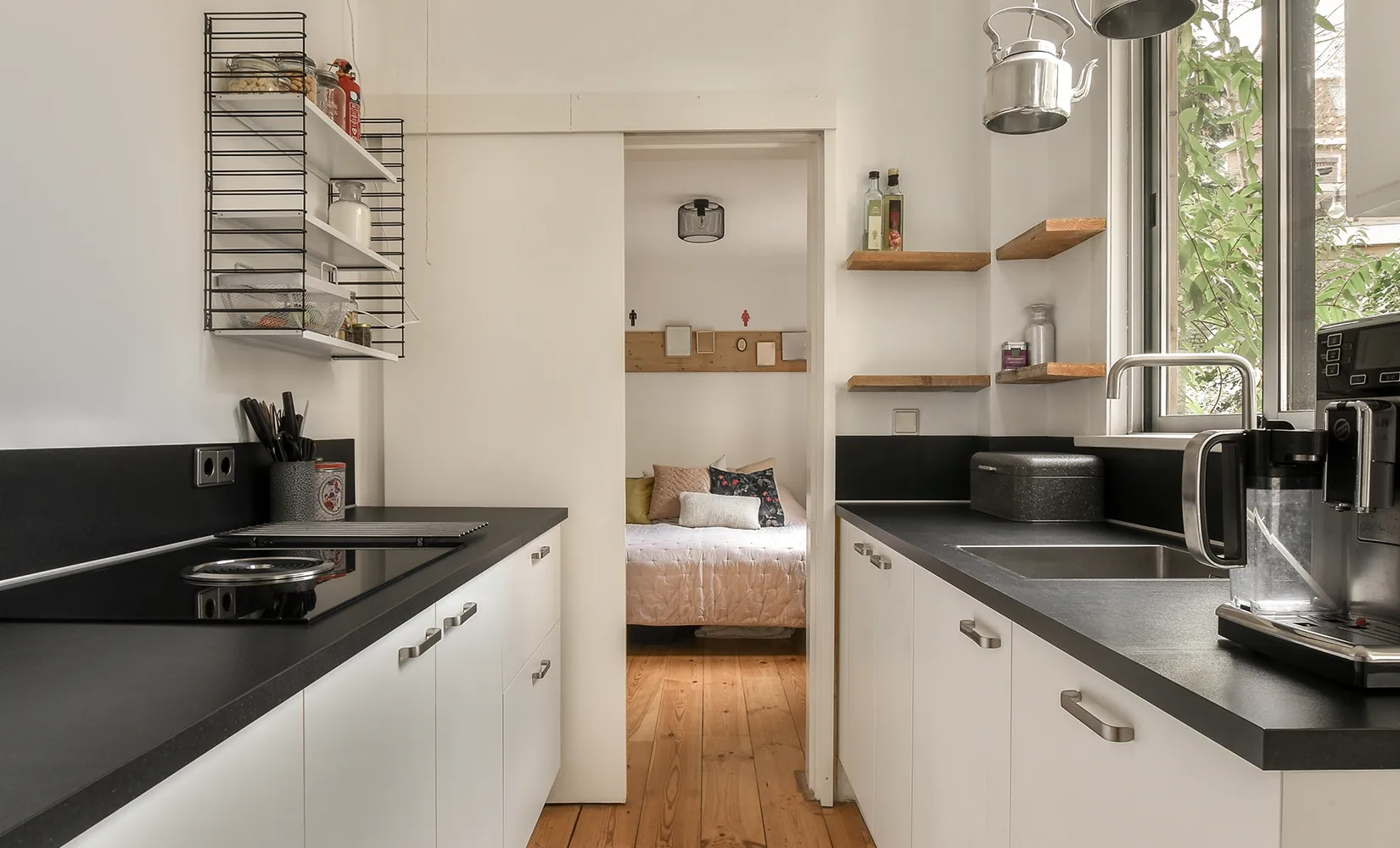
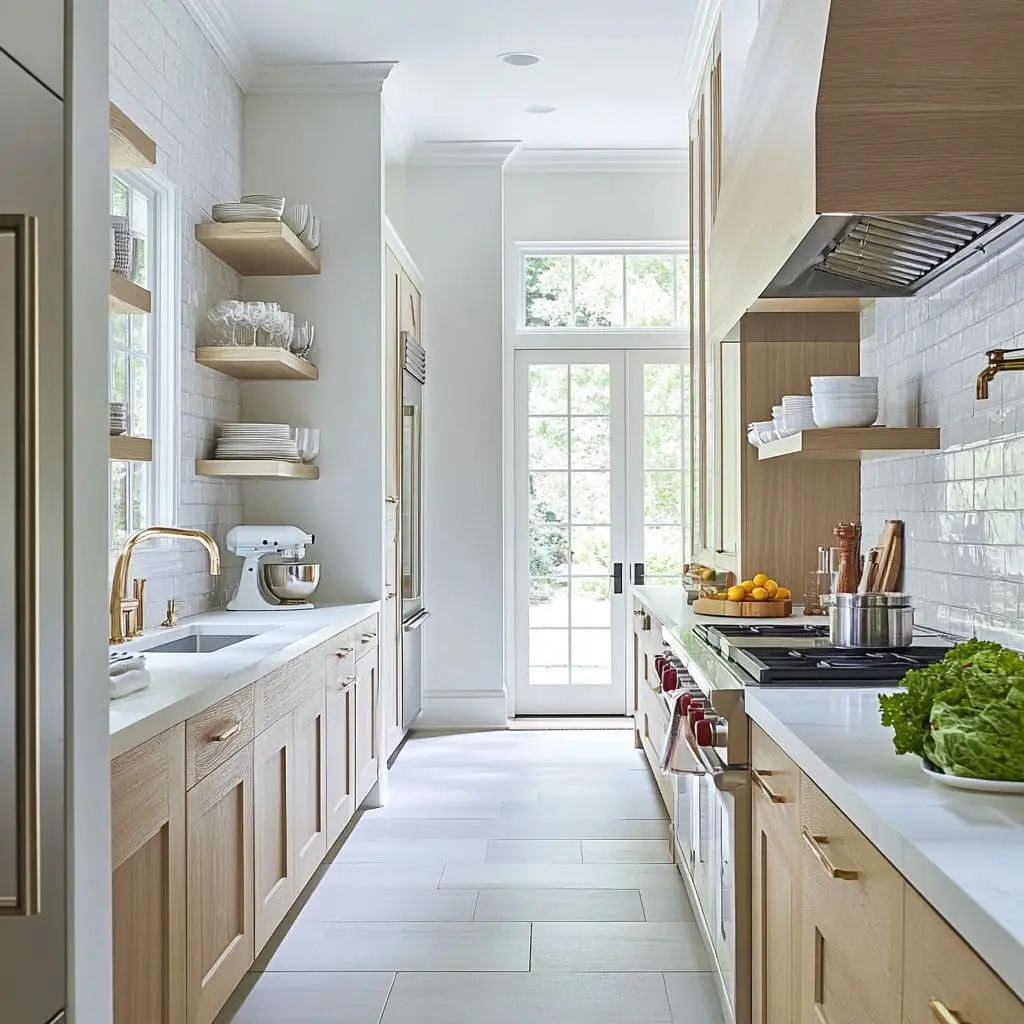
3. Galley Kitchen with Open Shelving

Galley Kitchen with Open Shelving

Open shelving creates a feeling of spaciousness and keeps daily essentials within reach. It’s particularly effective in narrow kitchens where heavy upper cabinets can feel overwhelming.

Key features

  • Floating shelves in place of upper cabinets

  • Opportunity to display glassware or small appliances

  • Mix of ambient and accent lighting to highlight shelves

Professional insight: Floating shelves should have integrated LED strips or wall-mounted task lights beneath them. Use low-voltage lighting for safety and energy efficiency. Conceal wiring inside the wall before installing brackets for a clean finish.

Action tips

  • Choose moisture-resistant materials for shelving near cooking areas

  • Use concealed cable channels to keep the wall clutter-free

  • Pair open shelving with matte wall paint to reduce light reflection

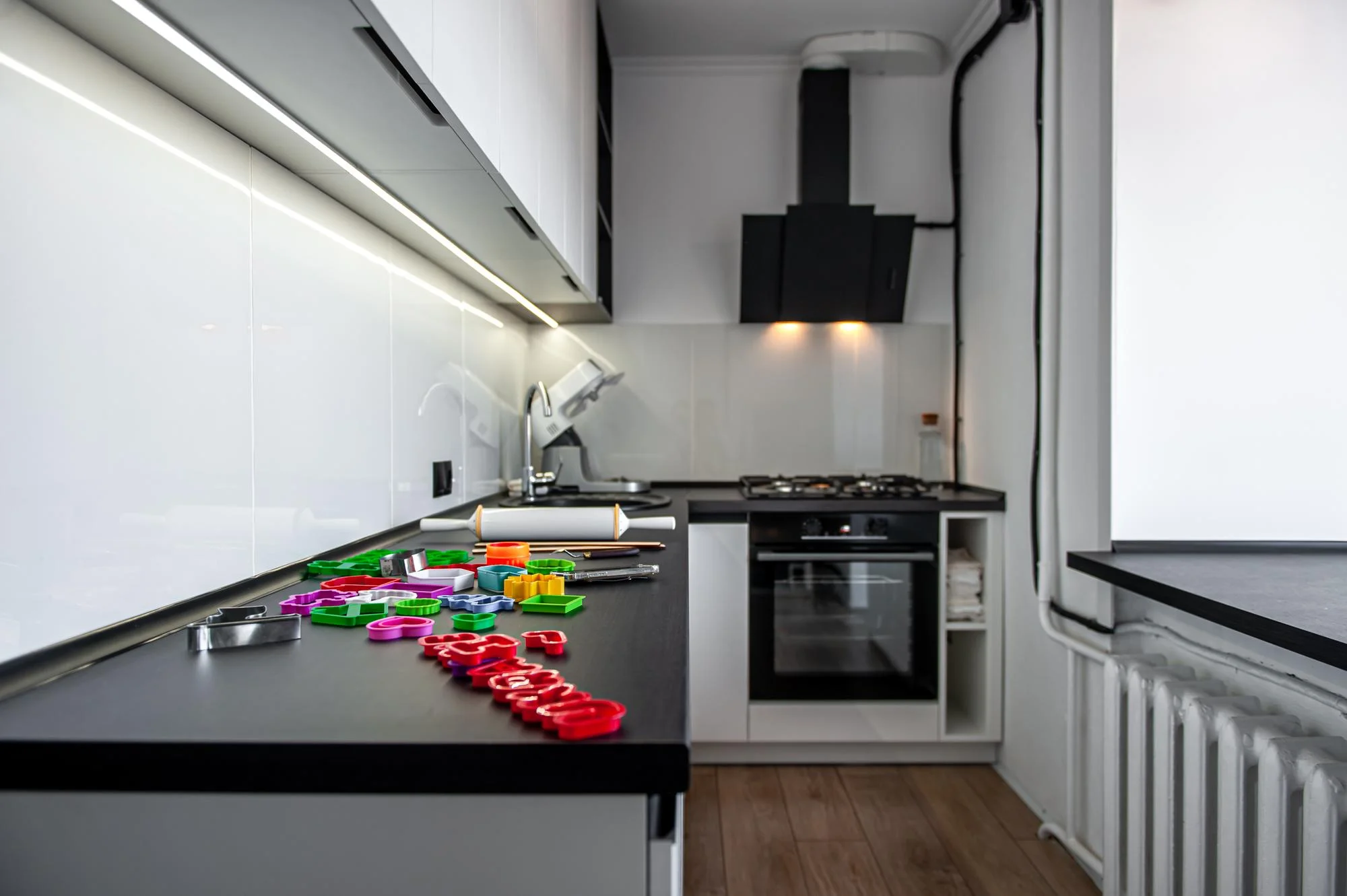
4. Narrow Galley with Minimalist Design

Narrow Galley with Minimalist Design

Minimalist galleys focus on simplicity, clean lines, and functionality. By using smooth, handle-less cabinetry and integrated appliances, they appear more spacious and modern.

Key features

  • Flat-panel doors and integrated lighting

  • Monochrome or neutral palette with subtle contrast

  • Built-in appliances to maximize counter space

Professional insight: Install continuous LED strip lighting beneath overhead units to visually widen the kitchen. Keep all electrical outlets in a single concealed channel to minimize wall interruptions. Plan for ventilation fans with silent, energy-efficient models to preserve acoustic comfort.

Action tips

  • Limit the color palette to two tones for visual calm

  • Use reflective materials like satin-finish laminate or glass backsplash

  • Ensure switches and sockets match the wall tone for a seamless look

5. Galley Kitchen with Peninsula Extension

Adding a peninsula transforms a basic galley into a multifunctional zone. It creates a transition between kitchen and dining areas without breaking the visual line.

Key features

  • One counter extends into a short peninsula

  • Provides an additional worktop or casual dining area

  • Defines kitchen boundaries in open-plan layouts

Professional insight: Include electrical outlets on the peninsula’s vertical side for small appliances. Use floor-mounted conduits for concealed power routing to keep the surface neat. Plan pendant lighting directly above the peninsula for focused task illumination.

Action tips

  • Allow at least 900 mm clearance between peninsula edge and wall for movement

  • Use a separate lighting switch for the peninsula zone

  • Include USB power outlets for convenience

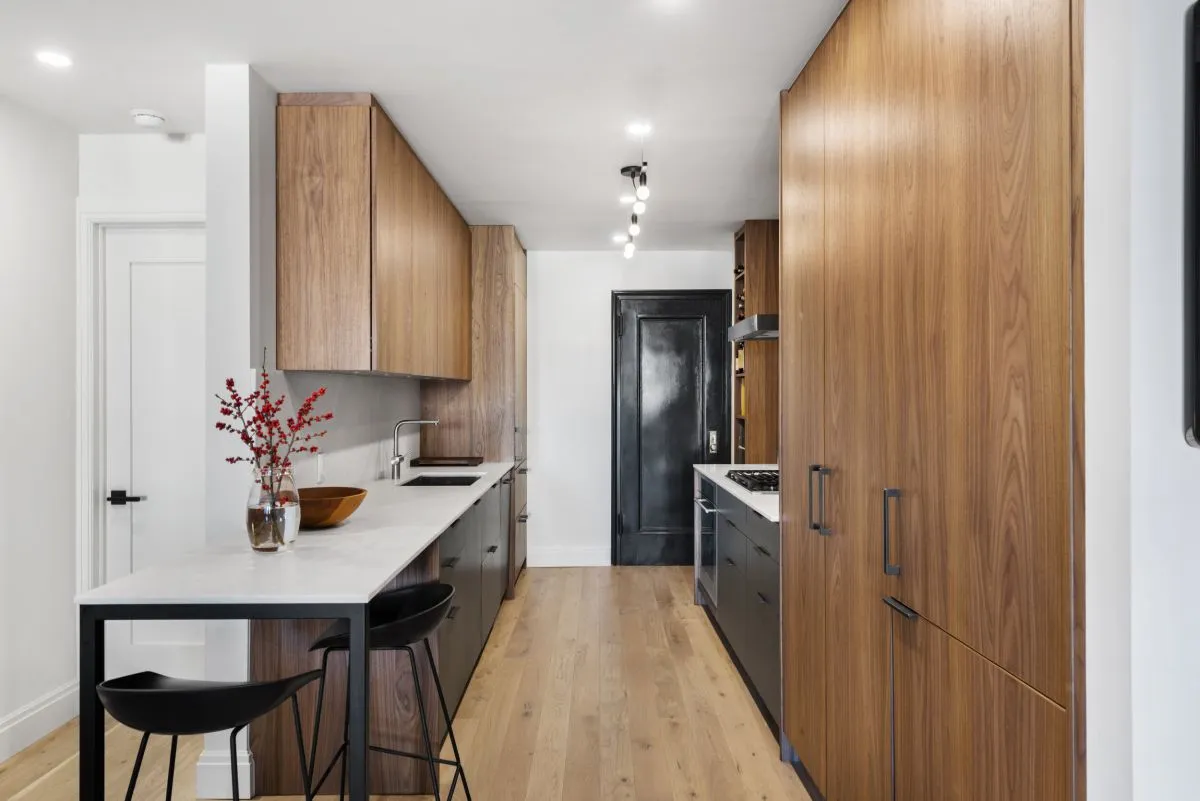
6. Galley Kitchen with Breakfast Bar

Galley Kitchen with Breakfast Bar

The breakfast bar version is perfect for homes needing a compact social space. It doubles as an informal dining spot or workspace without crowding the kitchen footprint.

Key features

  • Raised or extended benchtop for seating

  • Clear legroom under the counter

  • Option to integrate task lighting above

Professional insight: Plan dedicated circuits for under-counter sockets if small appliances are used at the bar. Avoid routing electrical cabling where footrests or stools may cause damage. Consider flexible pendant lighting with adjustable height to match usage mode—bright for work, soft for dining.

Action tips

  • Provide 300 mm overhang depth for comfortable seating

  • Use waterproof sockets for bars near sinks or beverage stations

  • Select durable countertop materials like engineered stone or composite quartz

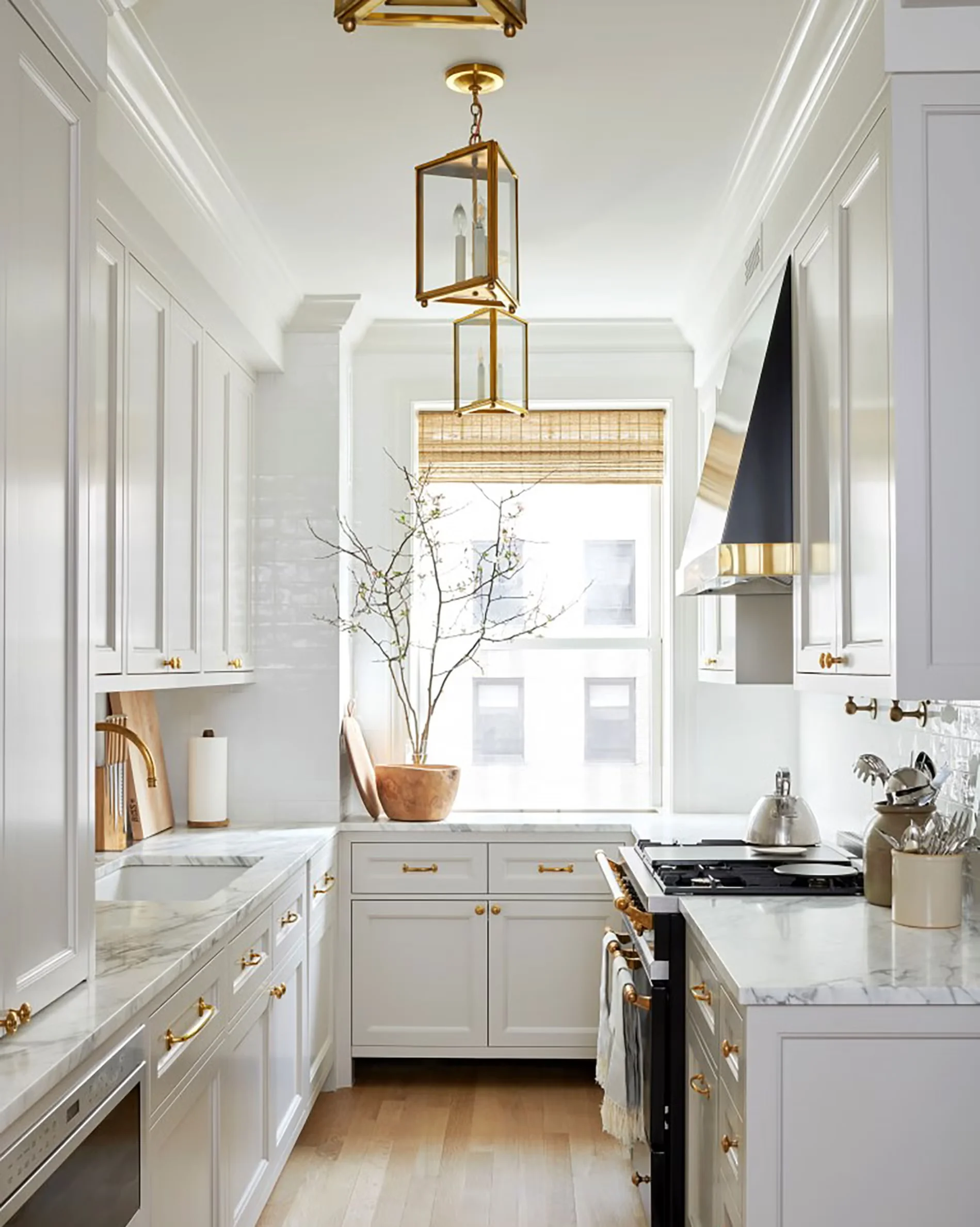
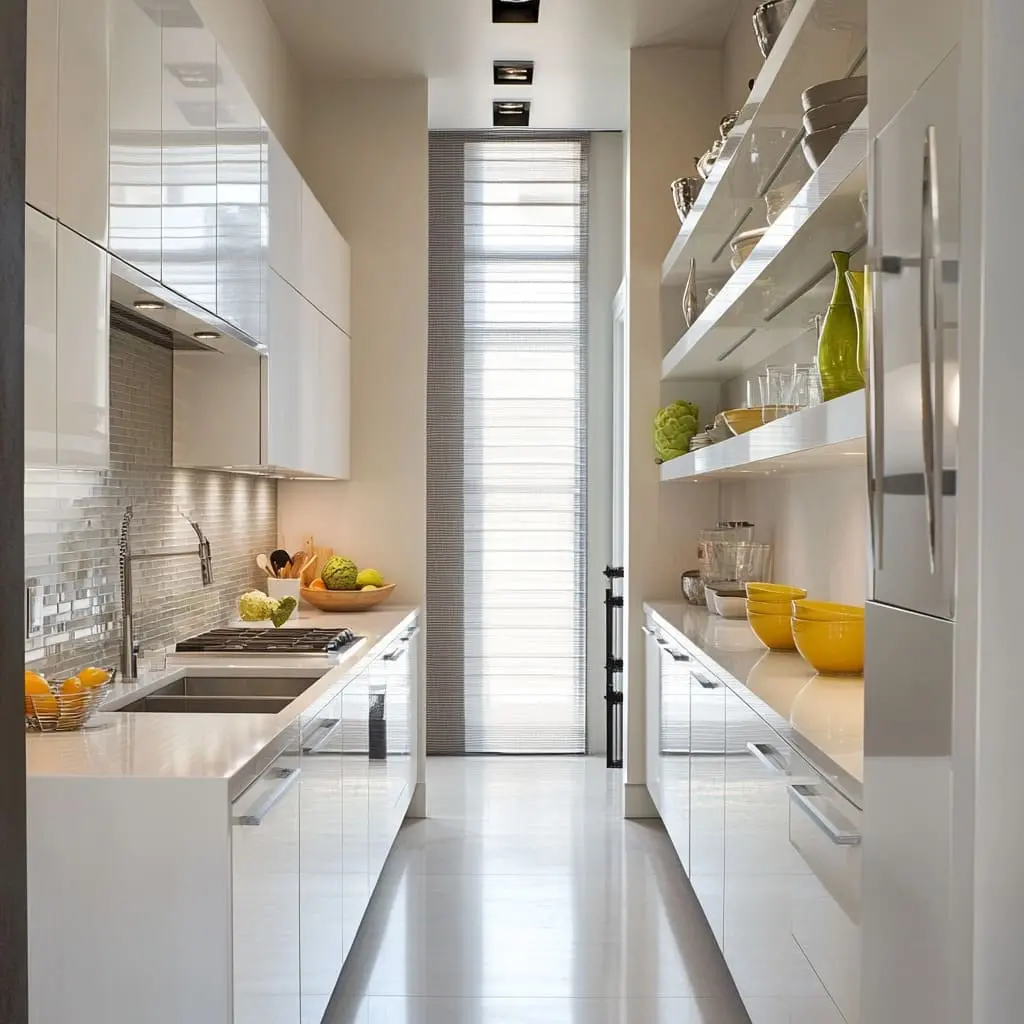
7. All-White Galley Kitchen Design

All White Galley Kitchen Design

An all-white galley kitchen never goes out of style. It enhances brightness, reflects light efficiently, and creates the illusion of a larger area—especially in small homes.

Key features

  • White cabinetry, countertops, and backsplashes

  • Subtle textural contrasts for visual depth

  • Neutral base ideal for accent lighting

Professional insight: White finishes reflect light, reducing the number of fixtures needed. However, use warm-color LEDs (2700–3000 K) to avoid a sterile look. Ensure dimmers are compatible with LED drivers to prevent flickering. Integrate lighting under counters and toe kicks for a floating effect.

Action tips

  • Add brushed metal fittings or wooden accents for warmth

  • Keep wiring pathways hidden to maintain a flawless aesthetic

  • Choose easy-clean finishes to preserve brightness over time

8. Galley Kitchen with Continuous Counters & Back-Panels

A continuous countertop and matching backsplash bring a sense of flow and unity to a galley kitchen. This seamless design reduces visual clutter and creates a sleek, modern appearance while improving durability and maintenance.

Key features

  • Single, uninterrupted countertop running the full kitchen length

  • Matching backsplash panels made of stone, glass, or solid surface

  • Integrated power outlets and concealed LED lighting under cabinets

Professional insight: Continuous surfaces simplify electrical planning. Install outlets in flush-mounted boxes along the backsplash for easy appliance access without breaking the visual line. Use low-profile fittings and match outlet covers to the wall finish for consistency. LED strip lights under cabinets should be fitted with aluminium channels to ensure even light distribution and heat dissipation.

Action tips

  • Choose heat- and moisture-resistant materials for both counter and backsplash

  • Limit countertop joins to prevent moisture ingress near electrical points

  • Plan a hidden access panel behind cabinets for easy wiring maintenance

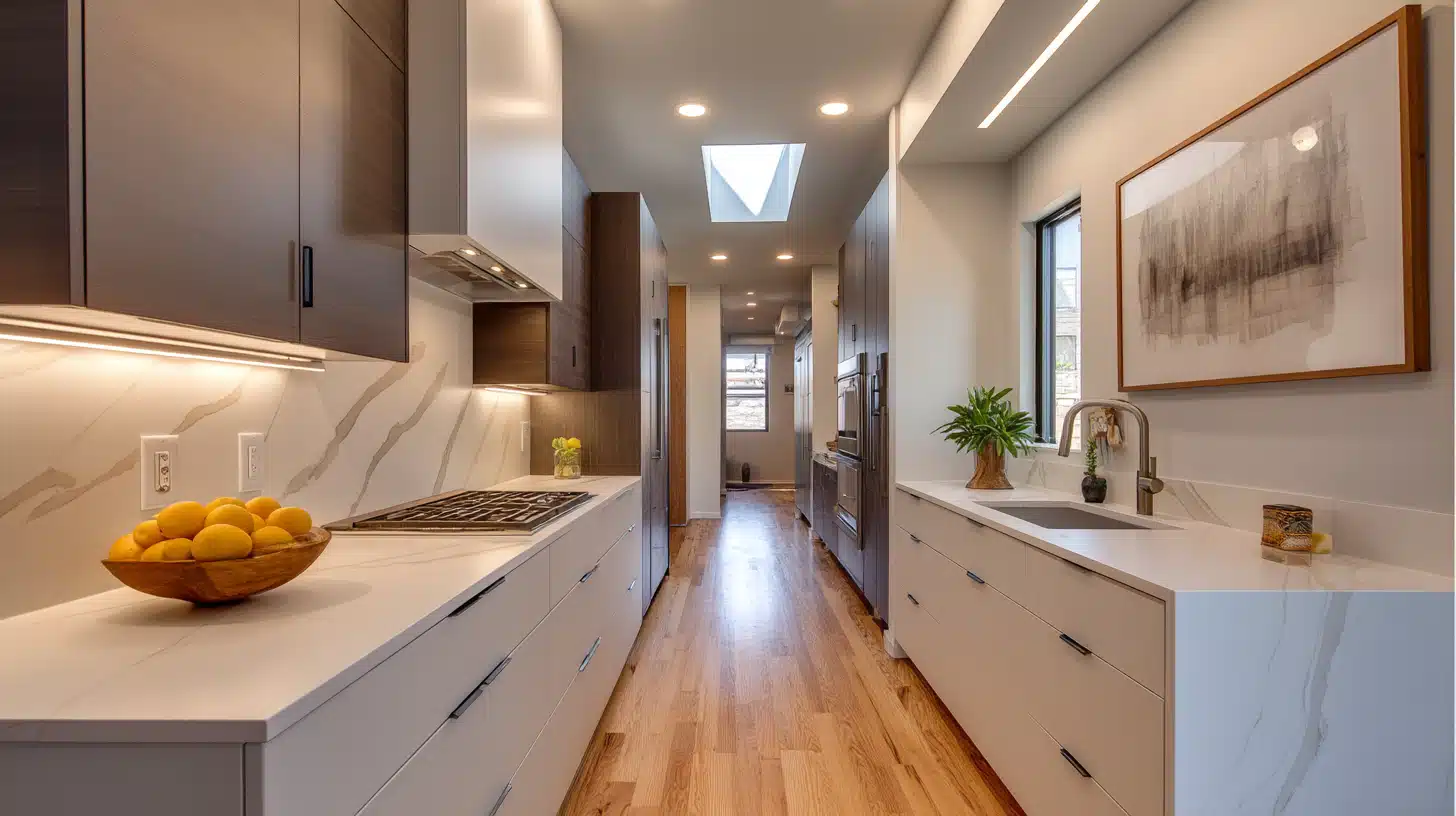
9. Galley Kitchen with Recessed + Under-Cabinet Lighting

Galley Kitchen with Recessed Under Cabinet Lighting

Proper lighting design elevates both aesthetics and safety. Combining recessed ceiling lights with under-cabinet illumination ensures every surface is evenly lit, eliminating shadows and improving visibility for cooking tasks.

Key features

  • Recessed LED downlights for general illumination

  • Linear LED strips beneath upper cabinets for focused task lighting

  • Optional toe-kick or cove lighting for soft ambient glow

Professional insight: Each lighting zone should have its own circuit and switch. Use warm-white (2700–3000 K) lighting for a comfortable tone that complements most finishes. Recessed lights should be spaced evenly—about 900–1000 mm apart—and aligned with the counter edge to minimize glare. Under-cabinet strips can be connected to motion sensors or smart switches for energy savings and ease of use.

Action tips

  • Avoid placing recessed lights directly above glossy surfaces to reduce reflection

  • Use dimmers rated for LED compatibility to control brightness levels

  • Ensure under-cabinet wiring is low-voltage (12 V or 24 V) for safety and longevity

10. Galley Kitchen with Luxury Materials

Luxury doesn’t always mean large—it’s about material selection and craftsmanship. In a galley layout, using premium materials on a compact scale maximizes impact without overwhelming the space.

Key features

  • High-end surfaces such as quartz, marble, or composite stone

  • Designer fittings and precision-aligned cabinetry

  • Accent lighting to highlight textures and finishes

Professional insight: When using luxury materials, lighting placement is critical. Install adjustable spotlights to highlight natural stone veining or textured backsplashes. Avoid cutting electrical outlets into marble or fragile panels; instead, position them discreetly under upper cabinets. If integrated appliances are used, confirm proper ventilation and load balancing on dedicated electrical circuits.

Action tips

  • Combine natural and artificial lighting to enhance depth and texture

  • Use concealed LED edge lighting to showcase statement materials

  • Include surge protection on circuits serving high-value appliances

11. Galley Kitchen with a Cozy Corner Seating Area

Galley Kitchen with a Cozy Corner Seating Area

A cozy corner can turn a purely functional galley into a welcoming social space. Adding a built-in bench or compact dining nook creates a place to relax without compromising kitchen efficiency.

Key features

  • Built-in bench seating tucked into unused wall space

  • Compact table or fold-down surface for casual dining

  • Integrated power outlets and ambient lighting for comfort

Professional insight: Electrical planning around seating areas requires careful placement. Install outlets near the bench base for charging devices or powering small appliances. Use indirect lighting—such as recessed wall washers or pendant lights above the table—to define the zone without adding glare. If the seating backs onto cabinetry, ensure ventilation for any concealed electrical wiring or sockets.

Action tips

  • Choose rounded edges and low-profile fittings to ensure safety in tight areas

  • Use warm ambient lighting (2500–3000 K) to create a relaxed atmosphere

  • Plan wiring access early to avoid rework once seating structures are installed

Ready to Design Your Perfect Galley Kitchen?

Warm wood galley kitchen with built in breakfast counter

Transform your narrow space into a bright, efficient, and beautifully planned galley kitchen. Our electrical and design experts can help you plan safe wiring, smart lighting, and modern layouts tailored to your home. Contact us today to discuss your project and get professional advice that brings your kitchen ideas to life.

Related Posts

Share the Post: