

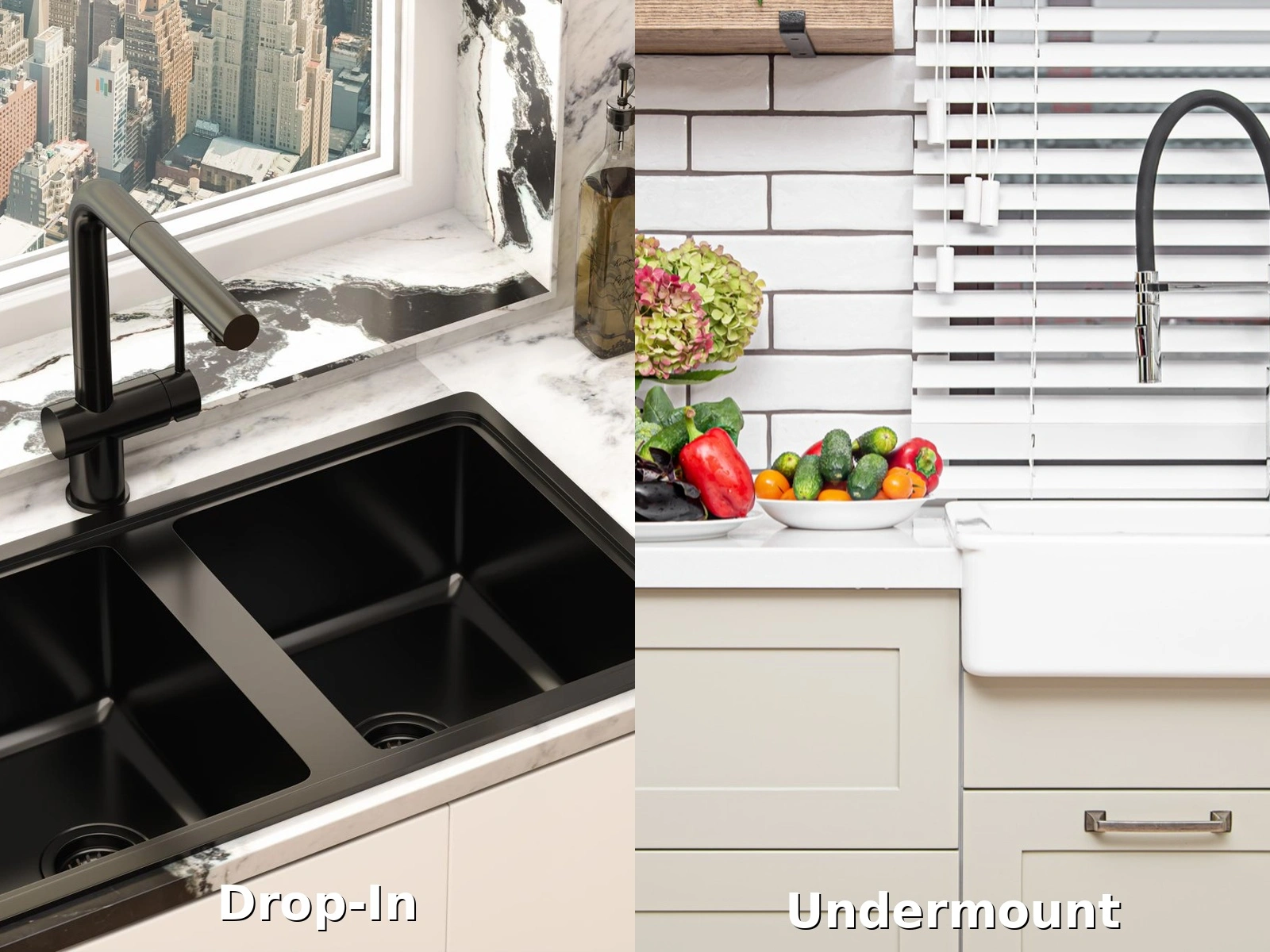
What Is a Drop-In Kitchen Sink?
A drop-in kitchen sink (also called a top-mount or self-rimming sink) is installed from above the countertop. The sink drops into a pre-cut hole, and a visible rim rests on top of the counter to support it. This rim makes installation simple and stable, even without special hardware.
Drop-in sinks are known for being DIY-friendly, budget-friendly, and compatible with almost any countertop material, including laminate. They come in popular materials like stainless steel, porcelain, cast iron, and granite composite, and they work with traditional, farmhouse, or transitional kitchen styles.
What Is an Undermount Kitchen Sink?
An undermount kitchen sink is installed from underneath the countertop, creating a seamless edge where the counter meets the sink. Instead of sitting on top, the sink is attached to the underside of the counter using brackets or adhesive.
This style offers a sleek, modern look and makes it easy to wipe crumbs or spills straight into the sink without catching on a rim. Undermount sinks work best with strong countertop materials like quartz, granite, marble, and solid surface — materials that can support the sink’s weight securely.
Comparison: Drop-In vs Undermount
Choosing between a drop-in sink and an undermount sink depends on how you balance convenience, style, and long-term value. Here’s a clear look at how they compare.
Installation & Compatibility
Drop-in sinks are easy to install and ideal for DIY projects. They sit on top of the counter, so they don’t require special mounting hardware.
Undermount sinks attach from underneath and usually need a professional install. They work best with solid countertop materials like quartz or granite that can support their weight.
Cleaning & Maintenance
Undermount sinks make cleanup simple. With no rim, you can wipe crumbs and spills straight into the sink without blocking edges.
Drop-in sinks have a visible rim that may collect grime or water over time. Regular cleaning around the edges helps keep them looking fresh.
Counter Space
Undermount sinks save space visually and physically. Without a rim, you gain a little extra usable countertop area, which can make a small kitchen feel less crowded.
Drop-in sinks take up slightly more surface due to the rim resting on the counter.
Cost & Installation
Drop-in sinks are typically more affordable. They install faster and don’t always require a professional, which helps keep your budget in check.
Undermount sinks cost more and often need pro installation for proper sealing and support.
Resale & Aesthetics
Undermount sinks are often viewed as more modern and premium. They create a seamless, high-end look that may appeal to future buyers.
Drop-in sinks suit traditional or transitional kitchens and offer a timeless feel without committing to a trendy style.
Material & Durability Considerations
The material you choose affects how your sink looks, feels, and performs over time. Stainless steel is the most common due to its strength, rust resistance, and easy maintenance. Composite sinks (like granite composite) offer a matte, modern look with good scratch resistance. Porcelain and cast iron bring a classic, glossy finish but may chip if struck hard. Fireclay delivers a premium farmhouse style and excellent heat resistance, though it’s usually more expensive.
Each material changes the feel of your kitchen: stainless steel is modern, composite is contemporary, and porcelain/fireclay is traditional and decorative.
Best Use Cases
Drop-in sinks are great for small kitchens, rental units, or tight budgets where flexibility and simple installation matter most.
Undermount sinks are ideal for modern, seamless kitchen designs, especially if you cook often and want easy cleanup and maximum counter space.
Choosing the right sink depends on your space, countertop type, and daily routine.
Ready to Pick the Perfect Sink for Your Kitchen?
The right sink can upgrade both the look and workflow of your space. If you need help choosing between drop-in and undermount — or want recommendations based on your countertop, layout, or cooking habits — contact us today. We’ll help you find the best fit for your home, style, and budget.
FAQs
What is the downside to undermount a kitchen sink?
Undermount sinks often cost more and require professional installation. They need strong countertop materials like quartz or granite, and poor installation can lead to leaks or damage over time.
How do I know if my sink is drop-in or undermount?
Check the edge where the sink meets the counter. If you see a rim sitting on top of the countertop, it’s a drop-in. If the countertop flows smoothly to the sink with no rim visible, it’s an undermount.
Can I replace an undermount sink with a drop-in?
Yes, but it usually requires modifying or replacing the countertop because undermount sinks need a polished underside and a different cutout.
What are the advantages of a drop-in sink?
Drop-in sinks are affordable, easy to install (even DIY), and work with almost any countertop material. They’re versatile and simple to replace if needed.




 English
  Arabic
  Spanish
  Japanese
  Russian
  Korean
  French
  Italian