

What Are Shaker Cabinets?
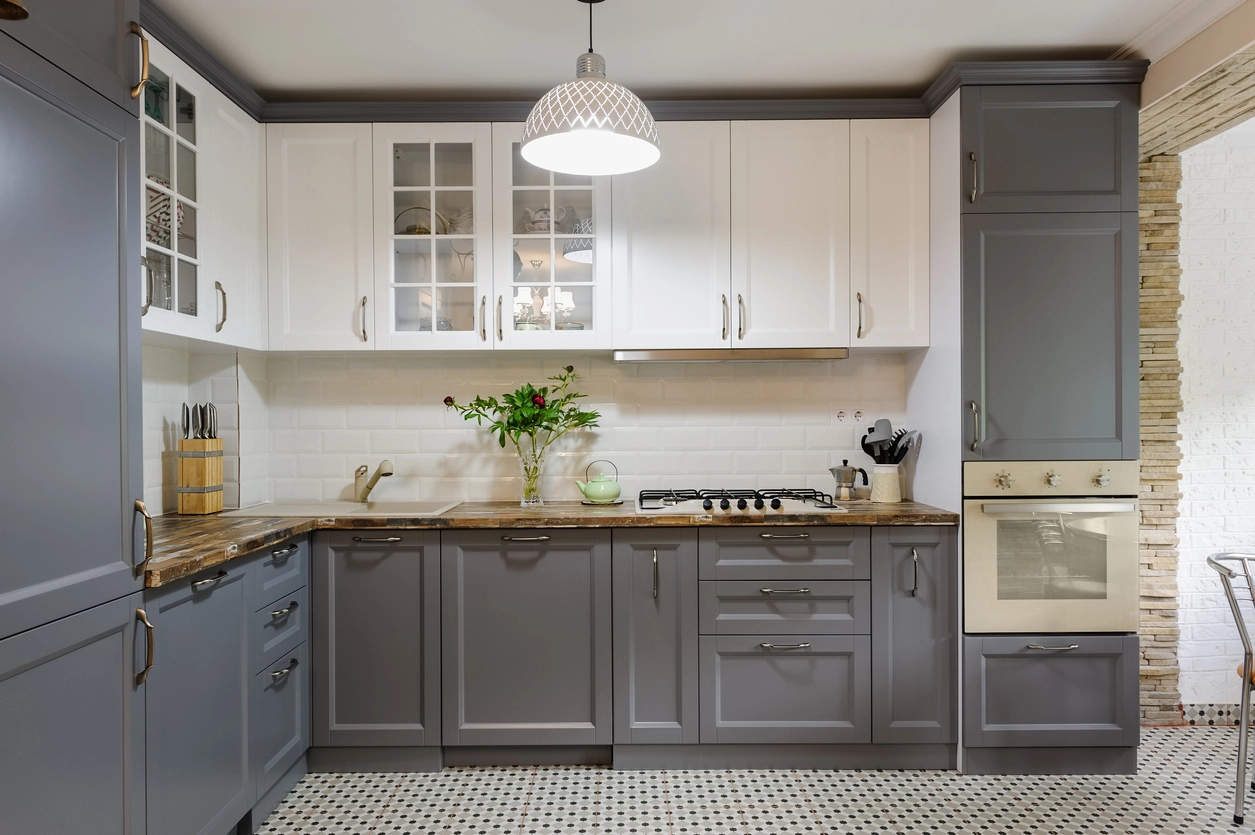
Shaker cabinets are known for their clean lines and simple, functional design. They feature a flat recessed center panel framed by four straight rails, creating a look that is minimal but timeless. The style originated from the Shaker community, which valued craftsmanship, honesty, and practicality—traits still reflected in the design today.
Because of their versatility, Shaker cabinets work well in many kitchen styles: modern, farmhouse, Scandinavian, transitional, and even minimalist spaces. They are commonly finished in white, wood tones, or muted colors, and their simplicity makes hardware and countertops easier to match. Another bonus—fewer grooves and details mean they are generally easier to clean and maintain.
What Are Traditional Cabinets?
Traditional cabinets embrace richer detail and classic ornamentation, creating a warm and refined look. They often feature raised panels, decorative trim, molding, fluting, corbels, or curved profiles that add visual depth. These design elements are inspired by Old World, European, and American classic interiors.
Traditional cabinetry shines in kitchens that feel elegant, cozy, or formal. Wood stains, glazed finishes, and darker tones are common, though painted finishes can also work well. Because of the added detail, traditional cabinets often require more craftsmanship and can be more challenging to clean compared to Shaker styles.
Where Shaker feels streamlined and understated, traditional cabinetry brings character, ornamentation, and heritage to the kitchen.
Design & Aesthetic Differences
Shaker cabinets use clean lines and a simple recessed panel, giving them an understated, modern look. They blend easily with contemporary, Scandinavian, transitional, and even farmhouse kitchens because they don’t overwhelm the space.
Traditional cabinets lean into ornamentation with raised panels, trim, and curved profiles. This creates a more formal and classic aesthetic, giving the kitchen warmth, richness, and architectural character.
The style you choose changes the whole mood of the kitchen—Shaker feels modern and relaxed, while Traditional feels timeless and elegant.
Functionality & Maintenance
Shaker cabinets are easier to clean thanks to their flat, minimal surfaces and limited detailing. Less dust collects, and the kitchen feels visually uncluttered.
Traditional cabinets require more upkeep since grooves, moldings, and raised panels can trap dust, grease, and residue over time. They’re beautiful, but they need more love to stay looking polished.
Cost & Value Considerations
Shaker cabinets tend to cost less, mainly because their simple construction requires fewer parts and less intricate craftsmanship.
Traditional cabinets often cost more due to detailed paneling, decorative trim, and higher craftsmanship demands. Materials and finishes also influence price.
From a resale standpoint, Shaker has broader mass-market appeal, while Traditional attracts buyers who value luxury and classic design—more niche but highly desirable in the right homes.
Best Use Cases & Kitchen Styles
Shaker works best for:
Modern and contemporary kitchens
Transitional and Scandinavian spaces
Modern farmhouse and minimalist homes
Traditional works best for:
Classic and formal kitchens
Luxury custom homes
Warm spaces with rich wood tones and detail
 English
  Arabic
  Spanish
  Japanese
  Russian
  Korean