

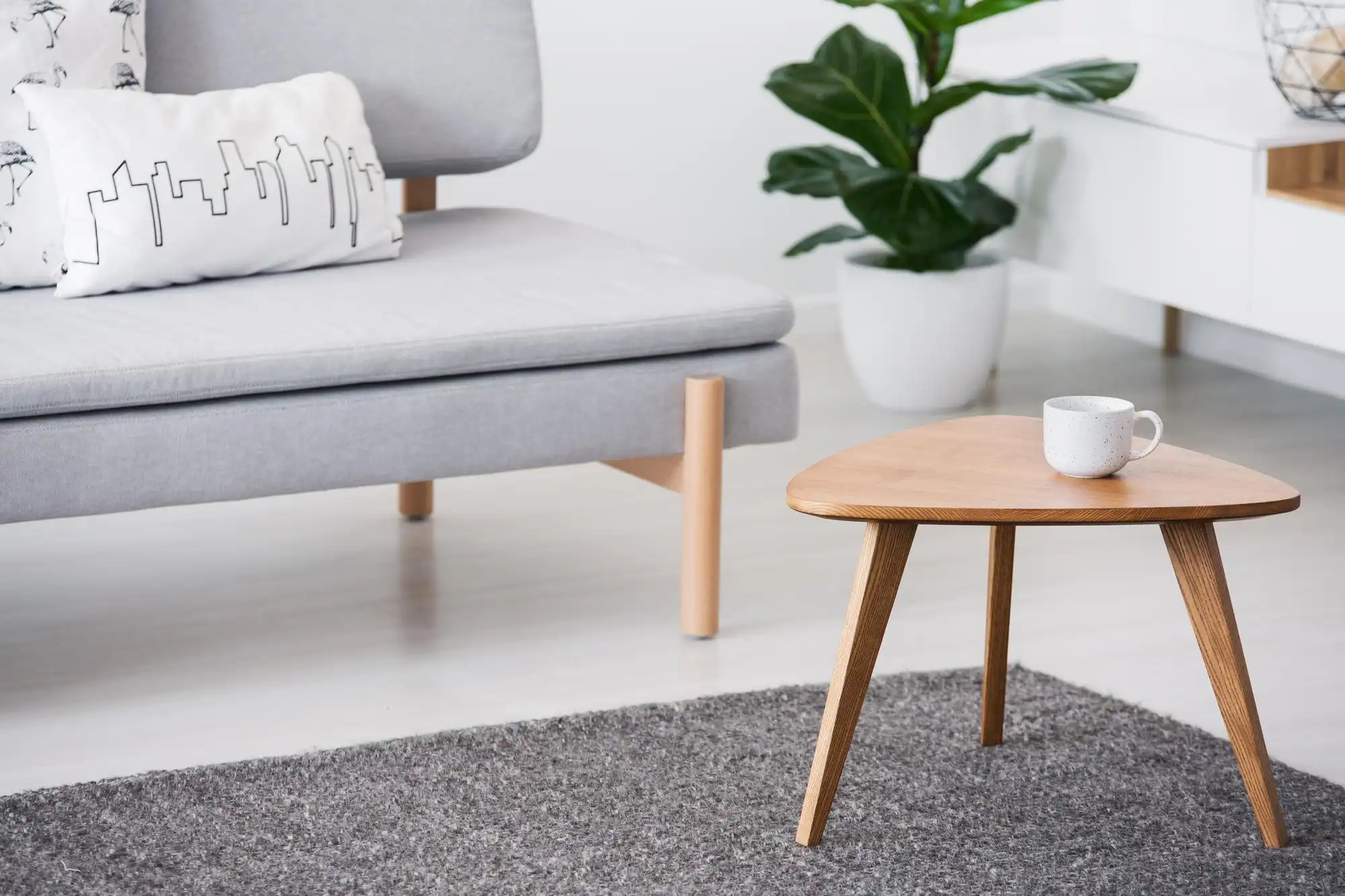
1. Glass & Metal Tables for Visual Lightness
Glass-top tables supported by metal bases create a bright, airy feel. Because glass is visually lightweight, it makes the room look larger and prevents heavy blocks of furniture from overwhelming the space.
This style is ideal for smaller living rooms, modern spaces, and areas with abundant natural light, helping the overall layout feel open and breathable.
2. Classic Coffee Table — Centerpiece of the Space
The coffee table is often the anchor of a living room. It provides a shared surface for snacks, décor, remotes, and conversation, making it both functional and design-forward. Classic coffee tables come in a variety of materials including solid wood for warmth, marble for luxury, glass for openness, and metal for an industrial touch.
Shape plays a major role in how a coffee table affects the layout. Rectangular tables suit longer sofas and linear rooms. Square tables feel balanced and structured. Round or oval tables soften angles and improve movement flow in smaller spaces. Choosing the right shape ensures the room feels spacious instead of cramped.
3. Nesting Table Sets for Flexibility
Nesting tables are two or more tables designed to tuck under each other. They are a smart choice for small or multi-use living rooms where surface space needs to grow and shrink on demand. You can separate them for guests or pull them closer to chairs, then nest them neatly when not in use.
Because they combine function with efficient storage, nesting tables are great for apartments, open-plan layouts, and modern homes that favor versatility.
4. Side & End Tables — Functional Complements
Side and end tables sit next to sofas or chairs, offering a convenient spot for lamps, drinks, or books. While they take up less space than coffee tables, they make a big difference in daily comfort and lighting.
Mixing shapes and heights adds visual interest. For example, a taller lamp table and a lower drink table can work together to create a layered look. Side tables are especially useful in seating arrangements with multiple chairs where a single coffee table cannot reach everyone comfortably.
5. Console or Sofa Tables — Behind Seating & Walls
Console tables are slim, narrow pieces typically placed against walls or behind sofas. They provide surface space without blocking walkways, making them ideal for tight living rooms and open floor plans.
You can style console tables with tray arrangements, sculptural décor, or lamps to bring height and dimension into the room. Behind a sofa, they also help define zones in open layouts and keep the seating area visually grounded.
6. Ottoman Tables — Comfort Meets Function
Ottomans have become a popular alternative to coffee tables. They offer a soft, upholstered surface that doubles as extra seating or a footrest during relaxed evenings. To make ottomans function like tables, many homeowners add a tray on top to hold drinks, candles, or décor.
Ottoman tables support cozy, family-friendly living rooms where comfort and multi-use pieces matter most.
7. Accent Tables — Eye-Catching Touches
Accent tables (also called occasional tables) are small design pieces that instantly elevate a room’s personality. They may use sculptural forms, unique silhouettes, or artistic materials to stand out.
These tables let you experiment with texture—mixing wood with metal, marble with glass, or rattan with stone—to complement your living room without committing to a large furniture upgrade. They’re ideal for layering style in small doses.
8. Lift-Top & Storage Coffee Tables
Lift-top coffee tables are perfect for homes that need storage and function. The tabletop can raise to become a work surface or dining surface, while the interior hides blankets, remotes, games, and tech accessories.
Because they reduce clutter and help the living room stay tidy, storage coffee tables are popular in family rooms, small apartments, and multipurpose spaces.
9. Two-Table Clusters & Layered Table Looks
Instead of one coffee table, many designers now use two smaller tables clustered together. Mixing shapes—like combining a round table with a square or oblong one—adds movement and dimension.
Clusters also provide more usable surface area than a single large table and can be separated when needed. This design trend works especially well with modular sofas and open-flow seating layouts.
10. Modern Minimalist Tables
Minimalist tables feature clean lines, slim frames, and neutral colors. Materials like wood veneer, matte metal, or smooth stone give them a streamlined look that fits contemporary interiors.
Because they lack ornamentation, minimalist tables keep visual clutter low and let other elements—like rugs and sofas—take the lead.
11. Rustic & Organic Material Tables
Rustic tables highlight natural textures such as reclaimed wood, rattan, stone, or raw finishes. These materials add warmth, depth, and tactile interest to living rooms that favor comfort and character.
Rustic tables work well in farmhouse, coastal, boho, and nature-inspired interiors and pair beautifully with soft textiles and greenery.
Need Help Choosing the Right Living Room Table?
From coffee tables to nesting sets, the right piece can transform your living room’s style and flow. If you’re furnishing a new space, remodeling, or sourcing designs for a client, our team can help you select tables that fit your layout, lifestyle, and aesthetic.
Contact us today for personalized recommendations or assistance with furniture selection and design.
FAQs
What table design is trending now?
Trending designs include nesting tables, sculptural bases, mixed materials, and two-table clusters. Many homes are choosing functional pieces like storage and lift-top coffee tables for multipurpose living spaces.
What are common table design mistakes?
Common mistakes include choosing a table that’s too large or too small for the seating area, blocking traffic flow, mismatching styles, or skipping storage needs in smaller spaces.
How to decorate a table in your living room?
Use the rule of three: mix different heights, textures, and materials. Books, candles, trays, and greenery are popular accents. Keep surfaces curated—avoid clutter.
Do people still use end tables in the living room?
Yes — end tables are still widely used because they add function and convenience next to sofas and chairs. They’re useful for lighting, drinks, remotes, and décor, especially in layered seating layouts.
 English
  Arabic
  Spanish
  Japanese
  Russian
  Korean