

What Is a Kitchen Island?
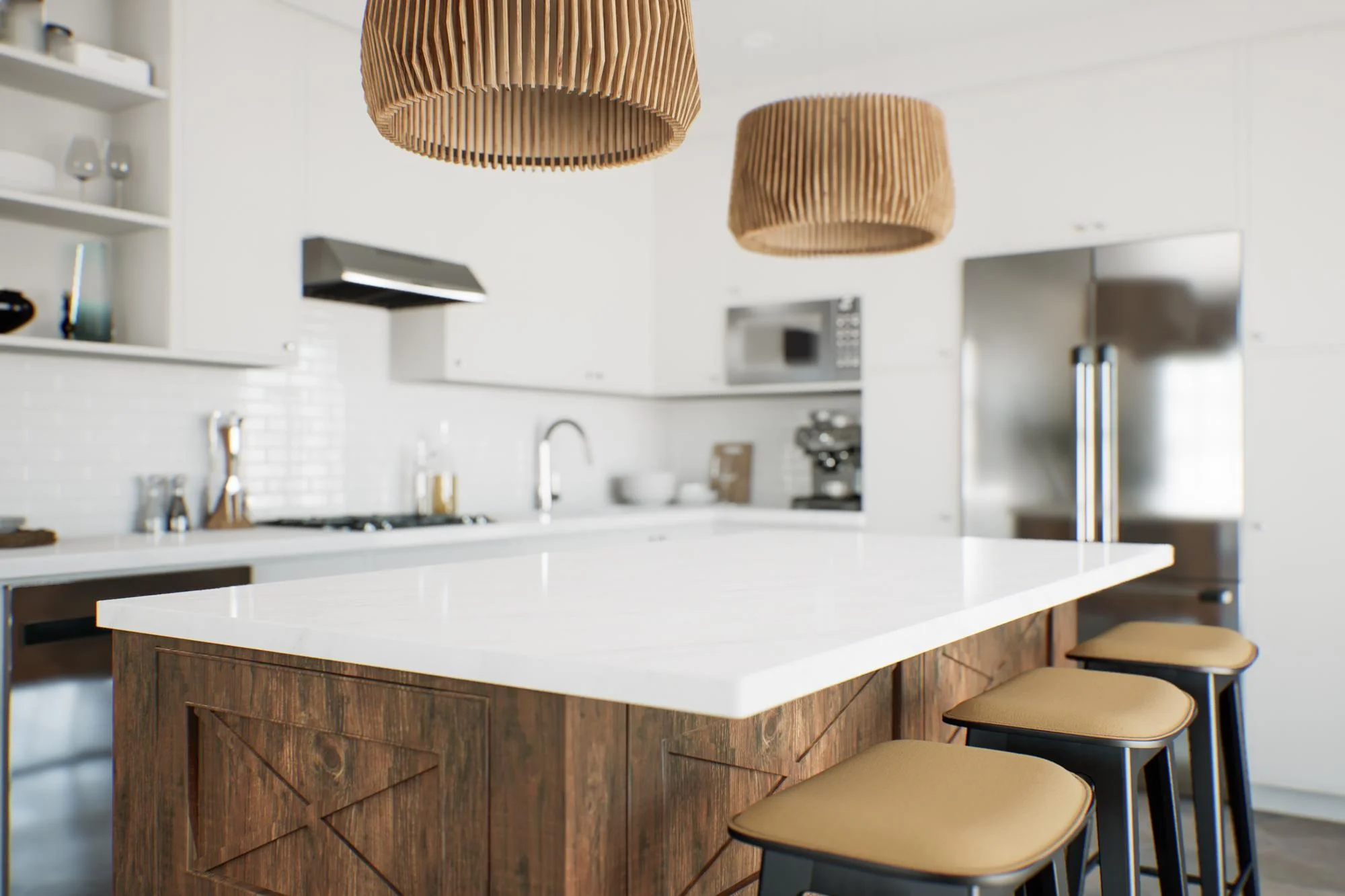
A kitchen island is a freestanding structure placed in the center or open area of a kitchen. It’s designed to add extra prep space, storage, and functionality without being attached to walls. In many modern kitchens, the island becomes the main work hub.
Most kitchen islands include built-in cabinets or drawers for storage, a durable countertop for food prep, and seating on one side for casual meals or conversation. Larger islands may also hold appliances like a sink, cooktop, dishwasher, or wine fridge. Because of their size and features, islands work best in kitchens with enough space to maintain clear walking paths.
What Is a Kitchen Table?
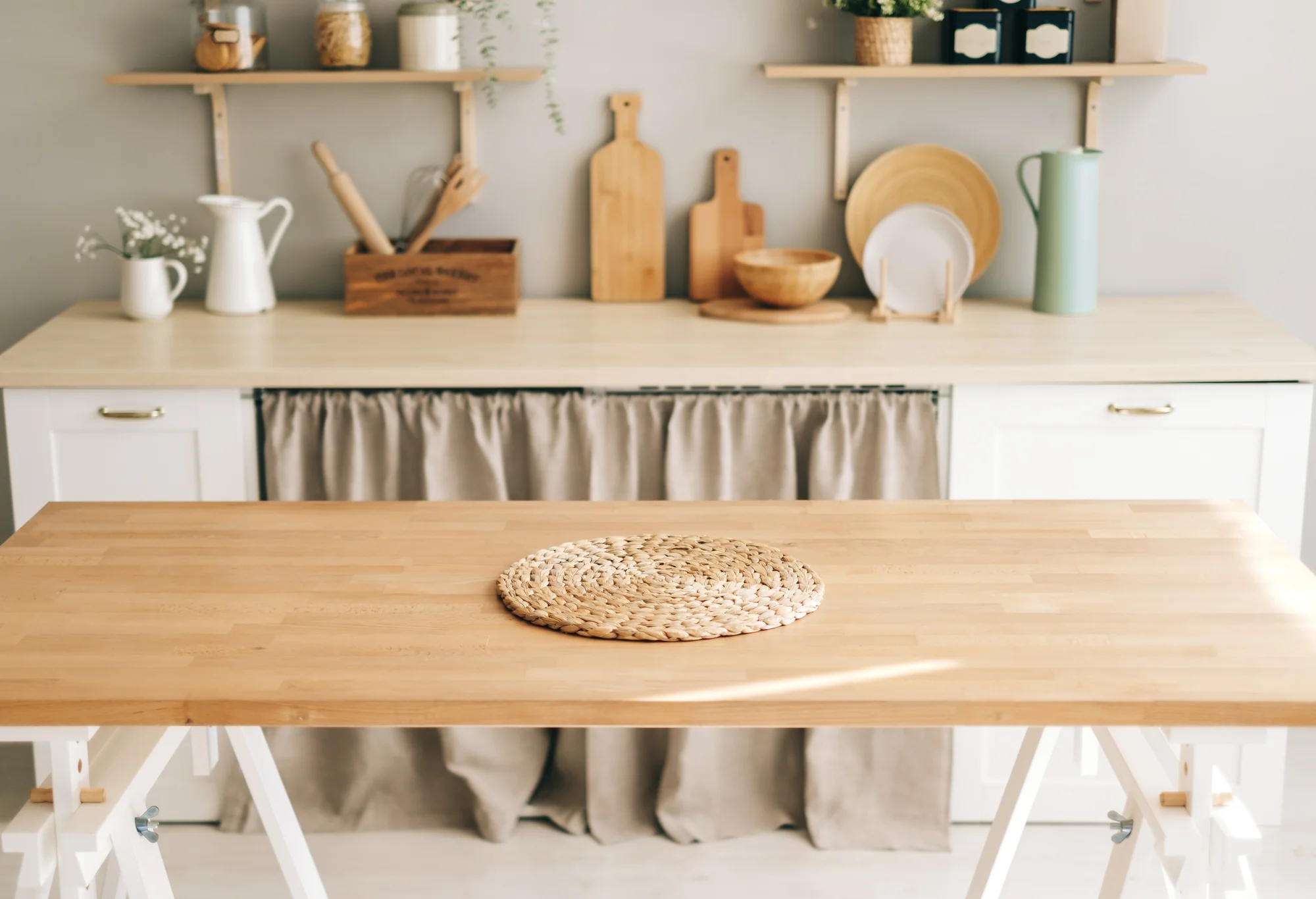
A kitchen table is a freestanding furniture piece mainly used for dining, but it often serves many purposes. Beyond meals, it can double as a spot for homework, casual work, crafts, or quick food prep.
Unlike islands, kitchen tables offer flexible seating and can easily be moved or replaced. They come in many shapes and sizes, making them a good fit for both small and large kitchens. Tables create a more traditional, social feel, encouraging people to sit longer and gather comfortably, especially for family meals or entertaining.
Workspace & Cooking Function
Kitchen islands are built for work. They expand your prep space and create a central surface for chopping, mixing, and plating. Because islands often use durable countertops, they handle daily cooking tasks with ease.
Kitchen tables provide extra surface area, but they aren’t designed for heavy prep. Most tables lack heat resistance, knife durability, or easy cleanup, making them better for light tasks rather than serious cooking.
Storage & Built-In Features
One major advantage of a kitchen island is built-in storage. Islands often include drawers, cabinets, and shelves that keep cookware, utensils, and small appliances within reach. Some even integrate sinks, cooktops, or dishwashers.
Kitchen tables usually don’t offer storage, so you’ll need nearby cabinets, shelves, or sideboards to stay organized.
Seating & Dining Capacity
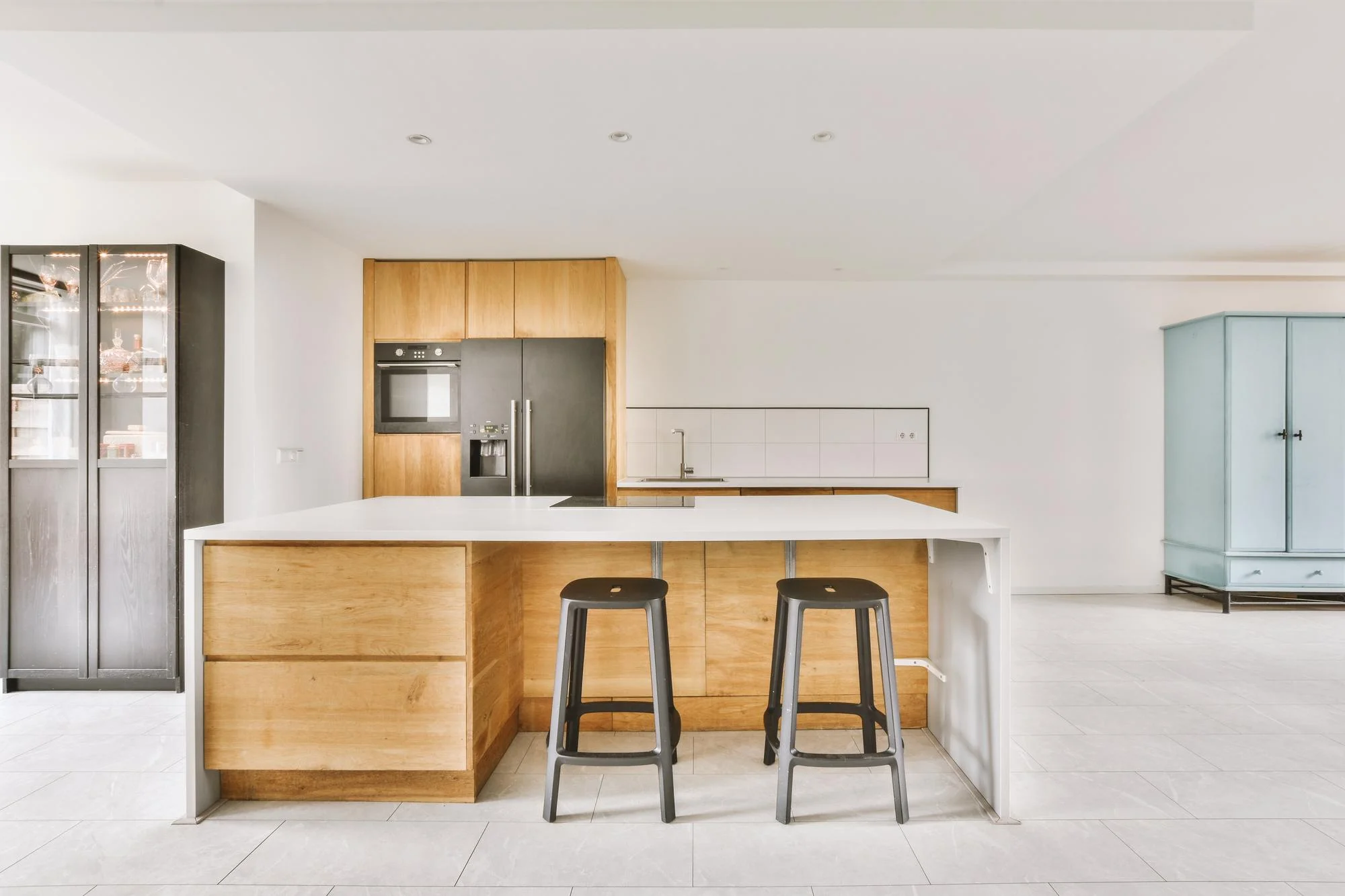
Island seating typically works best for 2 to 4 people using stools. It’s great for quick meals, snacks, or casual conversation during cooking.
Kitchen tables offer more flexible seating. They can accommodate additional chairs and are better for longer meals, family gatherings, and hosting guests.
Space & Layout Considerations
Kitchen islands require clearance on all sides to allow safe movement and smooth traffic flow. This makes them better suited for medium to large kitchens.
Kitchen tables are easier to place and move. They work well in smaller kitchens or layouts where flexibility and open space matter.
Atmosphere & Use Cases
Islands support social cooking. Guests can sit nearby while meals are prepared, creating a relaxed, interactive feel.
Tables create a more traditional dining atmosphere. They encourage people to sit together, talk longer, and enjoy meals as a shared experience.
Aesthetic & Design Impact
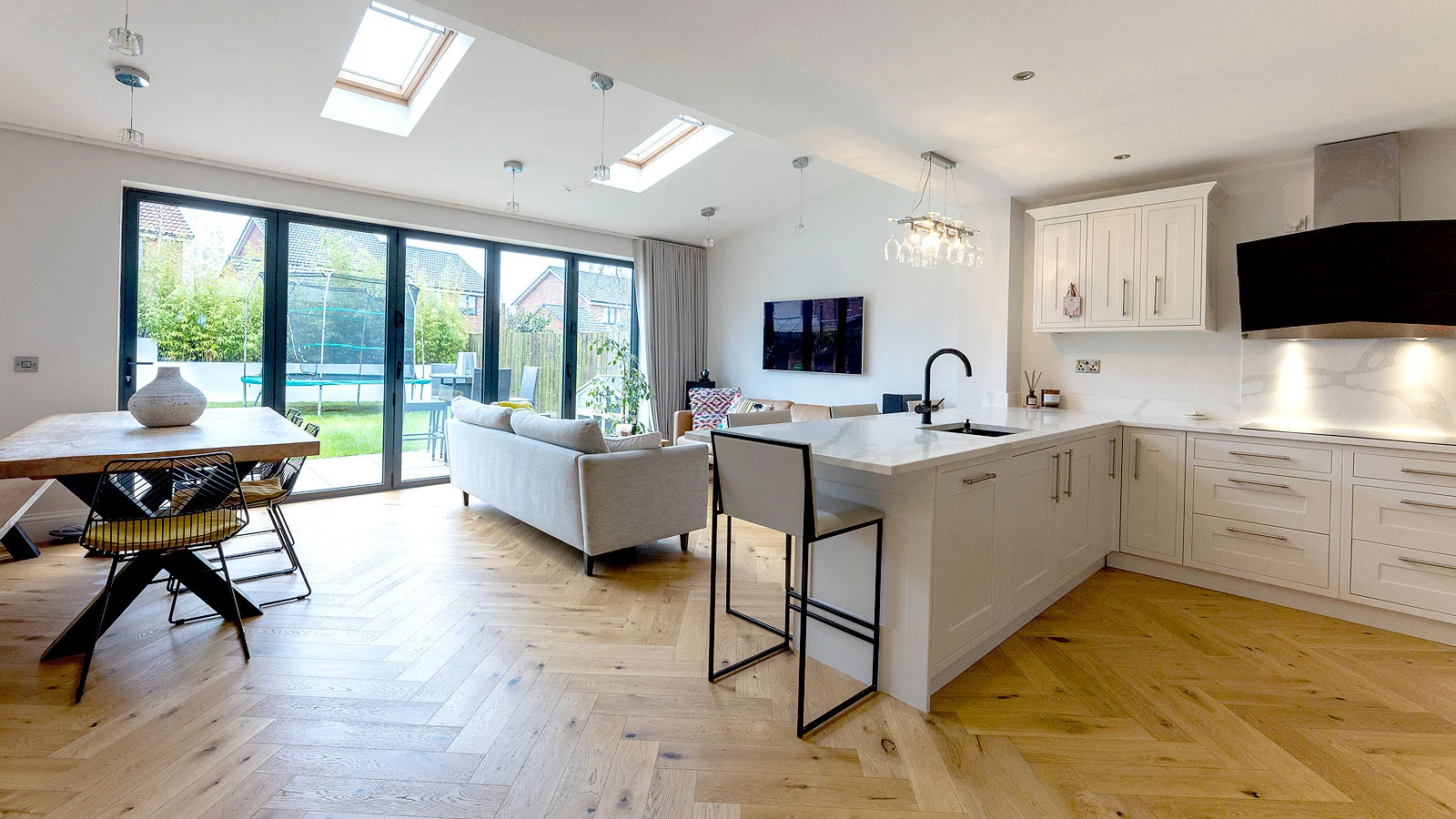
Kitchen islands often anchor modern or open-plan kitchens, offering clean lines and a built-in look that defines the space.
Kitchen tables add warmth and character, fitting well with classic, farmhouse, or transitional styles.
Cost & Installation
Kitchen islands are a permanent feature and usually cost more due to cabinetry, countertops, and possible plumbing or electrical work.
Kitchen tables are more affordable, require no installation, and can be replaced easily as styles or needs change.
How to Choose for Your Kitchen

Choosing between a kitchen island and a table depends on how your kitchen is used every day. Focus on space, lifestyle, and how you like to cook and gather.
Space size: Larger kitchens can handle a permanent island with proper clearance. Smaller kitchens often benefit from a table’s flexible placement.
Cooking habits: If you cook often and need prep space, an island adds function. For light cooking or reheating, a table may be enough.
Storage needs: Islands offer built-in drawers and cabinets. Tables require nearby storage solutions.
Social use: Islands support casual seating and conversation. Tables work better for longer meals and group gatherings.
Dining frequency: Choose a table if you eat most meals in the kitchen. Choose an island if dining is occasional.
The best option balances daily function with comfort and flow.


 English
  Arabic
  Spanish
  Japanese
  Russian
  Korean
  French
  Italian